

Outdoor Dining Materials
Teak and Aluminum Outdoor Dining Tables: Why the Combination Works
A teak and aluminum outdoor dining table brings a balanced approach to open-air dining. Teak gives the tabletop warmth and natural texture. Aluminum gives the frame strength, structure, and a cleaner visual profile.

Choosing an outdoor dining table can feel surprisingly difficult. A full teak table feels warm and natural, but it can sometimes look heavy in a modern patio. A full aluminum table feels clean and easy to maintain, but the surface may feel too cool for long meals outside. Stone has a strong presence, but it can be difficult to move, rearrange, or live with every day.
A teak and aluminum outdoor dining table brings a more balanced approach. It places each material where it works best. Teak belongs on the tabletop, where warmth, texture, and touch matter most. Aluminum belongs in the frame, where strength, stability, and long-term outdoor performance carry the design.
For outdoor dining, that balance matters. The table needs to look beautiful in the space, but it also needs to support daily meals, weekend gatherings, changing weather, and years of use. A thoughtfully designed teak and aluminum outdoor dining table gives the dining area a natural surface, a clean structure, and an easier way to live outside.
Why a Teak and Aluminum Outdoor Dining Table Makes Sense
The strongest outdoor furniture designs usually start with a simple question: what job does each part need to do?
For a dining table, the tabletop is the part people experience first. It catches the eye from across the patio. It holds plates, glasses, serving dishes, flowers, candles, and the small traces of everyday life. It is also the part people touch most often. That surface should feel warm, natural, and inviting.
The frame has a different job. It needs to support the table, hold its shape, resist outdoor conditions, and keep the overall piece from feeling too bulky. For an extendable outdoor dining table, the frame also needs to support movement and stability as the table shifts between everyday use and larger gatherings.
That is why teak and aluminum work so well together. Teak gives the table its natural dining surface. Aluminum gives it a strong, streamlined foundation. The combination feels intentional because each material is used where it brings the most value.
Teak tabletop
Adds warmth, natural grain, and a more inviting surface for meals, drinks, and everyday gathering.
Aluminum frame
Supports the table with clean lines, outdoor-ready structure, and less visual weight than a full-wood base.
Teak on the Tabletop: Natural Warmth Where You Feel It Most
A tabletop shapes the entire feeling of an outdoor dining space. Even before the chairs are pulled out or the food arrives, the surface sets the tone.
Teak is a strong choice for that role because it brings warmth that metal and stone rarely match. Its grain gives the table movement and character. Its natural color can range from golden honey to deeper brown tones. Those variations are part of the material’s appeal. They make each table feel less flat, less manufactured, and more connected to the outdoors.
High-quality teak is also well suited for outdoor furniture. Grade A teak comes from the mature heartwood of the tree, where the grain is tighter and the natural oil content is higher. That oil content helps the wood handle outdoor exposure better than lower-grade teak. When teak is properly dried and prepared before construction, it also becomes more stable for long-term use in changing outdoor conditions.
For a dining table, these details matter. Teak does more than make the table look warm. It makes the surface feel like a true place to gather. It softens modern patios, pairs easily with plants and stone, and gives the outdoor dining area a sense of comfort that can be difficult to create with metal alone.

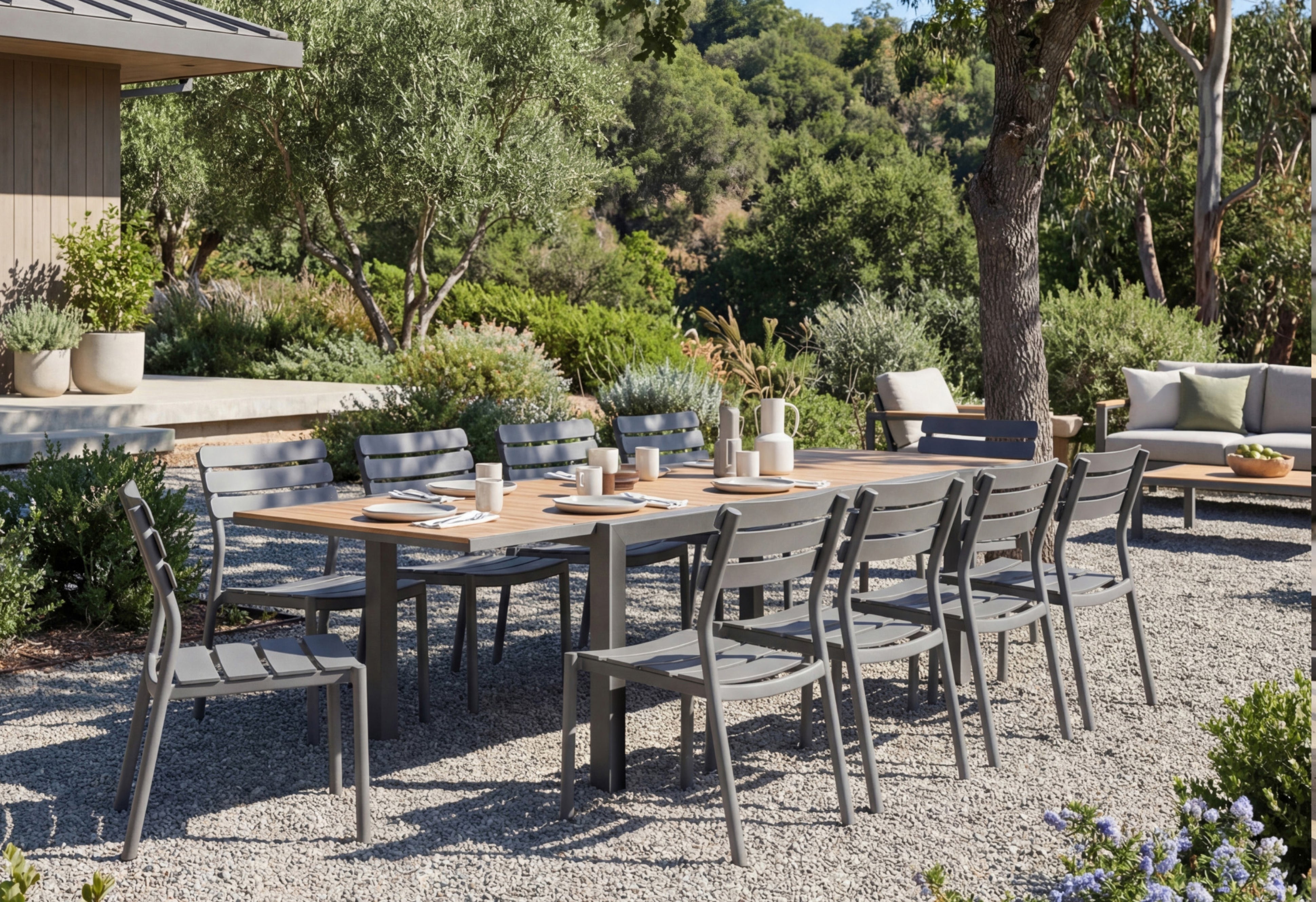
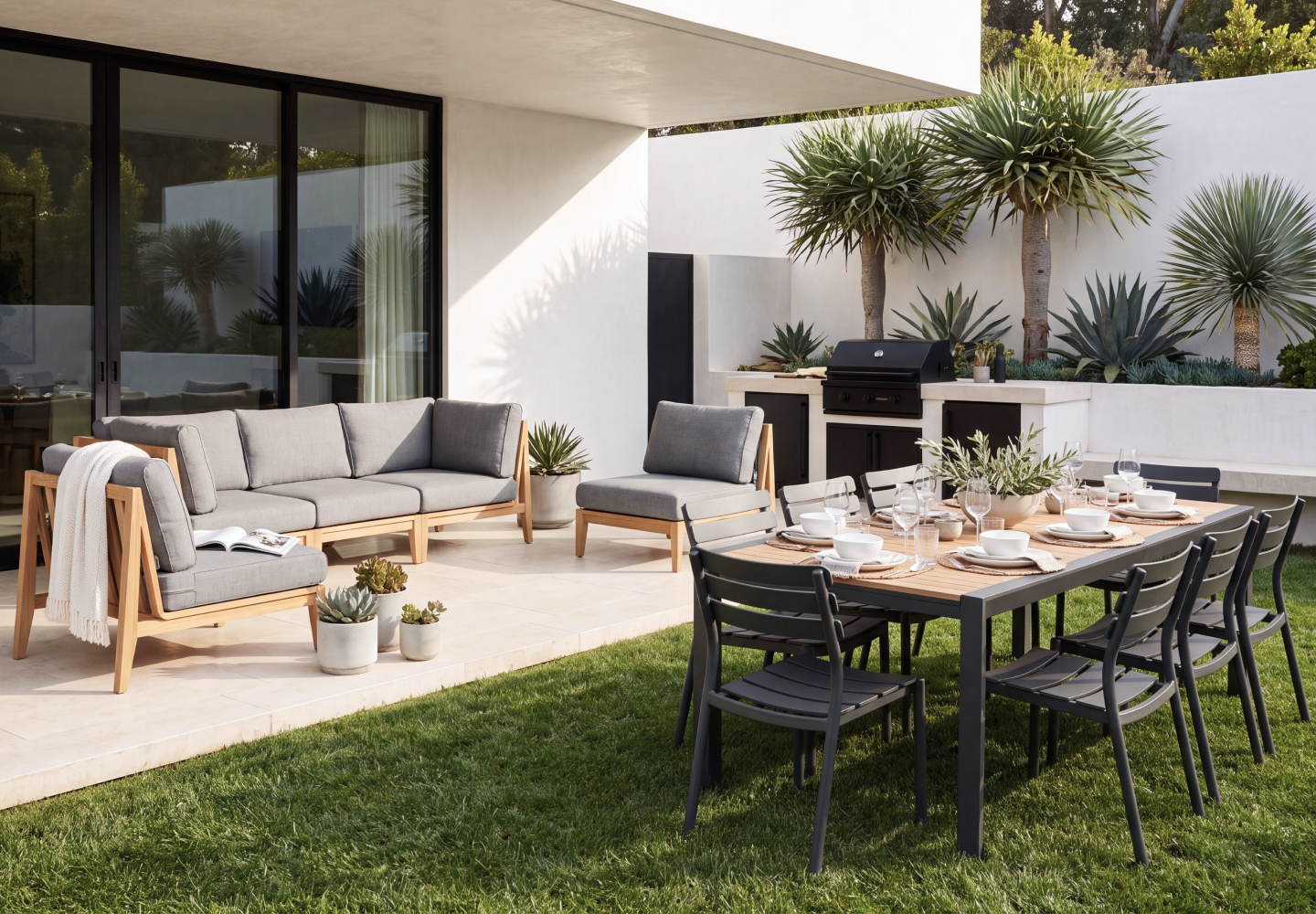
Teak brings natural warmth to the dining surface, while aluminum keeps the frame clean and visually lighter.
A teak tabletop also ages with the space. It does not stay frozen in one perfect showroom state. It responds to sunlight, rain, humidity, and use. For many homeowners, that natural evolution is part of the beauty.

Aluminum on the Frame: Strength Without Visual Weight
If teak is the material people notice first, aluminum is the material that makes the table easier to live with.
An outdoor dining table frame needs to be strong, stable, and ready for regular exposure to the elements. It should support the tabletop without making the entire piece feel oversized. Aluminum is useful here because it offers structure without unnecessary weight.
In premium outdoor furniture, aluminum is often selected for frames because it balances durability, corrosion resistance, and clean shaping. It can be engineered into slim, strong forms that support the table while keeping the silhouette light. That matters in a dining area, where people need space to move around the table, pull out chairs, and gather comfortably.
The frame also affects the visual feel of the furniture. A full wood dining table can be beautiful, but in some spaces it may feel too dense. A teak tabletop on an aluminum frame keeps the warmth where people see and touch it, while allowing the base to feel cleaner and more architectural.
This is especially useful for modern outdoor spaces. A charcoal aluminum frame can sit comfortably on a deck, patio, poolside terrace, or covered porch without competing with the surrounding design. It gives the table a quiet structure and lets the teak surface remain the focal point.
Why Powder-Coated Aluminum Matters Outdoors
Powder coating is easy to overlook because it looks like a finish. On outdoor furniture, it does more than add color.
A powder-coated aluminum frame has an added layer of protection for outdoor use. It helps the frame handle everyday exposure to sun, rain, humidity, dust, pollen, and repeated cleaning. It also gives the metal a more refined surface, which changes how the table feels in the space.
A matte charcoal finish, for example, feels quieter than shiny metal. It gives the table a more architectural presence while allowing the teak tabletop to stay at the center of the design. The result is a teak and aluminum outdoor dining table that feels modern without becoming cold, and natural without feeling heavy.
The strength of this material pairing is simple: teak brings organic warmth, while powder-coated aluminum brings clean structure. Together, they create a table that feels grounded, durable, and easy to live with outside.
This contrast is the reason the material pairing works so well. The teak brings organic texture. The aluminum brings clean lines. The powder-coated finish helps connect the two by making the frame feel intentional, durable, and visually calm.
For a dining table that lives outside, this kind of finish matters. The frame should not need constant attention. It should be easy to refresh, easy to clean, and dependable enough to stay in regular use through the seasons.
How Teak Changes Outdoors Over Time
Teak is a natural material, so part of owning teak furniture is understanding how it changes.
When new, teak often has a warm golden tone. Over time, exposure to sunlight, rain, air, and humidity causes the surface to develop a soft silver-grey patina. This is a normal part of teak’s outdoor aging process. It does not mean the wood is damaged or failing.
Some homeowners love the silver-grey look because it feels relaxed, coastal, and naturally weathered. Others prefer to maintain more of the original golden color with regular cleaning and teak care products. Both approaches can work. The right choice depends on the look you want for your outdoor dining space.
Teak may also show natural variation from board to board. Small surface checks or fine fissures can appear as the wood expands and contracts with changes in moisture and temperature. These are normal characteristics of real wood. They add character and do not necessarily affect the strength of the furniture.
This is one reason teak works so well outdoors. It does not need to look untouched to look beautiful. It can age into the landscape, soften over time, and still remain a strong part of the dining space.
Why This Combination Works for Extendable Outdoor Dining Tables
An extendable outdoor dining table has to serve two different moments.
Most days, it needs to feel right for everyday meals. It should not overwhelm the patio when only a few people are sitting down for dinner. When guests arrive, it needs to open up for longer meals, birthdays, holidays, and weekend gatherings.
That flexibility makes material choice more important. A large table can easily feel too heavy. A lighter table can sometimes feel too spare. The right design has to feel stable when extended and comfortable when used at its smaller size.
This is where teak and aluminum work especially well. The teak tabletop keeps the dining surface warm and natural, even when the table expands for more guests. The aluminum frame helps control weight and keeps the table visually clean. Together, they create a piece that can shift from family dinner to open-air hosting without feeling like a different table.
For homes where the outdoor space is used often, that flexibility matters. A patio may host morning coffee, after-school snacks, weeknight meals, and long weekend dinners. A teak and aluminum outdoor dining table can support each of those moments without making the space feel overly formal or fragile.
It also pairs easily with different seating styles. Armchairs can make the setting feel more relaxed. Armless chairs can keep the footprint efficient. A bench can make the table feel more casual and flexible for larger groups. The material combination gives the dining area a strong foundation, while the seating can adapt to the way the household actually lives.
Teak and Aluminum vs. Single-Material Outdoor Dining Tables
A teak and aluminum outdoor dining table is not about proving that one material is better than another. It solves a specific design problem: how to create an outdoor table that feels warm, stable, modern, and easy to use.
| Table Type | Common Strength | Common Tradeoff | Why Teak + Aluminum Works |
|---|---|---|---|
| Full teak table | Warm, natural, and timeless | Can feel visually heavy in modern spaces | Keeps teak where it matters most: the tabletop |
| Full aluminum table | Clean, lightweight, and easy to maintain | The surface can feel cooler for dining | Adds a warmer, more natural dining surface |
| Stone or concrete table | Substantial and grounding | Can be harder to move or rearrange | Offers a softer, more flexible everyday feel |
| Plastic or resin table | Simple and accessible | Often lacks a refined material presence | Uses more intentional, long-lasting materials |
Teak and aluminum sit between these categories. The teak tabletop keeps the most visible and tactile part of the table warm and natural. The aluminum frame keeps the overall structure lighter, cleaner, and easier to manage. The pairing works because it is based on material purpose, not decoration alone.
That is the difference between mixed materials as a style choice and mixed materials as good design. In a well-designed teak aluminum outdoor dining table, the materials are not competing with each other. They are doing separate jobs that make the whole table better.
Care Notes for a Teak and Aluminum Outdoor Dining Table
A high-quality outdoor dining table should be easier to care for, but no outdoor furniture is completely maintenance-free. The best approach is simple, steady care.
For the teak tabletop, brush off debris regularly, especially during high pollen or leaf seasons. Wipe the surface as needed with mild soap and water. Clean spills after meals rather than letting food, wine, or oil sit for long periods. If you want to preserve more of the golden tone, use teak care products on a regular schedule. If you prefer the silver-grey patina, let the wood age naturally and clean it as needed.
During the first few rainfalls, teak may release some of its natural oils when exposed to humidity or rain. This is more common early in the life of the furniture. If your dining chairs include fabric components, it is wise to avoid leaving them tucked tightly under the tabletop during those first wet-weather moments. Once the teak begins to settle and develop its patina, this becomes less of a concern.
For the aluminum frame, care is usually more straightforward. Keep it clean with mild soap and water. Avoid abrasive cleaners that may damage the powder-coated surface. Try not to let water sit for long periods around joints or hardware. In extreme weather, such as heavy snow or tropical storms, store furniture under shelter or secure it when possible.
The goal is not to make outdoor living feel delicate. It is to keep the table ready for real use: meals, drinks, homework, weekend projects, and the everyday moments that make the outdoor space feel alive.
Design Benefits: Warm Wood, Clean Lines, and a Table That Belongs Outside
A teak and aluminum dining table works because it brings two visual languages together.
Teak adds warmth. Its grain, color variation, and natural aging process help the table feel grounded in the outdoors. It connects easily with landscaping, trees, stone pavers, garden beds, and the changing light across a patio.
Aluminum adds clarity. The frame gives the table a clean outline and a more modern shape. In charcoal grey, it can feel quiet and architectural rather than industrial. It supports the tabletop without competing with it.
Together, these materials help the dining table fit into many outdoor settings. It can work on a deck with simple planters and armless chairs. It can sit near a pool without feeling too traditional. It can anchor a covered porch with a relaxed mix of seating. It can also support a larger dining area where the table needs to feel substantial without taking over the whole space.
That balance is helpful for homes where the outdoor area has become part of daily living. The dining table is not just for the occasional summer party. It is where breakfast happens when the weather is good. It is where friends linger after dinner. It is where kids drift between the house and the yard.
A table that looks refined but feels easy to use is often the table that gets used most.
What to Look for When Buying a Teak and Aluminum Outdoor Dining Table
When comparing teak and aluminum outdoor dining tables, look beyond the surface description. Many tables can say they use teak or aluminum. The details tell you more.
Start with the teak. Look for high-quality teak, responsible sourcing, and clear care expectations. Teak should have natural variation, but the brand should also explain how it will age and how to care for it if you want to preserve the original tone.
Then look at the frame. Outdoor-grade aluminum should feel stable, not flimsy. Powder coating should be part of the material story, not just a color option. A matte finish often pairs better with teak because it lets the wood remain the warmest visual element.
Consider the table’s proportions. A thick wood top on a heavy frame can feel bulky. A thin frame under a large tabletop can feel underbuilt. The best designs feel balanced from every angle, with enough structure to feel secure and enough openness to keep the dining area comfortable.
For extendable tables, check how the table supports both everyday and hosting modes. The extension should feel like part of the design, not an afterthought. A table that works well for everyday meals and expands for larger gatherings can make the outdoor space more useful throughout the year.
Finally, think about the seating. A teak and aluminum outdoor dining table should pair easily with armchairs, armless chairs, or a bench. The full dining set should feel cohesive without looking overly matched.
Complete the Outdoor Dining Space
Start with the teak and aluminum table, then build the setup around the way your household gathers: everyday meals, larger dinners, or flexible seating for guests.
Featured Table
Teak + Aluminum Outdoor Expandable Dining Table
A warm teak tabletop paired with a clean aluminum frame for everyday meals and open-air hosting.
Shop the table
Hosting Setup
Teak + Aluminum Table + 10 595 Armchairs
A larger dining setup designed for family meals, weekend gatherings, and longer dinners outside.
Shop the set
Flexible Seating
595 Dining Armless Chair, Set of 2
A clean, space-efficient chair option that pairs naturally with teak and aluminum dining tables.
Shop chairsOuter’s Approach to Teak and Aluminum Outdoor Dining
Outer’s teak and aluminum outdoor dining design is built around material purpose. The teak tabletop brings the warmth, texture, and natural feel people want at the center of the meal. The powder-coated aluminum frame brings the structure, support, and clean lines needed for outdoor use.
The result is a table that feels considered rather than overdesigned. It is warm where people gather and streamlined where the structure matters. It works for everyday meals and longer outdoor hosting. It can sit comfortably in a modern patio, a garden dining area, or a deck designed for family life.
That is the real strength of the material combination. It does not force the table into a single style. It gives the outdoor dining area a flexible foundation: natural enough to feel inviting, modern enough to feel current, and durable enough to stay in the rhythm of daily use.
For families who use their outdoor space often, that matters. A dining table should not feel like a seasonal prop. It should be ready for Tuesday dinners, Saturday brunch, and the kind of long, unhurried meals that make being outside feel worth planning around.
Final Thoughts: The Right Material in the Right Place
A teak and aluminum outdoor dining table works because it understands what each material should do.
Teak belongs on the tabletop because that is where warmth, touch, and natural beauty matter most. Aluminum belongs on the frame because that is where strength, stability, and ease of care matter most. Together, they create a table that feels balanced for outdoor living.
For a patio, deck, or garden dining space, that balance can make the difference between furniture that only looks good in photos and furniture that becomes part of daily life. The best outdoor dining table is not just the one that can stay outside. It is the one that makes people want to gather there again and again.
FAQ
Is teak and aluminum a good combination for an outdoor dining table?
Yes. Teak and aluminum work well together because each material serves a different purpose. Teak brings warmth, natural texture, and a comfortable dining surface. Aluminum brings structure, stability, and a lighter visual profile for the frame.
Does teak change color outdoors?
Yes. Teak naturally changes color as it lives outdoors. It often starts with a warm golden tone and gradually develops a silver-grey patina with exposure to sunlight, rain, air, and humidity. This is a normal part of teak’s aging process.
How do you maintain a teak and aluminum outdoor dining table?
Clean the teak tabletop with mild soap and water as needed, and brush off debris regularly. If you prefer the original golden tone, use teak care products periodically. If you prefer a silver-grey patina, allow the teak to weather naturally. The aluminum frame can usually be cleaned with mild soap and water.
Is aluminum good for outdoor dining table frames?
Yes. Aluminum is a strong choice for outdoor dining table frames because it is lightweight, stable, and well suited for clean structural forms. When powder-coated, it becomes even better suited for regular outdoor use.
Is a teak and aluminum table better than a full teak table?
It depends on the space and the look you want. A full teak table offers a strong natural presence, while a teak and aluminum table keeps the warmth of teak on the tabletop and uses aluminum to create a lighter, cleaner frame. For many modern outdoor dining spaces, that balance works especially well.
Build a Dining Space That Feels Ready for Every Meal
Explore Outer’s teak and aluminum outdoor dining tables, crafted for everyday meals, open-air hosting, and long-lasting outdoor living.
Shop Outdoor Dining