

Brick Fire Pit Ideas
Brick Fire Pit Ideas for a Stylish & Inviting Backyard (2026)
Brick brings texture, tradition, and permanence. Here is how to build or style one.

The quick answer
Brick Fire Pit Ideas That Work
Brick is traditional and permanent. Once built, it stays. The design commits your patio to a fixed focal point. For backyards where a single gathering zone makes sense year after year, permanence is the point.
A fire pit table delivers the same social function faster. No masonry. No permit wait. No mortar repair down the line. The Outer Fire Pit Table sits on the surface and repositions with the seasons.
Pair brick with contrasting seating. A traditional brick fire pit paired with modern aluminum or teak seating keeps the look from feeling dated. The contrast between rustic masonry and clean-lined furniture is intentional — and it works.
Classic Round Brick Fire Pit: The Timeless Layout
A round brick fire pit is the most recognizable backyard fire feature. The circular shape draws seating inward — everyone faces the center equally. The brick construction reads as permanent, grounded, and intentional. The silhouette has stayed consistent across generations because the geometry works. Here is what the build actually requires.
Correct Dimensions for a Round Brick Fire Pit
The inner diameter should be 36 to 48 inches. Below 36 inches, the fire is too small to produce meaningful warmth for more than two people. Above 48 inches, guests in the first row lose sight of each other across the flame — the social function degrades. The wall height: 12 to 18 inches above grade. Low enough to see across. High enough to contain embers and provide a footrest. The wall thickness: 4 inches for a single wythe of standard brick, or 8 inches for a double wythe that holds heat longer and reads as more substantial. A double-wythe pit costs roughly 40 percent more in materials. The extra mass pays off on cool evenings — the brick absorbs heat during the fire and radiates it back for an hour after the flame goes out.
Firebrick vs. Standard Brick: What Actually Survives the Heat
The inner ring must be firebrick. Standard clay brick spalls — explosively chips — under sustained high heat above roughly 1,200°F. A wood fire reaches 1,100°F at the flame base and can spike higher with hardwoods. Firebrick is rated to 2,000°F. It costs about $3 to $5 per brick versus $0.80 to $1.50 for standard clay brick. The inner ring of a 42-inch round fire pit uses approximately 80 to 100 firebrick depending on wall height. The outer ring can be standard clay brick for appearance — it stays far enough from the flame that it never reaches spalling temperature.
Mortar both rings with refractory cement — rated to 2,500°F or higher. Standard masonry mortar cracks within a single season under the thermal cycling of a fire pit. The temperature differential between the inner firebrick ring (1,000°F+) and the outer clay brick ring (200°F) creates expansion stress that standard mortar cannot handle. Refractory cement costs roughly $25 to $40 per 50-pound bag versus $8 to $12 for standard mortar. Two to three bags cover a 42-inch round fire pit. The base: 4 to 6 inches of compacted gravel for drainage, topped with 2 inches of sand for leveling. Skip the concrete pad — trapped moisture under sustained heat creates a steam explosion risk inside the concrete.

Brick and Stone Mixed Fire Pit: Contrast in Texture
Mixing brick and stone in a single fire pit adds visual complexity that a single-material structure cannot achieve. The brick provides warmth and regularity — the repeating rectangular grid. The stone provides irregularity — each piece is a different size and shape. The contrast between them makes both materials read as more deliberate than either would alone.
The formula: brick for the inner fire ring — firebrick, always. Stone for the outer facing — fieldstone, flagstone, or cut granite. Or reverse: a stone inner ring with a brick outer facing and a brick cap course that ties the top edge together visually. The cap course is the single most important aesthetic decision on a mixed-material pit. A smooth, continuous brick cap creates a clean top edge that reads as finished regardless of how irregular the stone facing below it is.
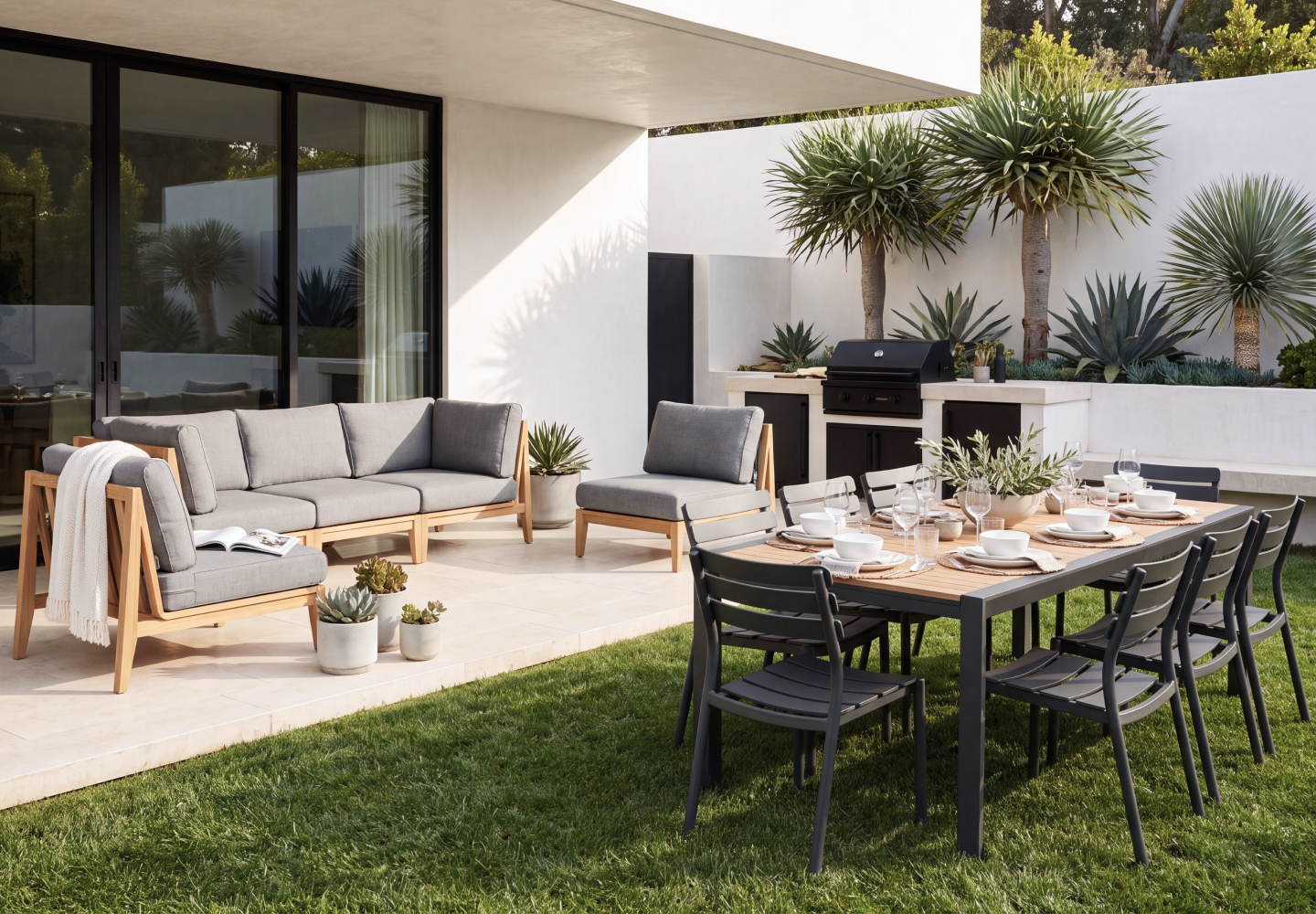
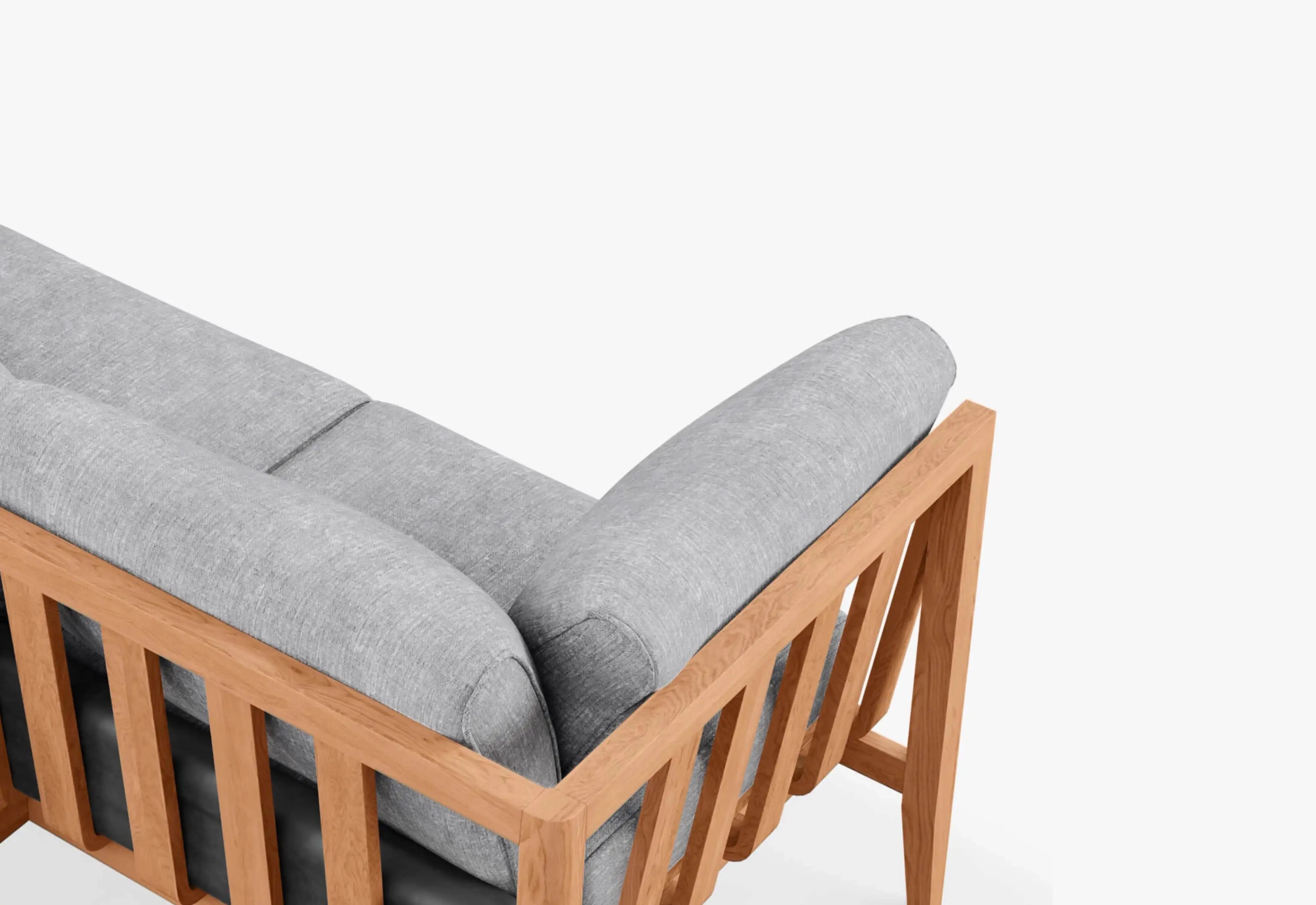
For seating integration, a brick-and-stone fire pit pairs naturally with a Teak Outdoor Sofa sectional — the organic warmth of the wood responds to the mixed masonry texture. For a more architectural look, powder-coated aluminum seating contrasts with the rustic fire pit. The stone-and-brick pit is the permanent anchor. The seating around it can shift styles across seasons without changing the fundamental character of the space.
Brick Fire Pit vs. Fire Pit Table: The Real Trade-OffA brick fire pit is permanent. It adds value to the home. It requires a permit in most jurisdictions. It costs $2,000 to $5,000 for professional installation, with high-end custom builds exceeding $8,000. A fire pit table is portable. It requires no permit in most cases. It costs a fraction of the masonry version — a single purchase with zero labor. It provides fire, grill, and table surface in one piece. For renters, for anyone planning to move within 5 years, and for anyone who wants fire tonight rather than next construction season, the fire pit table is the pragmatic answer to the same question a brick fire pit asks: where do we gather when the sun goes down?
The Alternative: A Fire Pit Table Without the Masonry
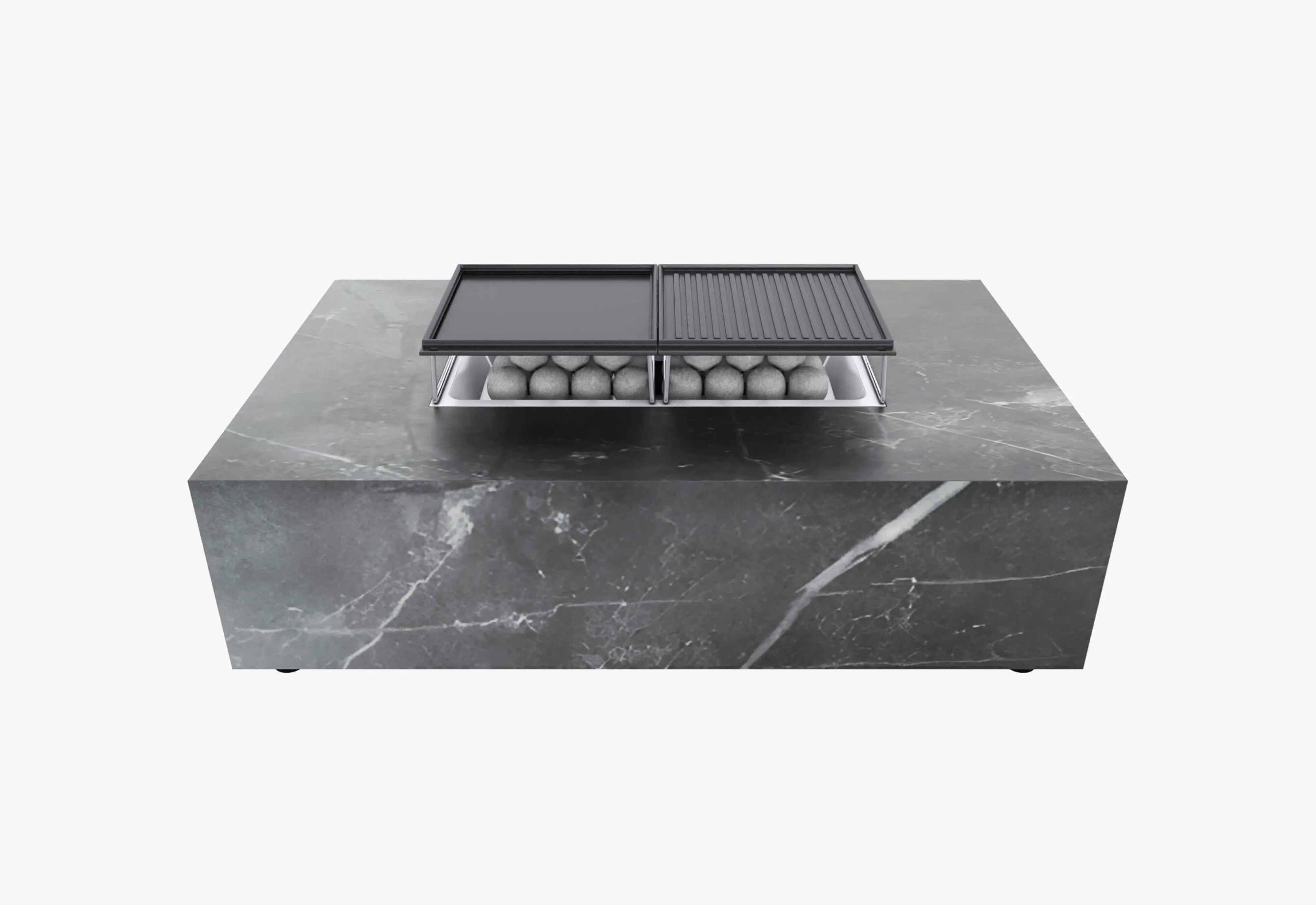
An Outer Fire Pit Table replaces the entire masonry project with a single piece of furniture. The OuterStone composite top has the look of natural stone — the weight, the installation, and the permanence are the only things missing. The aluminum base resists rust indefinitely. The entire table weighs roughly 120 pounds: heavy enough to stay put in wind, light enough that two people can reposition it when the layout changes.

The key advantage over brick is the time-to-first-fire. A brick fire pit takes weeks — permits, excavation, base prep, bricklaying, curing. A fire pit table takes approximately 10 minutes — unbox, connect the propane tank, press the ignition. The flame is the same. The social function is identical. The difference is entirely in the construction timeline and the commitment level. For the homeowner who wants fire this weekend, the fire pit table wins by default.
| Factor | Brick Fire Pit | Fire Pit Table |
|---|---|---|
| Installation time | 2–6 weeks | 10 minutes |
| Permit required | Usually yes | Typically no |
| Cost range | $2,000–$5,000 installed | Single purchase, zero labor |
| Portability | Permanent | Two-person repositioning |
| Multi-function | Fire only | Fire, grill, coffee table |
| Maintenance | Mortar repair, firebrick replacement, ash removal | Wipe surface, check connections seasonally |
| Best for | Long-term homeowners, traditional architecture | Renters, movers, immediate-use buyers |

Outer Fire Pit Table
OuterStone top. 50,000 BTU. No masonry. No permits. Fire tonight.

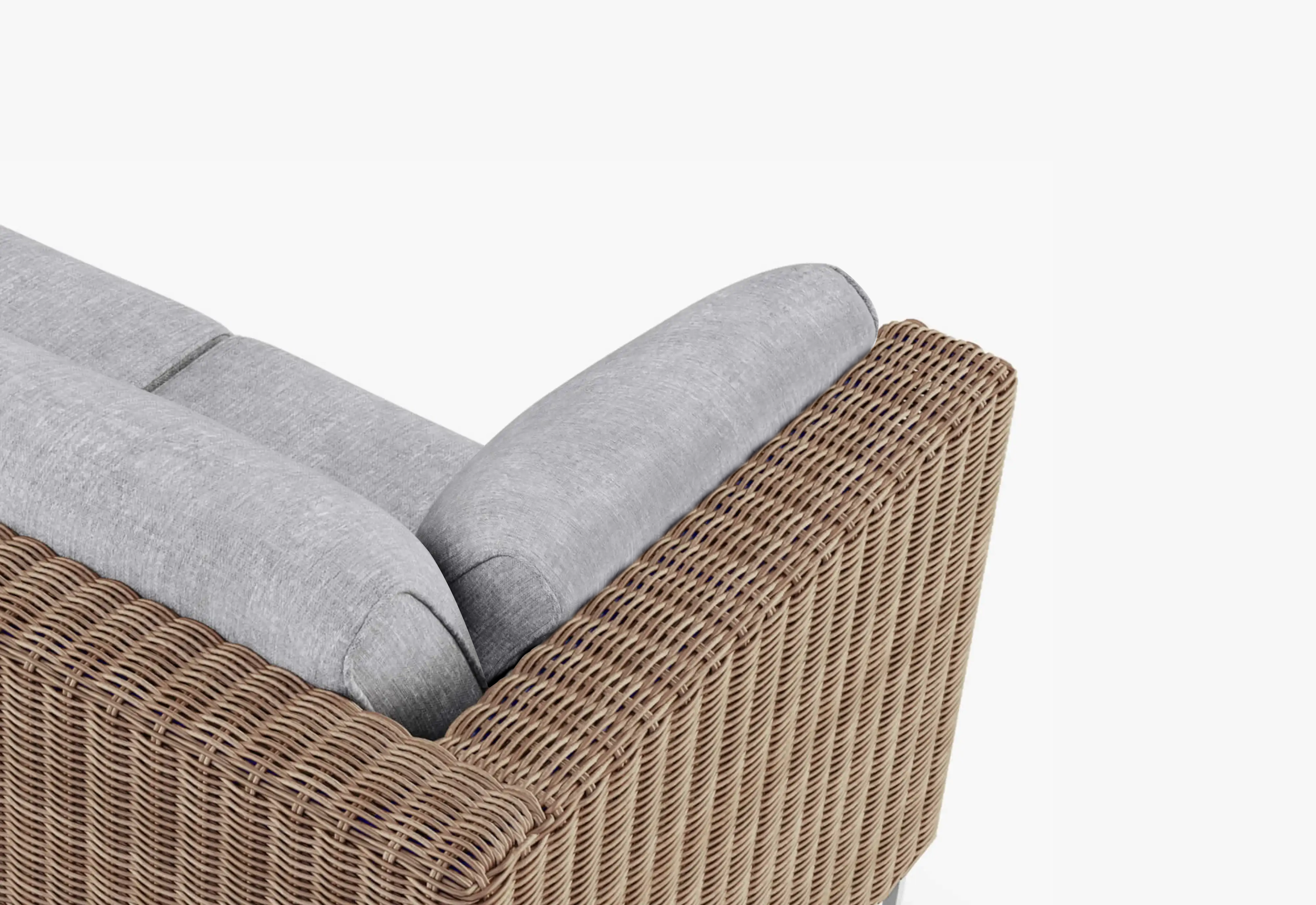
Wicker Sofa + Coffee Table Set
Brown wicker on aluminum. OuterShell® built in. Pairs with brick tones or replaces the masonry altogether.
Complete the Setup
Brick-Compatible Fire Pit Tables and Weatherproof Seating
Outer Fire Pit Table — Rectangular
OuterStone composite top. Propane or natural gas. Grill, fire, and table in one. The masonry-free alternative.
OuterStone top
Aluminum base

Wicker U Sectional — 6 Seat
Modular HDPE wicker on aluminum. Arrange to face the fire. OuterShell built in. Brown wicker pairs with brick tones.
OuterShell built-in
Brown wicker
Common questions
Brick Fire Pit Questions, Answered
Does a brick fire pit add home value?
A professionally built brick fire pit with a paver or gravel surround adds curb appeal and functional outdoor living space. Appraisers in most markets treat it as a landscape improvement rather than square footage. The return varies by region — fire pits in climates with a 9-to-12-month outdoor season (California, Texas, Florida, the Southeast) tend to return a higher percentage of the build cost than those in 4-to-6-month climates. A fire pit table offers the same lifestyle improvement without the permanence — and it moves with you when you sell.
How long does a brick fire pit last?
With firebrick on the inner ring, refractory cement mortar, and a compacted gravel base, a brick fire pit lasts 20 to 30 years before the mortar joints need repointing. The firebrick itself can last 50-plus years with proper drainage underneath. Fire pits built with standard clay brick and standard mortar — the shortcut version — typically show spalling and mortar cracks within 2 to 3 seasons. The materials you choose for the inner ring and the mortar determine the lifespan. The outer facing brick and the cap course can be replaced independently of the structural inner ring.
Can you put a brick fire pit on a wooden deck?
No — wood-burning fire pits, including brick, should never sit directly on a wooden deck. The radiant heat and potential ember scatter create a fire hazard. Gas fire pit tables with a protective mat and proper clearance can work on a deck. For a brick fire pit, the only safe surface is a non-combustible base: compacted gravel, concrete pavers, or a concrete pad with proper drainage underneath.
How far should seating be from a brick fire pit?
For a wood-burning brick fire pit: 6 to 7 feet minimum from the fire pit edge to the front of the seating. Wood fires produce embers that can travel 4 to 5 feet in light wind. For a propane fire pit table: 2 to 3 feet. The controlled flame produces no embers. The tighter radius around a gas fire pit table means the same patio footprint seats more people around the same flame.
What is the best brick for a fire pit?
Firebrick for the inner ring — rated to 2,000°F. Standard clay brick for the outer facing — it stays cool enough that spalling is not a concern. The two-brick system — firebrick inside, clay brick outside — is the industry standard for a reason. It balances safety, durability, and material cost. Using only clay brick throughout is the most common mistake in DIY fire pit builds. It fails within 2 to 3 seasons.
Skip the masonry. Get the flame tonight.
Every Outer piece includes OuterShell built-in cushion protection.