

Low-Maintenance Outdoor Dining
Why a Low-Maintenance Outdoor Dining Set Saves You Time
The right materials and built-in protection turn outdoor dining from a maintenance project into something you simply use.

The quick answer
What makes a dining set low maintenance.
It comes down to three decisions — material, protection, and climate fit. Get those right, and maintenance shrinks to minutes per week.
Material sets the baseline. Teak and aluminum demand the least. Wicker and wrought iron demand the most. The tabletop material dictates your weekly routine more than any other factor.
Built-in protection beats aftermarket covers. OuterShell® deploys in seconds and lives inside the cushion. Separate covers get left in the garage. The protection you actually use is the only protection that counts.
Climate decides the details. A dining set in coastal Florida needs a different care rhythm than one in Arizona. Match the materials to your weather and the routine writes itself.
The appeal of effortless care.
Outdoor evenings have a rhythm. Guests arrive. The table gets dressed. Candles flicker as conversations stretch into night. What interrupts that rhythm is furniture that demands attention — cushions that need hauling inside after a drizzle, frames that show rust by August, fabric that fades before the season ends.
A low maintenance outdoor dining set shifts the equation. The furniture handles the weather. You handle the hosting. That trade-off defines every material choice, every design decision, and every dollar spent on an outdoor dining setup.
Outer builds for this reality. FSC-certified teak tables keep their strength through seasons of sun and rain. Recyclable aluminum frames resist rust without coatings or sealants. OuterWeave® performance fabric cleans with mild soap and water. The engineering does the work so the owner doesn't have to.
Why materials matter outdoors.
Outdoor furniture faces more than sun. Wind-driven rain, pollen, humidity, salt air, and kids running in with popsicles all test its resilience. The material you choose determines how much of that testing lands on you. These three lead the most durable outdoor furniture material conversation. Choosing the right weather resistant material for outdoor furniture is what turns a dining set from a maintenance burden into something you simply use.

01 · Teak
Teak that lasts.
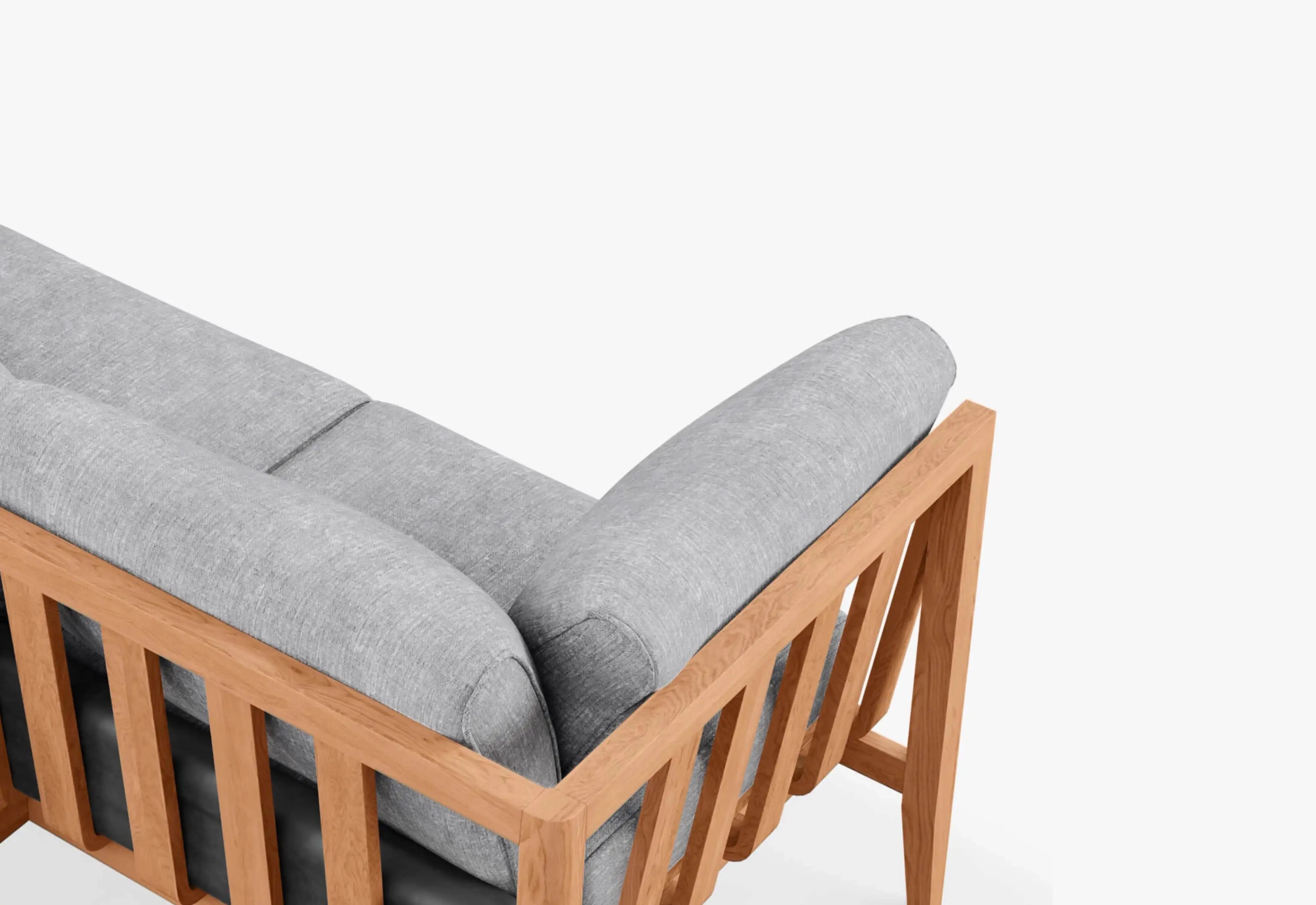
Teak is the benchmark. Its natural oils give it strength against moisture and temperature shifts without sealers or chemical treatments. Left alone, it weathers to a distinguished silver-gray. A seasonal cleaning keeps the original golden tone. Either path is valid. Neither requires painting, staining, or annual refinishing.
For weather resistant wood for outdoor furniture, nothing matches teak's record of surviving decades outdoors with minimal intervention. It's the material you buy once.

02 · Aluminum
Aluminum that resists rust.
Aluminum is lightweight, structurally strong, and rust-proof by nature. Powder-coated frames add UV-stable color that holds through years of direct exposure. A wipe-down with mild soap restores the finish with no special products required.
Aluminum is endlessly recyclable — a frame that lasts decades can become something else when its outdoor life is done. For coastal homes where salt air corrodes other metals, aluminum holds a clear advantage.

03 · Performance Fabric
Easy-care fabrics that stay fresh.
Cushions are where most outdoor dining setups fail. They trap water. They stain. They fade faster than the frame. OuterWeave® is solution-dyed acrylic engineered for color retention through long sun exposure. Machine-washable. Quick-drying. PFAS-free.
Spills blot out. Rain drains through. The fabric works with the weather rather than fighting it. This is the layer you touch at every meal — it should feel good and ask for nothing in return.
| Material | Durability | Care frequency | Best climates | Expected lifespan |
|---|---|---|---|---|
| Teak | Excellent — natural oils resist rot, insects, moisture | Seasonal clean; optional oiling for golden tone | All climates; thrives in coastal and humid regions | 25–50+ years |
| Aluminum | Excellent — rust-proof, UV-stable powder coat | Monthly wipe-down; rinse after salt exposure | All climates; ideal for coastal (no corrosion) | 20–30 years |
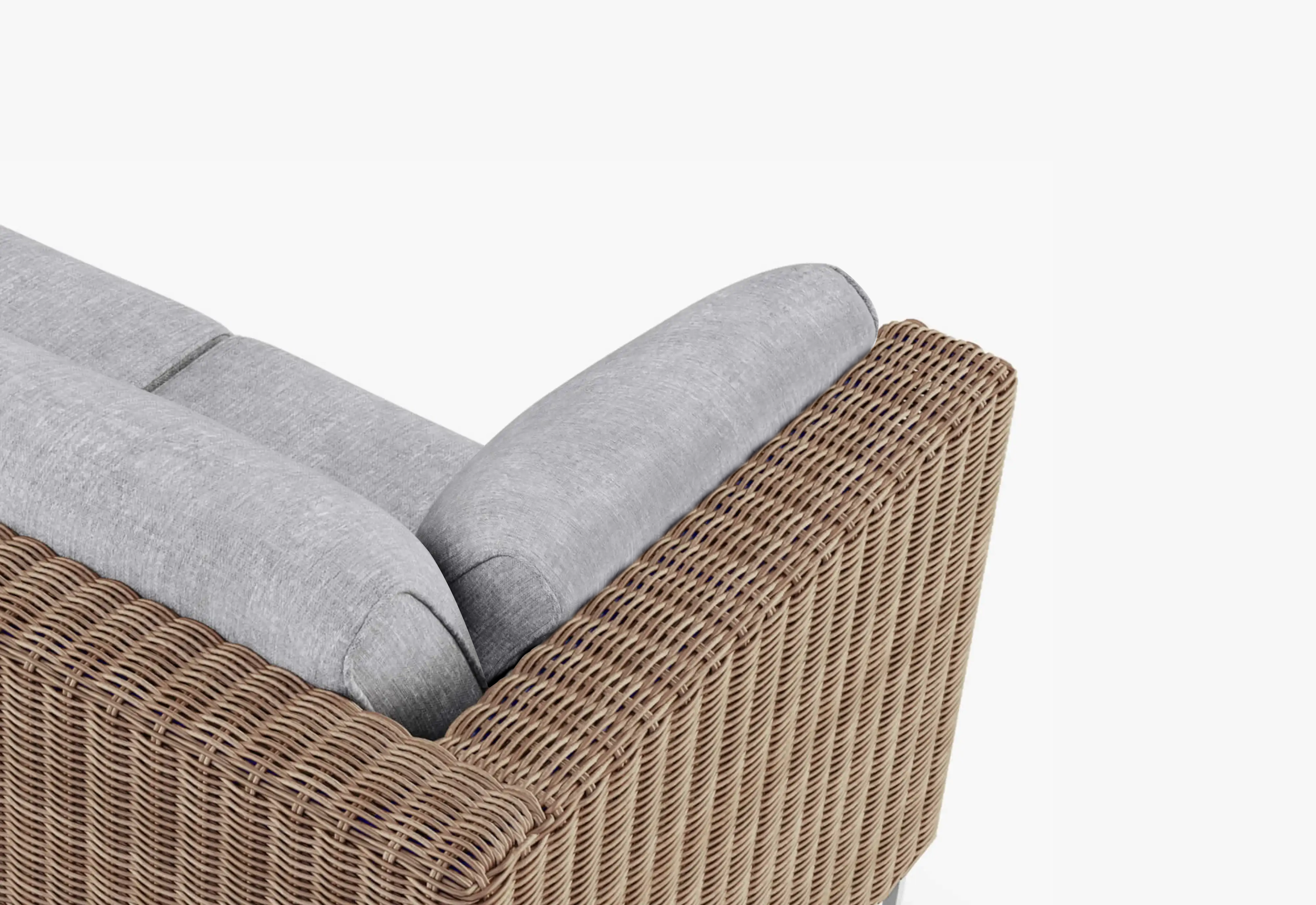
| All-Weather Wicker | Good — synthetic resin on aluminum frame | Weekly brush-out of debris; monthly deep clean | Dry to moderate; avoid constant salt spray | 10–15 years |
| Wrought Iron | Moderate — strong but rust-prone | Monthly rust inspection; annual repainting in coastal zones | Dry climates only; avoid humidity and salt | 15–25 years (with repainting) |
Key pointThe most durable outdoor dining sets pair a teak or powder-coated aluminum table with performance fabric seating. That combination handles UV, rain, humidity, and salt air without a separate cover routine. OuterShell® takes it one step further — the cover is built into the cushion. It stays with the furniture. No separate storage. No retrieval step. It's always where you need it.
How climate shapes your maintenance routine.
The same dining set behaves differently in Phoenix than it does in Miami. Maintenance is climate work. Match your materials to your weather and the routine becomes predictable. Ignore the climate and you're fighting it every season. Choosing a low maintenance outdoor furniture material is only half the equation — the other half is knowing what your local weather asks of it. The best weather resistant material for outdoor furniture depends on whether you face more UV, moisture, salt, or freeze-thaw cycles.
Sun and UV exposure.
Direct UV breaks down fabric polymers at the molecular level. Colors fade. Threads become brittle. In high-UV regions — Arizona, Nevada, inland California, Texas — solution-dyed acrylic fabrics (like OuterWeave®) resist this degradation far longer than dyed polyester. Teak and aluminum frames are largely unaffected by UV. The fabric is the variable. Choose UV-stabilized fabric and deploy covers during peak hours (10am–4pm) when the furniture sits empty.
Rain, humidity, and mold.
The Southeast, Gulf Coast, and Pacific Northwest share a threat: persistent moisture. When humidity stays above 65% RH, mold spores activate within 48 hours on fabric that traps moisture rather than releasing it. Quick-dry performance fabric matters here. So does drainage — standing water on a table surface or inside a cushion seam is the start of a problem. After heavy rain, open covers and let cushions air-dry for 4–6 hours before closing them again.
Salt air and coastal conditions.
Salt is abrasive. It grinds into fabric fibers with every breeze and accelerates corrosion on metal hardware. For durable outdoor furniture for coastal homes, aluminum frames hold a clear advantage — they don't corrode. Teak's natural oils resist salt penetration. The maintenance add: rinse cushions and frames with fresh water every 2–3 weeks. Wipe metal connection points monthly. Salt accumulates at joints and zippers first.
Seasonal transitions.
Spring pollen coats everything. Summer thunderstorms soak cushions between gatherings. Fall leaves trap moisture against fabric. Winter freeze-thaw cycles expand any water trapped inside foam by 9% — enough to rupture cell structure. Each season has a signature threat. The response is a handful of small habits, spread across the year.
| Climate type | Main threat | Recommended material | Key routine |
|---|---|---|---|
|
Dry heat / High UV AZ, NV, TX, inland CA |
Fabric fade, foam breakdown | Aluminum frame + UV-stabilized fabric | Deploy covers during peak UV. Rotate cushions monthly — the seat nearest afternoon sun ages fastest. |
|
Rain & high humidity Southeast, Gulf Coast, PNW |
Mold, mildew, foam saturation | Teak frame + quick-dry fabric | Air-dry cushions 4–6 hrs after heavy rain. Store vertically for airflow. Check under-seat compartments for trapped moisture. |
|
Salt air & coastal wind FL coast, CA coast, Northeast shore |
Salt abrasion, metal corrosion | Aluminum frame + teak tabletop | Fresh-water rinse every 2–3 weeks. Wipe frame joints and zippers monthly. Salt concentrates at connection points. |
|
Snow, ice & freeze-thaw Midwest, Northeast, Mountain West |
Freeze-thaw expansion, ice damage | Teak or aluminum frame + sealed storage | Fully dry cushions before first frost. Deploy OuterShell® + All-Weather Cover. Remove snow after each storm. |
Hosting without the hassle.
A summer dinner party has a sequence. Guests arrive at six. The table is dressed by six-fifteen. Candles are lit and wine is open by six-thirty. What kills the sequence is the twenty minutes before guests arrive — the part where you're hunting for dry cushions, wiping down pollen-covered chairs, and wondering why the table surface already looks weathered after one season.
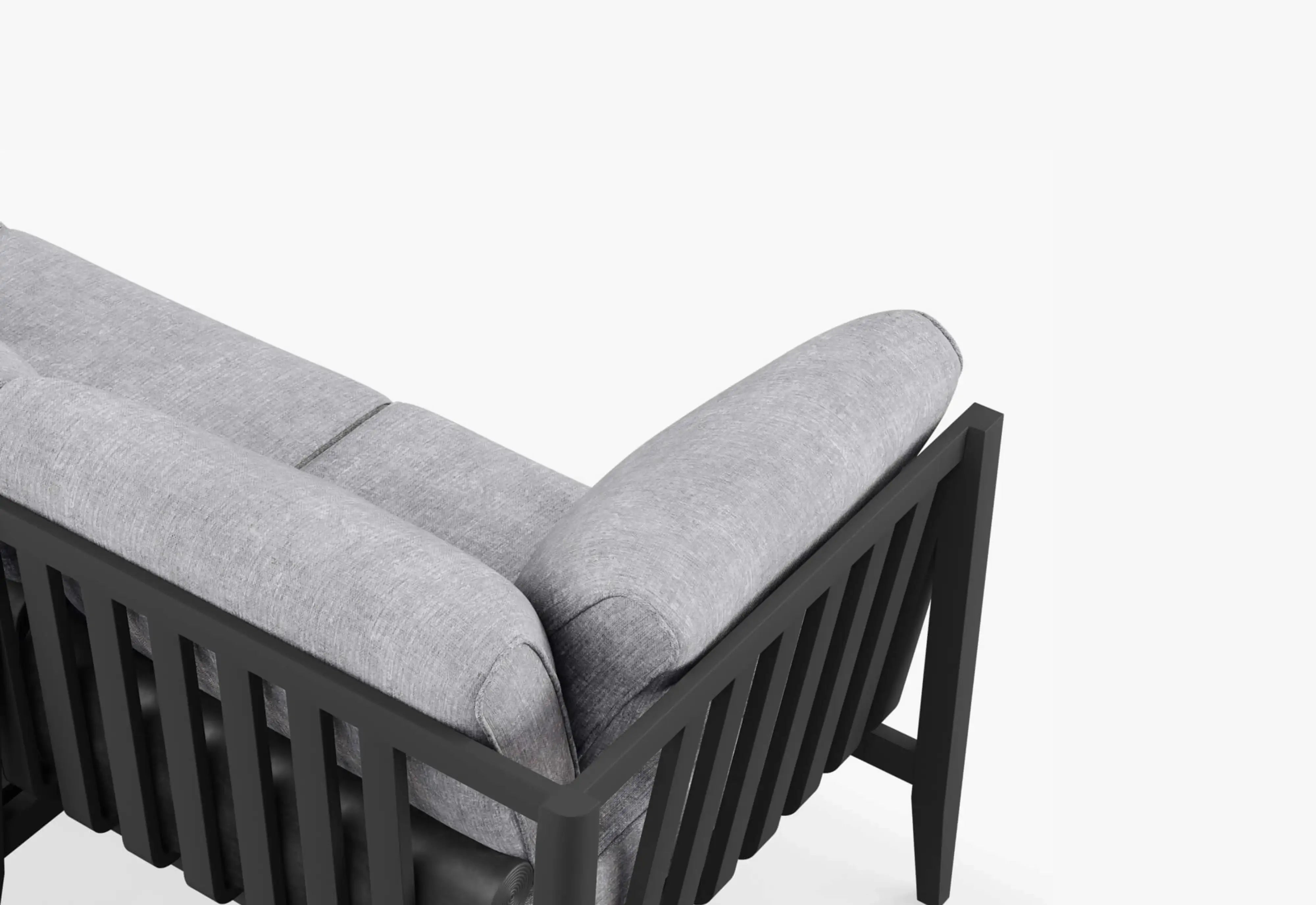
OuterShell® removes that pre-party scramble. It's a patented cover built directly into each seat cushion. Pull the integrated handle forward. Seat the aluminum rod into the front groove. Done. Fifteen seconds per seat. When guests arrive, reverse the motion and the cover stows invisibly behind the backrest. No storage bag. No straps. Nothing to lose.
Traditional aftermarket covers follow a different trajectory. They get used for the first month. Then they get left in the garage. Then the cushions start showing wear. The protection you use consistently beats the protection you own but never deploy. Built-in wins because it gets used — on behavior, and on engineering.
OuterShell® vs. aftermarket coversAftermarket covers add steps: retrieve, unfold, fit, strap, remove, fold, store. Most owners abandon them by season two. OuterShell® lives in the cushion. The motion becomes automatic — like locking the front door. Compliance approaches 100% because friction approaches zero.
The hosting rhythm stays intact. You close the covers after brunch. You open them before dinner. The table itself — teak or powder-coated aluminum — needs a quick wipe if it rained. That's the extent of the prep. The energy goes to the menu and the guests. Explore dining sets with built-in OuterShell®.
Care that fits into everyday life.
Care should feel like a habit rather than a project. The routine that sticks is measured in minutes instead of hours. Here is what that looks like for a low-maintenance outdoor dining set — organized by frequency so you can find your rhythm and move on.
Daily and weekly quick care.
Brush off loose debris — pollen, leaves, dust — with a dry microfiber cloth or soft brush. Spot-clean spills with mild soap and cold water. Blot, never scrub. If cushions got rained on, stand them on edge so both sides get airflow. Close OuterShell® after every use, even if you're just stepping inside for an hour. UV doesn't clock out.
Monthly refresh.
Wipe down aluminum frames with mild soap and water. For teak, a soft brush and soapy water remove surface grime without stripping the natural oils. OuterWeave® fabric covers are removable and machine-washable on cold/gentle — air-dry only. Rinse coastal furniture with fresh water. Inspect zippers, seams, and frame joints for salt buildup or debris.
Seasonal prep and storage.
Spring: Remove winter covers. Inspect every seam and zipper. Clean cushions before first use. Deploy OuterShell® at night — spring dew is heavier than you expect.
Summer: Keep OuterShell® closed during peak UV (10am–4pm). If a thunderstorm soaks the cushions, let them air-dry for an hour before closing covers — hot sun after rain creates steam inside sealed fabric.
Fall: Clean and fully dry every cushion before temperatures drop below 40°F. Deploy OuterShell®. Add an All-Weather Cover for the season. Store throw pillows indoors.
Winter: If furniture stays outdoors: OuterShell® deployed, All-Weather Cover secured, snow brushed off after each accumulation. If stored: cushions go indoors, standing on edge in a dry, ventilated space. Never stack cushions flat — weight compresses foam permanently.
| Frequency | Task | Teak | Aluminum | OuterWeave® Fabric |
|---|---|---|---|---|
| After each use | Deploy OuterShell®; brush off debris | ✓ | ✓ | ✓ |
| Weekly | Spot-clean spills; check for standing water | ✓ | ✓ | ✓ |
| Monthly | Mild soap wipe-down; rinse coastal furniture | ✓ | ✓ | ✓ (machine-wash cold) |
| Seasonally | Deep clean; inspect seams & hardware | Optional: teak cleaner for golden tone | Check powder coat integrity | Remove & launder covers |
| Winter | Dry fully; deploy OuterShell® + All-Weather Cover | ✓ | ✓ | Store indoors if below 40°F sustained |
Mold or mildew already present?Mix one part white vinegar to four parts water. Spray the affected area lightly. Let sit 10 minutes. Blot with a clean cloth. Rinse. Stand vertically in direct sun for 2 hours. Vinegar kills surface mold without bleaching the fabric. For anything deeper, consult the Outer Care and Maintenance Guide.
The real cost of low-maintenance dining.
Price tags tell half the story. The full picture includes what happens over a decade: replacements, refinishing, covers, cleaning products, and the hours you spend on all of it. Low maintenance outdoor furniture costs more upfront. It costs dramatically less over time — in dollars spent, and in hours reclaimed.
Consider two paths. Path A: a budget dining set of mixed materials — wrought iron frame, polyester cushions, no built-in protection. Path B: a dining set built from the most durable outdoor furniture material options — teak, powder-coated aluminum, and solution-dyed acrylic — with OuterShell® built in. The initial price gap is real. So is what happens by year five.
The single most expensive decision in outdoor dining furniture is buying a set that needs constant intervention to survive the elements. The second is buying protection you won't use. OuterShell® eliminates both. Browse teak dining sets or explore aluminum dining options.
Low-Maintenance Dining Sets
Dining furniture that handles the weather. So you don't have to.

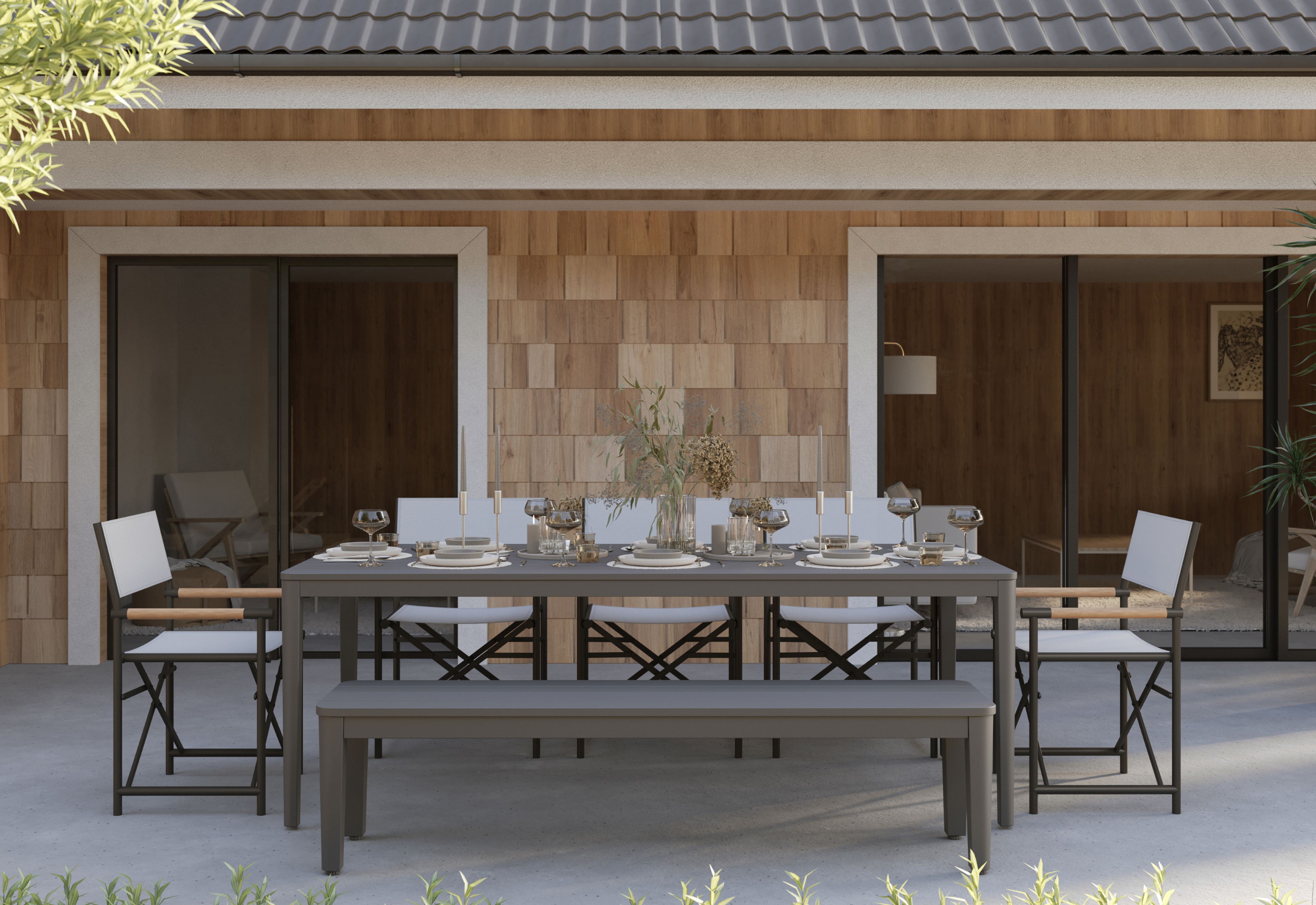
Teak + Aluminum Expandable Dining Table
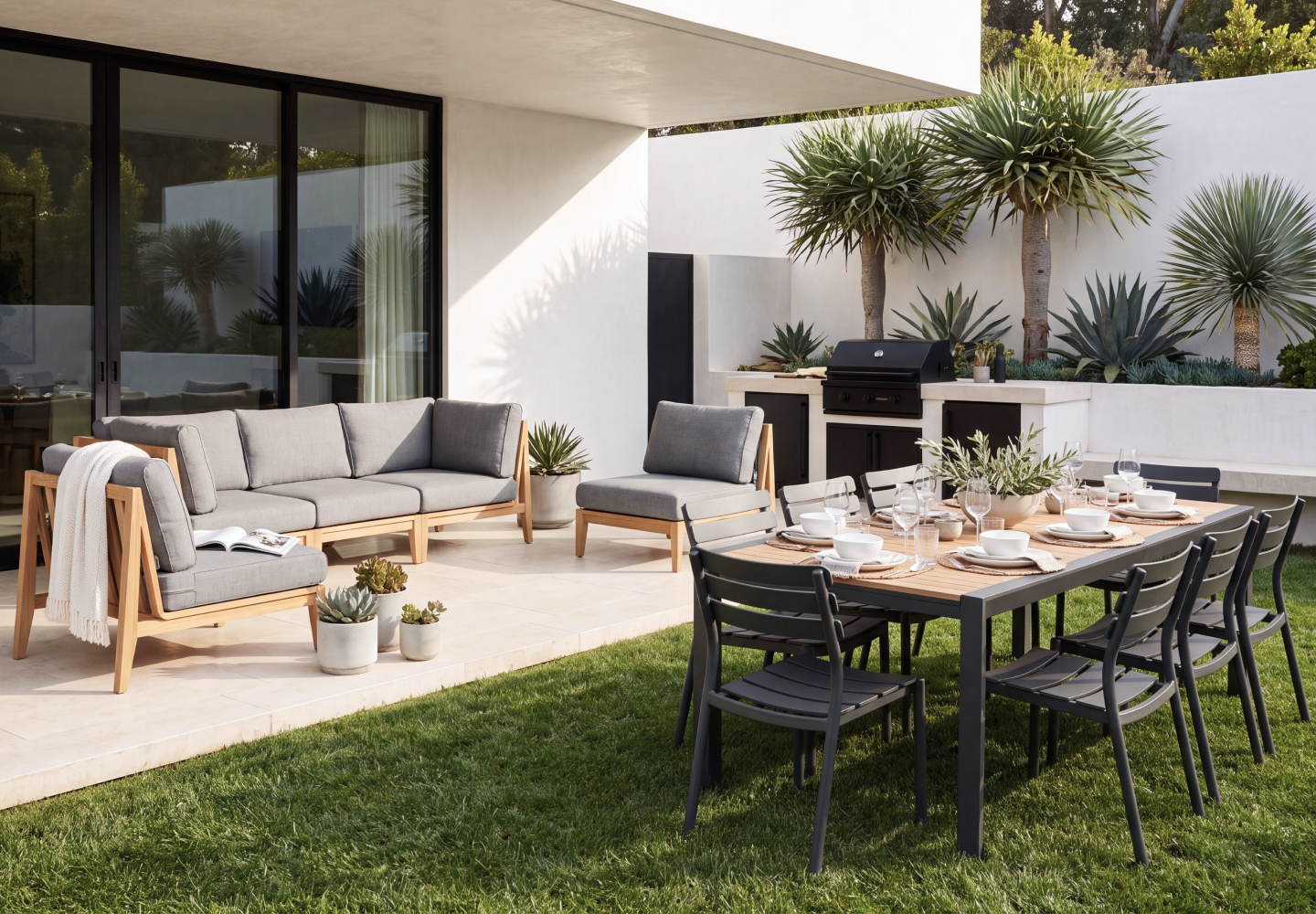
FSC-certified teak tabletop on a powder-coated aluminum frame. Expands to seat 8–12. Natural teak oils resist moisture without sealers. The aluminum base is rust-proof and recyclable.
Teak + aluminum
Expandable

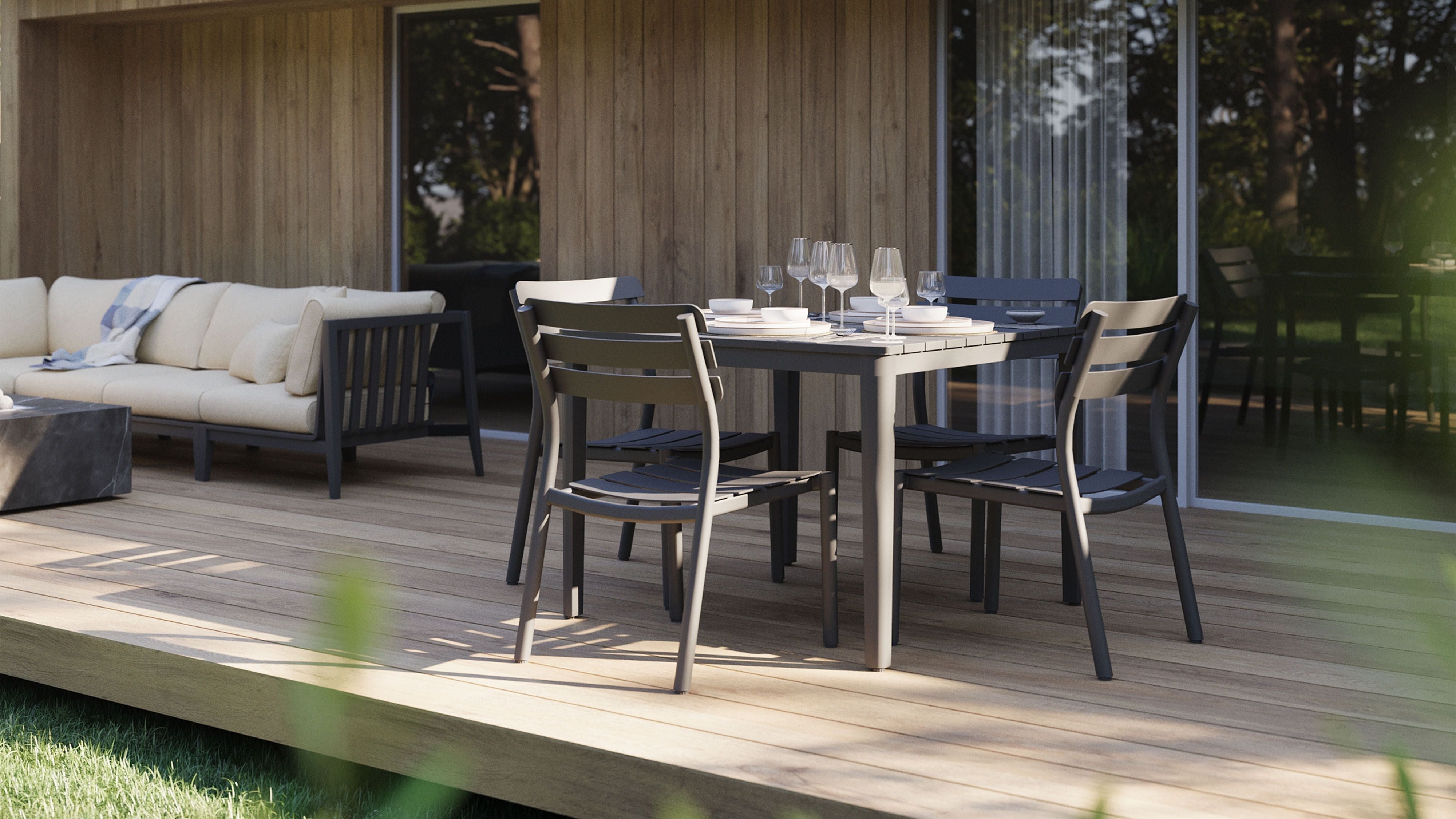
Aluminum Outdoor Dining Table
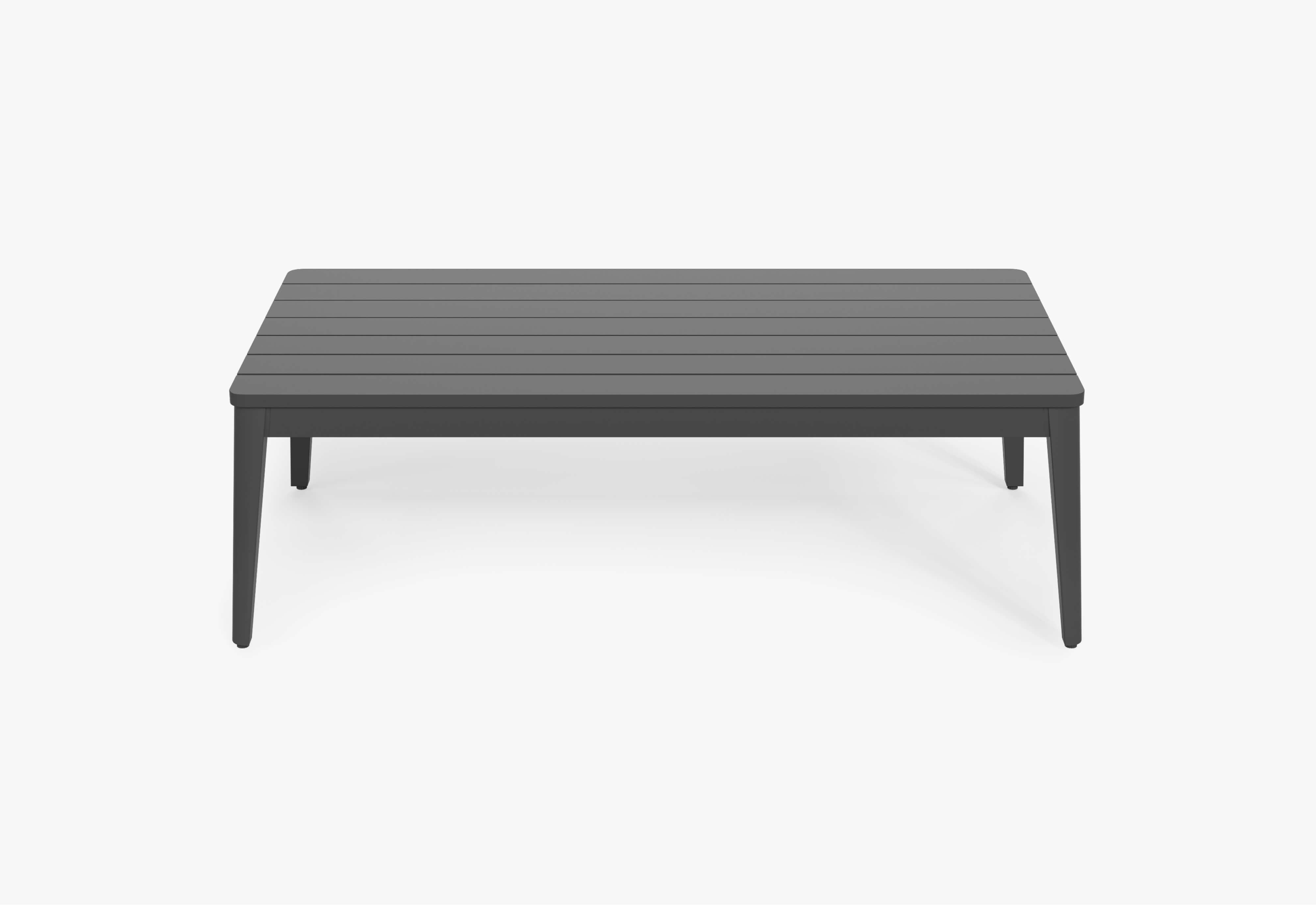
Powder-coated aluminum frame with a slatted tabletop. Rust-proof. UV-stable finish. Light enough to reposition, strong enough to host a full dinner party for years without maintenance.
Powder-coated aluminum
Rust-proof
Common questions
Low-maintenance outdoor dining FAQ
What is the most low-maintenance material for an outdoor dining set?
Teak and powder-coated aluminum, paired with solution-dyed acrylic fabric. Teak's natural oils resist rot, insects, and moisture without sealers or chemical treatments. Aluminum is rust-proof by nature — a powder-coated finish adds UV-stable color that lasts decades. Together, they represent the most durable outdoor furniture material combination available. Solution-dyed acrylic (OuterWeave®) resists fading, cleans with mild soap, and dries quickly. This trio reduces maintenance to a monthly wipe-down and seasonal fabric refresh.
How does OuterShell® protect outdoor dining furniture?
OuterShell® is a patented cover built directly into each seat cushion. It deploys in 15 seconds — pull the integrated handle forward, seat the aluminum rod into the front groove. The cover stays on between uses, blocking UV, rain, debris, and salt spray. When you're ready to sit, it stows invisibly behind the backrest. Because it's built in, it gets used. Because it gets used, the cushions stay protected. The fabric is breathable OuterWeave®, so moisture escapes even while the cover is closed.
How often should I clean my outdoor dining set?
After each use: brush off debris and close OuterShell®. Weekly: spot-clean spills with mild soap and water. Monthly: wipe down frames and rinse coastal furniture with fresh water. OuterWeave® fabric covers are removable and machine-washable on cold/gentle — air-dry only. Seasonally: deep-clean cushions, inspect seams and hardware, and prepare for the coming weather (spring pollen, summer storms, fall leaves, winter freeze). A full cleaning session takes under 30 minutes for a standard 6–8 seat dining set.
Can teak outdoor dining furniture handle coastal salt air?
Yes. Teak is one of the few woods that thrives in coastal conditions, which is why it's a cornerstone of durable outdoor furniture for coastal homes. Its natural oils resist salt penetration and moisture damage. The maintenance add: rinse the teak surface and aluminum frame with fresh water every 2–3 weeks to remove salt accumulation. Wipe metal connection points and zippers monthly — salt concentrates at joints first. With this simple rinse routine, a teak-and-aluminum dining set performs exceptionally well within a mile of the ocean.
Is a low-maintenance outdoor dining set worth the higher upfront cost?
Over a 10-year period, low maintenance outdoor furniture — specifically a teak or aluminum dining set — costs roughly $1,900 less than a budget alternative. That factors in cushion replacements (typically needed by year 3 for budget sets), frame refinishing, aftermarket covers, cleaning products, and the eventual full-set replacement. The time savings tell an even starker story: low-maintenance owners spend roughly 15–20 hours per year on dining set upkeep. Budget set owners spend 60–80 hours. At any hourly rate, the gap pays for itself within two seasons.

Less maintenance. More meals outside.
A low-maintenance dining set gives you back the hours you'd spend scrubbing, covering, and replacing. That time belongs to the table — and the people around it.