

Engineered for Every Season: Salt-Air Care Tips for the Modern Patio

Salt-air environments place consistent, year-round pressure on outdoor furniture. Unlike seasonal rain or sun, airborne salt does not arrive once and disappear—it settles continuously, interacting with moisture, temperature shifts, and daily use.
Design engineered for every season doesn’t attempt to eliminate exposure. It manages it through material choice, surface systems, and care strategies that work together across changing conditions.
Why Salt Air Is a Year-Round Engineering Challenge
Salt particles travel easily and adhere to surfaces.
Once settled, salt attracts moisture, even in dry conditions. This means furniture can remain damp at a microscopic level long after rain or splashing ends. Over time, this cycle accelerates surface wear and joint stress.
Engineering for salt air focuses on interruption, not reaction.
Aluminum Frames as a Stable Foundation
Structural stability is the first line of defense.
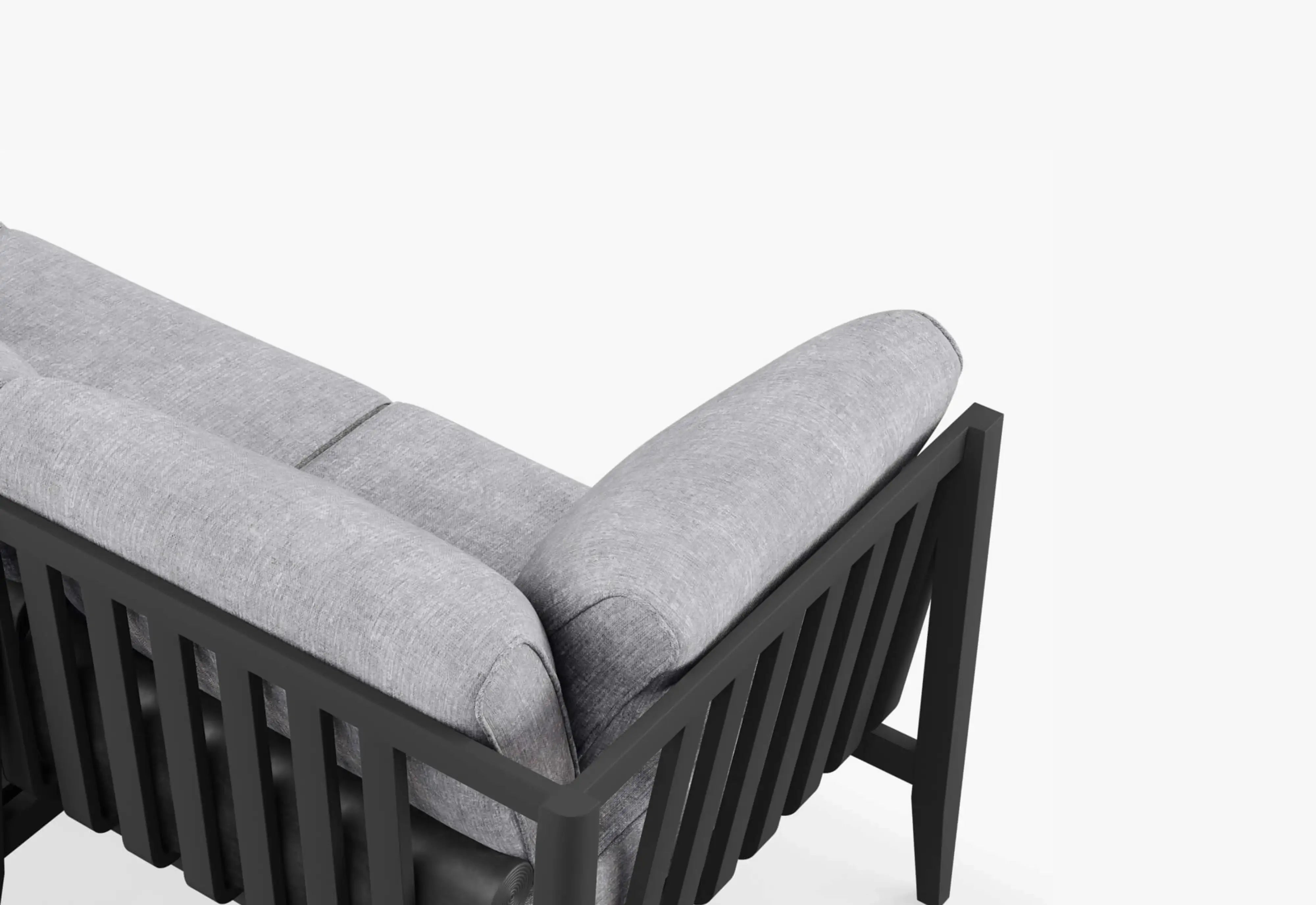
Aluminum resists warping and corrosion far better than many outdoor materials, making it well suited for coastal conditions. Frames retain alignment through temperature swings and persistent exposure.
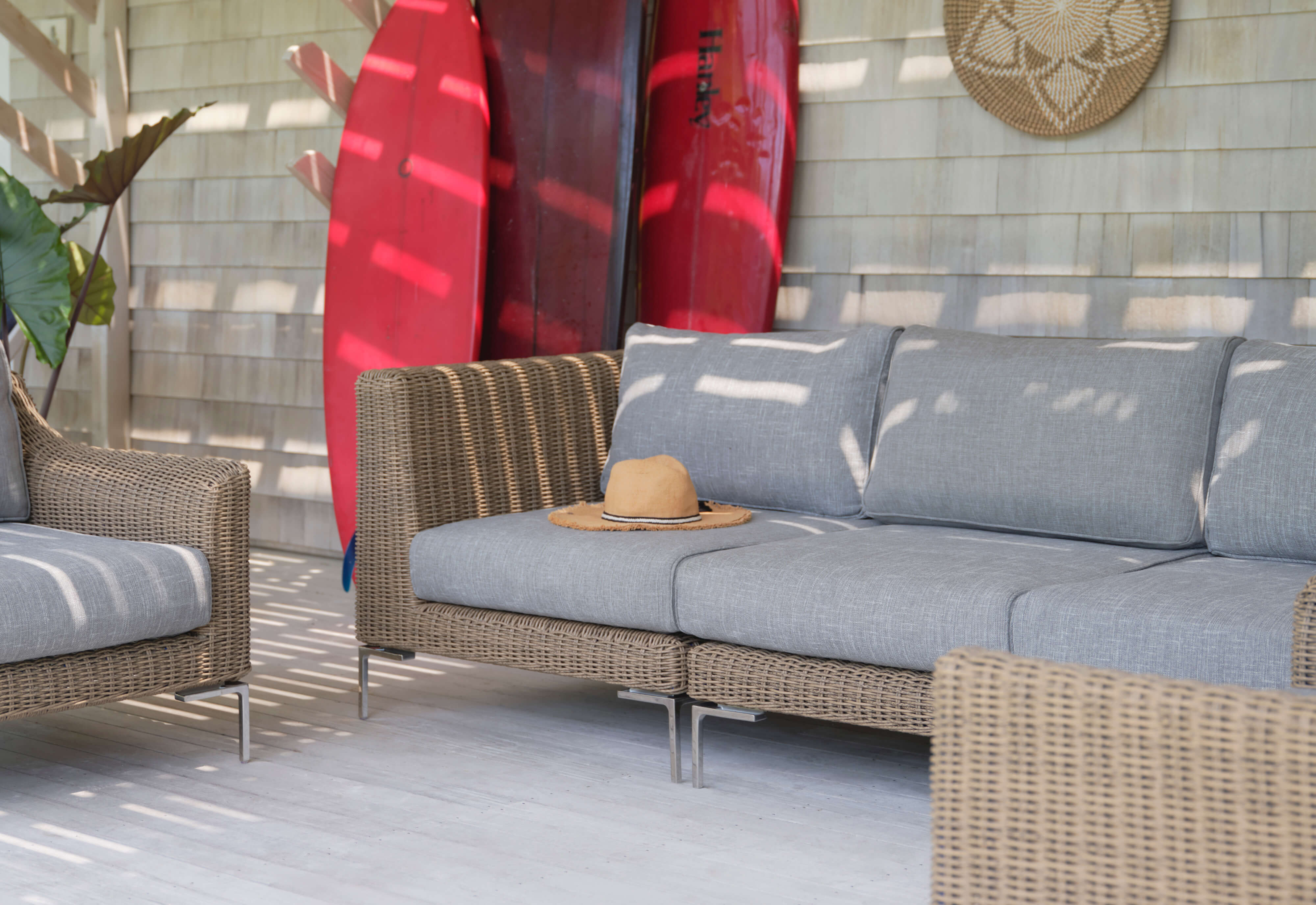
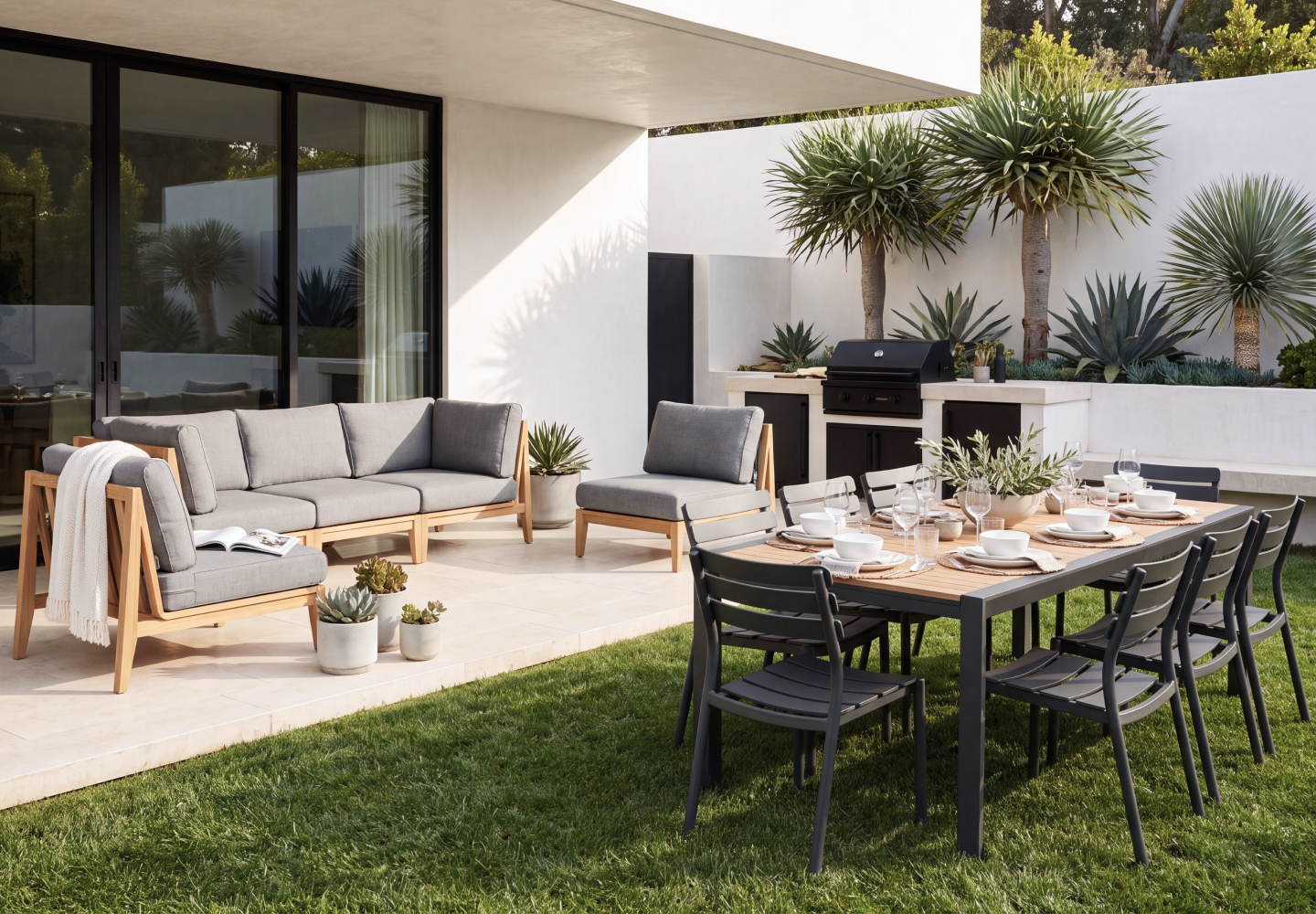
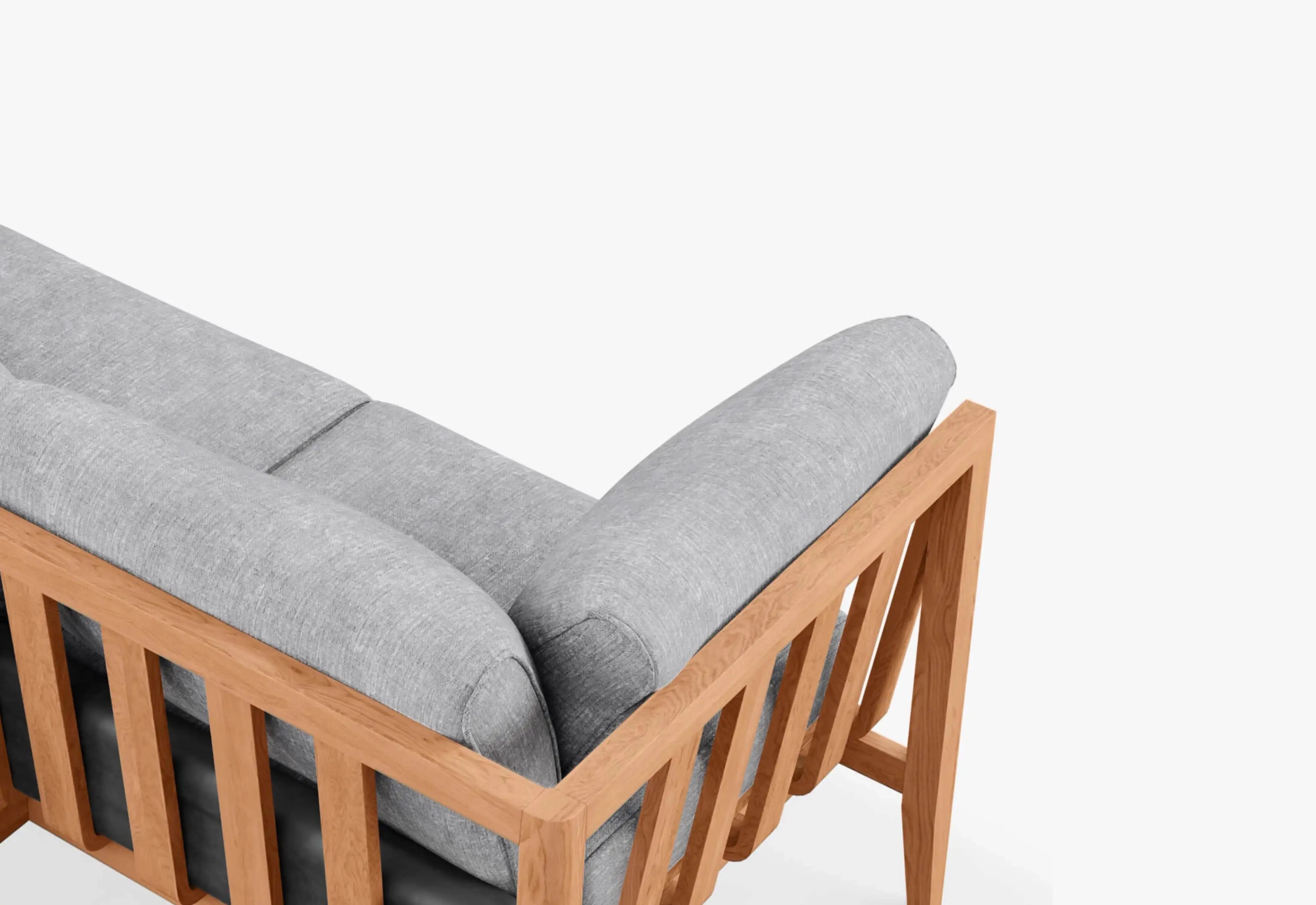
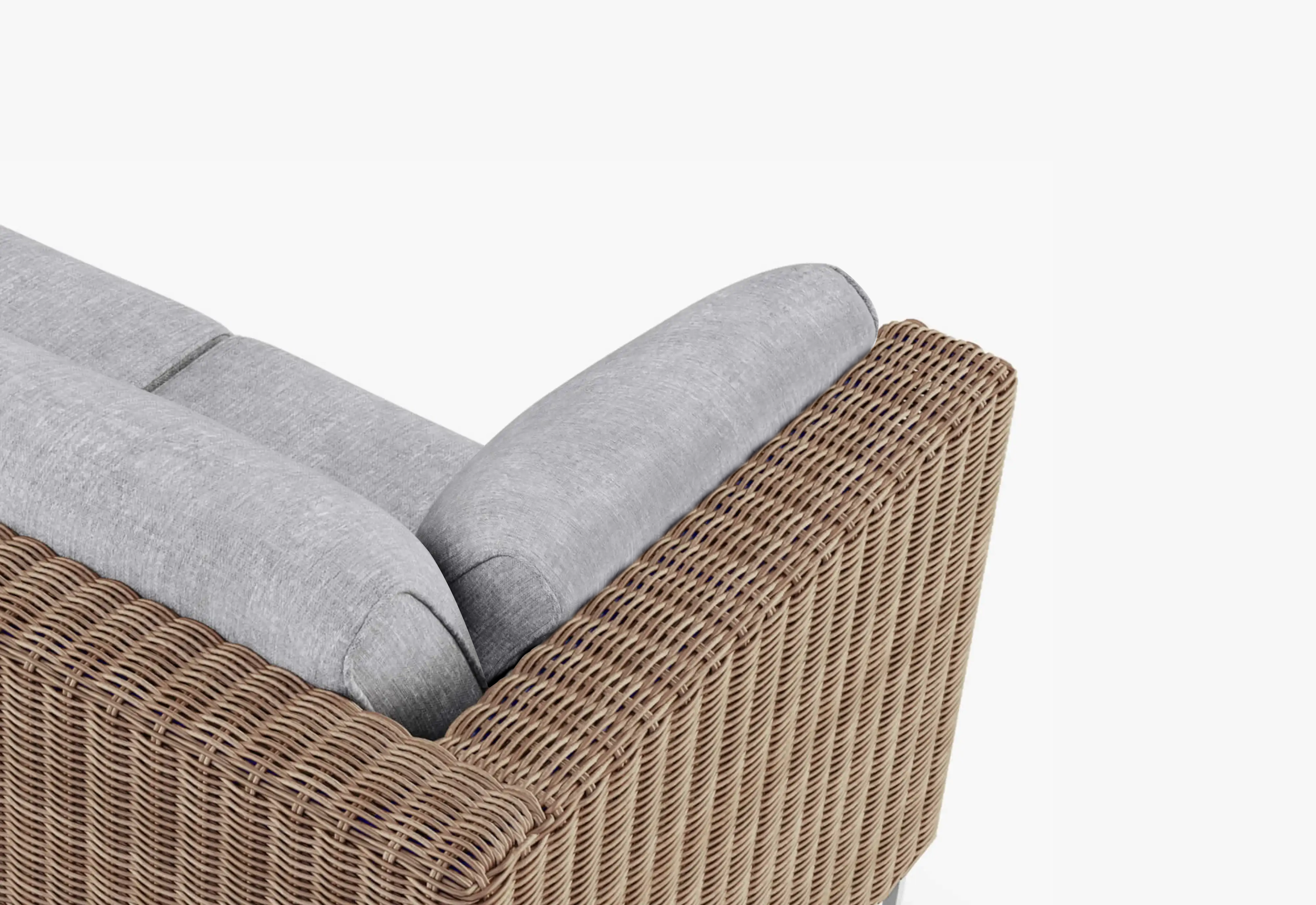
This stability supports consistent performance across seating and lounging systems, including pieces found in the Teak Outdoor Sofa and Wicker Outdoor Sofa collections.
Powder-Coated Surfaces as Seasonal Protection
Engineering continues at the surface.
Powder-coated aluminum finishes form a uniform barrier that slows salt penetration and resists corrosion. This coating performs consistently through heat, humidity, and cooler coastal months.
Surface systems that remain intact reduce the need for seasonal refinishing.
Movement and Mechanisms Need Ongoing Clearance
Salt accumulation is most problematic at contact points.
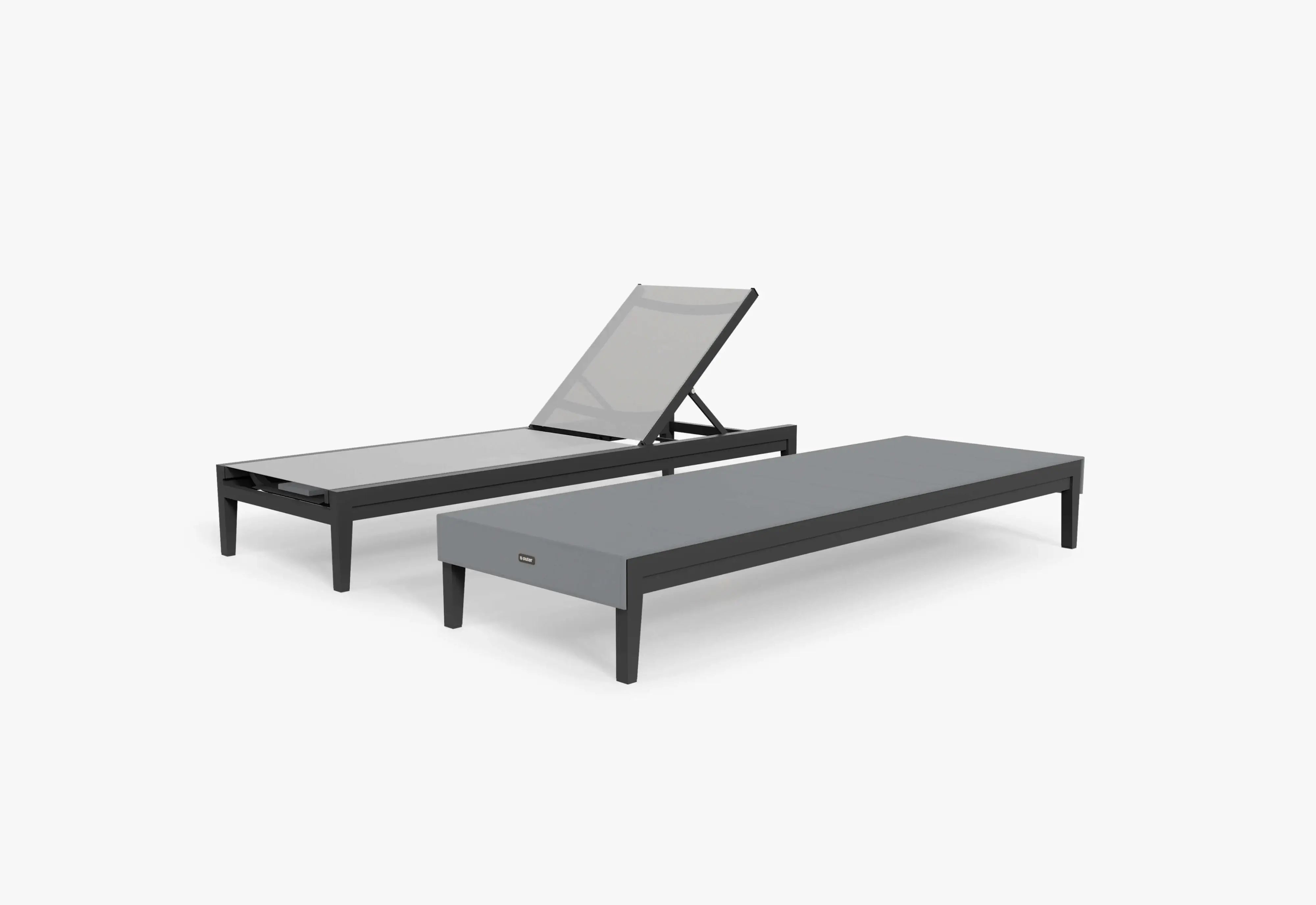
Lounges and adjustable furniture experience more friction where parts meet. Designs such as the Aluminum Outdoor Infinity Chaise Lounge benefit from periodic fresh-water rinsing to keep reclining mechanisms clear.
Preventing buildup maintains smooth operation across seasons.
Rinsing as Preventive Maintenance
In salt-air regions, rinsing is a maintenance strategy—not a response.
A light rinse with fresh water removes salt residue before it can attract moisture and initiate corrosion. This practice is especially effective after high winds or heavy coastal fog.
Regular rinsing supports long-term structural and surface performance.
Why Covers Must Be Breathable
Covering furniture incorrectly can worsen salt exposure.
Non-breathable covers trap moisture, creating ideal conditions for corrosion. Breathable systems like OuterShell® and options within the Covers collection allow moisture to escape while limiting direct salt deposition.
Engineering for every season means managing airflow as well as protection.
Seasonal Transitions Require Consistent Care
Salt does not follow a calendar.
Even in cooler months, airborne salt continues to settle. Maintaining light, consistent care through all seasons prevents concentrated damage that often appears after long periods of neglect.
Consistency outperforms intensity.
Dining and Seating Systems Benefit From Unified Materials
Mixed-material systems can introduce weak points.
Dining environments that rely on aluminum frames—such as those within Dining Tables & Sets—maintain performance more evenly in salt-air conditions, as materials expand, contract, and age at similar rates.
Unified systems reduce stress over time.
Engineering That Anticipates Exposure
Outdoor furniture designed for coastal use assumes exposure will occur.
Rather than relying on heavy maintenance, engineered systems combine corrosion-resistant materials, protective finishes, and practical care routines to manage salt air across seasons.
This approach supports reliable performance year after year.
Designed to Perform Beyond a Single Season
Seasonal durability is not enough.
Furniture engineered for every season remains functional and composed through continuous exposure, shifting temperatures, and daily use. Salt-air care becomes part of the system, not an afterthought.
When engineering anticipates the environment, outdoor spaces remain usable—no matter the season.