

The Science of Staying Beautiful Outside: Teak Sectional Corner Support Details for the Modern Patio

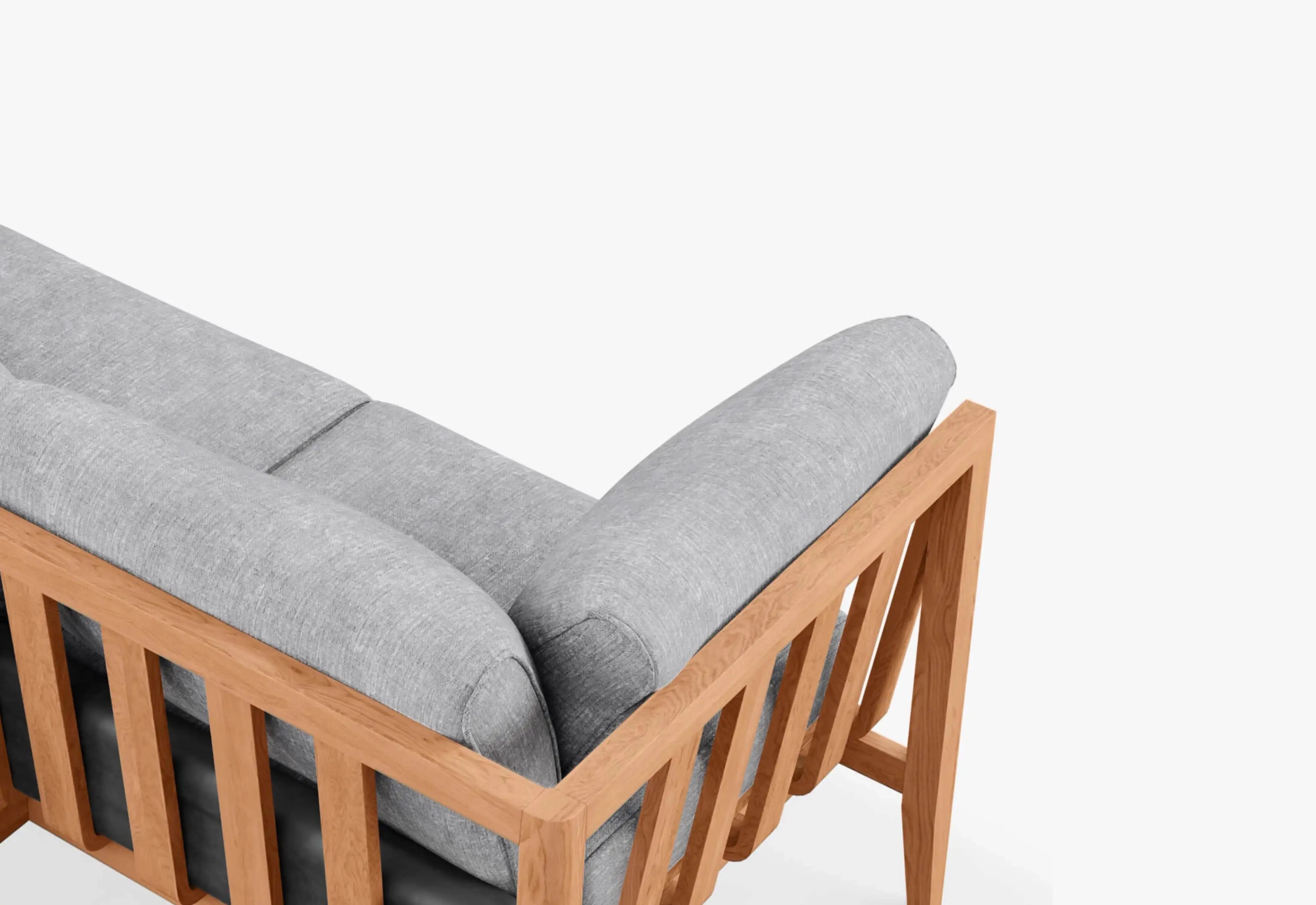
Outdoor beauty is not accidental. It is the result of structural choices that allow materials to maintain alignment, proportion, and balance under environmental stress. In teak sectionals, the corner is where aesthetics and physics intersect.
Understanding how corner support works explains why some outdoor seating remains visually composed for years—while others slowly lose their clarity.
Why Corners Are Structurally Critical
Force concentrates at transitions.
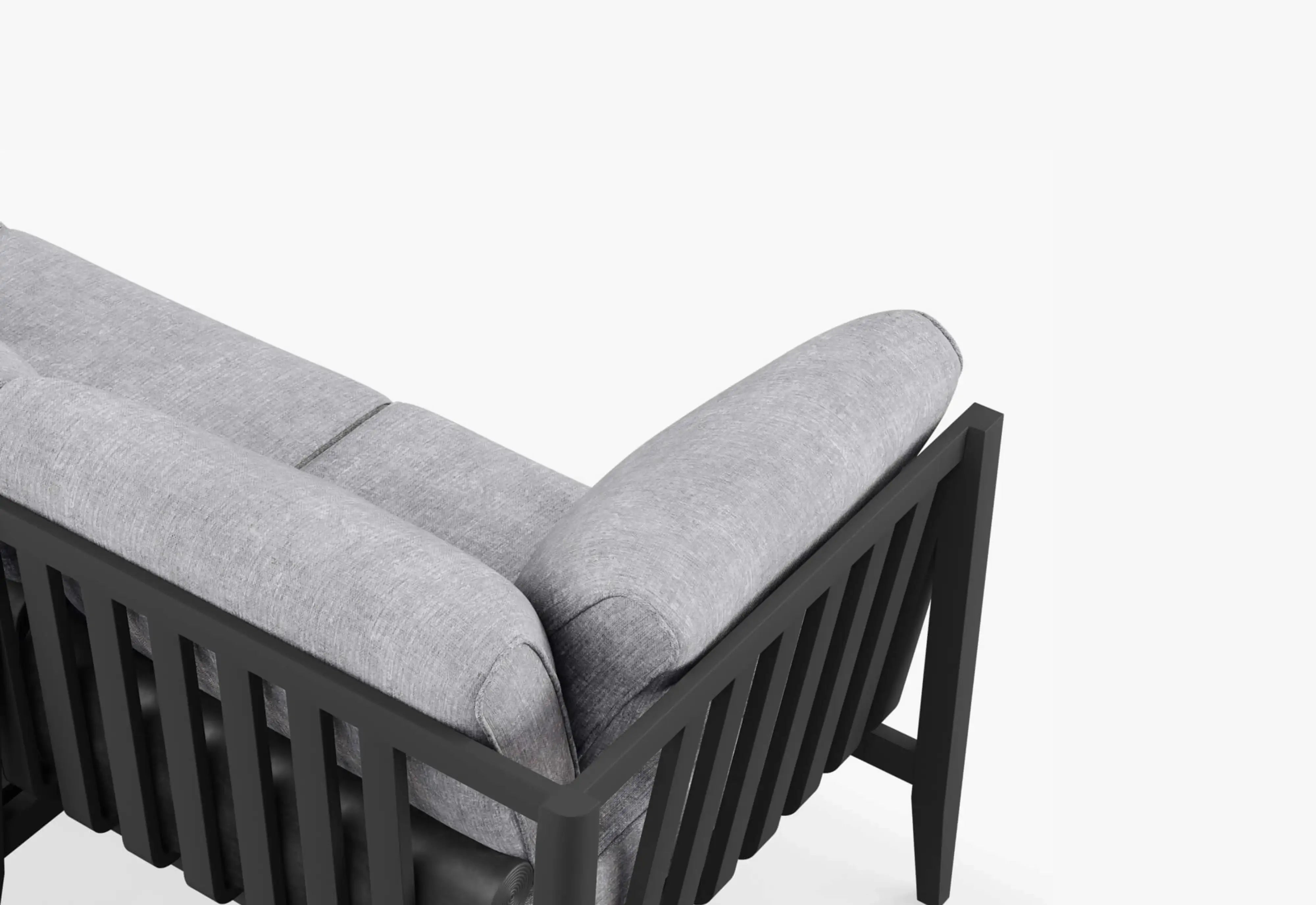
In a sectional layout, straight modules distribute load in predictable directions. Corners, however, absorb force from multiple angles—sitting, leaning, shifting, and environmental expansion.
When corner support stabilizes those forces, the sectional retains its original geometry.
Load Distribution Preserves Visual Alignment
Beauty depends on alignment.
If a corner compresses unevenly or shifts under repeated use, the eye begins to register gaps, tilts, or inconsistent spacing. Even minor deviations disrupt the perceived harmony of the layout.
Strong corner support keeps lines continuous and balanced.
Teak’s Material Properties Matter at the Joint
Durability begins at the cellular level.
Teak’s dense grain structure and natural oils help it resist moisture absorption and compression at stress points. At corners, this stability prevents gradual distortion that would otherwise alter the seating profile.
Material science protects visual order.
Environmental Cycling and Structural Response
Outdoor materials expand and contract.
Seasonal temperature shifts and humidity changes cause subtle dimensional movement. Properly supported corners manage these micro-adjustments without compromising alignment.
Controlled movement sustains appearance.
System-Level Consistency Reduces Weak Points
Sectionals behave as connected systems.
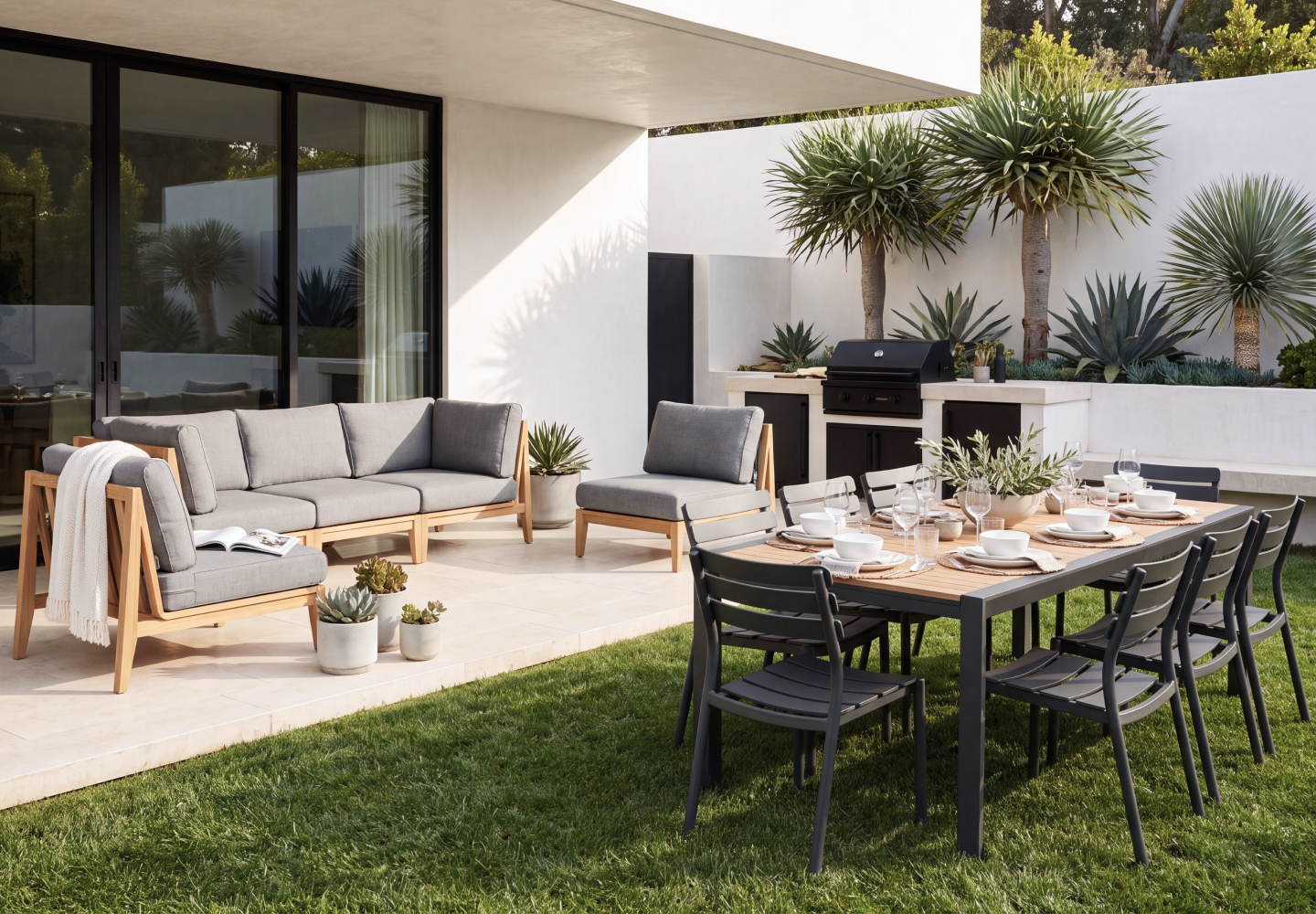
Using coordinated components from the Teak Outdoor Sofa collection ensures uniform joint behavior and material response across every corner connection.
Consistency strengthens structural harmony.
Cushion Support Influences Frame Integrity
Soft elements affect hard structure.
Supportive systems like OuterCloud® distribute occupant weight evenly across the frame, reducing concentrated stress at corner junctions.
Balanced pressure maintains alignment.
Surface Flexibility Absorbs Micro-Stress
Rigid surfaces transfer force.
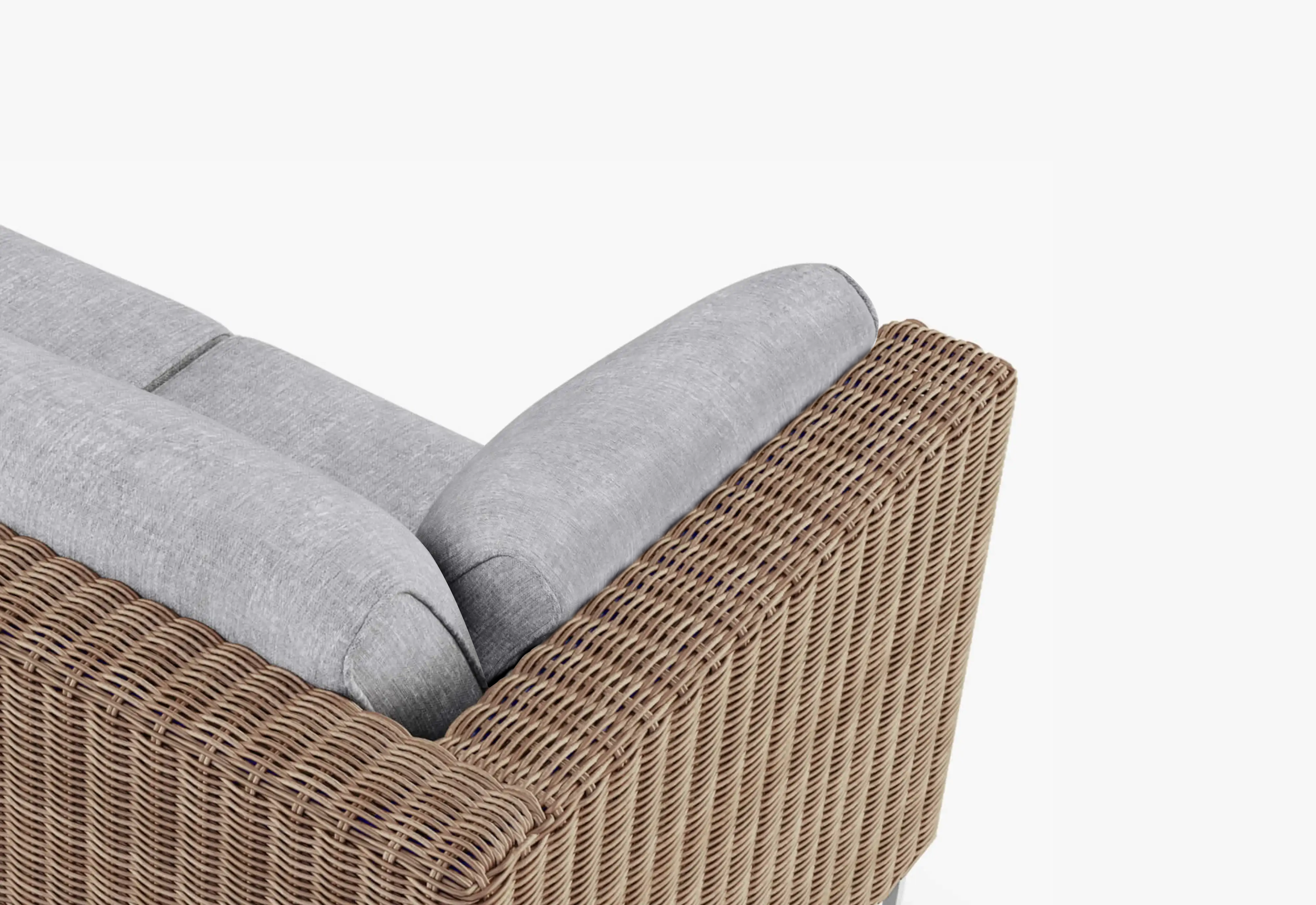
Textural systems such as OuterWeave® allow subtle movement at the surface layer, dissipating energy before it reaches structural joints.
Flexibility supports structural longevity.
Moisture Management Preserves Joint Stability
Moisture is the invisible variable.
Breathable protection systems like OuterShell® and options from the Covers collection reduce prolonged moisture exposure at corner intersections.
Stable moisture levels protect alignment over time.
Why Micro-Movement Alters Macro-Appearance
Small shifts accumulate.
Over months and years, minor structural movement can alter the spacing between modules. What begins as imperceptible eventually changes how the sectional reads as a whole.
Preventing micro-shifts preserves macro-beauty.
The Science Behind Staying Beautiful
Beauty outdoors is structural before it is visual.
When teak sectional corner support manages load, movement, and environmental change effectively, the seating remains composed without constant correction.
Science sustains the appearance of ease.