

Design That Endures: Low-Smoke Fire Pit Seating Clearances for the Modern Patio

Some outdoor layouts feel right only in the moment. Others continue to work—season after season, year after year—without needing constant adjustment. The difference often comes down to spacing. Around a low-smoke fire pit, seating clearances are not just a safety consideration; they are a design decision that shapes how the space ages, adapts, and supports everyday life outside.
A layout that endures balances proportion, movement, and comfort. It leaves room for people to settle in, stand up, circulate, and layer in blankets or extra seating without friction. When clearances are thoughtfully planned, the fire pit becomes a lasting anchor rather than a constraint.
Clearance as a Design Principle, Not a Rulebook
Fire pit spacing is often discussed in strict numbers, but enduring design looks beyond minimums. The goal is not just to meet requirements, but to create a zone that feels composed even as use patterns change.
Design for how people actually move
Guests lean forward to warm their hands, shift chairs to talk, or step back to let someone pass. A layout that anticipates these motions feels natural instead of tight.
Leave space for the unexpected
Kids sitting on the ground, an extra chair pulled in, a blanket draped over an arm—these moments require breathing room. Clearances that feel generous at the start tend to hold up better over time.
Establish a Calm Seating Radius
An enduring fire pit layout begins with a seating radius that feels relaxed rather than forced.
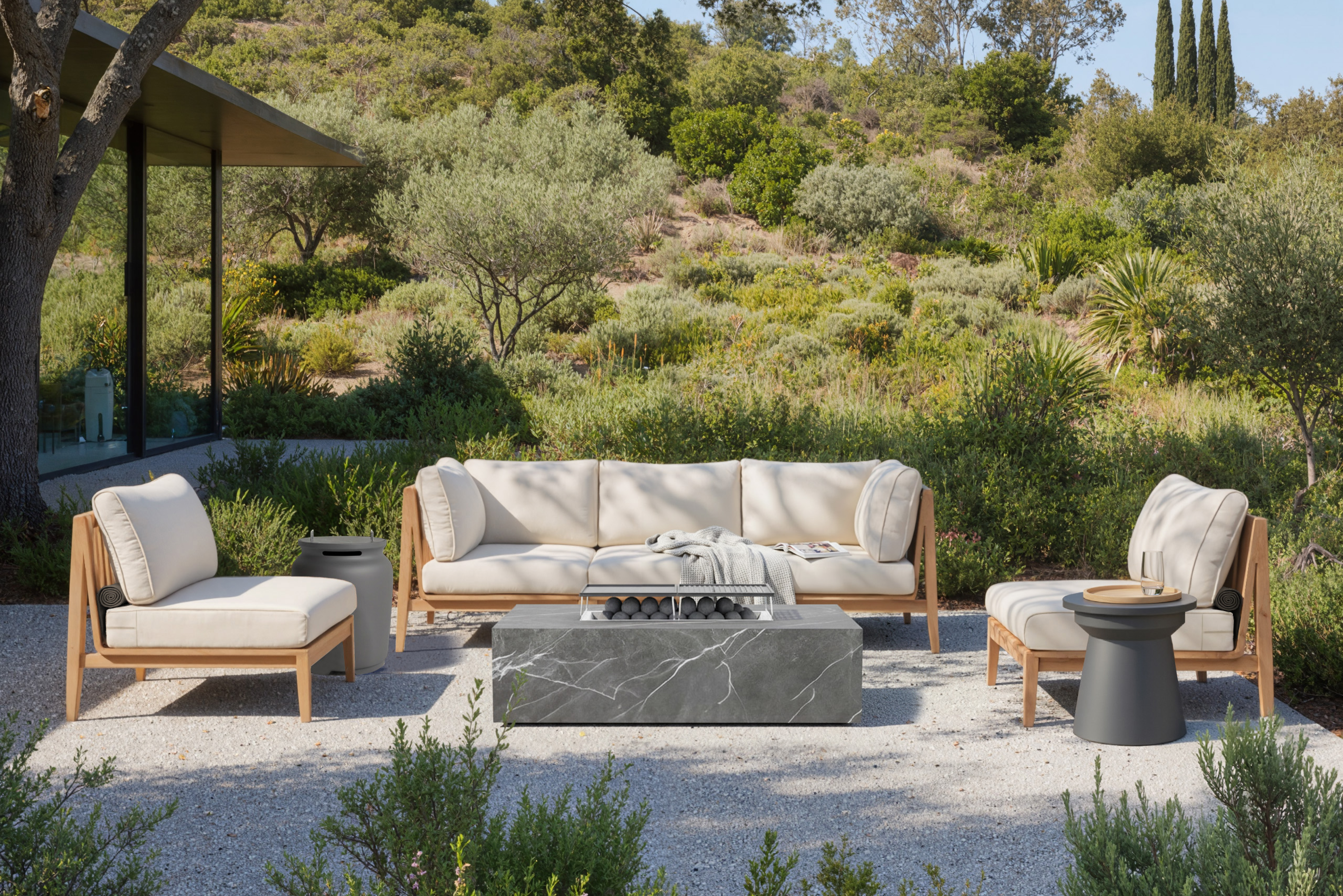
- Plan roughly 4–6 feet from flame source to seated position for comfortable warmth, adjusting based on pit size, output, and wind.
- Allow about 18–24 inches between the fire pit edge and knees as a functional buffer for sitting and standing.
These ranges create a zone where people can stay engaged without constantly repositioning. For families or mixed-age gatherings, erring slightly wider often pays off in long-term comfort.
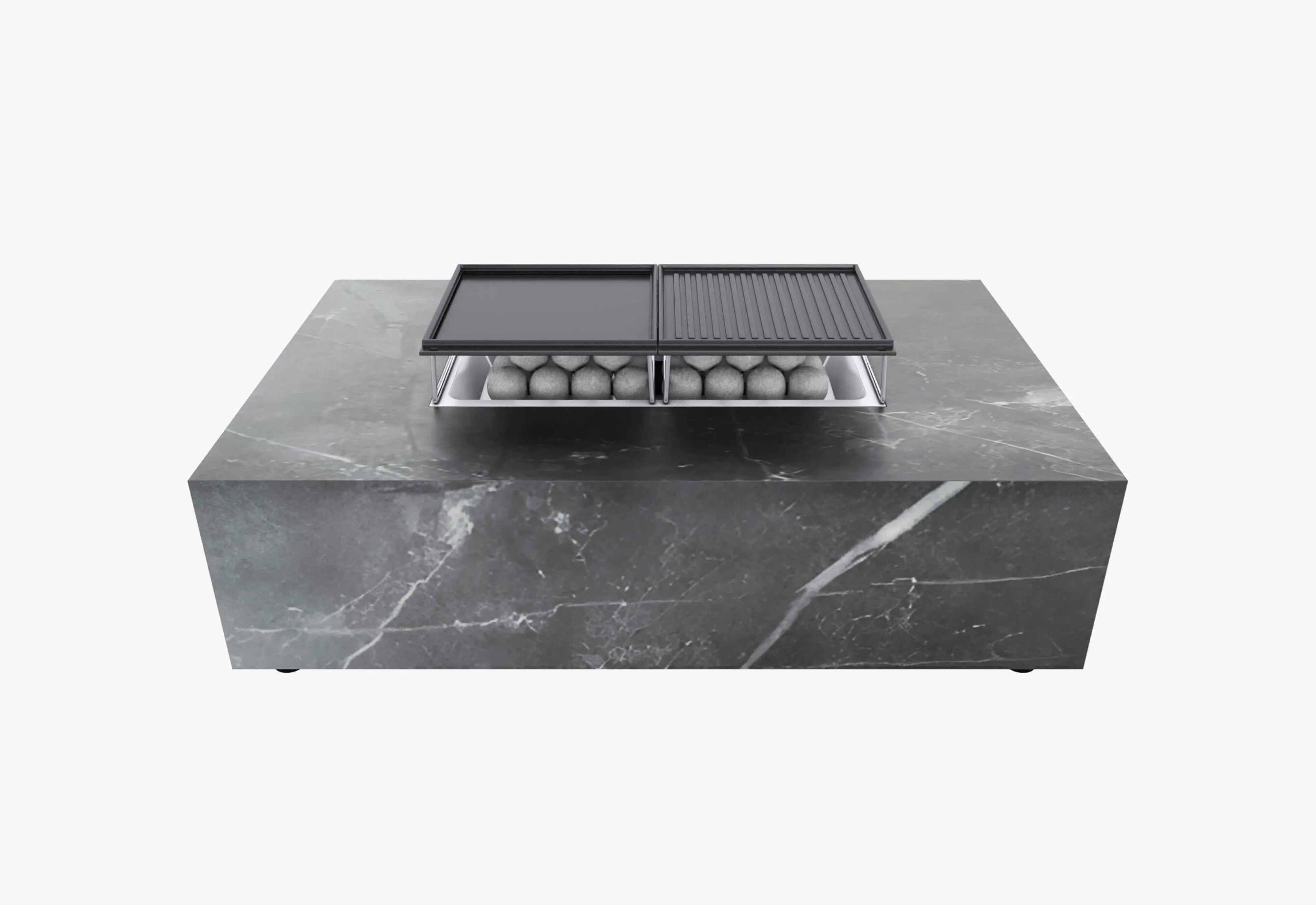
To understand how different footprints affect spacing, explore the Fire Pits collection and plan clearances around the specific dimensions of your chosen model.
Protect Circulation So the Space Keeps Working
Design that endures always accounts for movement. A fire pit area should never become a bottleneck.
- Reserve 24–36 inches of clearance behind primary seating when possible.
- Keep at least one clear entry path into the seating area so guests don’t have to squeeze between chairs and heat.
- Avoid tight pinch points near steps, doors, or transitions to dining areas.
These clear paths make the fire pit zone feel welcoming even when the patio is full, and they reduce wear on furniture by preventing constant bumping and dragging.
Let the Fire Pit Shape Guide the Layout
Fire pit shape influences how seating should be arranged if the design is meant to last.
Rectangular fire pits
Long, linear fire features often work best with an open arc or U-shaped seating plan. This keeps the layout visually balanced and preserves a clear access lane on one side.
Square fire pits
Square designs support symmetry, but enduring layouts avoid closing the circle completely. Leaving one side more open improves circulation and adaptability.
Round fire pits
Round fire pits invite conversation naturally. For longevity, maintain a defined entry point so the circle never feels sealed off.
In all cases, taping out the footprint before final placement helps confirm that clearances feel right at full scale—not just on paper.
Choose Seating That Supports Long-Term Spacing
Clearances feel different depending on the seating profile. Design that lasts pairs spacing with furniture that complements it.
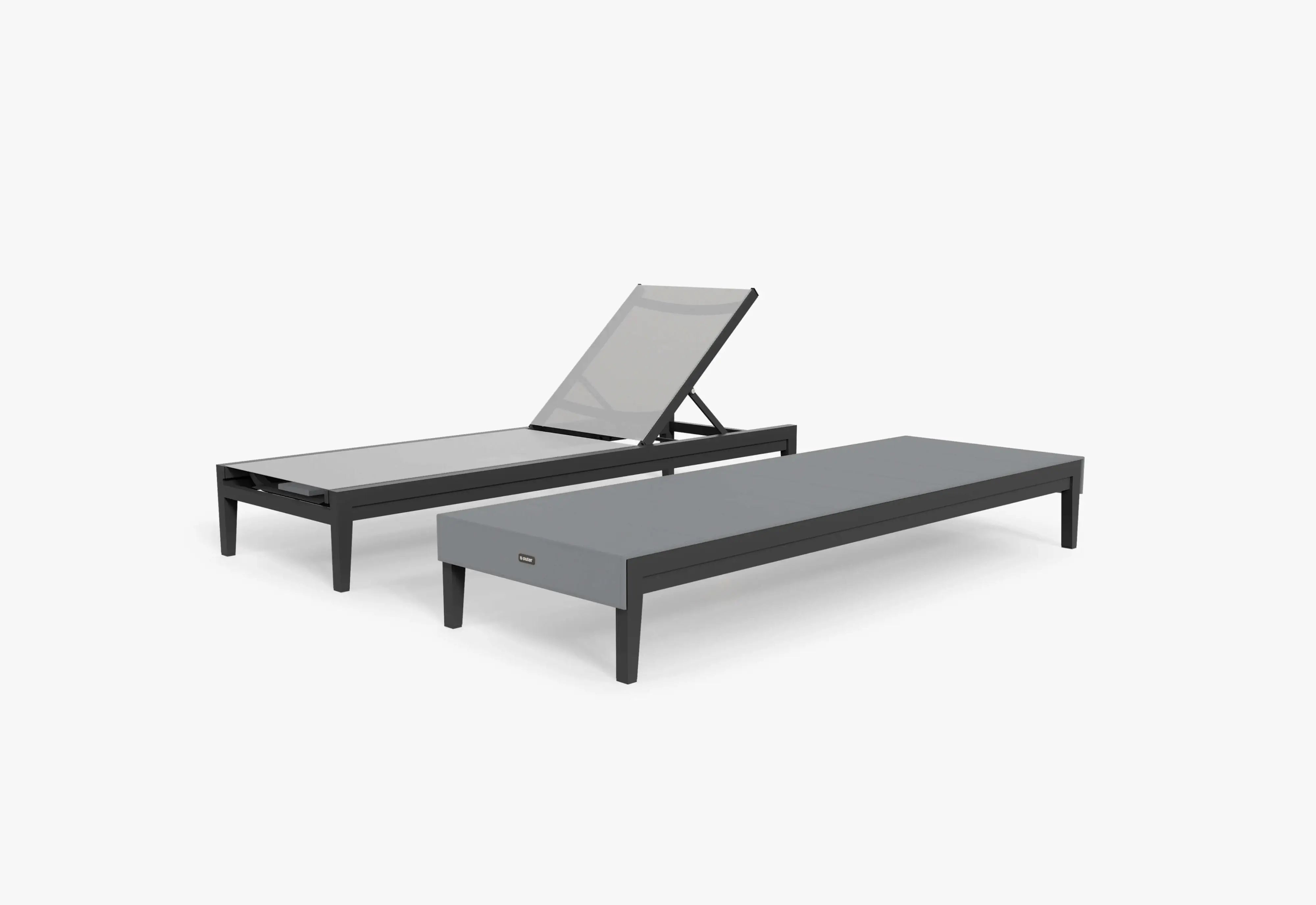
- Deeper lounge seating benefits from slightly wider spacing to accommodate stand-up movement.
- More upright pieces can sit a bit closer while still feeling comfortable.
- Modular seating makes it easier to open or close the circle as needs change.
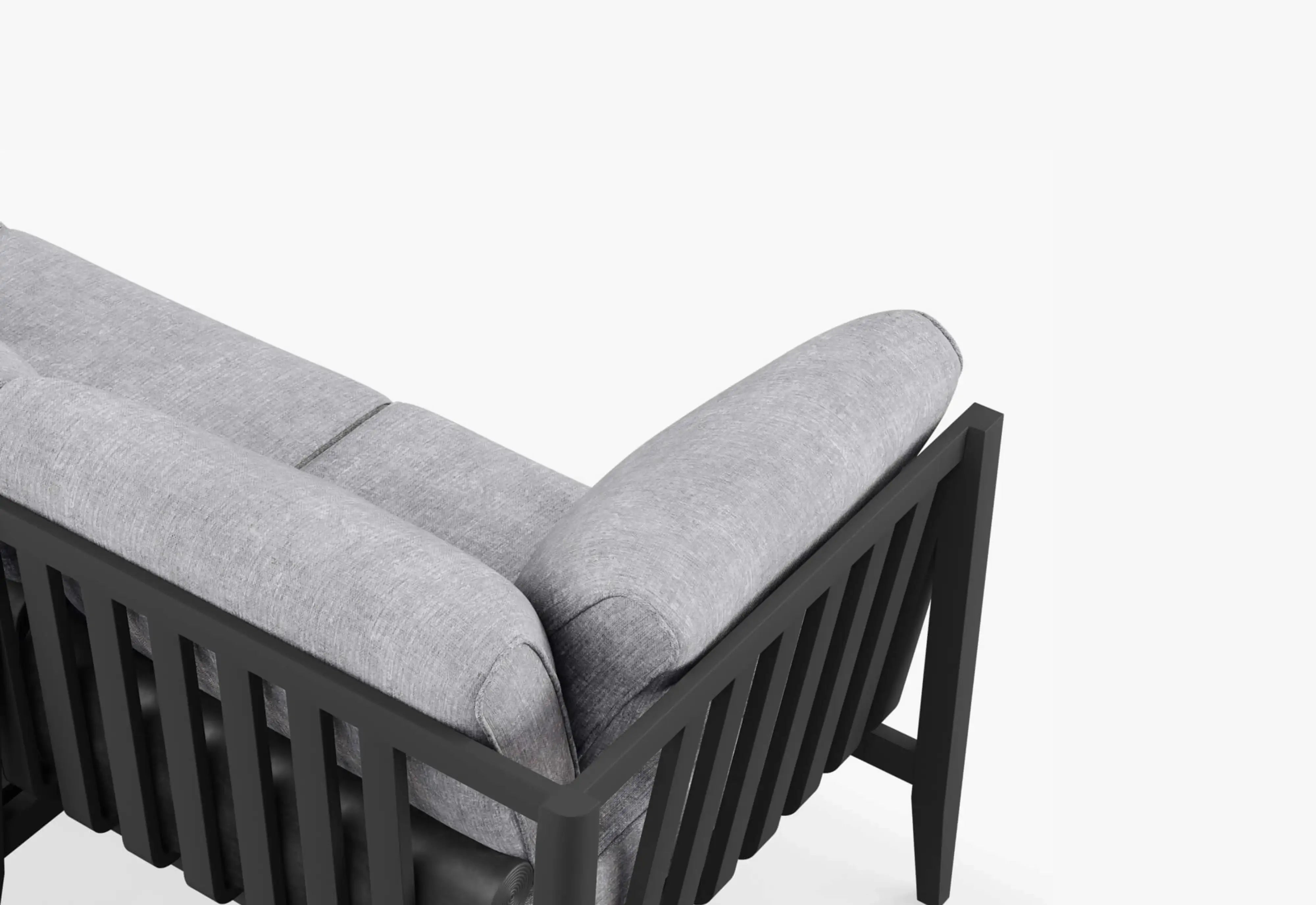
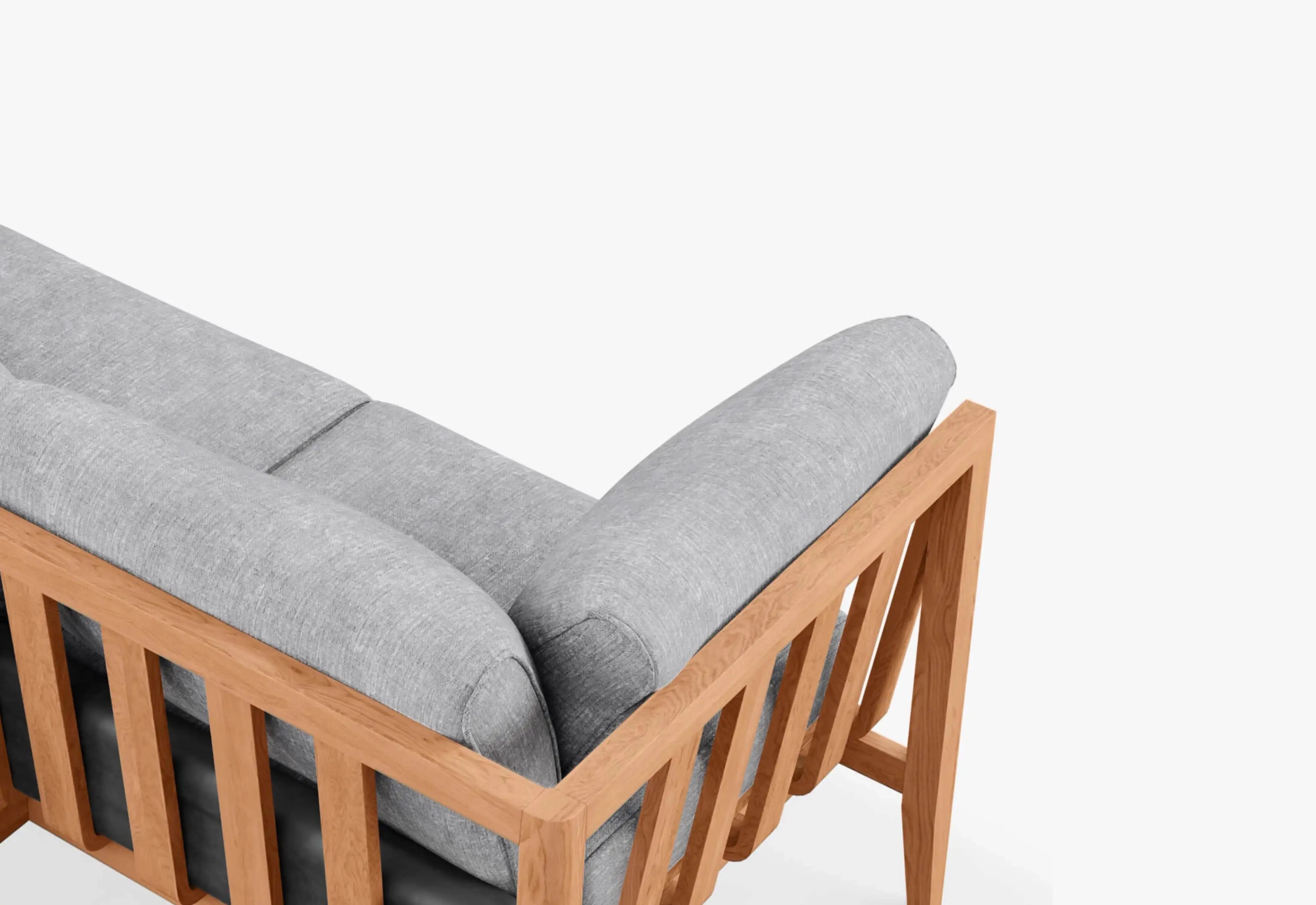
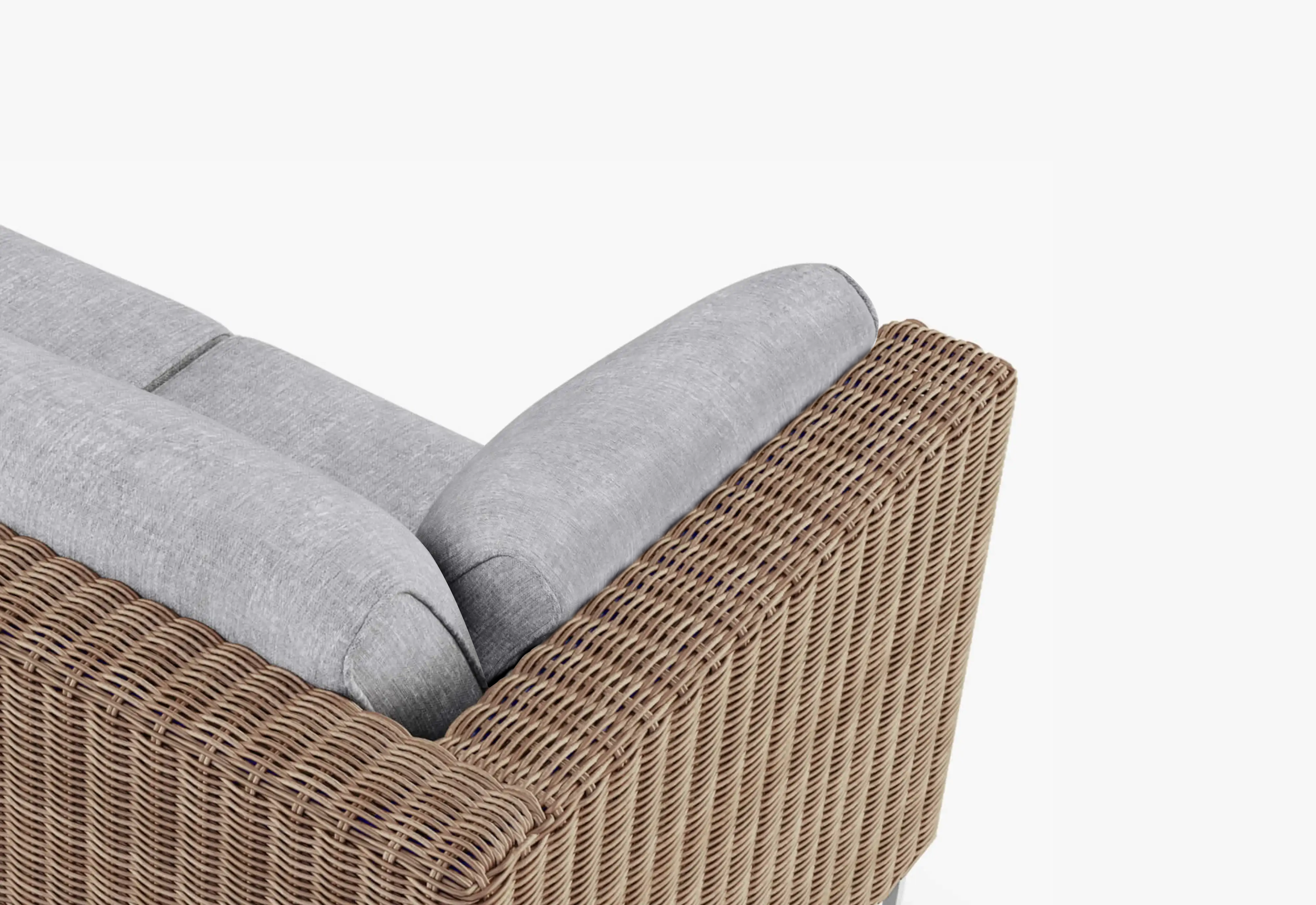
Collections like the Teak Outdoor Sofa offer a grounded presence that ages beautifully around a fire feature, while the Wicker Outdoor Sofa collection brings texture and softness without visual heaviness.
Underneath the cushions, supportive systems like OuterCloud® help seating stay comfortable during longer evenings, and performance fabrics such as OuterWeave® maintain their appearance as seasons change.
Account for Wind and Seasonal Shifts
Enduring layouts anticipate conditions beyond a single evening.
- Wind: open the seating arc toward prevailing airflow so smoke drifts away from guests.
- Cool seasons: slightly tighter seating within safe ranges helps retain warmth.
- Warm seasons: expanding the radius reduces radiant heat while preserving the gathering feel.
Instead of redesigning the space, small seasonal adjustments keep the fire pit area comfortable year-round.
Keep the Zone Clear of Soft Goods
A design that lasts also protects the materials around it. Fire pit zones should remain visually clean and functionally safe.
Use built-in protection like OuterShell® as part of a nightly routine, and store cushions and textiles with tailored solutions from the Covers collection only after the fire pit has cooled. Keeping soft goods out of the heat zone preserves both safety and longevity.
Connect the Fire Pit to the Rest of the Patio
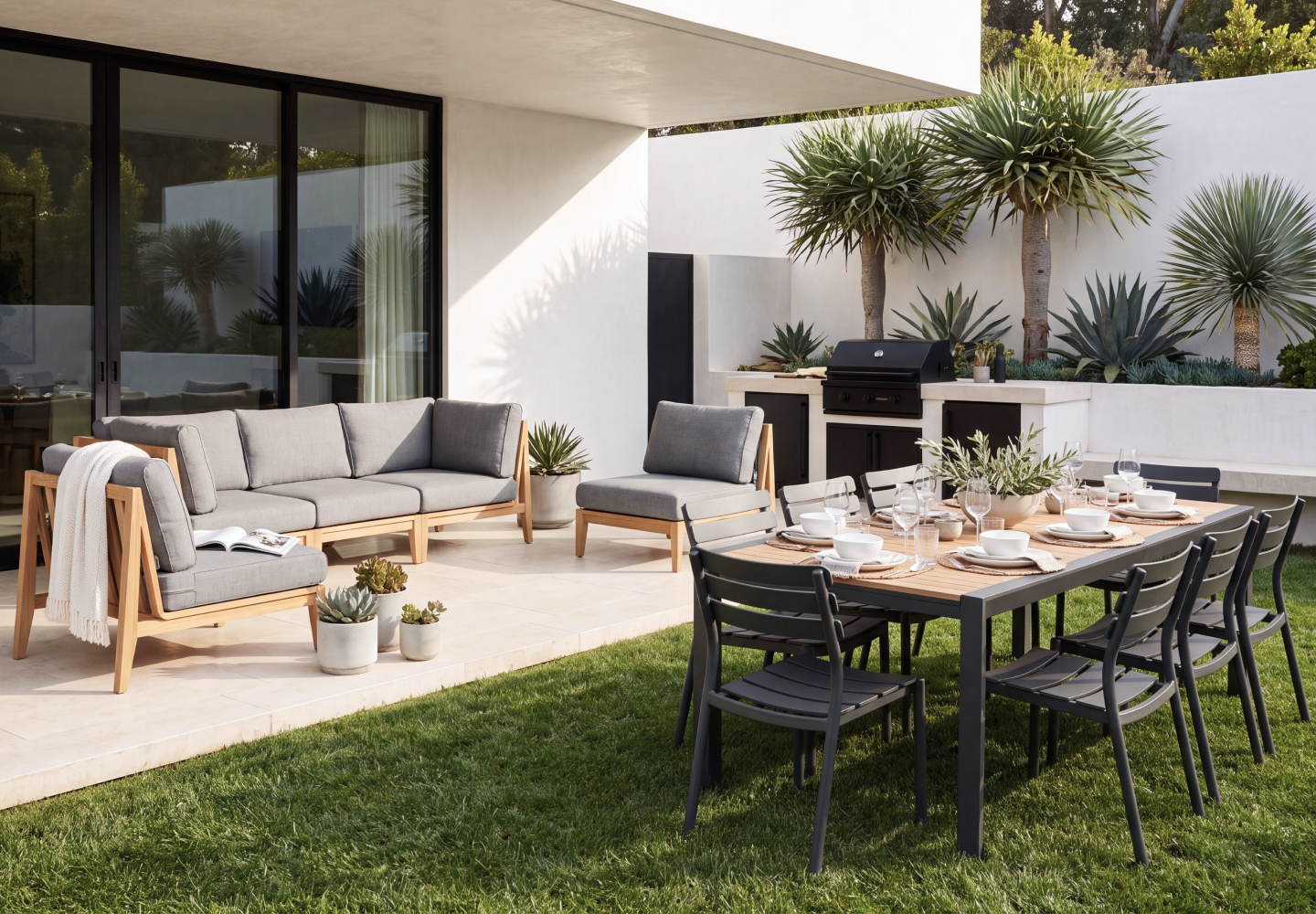
Enduring design rarely isolates one feature. A fire pit zone should feel connected to dining, lounging, and circulation paths across the patio.
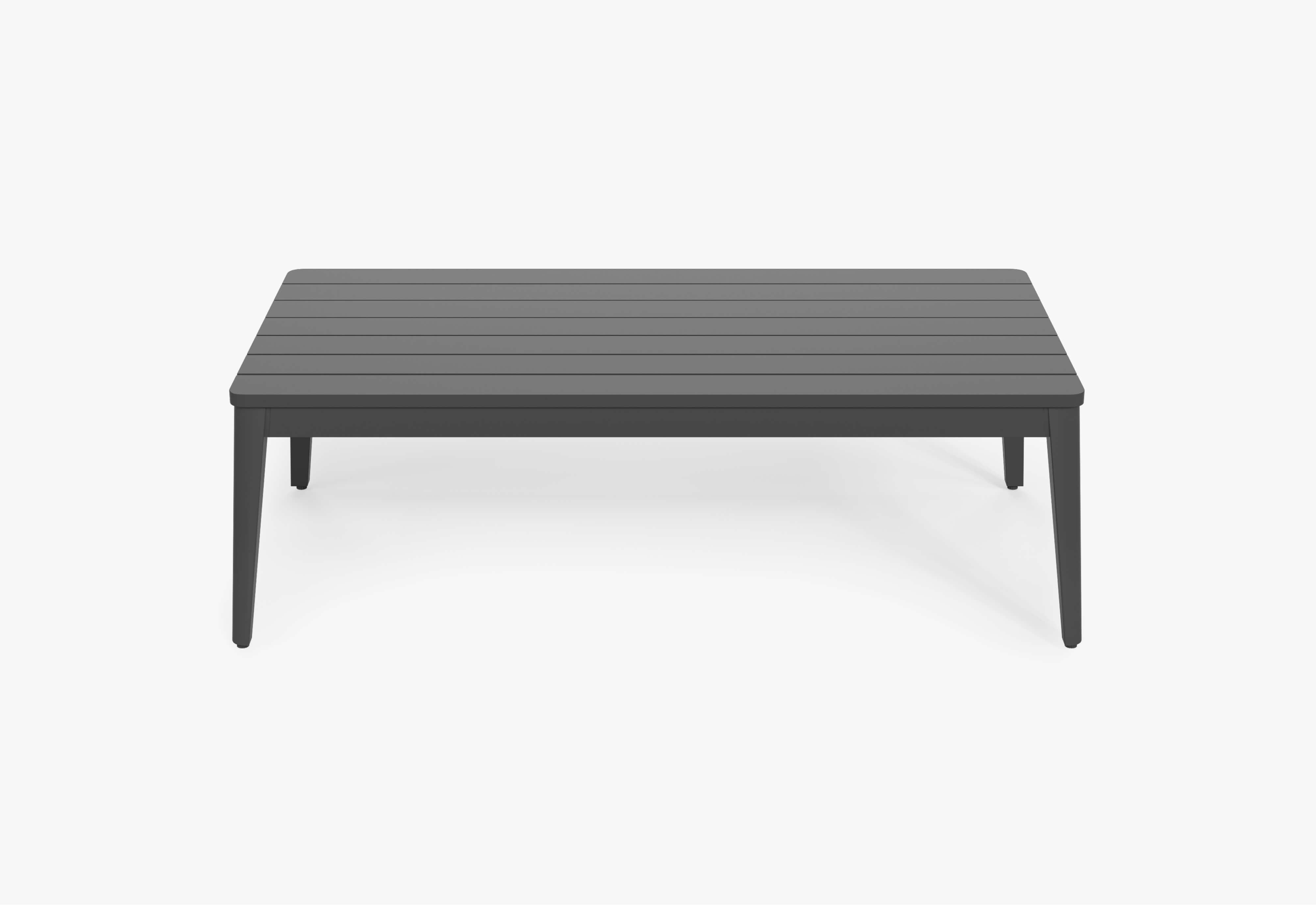
If evenings often begin with a meal, plan a clear transition from the table to the fire. Anchoring the earlier part of the night with pieces from the Dining Tables & Sets collection helps the space flow naturally into a more relaxed fireside setting afterward.
Why Clearances Are What Make Design Last
Trends change, but proportion endures. Fire pit seating clearances that respect comfort, movement, and adaptability tend to look right long after the initial setup.
By planning generous seating distances, protecting circulation, and choosing furniture that works with the layout—not against it—you create a fire pit zone that feels calm, confident, and ready for real life. That is design that endures: thoughtful spacing that supports warmth, conversation, and ease through every season.