

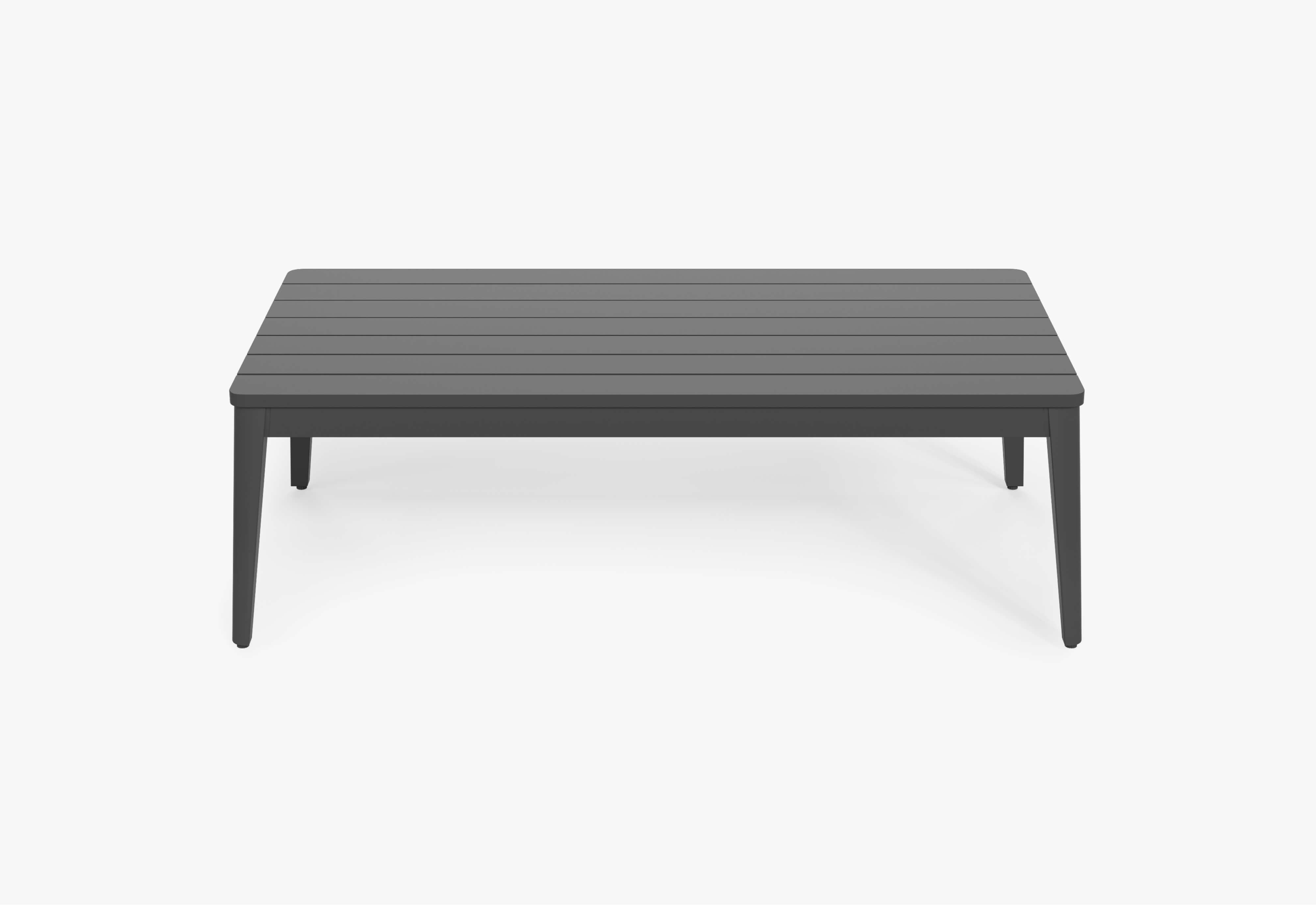
Comfort That Outlasts the Elements: Mixed-Material Seating Design Ideas for the Modern Patio

The most inviting patios rarely rely on a single material. They feel layered—warm without being heavy, clean without being cold, durable without looking utilitarian. That balance often comes from mixing materials with intention: pairing crisp structural elements with natural texture, smoothing hard edges with softness, and letting each surface do what it does best in real outdoor conditions.
Mixed-material seating is especially effective because it supports comfort on multiple levels. Frames can stay strong and low-maintenance, surfaces can feel welcoming to the touch, and the overall space can evolve season to season without needing a complete reset. The result is a modern patio that looks designed, feels lived-in, and holds up beautifully over time.
Start With a “Structure + Warmth” Formula
A reliable way to make mixed materials feel cohesive is to give each material a job:
- Structure: clean-lined frames that keep the silhouette modern and durable.
- Warmth: natural or woven textures that soften the look and invite people to stay longer.
- Comfort: cushions and textiles that make the space feel easy, not precious.
When these roles are clear, mixing materials feels intentional rather than busy.
Aluminum and Teak: Modern Lines, Natural Warmth
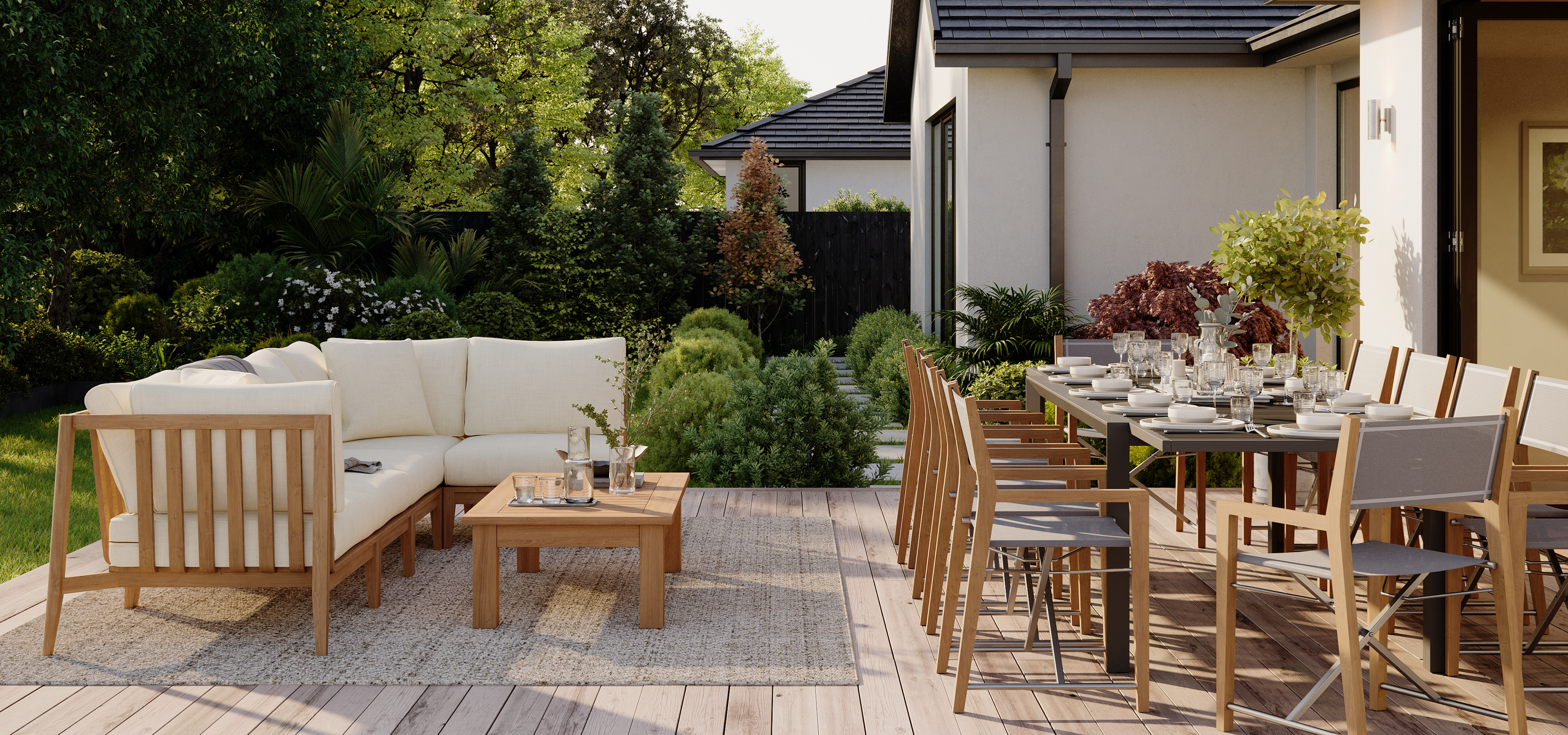
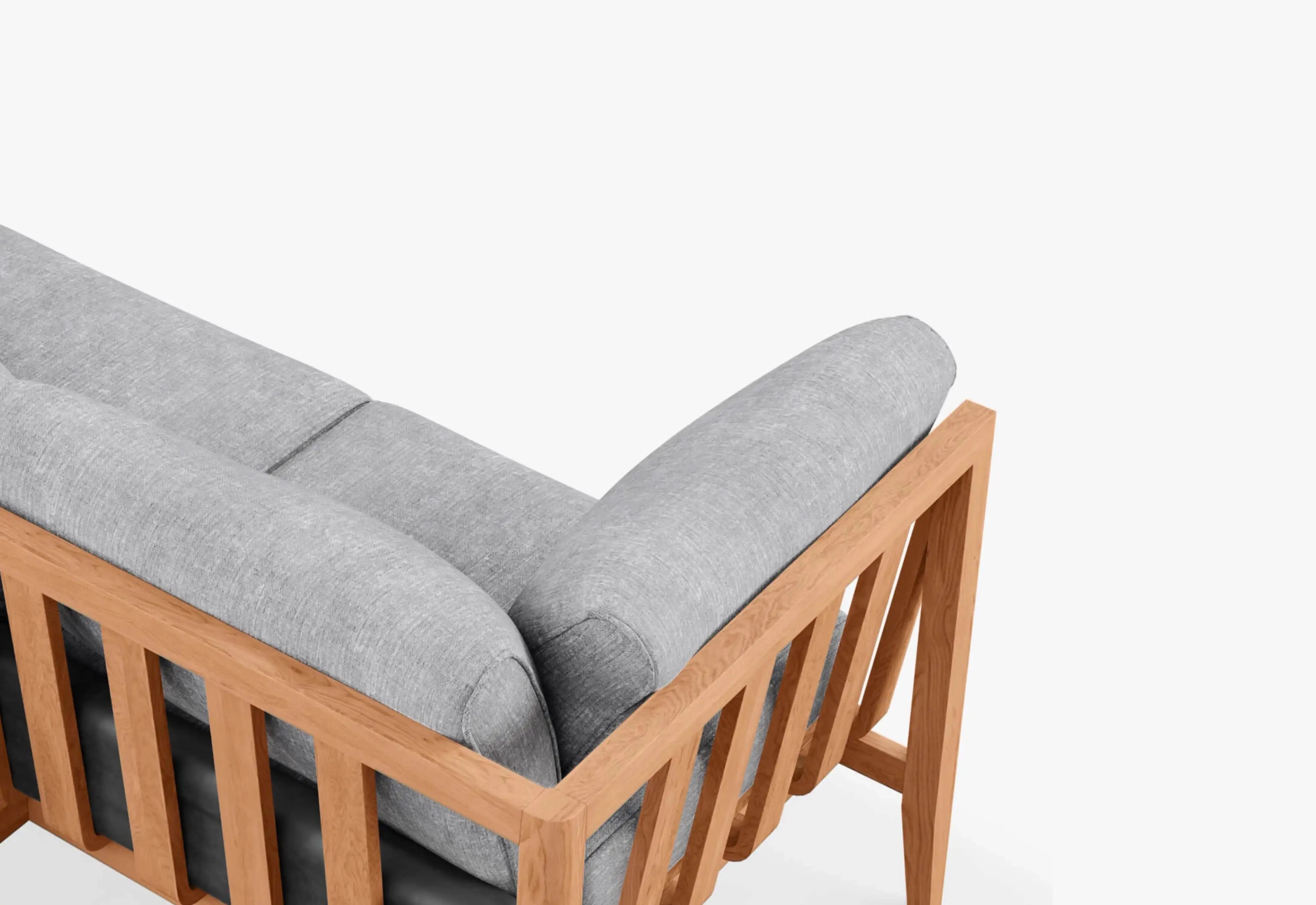
This pairing works because it’s visually balanced. Aluminum brings crisp geometry and a lighter profile; teak adds warmth and grounding presence. Together, they create a patio that feels refined but relaxed.
To build a seating zone around this idea, anchor the space with a warm base like the Teak Outdoor Sofa collection, then let cleaner-lined pieces and accessories keep the overall look airy and modern.
Design tip
Use teak as the “hero” material in one area (like the main seating group) and repeat it in small touches—side tables, serving trays, or a single accent chair—so the warmth feels consistent across the patio.
Wicker and Clean Frames: Texture That Still Feels Light
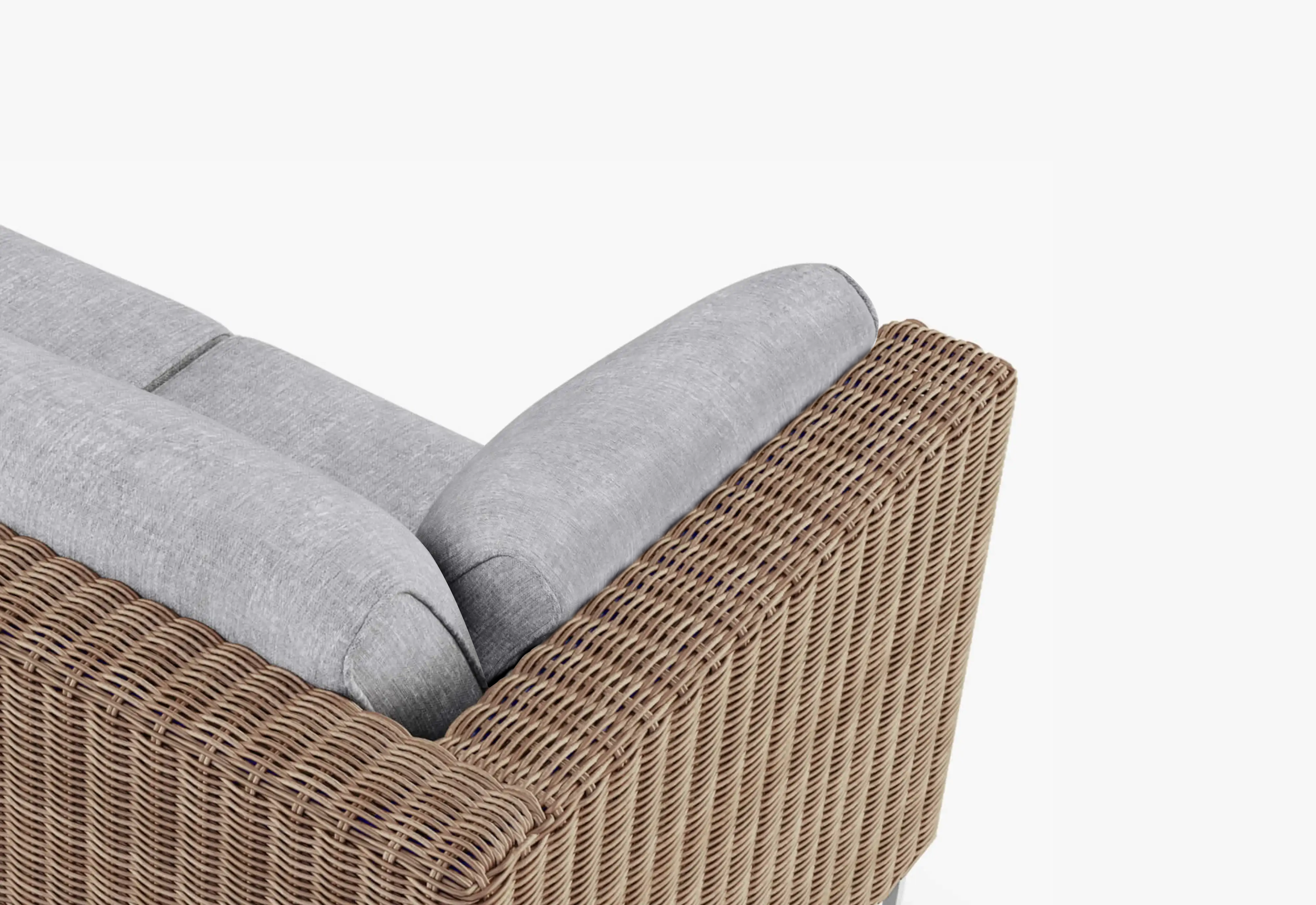
Wicker adds softness and depth without requiring heavy visual mass. It’s a smart way to bring texture into a modern space, especially when the rest of the patio leans minimal.
If you want a cozy, conversation-friendly atmosphere, build your lounge zone with the Wicker Outdoor Sofa collection, then keep surrounding elements simple—neutral textiles, calm lighting, and open negative space around the seating.
Design tip
Let wicker be the texture layer, and keep metals matte and understated so the material mix reads soft and intentional rather than high-contrast.
Concrete and Soft Goods: A Grounding “Anchor + Cushion” Pairing
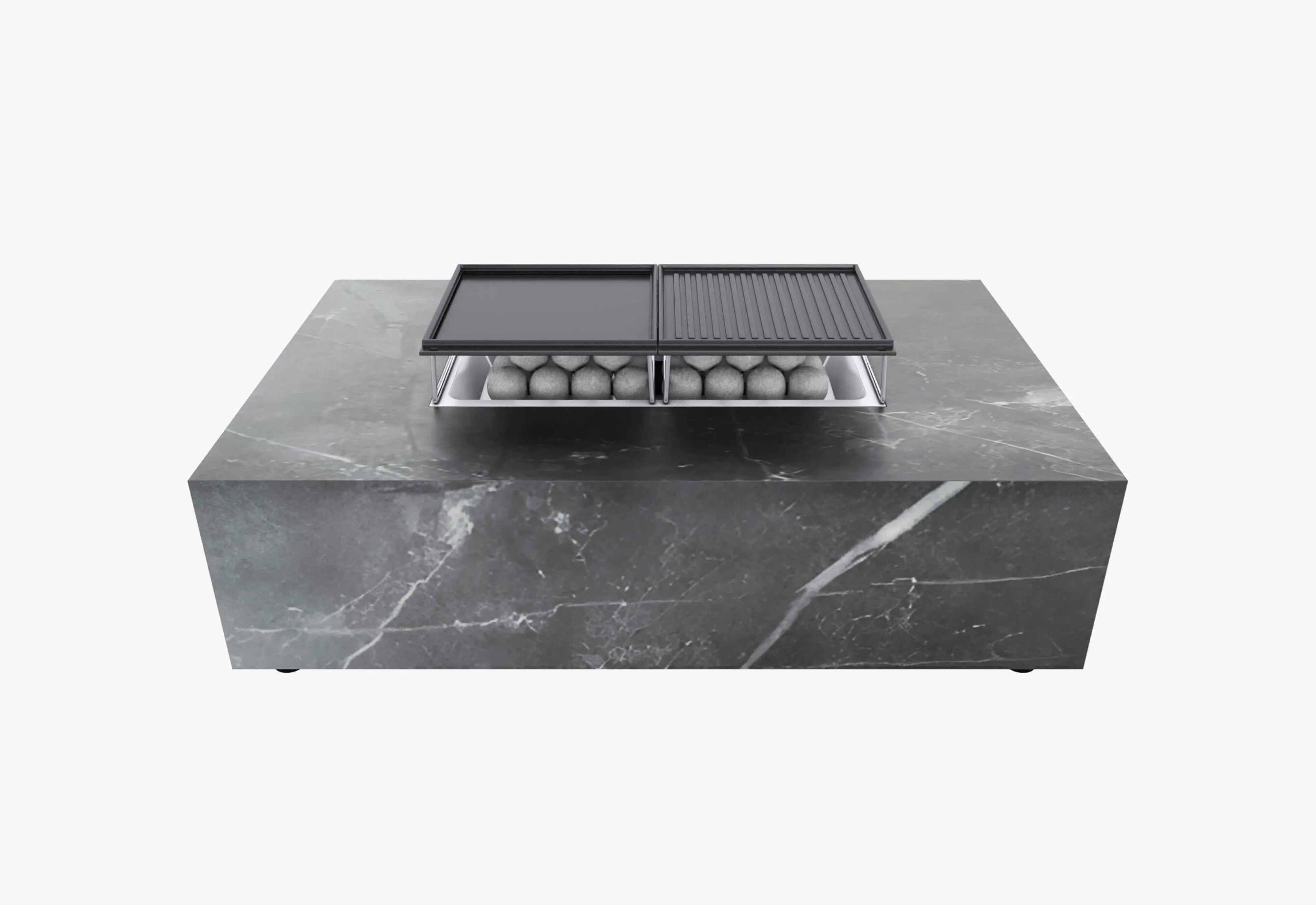
Hard surfaces like concrete feel timeless outside because they’re visually stable and naturally suited to open-air environments. The key to comfort is balancing that solidity with soft goods that invite lingering.
In a mixed-material patio, concrete often works best as the grounding layer—fire features, side tables, or statement accents—while cushions and throws create the comfort layer above it.
Design tip
If your space already has hardscape elements (stone pavers, concrete steps), echo that feel with a single grounded feature and let seating remain warm and soft.
Make the Comfort Layer Consistent Across Materials
Mixed materials look best when comfort feels unified. Even if your frames and surfaces vary, your cushion story should feel cohesive—similar tone, consistent feel, and performance that holds up outdoors.
That’s where materials engineered for outdoor life matter:
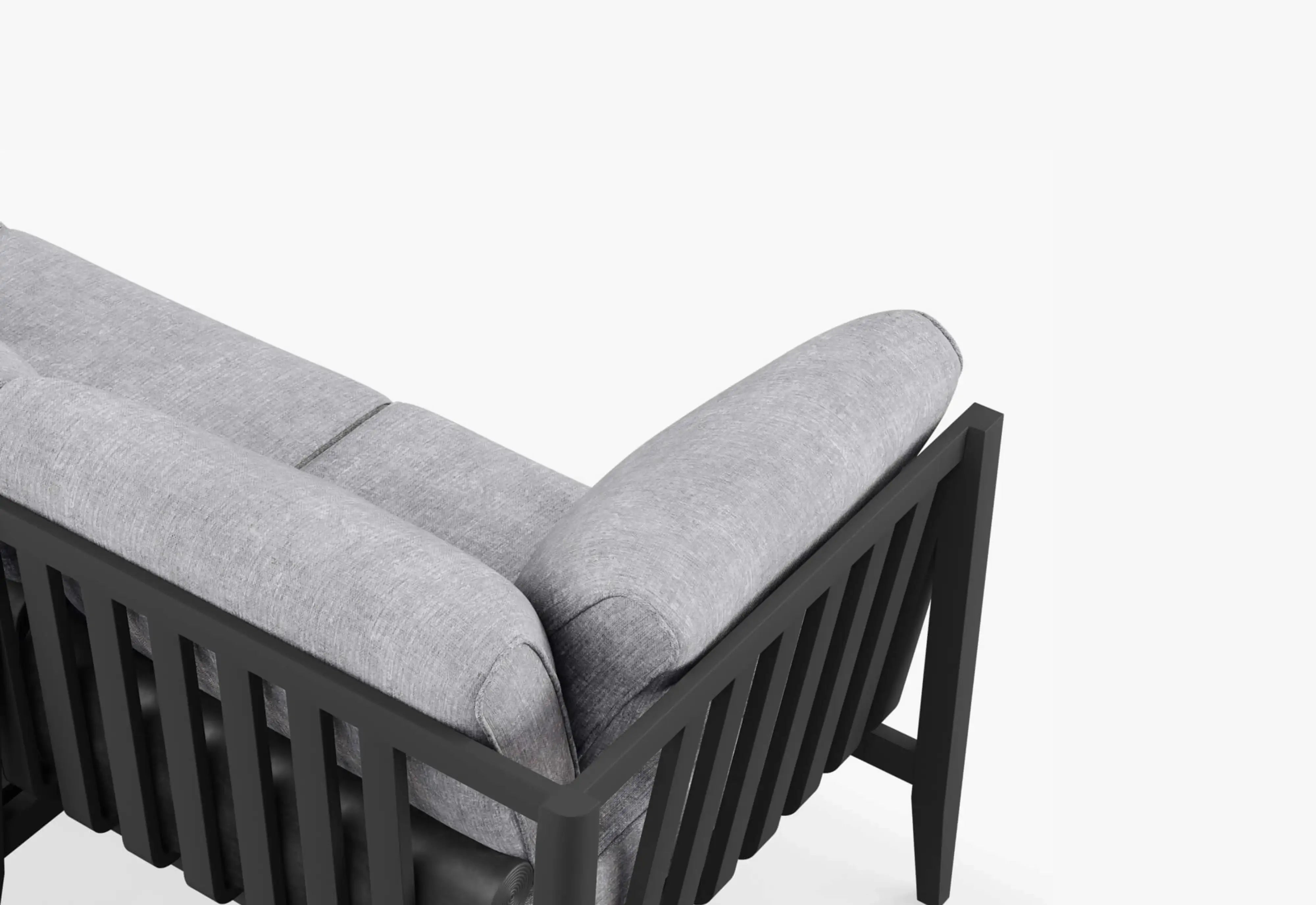
- Performance textiles like OuterWeave® help the space feel calm and consistent, even when the patio mixes warm and cool materials.
- Supportive cushioning like OuterCloud® helps mixed-material seating feel equally comfortable across zones—so guests don’t “prefer” one spot simply because it sits better.
- Protection systems like OuterShell® support everyday ease, so the space stays ready without constant maintenance.
When the comfort layer is consistent, mixed materials feel like design—not like a collection of different pieces.
Build a Patio That Transitions From Dining to Lounging
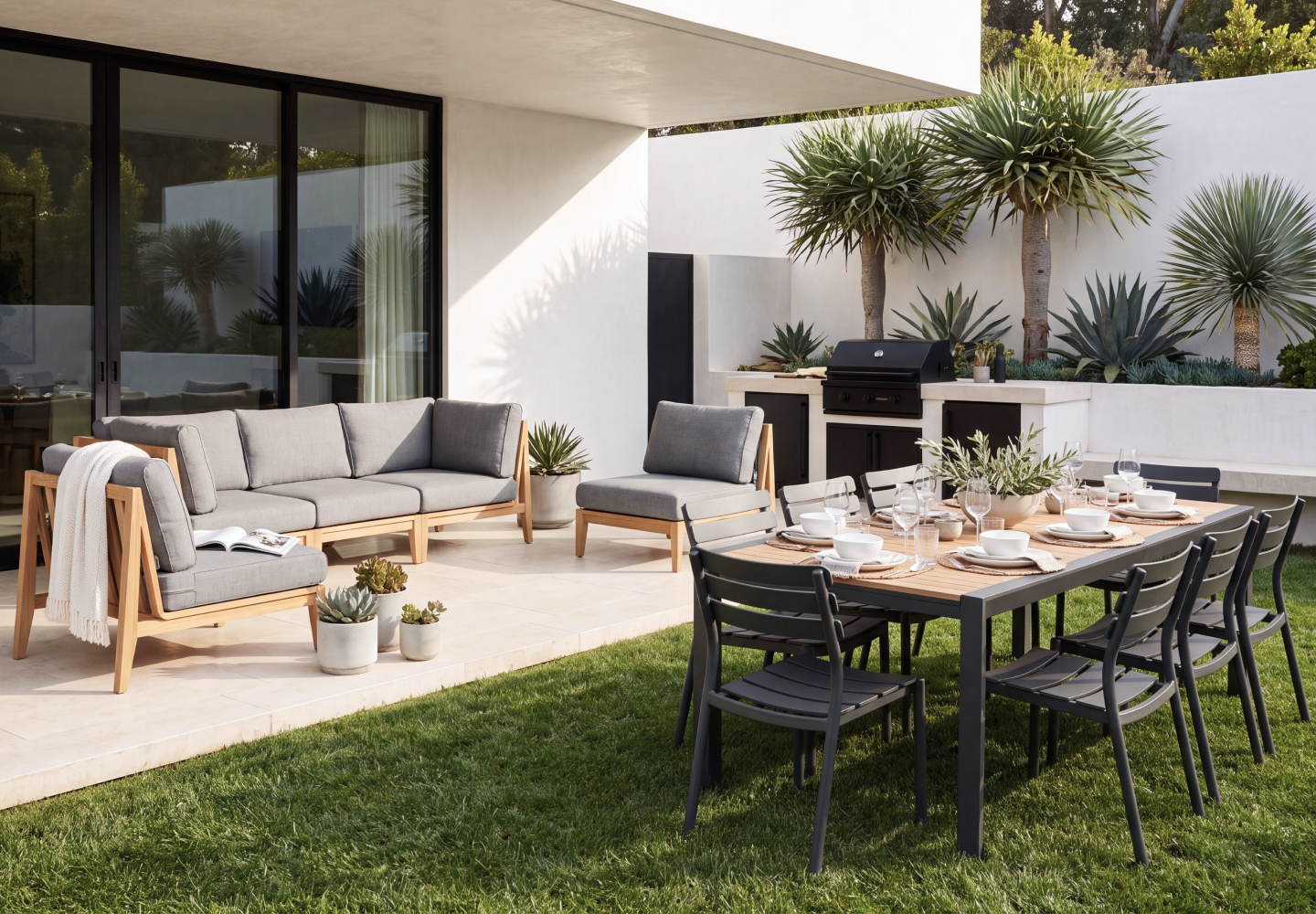
Mixed materials shine when your patio supports multiple moments: casual meals, slow conversation, and relaxed evenings that stretch later than planned. A simple way to do this is to make dining feel connected to the lounge zone.
Start with a dining foundation from the Dining Tables & Sets collection, then echo one dining material in the lounge area—either through a teak accent, a woven element, or a grounded surface. This creates a visual “bridge” so the patio reads as one space, not separate zones competing for attention.
Design tip
Repeat one finish three times across the patio (for example: teak tone, woven texture, or a stone-like surface). This is the simplest way to make mixed materials feel cohesive.
Use Firelight to Tie Materials Together at Night
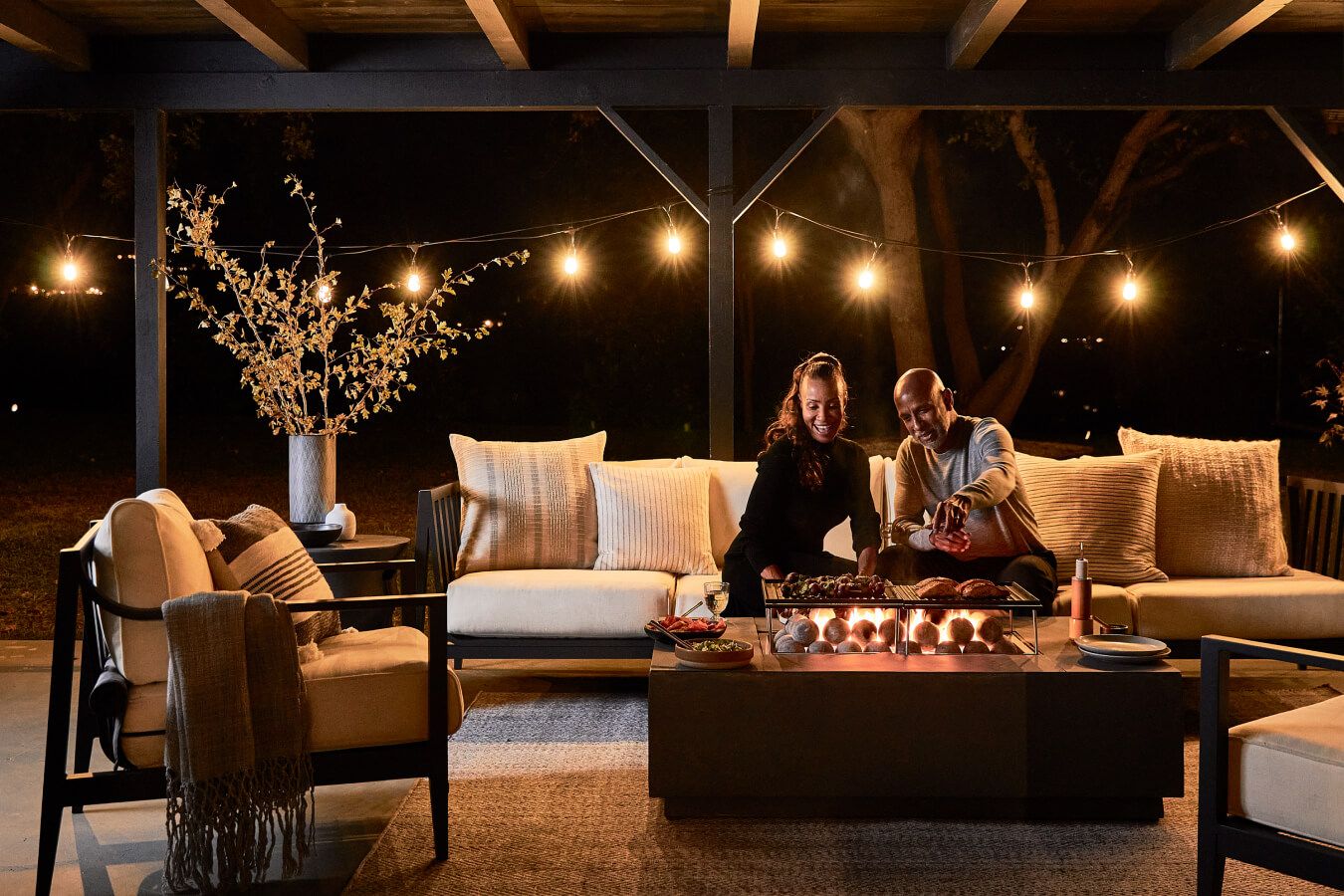
In the evening, lighting becomes the unifying element that makes mixed materials feel even more intentional. Firelight, in particular, softens contrasts and brings warmth across metal, wood, woven textures, and textiles.
To create a comfortable focal point that visually blends your material mix, explore options in the Fire Pits collection. Firelight helps hard surfaces feel warmer, highlights texture beautifully, and encourages the kind of lingering comfort that makes a patio feel like a true extension of home.
Protect the Pieces That Do the Most Work
Mixed-material spaces often get used more because they feel more inviting. That means protection matters—not in a complicated way, but as a simple routine that keeps everything looking fresh.
For everyday longevity, cover key pieces with breathable options from the Covers collection and rely on built-in protection like OuterShell® to keep cushions ready between uses. This helps your materials age gracefully together rather than wearing unevenly.
A Mixed-Material Patio That Still Feels Calm
The best mixed-material seating doesn’t feel busy—it feels balanced. Structure keeps the space modern, warmth keeps it inviting, and comfort keeps people outside longer. When you mix materials with a clear hierarchy and a consistent comfort layer, the patio becomes easy to live with and beautiful to return to, season after season.
That’s comfort that outlasts the elements: a space designed for real life outside, where every material contributes to how the patio looks, feels, and endures.