


Sustainability in Every Detail: Sectional-Style Aluminum Configurations for the Modern Patio

Sustainable outdoor living is not defined by a single material or label. It is built through countless small decisions—how furniture is made, how it adapts over time, and how often it needs to be replaced. Sectional-style aluminum configurations embody sustainability through longevity, flexibility, and thoughtful material use.
Rather than focusing on one moment of use, these systems are designed to reduce waste across their entire lifespan.
Sustainability Begins With Longevity
The most sustainable furniture is the furniture that lasts.
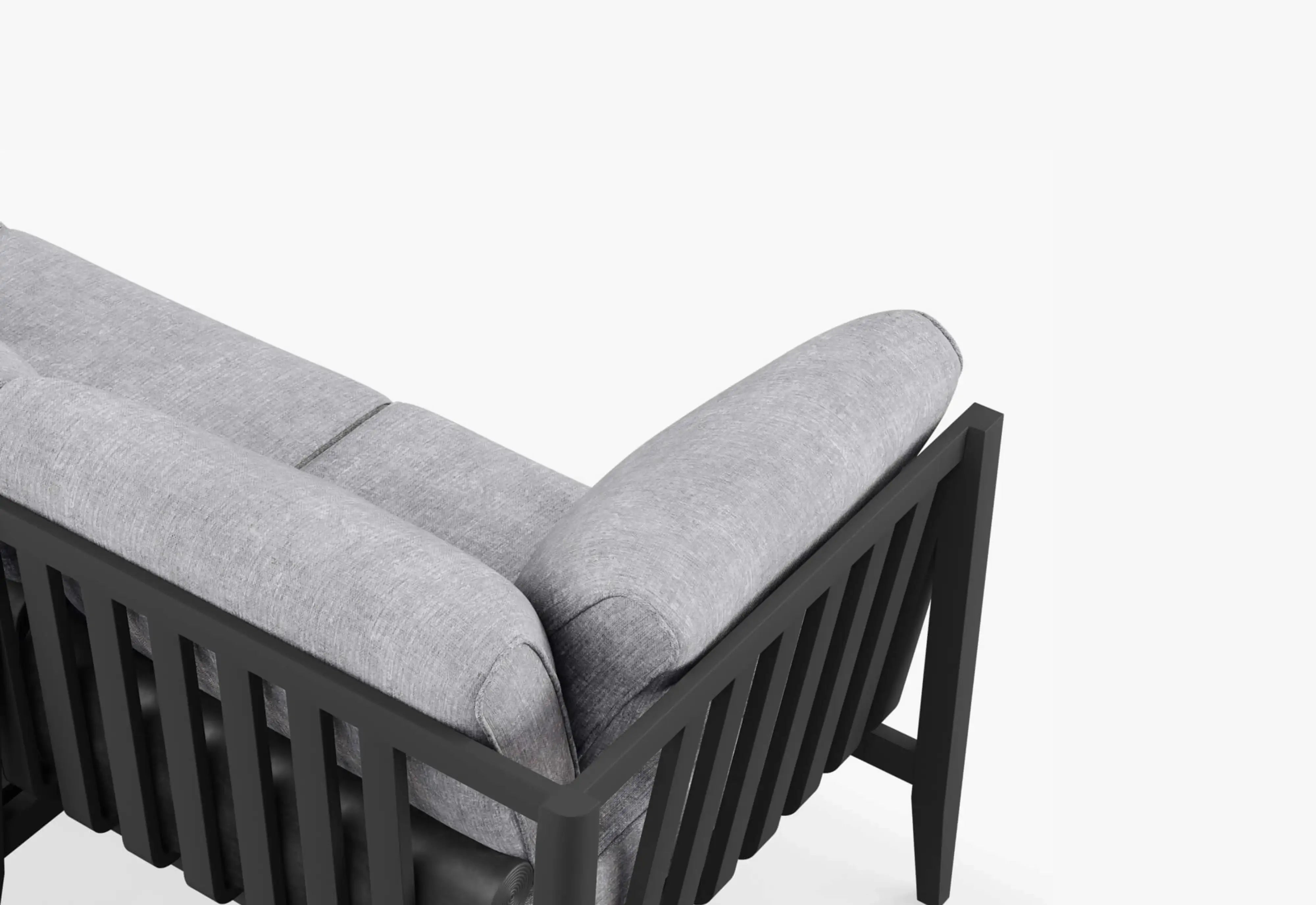
Sectional-style aluminum configurations are built to remain relevant as needs change. Instead of replacing an entire seating setup, individual modules can be rearranged, expanded, or reduced—extending the life of the system as a whole.
Fewer replacements mean fewer resources consumed.
Aluminum as a Responsible Structural Choice
Material selection matters.
Aluminum is lightweight yet durable, requiring less raw material to achieve long-term structural performance. Its resistance to corrosion and warping reduces the need for refinishing, repair, or early disposal.
This durability supports a lower-impact ownership cycle.
Modular Design Reduces Overconsumption
Fixed furniture encourages excess.
When layouts can’t adapt, homeowners often replace entire pieces to accommodate new needs. Sectional-style configurations avoid this cycle by allowing modules to be added or repositioned instead of discarded.
This approach supports mindful consumption.
Consistency Across Collections Supports Reuse
Design continuity enables reuse.
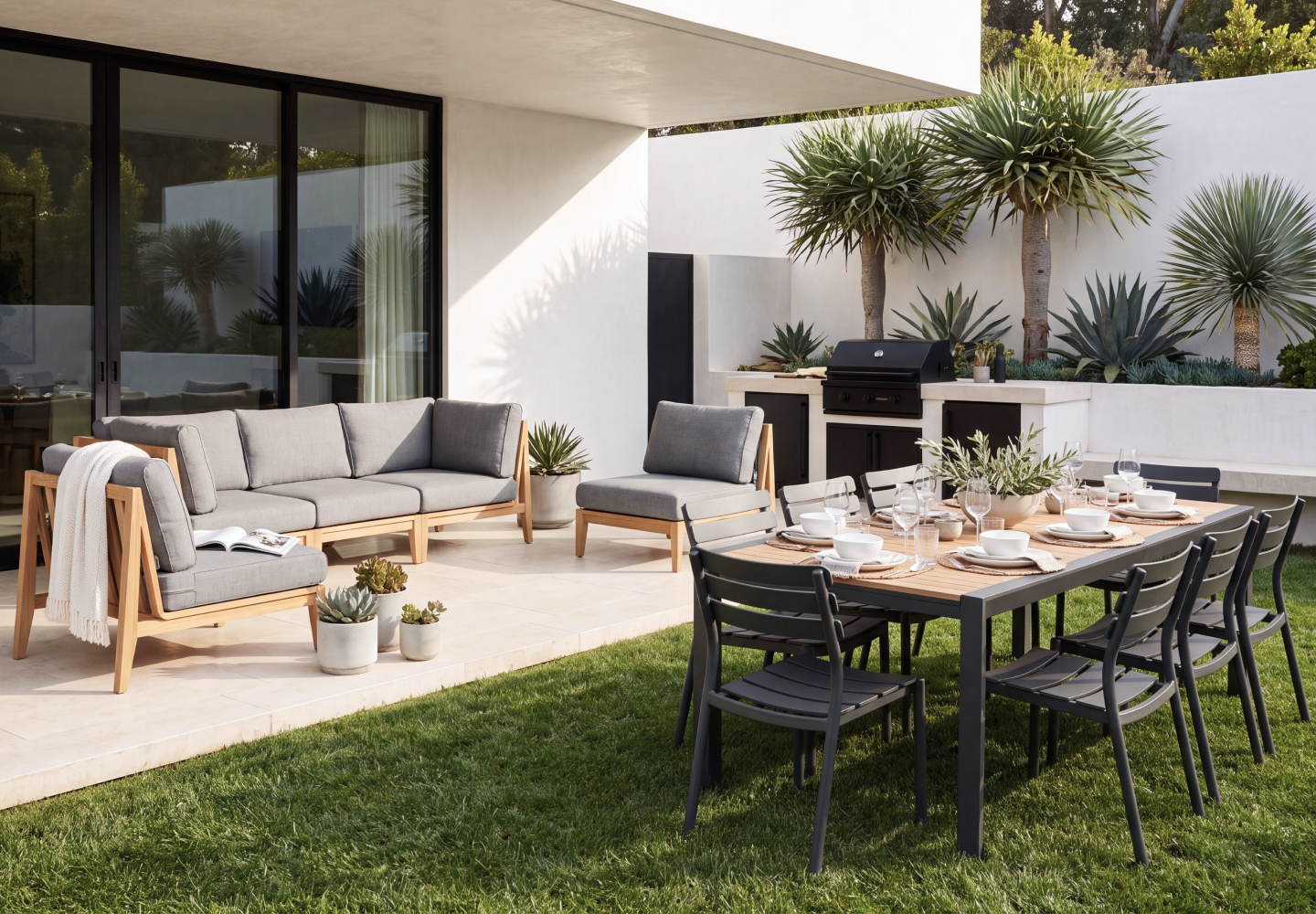
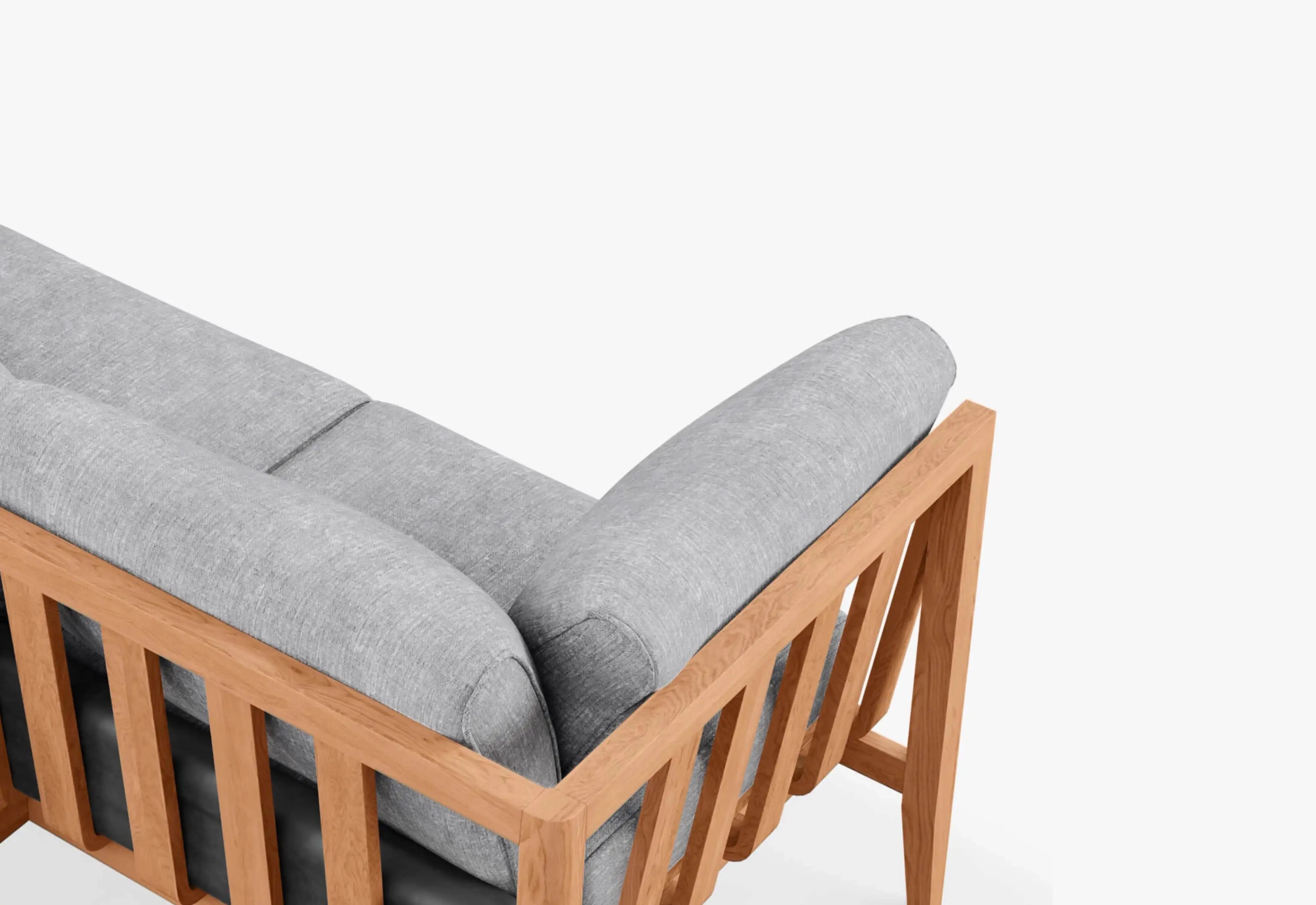
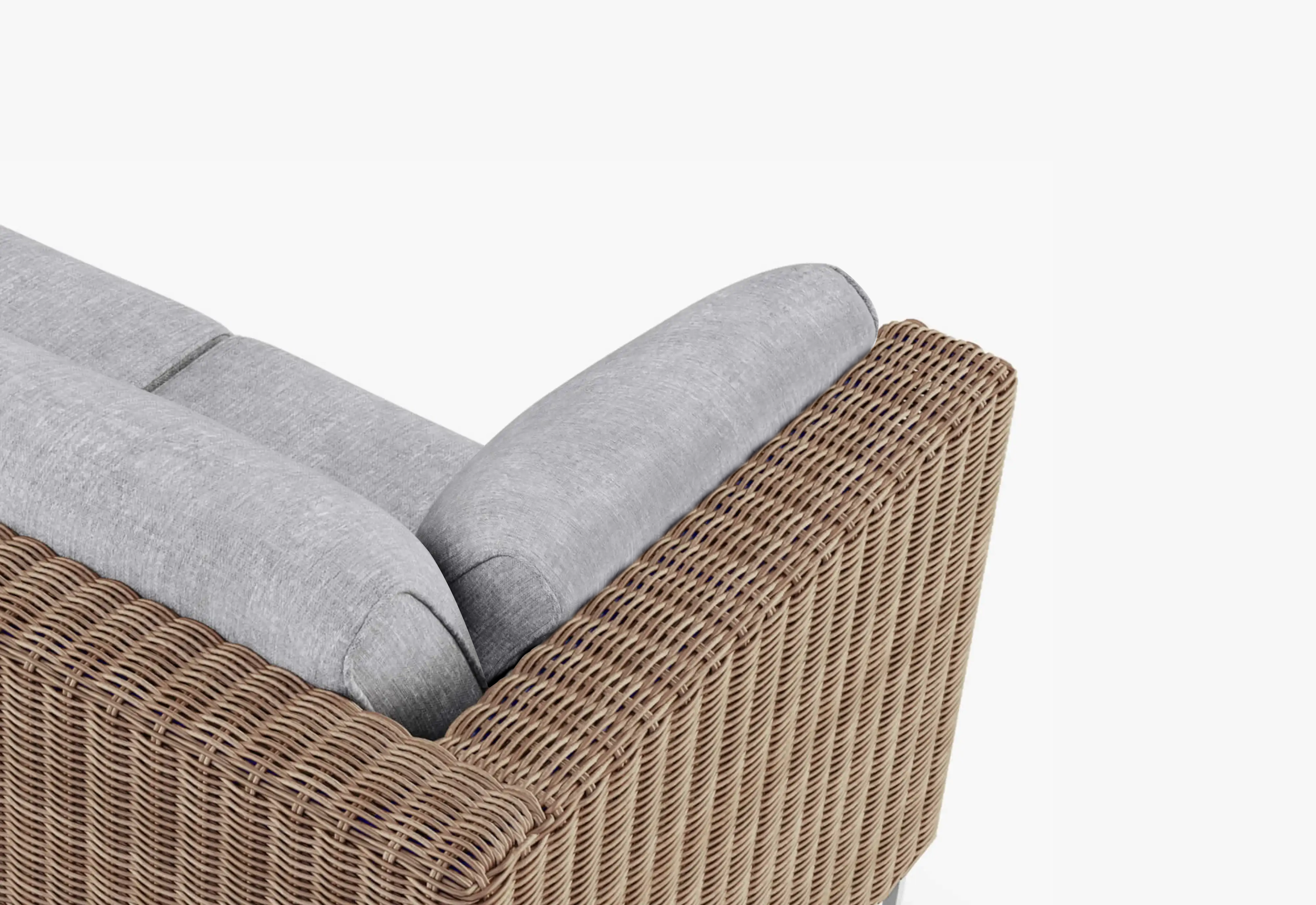
Sectional systems across the Teak Outdoor Sofa and Wicker Outdoor Sofa collections are designed to work together visually and structurally, allowing pieces to remain useful even as spaces evolve.
Compatibility reduces obsolescence.
Durable Finishes Minimize Maintenance Impact
Frequent refinishing increases environmental cost.
Powder-coated aluminum frames are designed to resist fading and corrosion, reducing the need for chemical cleaners or surface treatments. Less intensive maintenance lowers long-term material and water use.
Sustainability includes how furniture is cared for.
Smaller Footprints Through Distributed Design
Sectional configurations distribute load.
Instead of relying on oversized single pieces, modular systems share stress across multiple components. This allows lighter structures without sacrificing performance.
Efficient design uses fewer resources to achieve durability.
Protection That Extends Product Life
Extending lifespan is a sustainable act.
Breathable protection systems like OuterShell® and options from the Covers collection help reduce weather-related wear, allowing furniture to remain in use longer without premature degradation.
Protection supports longevity, not replacement.
Designing Spaces That Evolve, Not Expire
Outdoor spaces change with life stages.
Sectional-style aluminum configurations allow patios to evolve without discarding existing furniture. Pieces remain useful through different layouts, seasons, and routines.
Adaptability is a core sustainability principle.
Sustainable Living Beyond a Single Season
Sustainability is cumulative.
By choosing systems that adapt, endure, and require less intervention, outdoor living becomes more responsible over time. Sectional-style aluminum configurations support this approach by reducing waste at every stage of use.
When every detail is considered, sustainability becomes part of daily living.


