

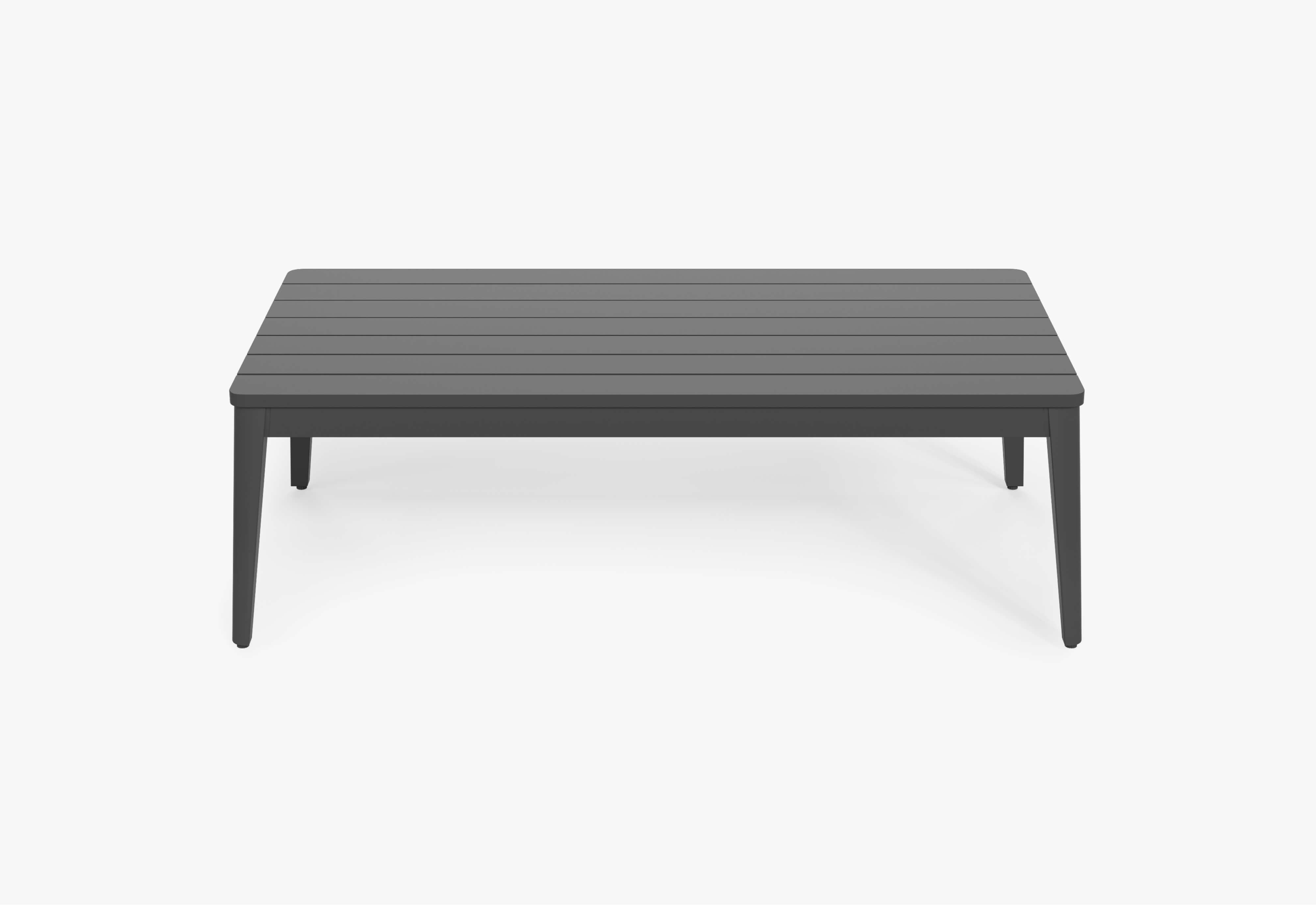
The Crafting of Outer Teak
How Outer Teak Furniture Is Made
From FSC-certified Grade-A teak selection to controlled drying, precision joinery, and final hand sanding, every stage helps turn natural timber into furniture made for life outdoors.
Explore Outer Teak
Great teak outdoor furniture starts long before it reaches a patio.
True quality is defined by precision at every stage: selecting premium timber, controlling the cut and kiln-drying, perfecting joinery, and refining how the finished frame meets your touch.
Why Teak
Why Is Teak Used for Outdoor Furniture?
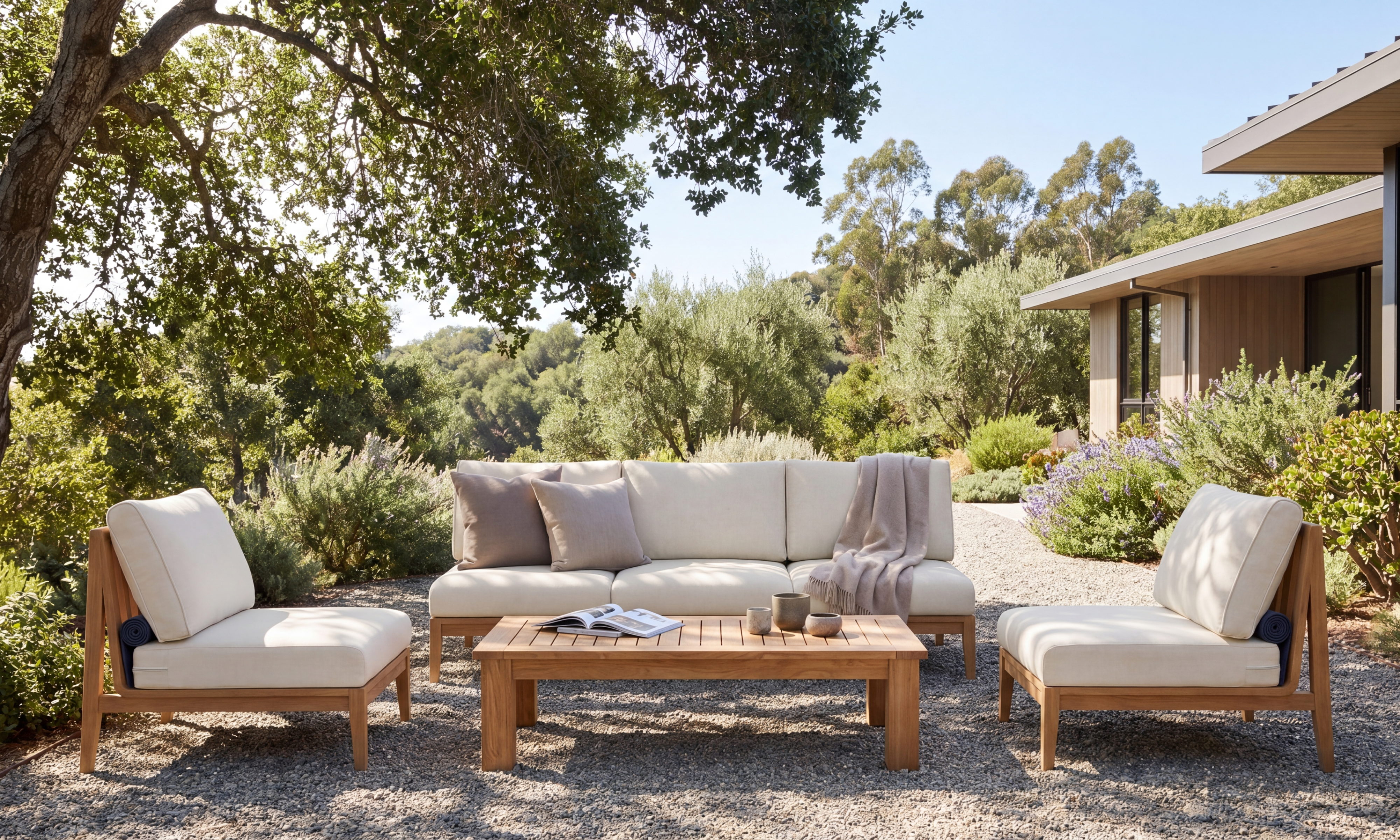
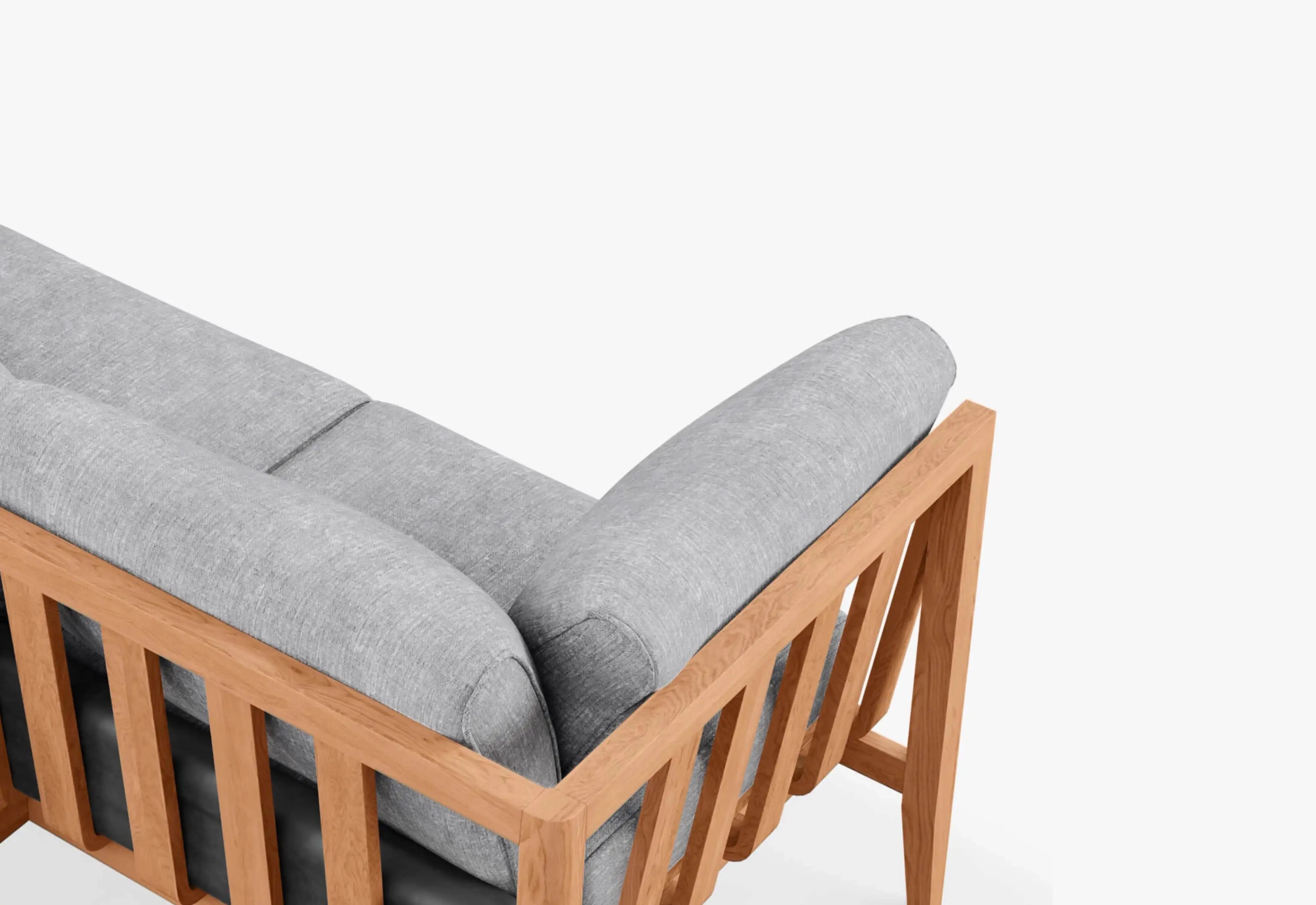
Teak is valued for the combination of dense grain, natural oils, strength, and warmth it brings to outdoor furniture. Unlike materials whose appearance depends mainly on a surface coating, teak’s grain and tone are part of the design itself.
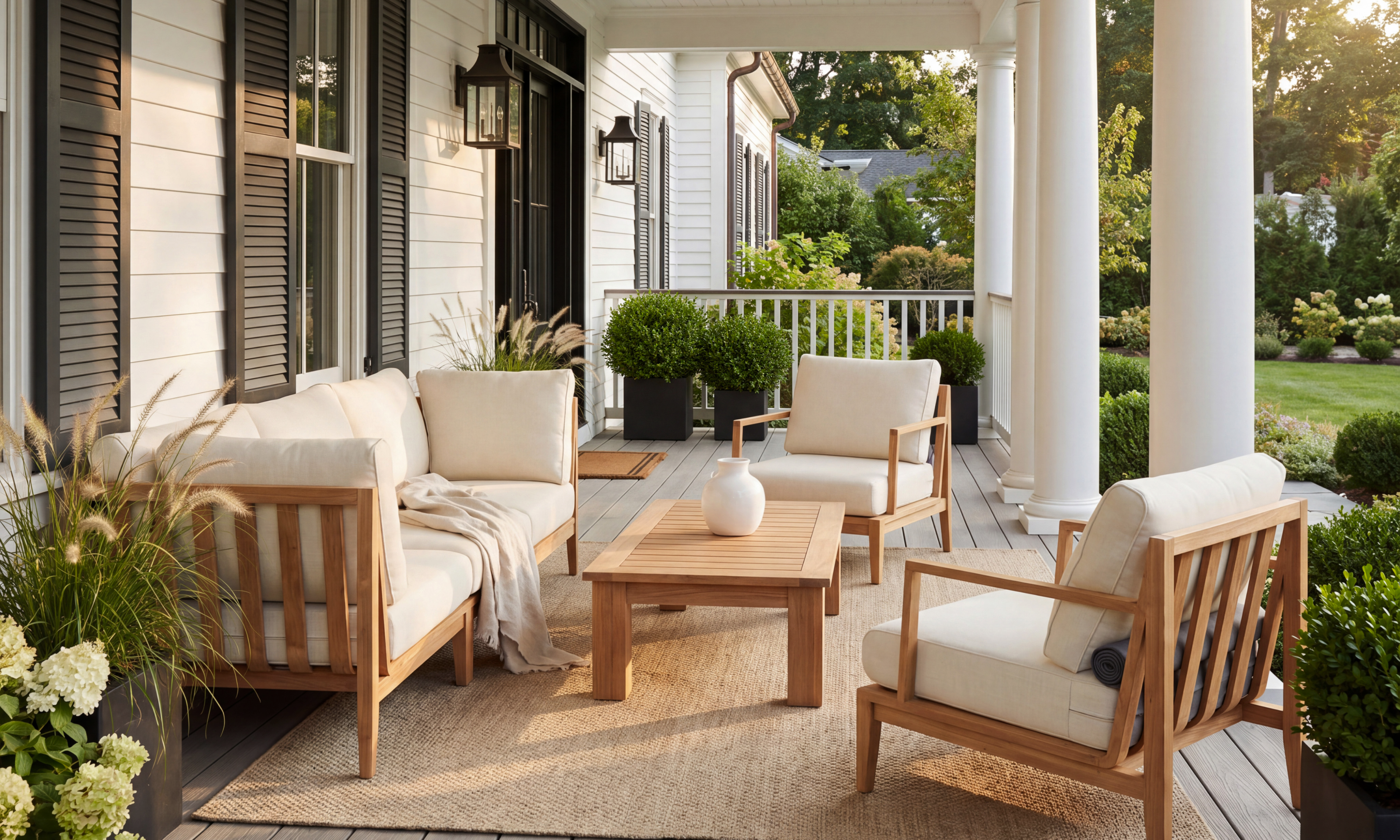
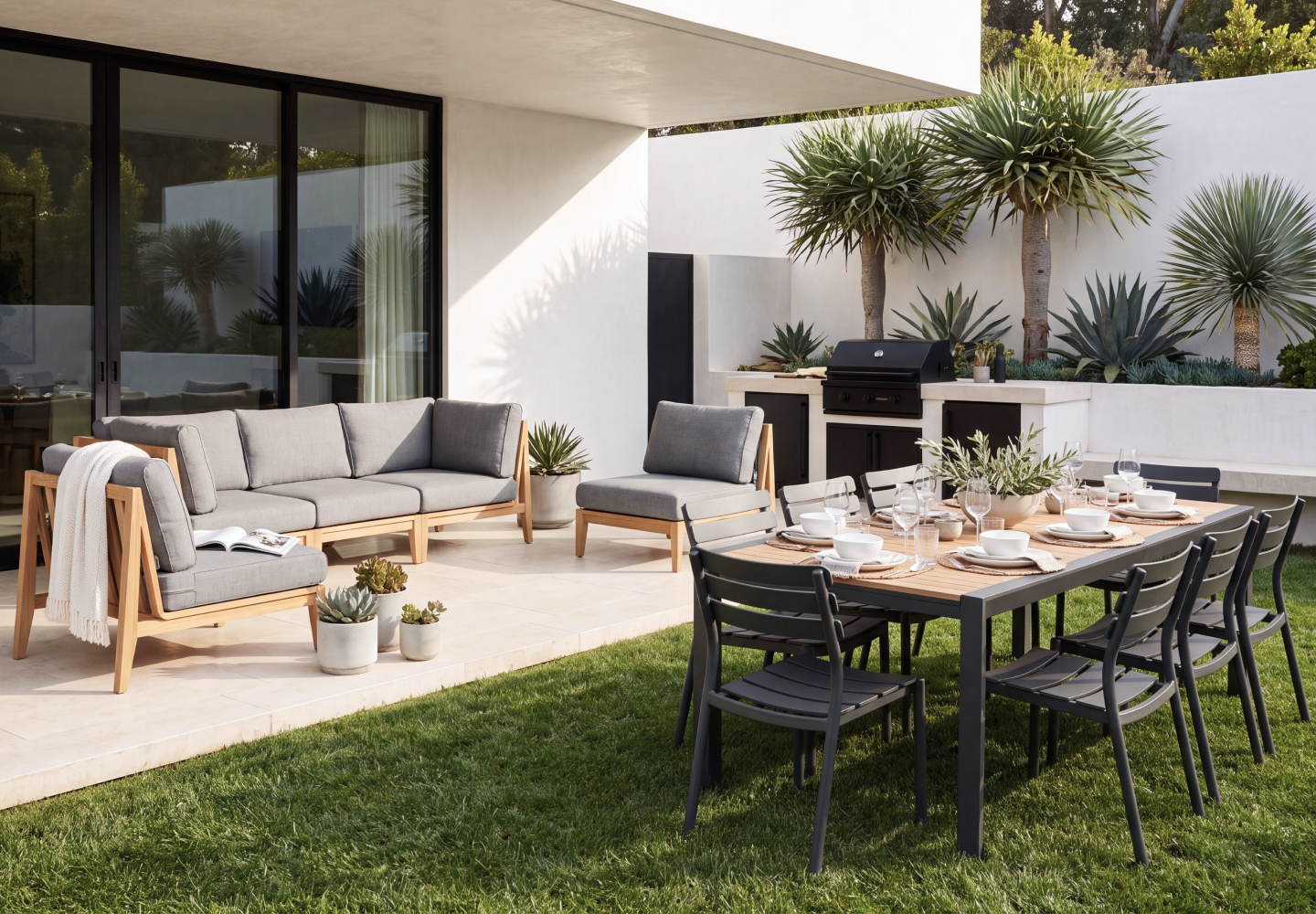
That natural character gives outdoor sofas, sectionals, coffee tables, and dining pieces an organic warmth that works across modern patios, covered porches, decks, and garden settings.
With outdoor exposure, teak gradually develop a silver-gray patina. Some owners embrace the weathered tone; others follow a regular care routine to retain more of the original golden color. Read the teak care guide.

01 / Material Selection
Only the Finest Teak Makes the Cut
Outer begins with FSC-certified Grade-A teak. Responsible sourcing creates a traceable material foundation, but certification is only the beginning: the timber still needs to meet the visual and structural standards required for natural, non-painted furniture.
At the factory, incoming teak is evaluated for maturity, grain, knots, dark spots, pale edges, and other visible characteristics. Experienced workers then identify the sections best suited to become exposed furniture components.
This selection matters as a natural teak frame leaves every raw grain and detail completely visible. Grain, tone, and workmanship cannot simply be hidden beneath an opaque coat of paint.
02 / Cutting and Drying
Cut with Judgment. Dried with Control.
Selected teak is not simply divided into standard pieces. Craftspeople study each sawn section, mark the most effective cutting path, and work around visible characteristics in the timber. Their decisions influence appearance, material use, and the consistency of the finished components.
Curved parts demand even more planning. Sculpted arms, legs, and architectural elements require larger timber cuts, making precise marking and master craftsmanship vital.
Before precision shaping begins, components are sorted by thickness for computer-controlled kiln drying. The drying program is adjusted to the material, followed by moisture checks before the teak moves forward.

Responsible Material Use
Wood offcuts and collected sawdust fuel our kiln-drying process, turning production remnants into sustainable energy with purpose.
The quality of natural teak cannot be hidden beneath a coat of paint.
Which is why every earlier step matters

03 / Precision Shaping
Shaped to Fit. Joined with Precision.
Once dried, teak components move closer to their final dimensions through moulding, cutting, and curved spindle work. Fixtures and jigs help hold each piece in a repeatable position, supporting consistency from one frame component to the next.
Mortise-and-tenon preparation and drilling are especially important because they determine how accurately the pieces come together during assembly. A strong frame begins with clean dimensions and joints that fit as intended.
Moulding and spindle work create final dimensions, curves, and design details.
Mortises, tenons, and drilled points prepare components for accurate assembly.
Machine sanding establishes a smooth, consistent surface before the frame is assembled.
04 / Assembly and Hand Finishing
Finished by Hand
Before assembly, matching components are sorted and kitted together. Adhesive is applied inside the mortise-and-tenon joints, and the frame is held under controlled pressure while the structure sets.
The assembled frame then moves through cleanup, final hand sanding, and visual inspection. Here, master artisans hone every detail—the bevel of an edge, the silken touch of an armrest, and the seamless fit of visible joints.
Sort and Kit
Matching parts are grouped so the complete frame can be assembled in sequence.
Apply and Join
Adhesive is applied inside the prepared mortise-and-tenon connections.
Hold Under Pressure
Purpose-built fixtures keep the frame aligned while the joints set.
Sand by Hand
Edges, surfaces, joints, and remaining adhesive are refined before inspection.
Made to be seen, not covered up
Outer’s Grade-A teak is left entirely unpainted, allowing the rich organic grain, warm golden tones, and honest craftsmanship to shine.
From Process to Patio
What It Means for Your Outdoor Space
The manufacturing process isn't built for show. Every single step must add tangible value, integrity, and longevity to the finished piece.
Responsible sourcing provides a traceable foundation. Grade-A selection guarantees natural beauty. Precision kiln-drying secures structural stability. Master joinery ensures perfect alignment. Finally, fine hand-sanding refines every surface you touch daily.
The result is luxury teak outdoor furniture offering organic warmth, structural integrity, and an elevated connection to modern open-air living.
Continue the Story
Explore Outer Teak Outdoor Furniture
Frequently Asked Questions
About Outer Teak Furniture
Material, manufacturing, weathering, and everyday care.
How is Outer teak furniture made?
The process begins with FSC-certified Grade-A teak selection, followed by experienced cutting, controlled kiln drying, precision shaping, mortise-and-tenon preparation, machine sanding, frame assembly, and final hand sanding and inspection.
What makes Grade-A teak different?
Grade-A teak is selected for maturity, grain, color, and visible quality. Because Outer presents teak in a natural, non-painted finish, the quality and consistency of the wood itself are especially important.
Why is FSC-certified teak important?
FSC certification supports a more responsible and traceable material foundation before the teak enters production. Outer identifies its teak outdoor furniture as FSC-certified.
Why does teak furniture need kiln drying?
Kiln drying reduces and controls moisture before teak is shaped, joined, and assembled. The process helps the timber behave more predictably during manufacturing and supports dimensional stability in the finished frame.
Will teak outdoor furniture turn gray?
Teak can gradually develop a silver-gray patina with exposure to sun and rain. Some owners prefer this weathered appearance, while regular cleaning and optional teak care can help retain more of the wood’s original warm tone.
How should I clean Outer teak furniture?
Use a gentle routine intended for outdoor teak and avoid harsh cleaning methods that could damage the surface. Follow the complete Outer teak furniture care guide for step-by-step instructions.