

How to Choose the Best Outdoor Blanket for All Seasons
Outdoor Accessories Guide
The ideal outdoor blanket elevates open-air lounging—tailored to your climate, setting, and outdoor routine.
Outdoor throws, waterproof picnic blankets, and insulated camp gear each serve a distinct purpose. This guide outlines essential buying criteria—highlighting why a lightweight, machine-washable throw is the ultimate everyday staple.

The Quick Answer
Selecting an outdoor blanket comes down to settings. For patio lounges, fire pit gatherings, and evening decks, opt for a soft, lightweight throw with a tactile hand-feel and machine-washable ease. Reserve heavy technical insulation for cold-weather camping, and dedicated waterproof backings for damp turf.
Start With the Use Case
What should you look for in an outdoor blanket?
Start with the environment: surface moisture, ambient temperature, and whether you need an inviting shoulder wrap or a dedicated ground barrier.

Patio sofa or outdoor chair
Prioritize softness, manageable weight and easy home laundering. A patio throw should be comfortable enough to wrap around your shoulders, compact enough to keep nearby and simple to refresh after pollen, food or everyday outdoor use.
Best match: lightweight outdoor throw
Warm, bug-proof evenings
Extra insulation may matter less than breathability and insect protection. Look for a light layer that does not feel excessive in summer temperatures.
Prioritize: lightweight + insect protection
Fire pit seating
Choose enough coverage for cooling temperatures and keep every textile safely away from flames, sparks and hot surfaces. A washable blanket is useful when smoke or outdoor dining is part of the evening.
Prioritize: coverage + easy care
Picnics on dry grass
A larger, portable blanket can work on a clean, dry surface. If dampness is possible, check whether the product has a dedicated moisture barrier rather than assuming every “outdoor” blanket is waterproof.
Prioritize: size + portability
Wet ground or beach use
Choose a purpose-built ground blanket with a waterproof backing, reinforced construction and a surface that releases sand or dirt easily. A soft patio throw is not a substitute.
Best match: waterproof-backed blanket
Cold-weather camping
Technical insulation, wind resistance, packed size and temperature-appropriate equipment matter more than decorative texture. Use gear designed for the conditions you expect.
Best match: insulated camping blanket
Material Comparison
Outdoor fabrics: from recycled polyester to wool
No single material wins every category. The best choice depends on whether you value everyday patio comfort, traditional warmth, breathability or protection from damp ground.
| Material | Strengths | Limitations | Best For |
|---|---|---|---|
|
Everyday patio use Recycled polyester |
Lightweight, durable, soft, easy to wash and practical across changing temperatures | Not automatically waterproof and not a replacement for technical cold-weather insulation | Patio seating, outdoor sofas, warm-weather evenings and frequent use |
| Wool | Naturally warm, insulating and comfortable in cool, dry conditions | Heavier, often slower to dry and may require more careful cleaning | Cool evenings and dry-weather lounging |
| Fleece | Soft, warm, relatively lightweight and widely available | Can trap debris and may feel too warm during summer | Casual cool-weather use |
| Cotton | Soft, breathable and familiar against the skin | Absorbs moisture and can take longer to dry once damp | Dry summer evenings and covered spaces |
| Waterproof-backed fabric | Creates a barrier between the user and damp ground | Often stiffer and less comfortable as a shoulder or sofa throw | Picnics, beaches and wet grass |
Important Distinction
“Outdoor” is not synonymous with “waterproof”.
Outdoor blankets fall into two distinct categories: heavy-duty ground barriers built for damp grass, and wearable throws designed for elevated patio comfort. If your goal is to drape yourself in warmth on an outdoor sofa, choose breathable, high-performance textiles—like the Outer Bug Shield Blanket—which balances soft, tactile comfort with invisible insect defense.
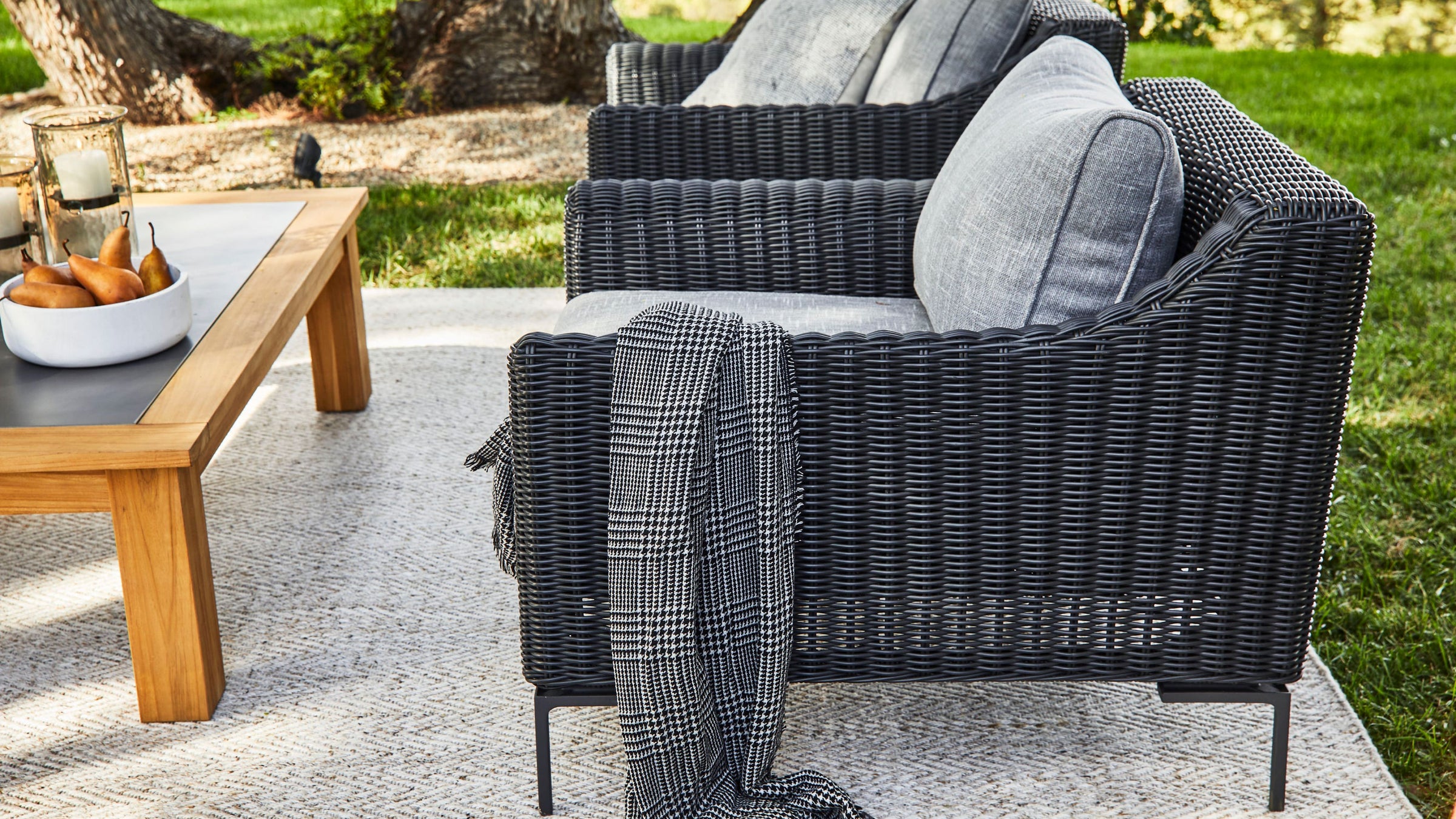
Outer Product Guide
Outdoor Bug Shield Throw Blanket
Designed for effortless patio lounging, the Bug Shield Throw Blanket combines lightweight warmth with built-in bug protection.
Crafted from 100% recycled polyester, it features invisible, odorless, EPA-registered Insect Shield® technology that repels mosquitoes and ticks through 25 washes.
Designed as a lightweight outdoor throw. It is not presented as a waterproof ground blanket or as extreme-cold camping insulation.
Season-by-Season Guide
How to Choose the Best Outdoor Throw Blanket for Any Season?
True all-season functionality relies on a versatile base layer, adapting how you wrap, clean, and store your blanket as weather patterns shift.

Plan for pollen, dew and quick temperature changes.
Spring weather shifts quickly from mild sun to damp evening chill. Fast-drying, washable fabrics are essential.
- Shake off pollen and loose debris before folding.
- Bring the blanket inside if rain or prolonged dampness is expected.
- Choose a manageable weight that is easy to move with the weather.

Prioritize light coverage and insect protection.
On summer evenings, the main problem may not be cold. A soft, breathable-feeling layer can add comfort after sunset without the bulk of a winter blanket.
- Use a lightweight throw instead of a heavy insulated blanket.
- Consider insect-repellent textiles in mosquito-prone spaces.
- Keep it within reach for late dinners and outdoor movie nights.

Choose more coverage for longer, cooler evenings.
Fall is when dimensions become more noticeable. A personal throw may be enough for one seat, while a larger blanket is better for sharing or covering more of the legs.
- Consider the 60" × 80" size for sharing or added coverage.
- Wash after smoky or food-centered gatherings when necessary.
- Keep all blankets well away from open flame, sparks and hot fire pit surfaces.

Use a lightweight throw as one layer—not the whole system.
In mild climates, a throw can support brief winter patio use. In freezing, windy or snowy conditions, clothing, sheltered seating and purpose-built cold-weather equipment become more important.
- Layer the blanket rather than relying on it as technical insulation.
- Store it indoors, clean and completely dry.
- Do not leave a soft outdoor throw exposed to repeated winter storms.
Blanket Size Guide
What size outdoor blanket should you choose?
Think about bodies and furniture—not just measurements. A smaller throw is easier to carry and store, while a larger blanket provides better shared coverage on a sofa or around a fire pit.
Personal Throw
Best for one person, individual outdoor chairs, chaise lounges, compact storage and easy carrying from indoors to the patio.
Sharing & More Coverage
Best for two people, larger outdoor sofas, cooler fire pit seating and anyone who wants more complete shoulder-to-leg coverage.
Care & Storage
How do you clean and store an outdoor blanket?
To extend its lifespan, shake off loose debris, spot-treat spills immediately, and ensure the fabric is thoroughly dry before storing.
Remove pollen, crumbs, leaves and loose dirt before washing or storage.
Address small spills early with mild detergent and follow the product label.
Outer recommends hand or machine washing its Bug Shield Blanket separately with mild detergent.
Make sure no dampness remains before the blanket is folded or placed in storage.
Keep the blanket in a clean, dry, ventilated space when it is not in use.
Avoid dry cleaning. To preserve its EPA-registered Insect Shield® protection (effective up to 25 washes), machine-wash gently only when needed. For comprehensive fabric care, review our Outer Care & Maintenance Guide.
Long-Term Value
What is the real cost of an outdoor blanket?
True value lies in enduring quality. Multi-season versatility, low-maintenance care, and timeless design make an outdoor throw a wellness investment.
A lightweight throw that works from spring through fall may see more use than a heavy blanket reserved for a few cold nights.
Home laundering and simple storage reduce the friction and expense of keeping a frequently used blanket fresh.
Insect protection adds a purpose beyond warmth for households where mosquitoes routinely shorten time outside.
The right size and material improve cost per use because the blanket is more likely to stay in regular rotation.
Frequently Asked Questions
On Outdoor Blankets
What is the best material for an outdoor blanket?
For everyday patio and outdoor sofa use, recycled polyester offers a strong balance of softness, manageable weight, durability and easy care. Wool may be preferable for dry, cold conditions, while a waterproof-backed material is better when the blanket will be placed on wet ground.
Are outdoor blankets waterproof?
Not automatically. “Outdoor blanket” can describe both soft throws and waterproof ground blankets. Check whether the product specifically includes a waterproof backing before using it on damp grass, sand or soil. Outer’s current Bug Shield Throw Blanket is presented as a lightweight outdoor throw, not as a waterproof ground barrier.
Can you leave an outdoor blanket outside?
It is better to bring a soft outdoor blanket into a dry, protected space when it is not being used. Repeated exposure to rain, dew, dirt and prolonged sunlight can create unnecessary cleaning and shorten the useful life of many textiles. Always let the blanket dry completely before folding or storing it.
What size outdoor blanket should I buy?
A 50" × 60" throw is a practical personal size for one chair, chaise or sofa seat. A 60" × 80" blanket offers more coverage for two people, larger seating or cooler evenings. Also consider whether the blanket must fit inside an existing storage box or basket.
Can outdoor blankets be machine washed?
Many can, but the care label should always decide. Outer recommends washing its Bug Shield Blanket separately by hand or machine with a mild detergent and avoiding dry cleaning. Confirm drying instructions on the sewn-in label before laundering.
Do insect-repellent blankets work after washing?
The answer depends on the treatment and manufacturer. Outer states that the Insect Shield® treatment used on its Bug Shield Blanket remains effective through 25 washings. Follow the product’s washing instructions to avoid unnecessary wear.
Can I use an outdoor throw blanket around a fire pit?
A throw can provide useful coverage as temperatures drop, but every blanket should remain well away from open flame, sparks, burners and hot surfaces. Follow the fire pit manufacturer’s clearance and safety instructions, supervise children and pets, and never use a blanket to handle or cover hot equipment.
Comfort After Sunset
Make outdoor evenings last longer.
Bring lightweight comfort, recycled materials and built-in insect protection to the patio, deck or outdoor sofa.
Explore the Bug Shield Blanket