

Outdoor Furniture · Material Guide
How to Choose All-Weather Wicker Outdoor Furniture (2026)
The material underneath the weave matters more than the weave itself. Here is what to look for.

The quick answer
Three Things to Verify Before You Buy Wicker Furniture
Wicker describes the weaving technique. The material underneath determines whether the piece survives its first winter or its first decade.
Verify HDPE resin. Skip PVC. HDPE wicker is infused with UV inhibitors throughout the material. PVC wicker turns brittle within two seasons.
Confirm the frame is powder-coated aluminum. Steel frames rust internally. Rust bleeds through the weave and stains the patio. Aluminum stays clean.
Check that the fabric is solution-dyed. Printed fabric fades. Solution-dyed fibers hold color because the pigment lives inside the polymer — running through every strand.
What Makes Wicker Outdoor Furniture Weather-Resistant
Outdoor wicker falls into two categories. The first uses high-density polyethylene (HDPE) resin, a UV-stabilized polymer engineered for full weather exposure — this is what separates weather resistant wicker outdoor furniture from the disposable kind. The second uses standard PVC, a cheaper plastic suited for indoor or covered use. The two look similar in product photos. They perform nothing alike.
HDPE is the standard for all-weather outdoor wicker. UV inhibitors are infused throughout the material during extrusion. Surface-coated UV protection peels and washes away. Embedded inhibitors extend through every strand. It withstands direct sunlight, heavy downpours, and freezing temperatures without becoming brittle. PVC wicker softens in hot weather and cracks in winter, leading to saggy or snapped strands within one to two seasons.
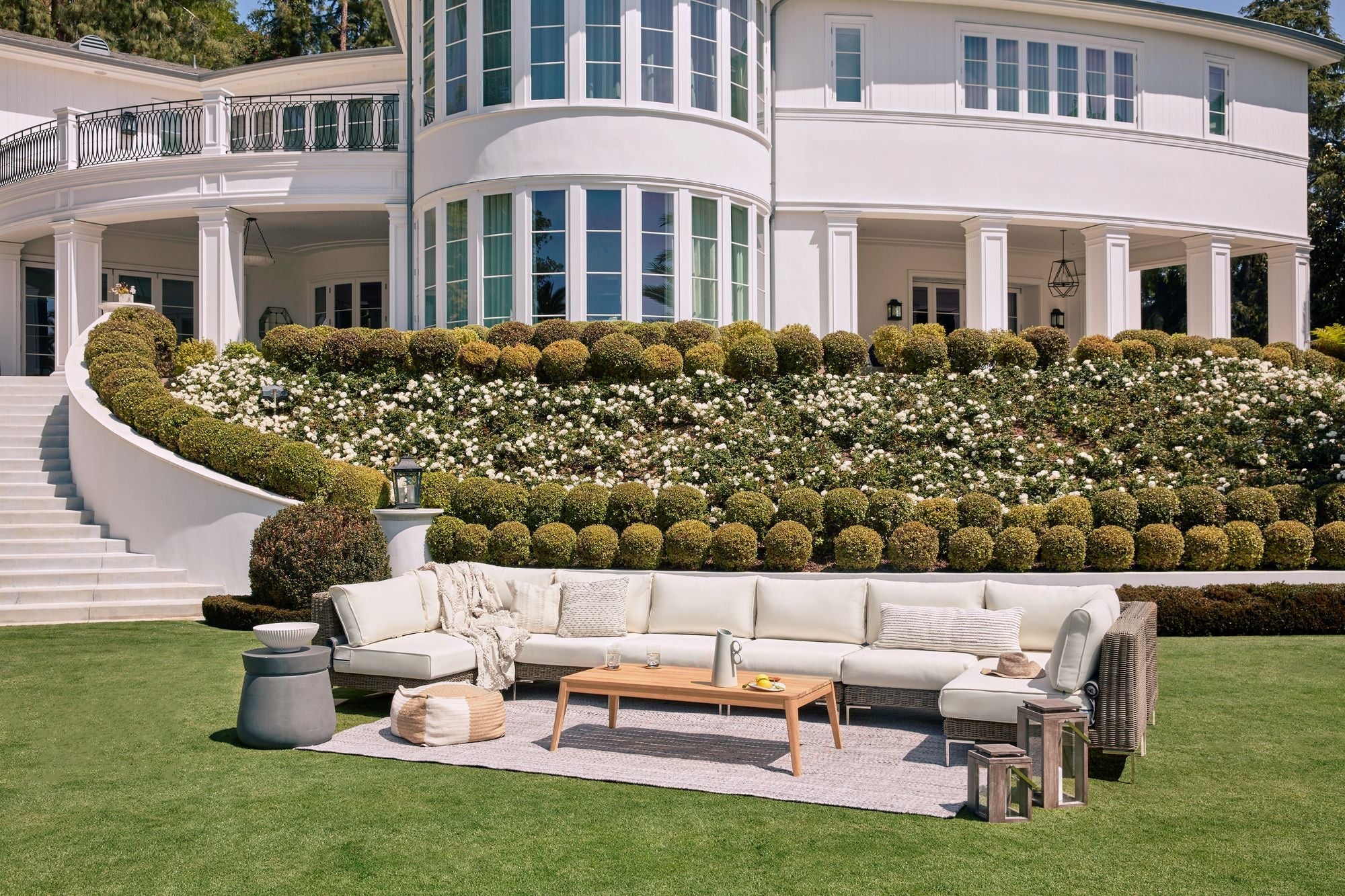
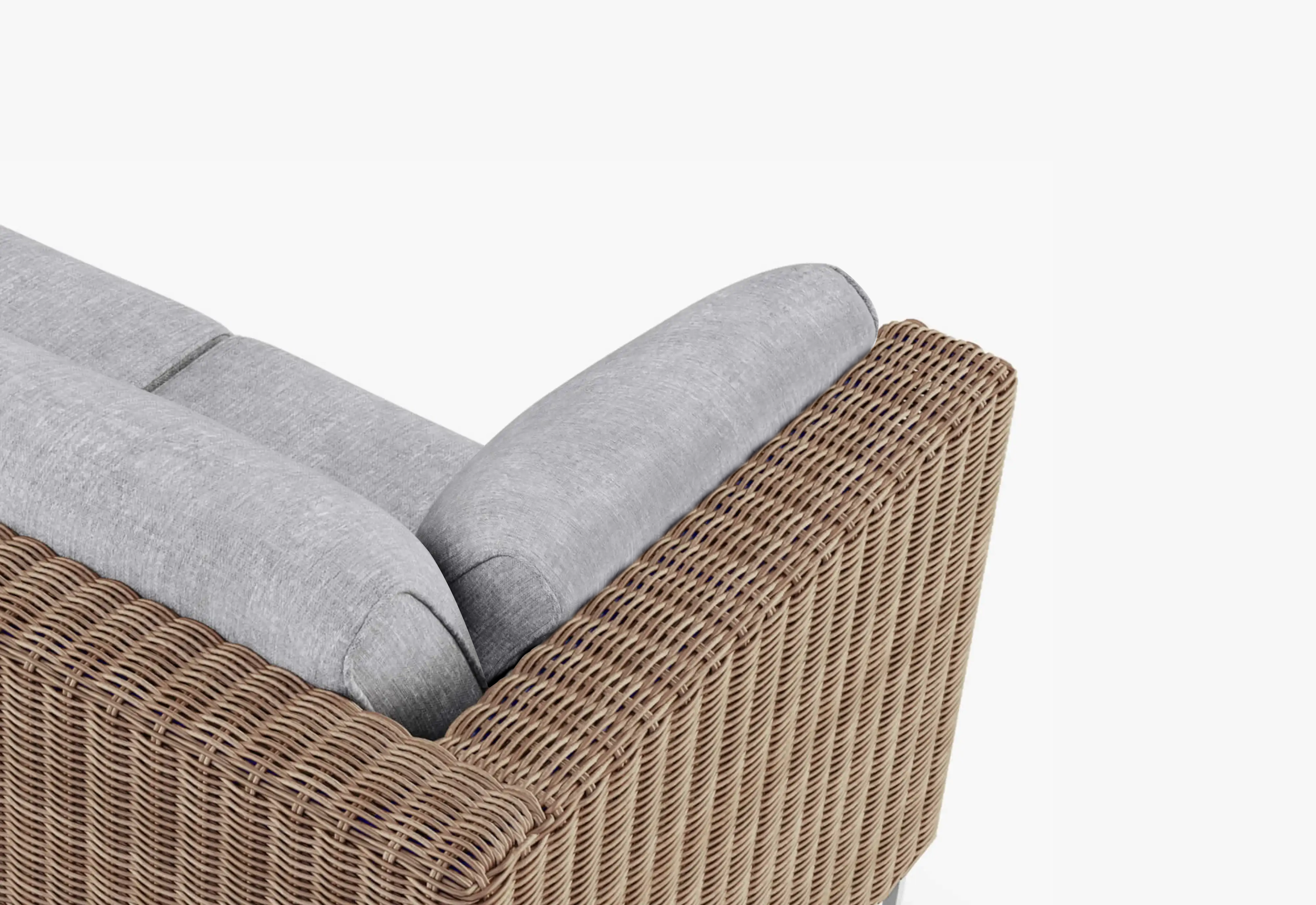
Buying tipHand-woven HDPE resin wicker with varied color tones creates a soft, tactile surface that mimics natural rattan. The multi-tonal strands also hide the inevitable scuffs and rubs better than flat, single-color PVC.

Frame Engineering That Determines Wicker Durability
A wicker weave is a tension structure. Every strand is stretched tightly around the underlying frame. When the frame rusts, warps, or weakens, the weave loosens. The chair sags. Sections that looked seamless in photos begin to gap.
Powder-Coated Aluminum Frames
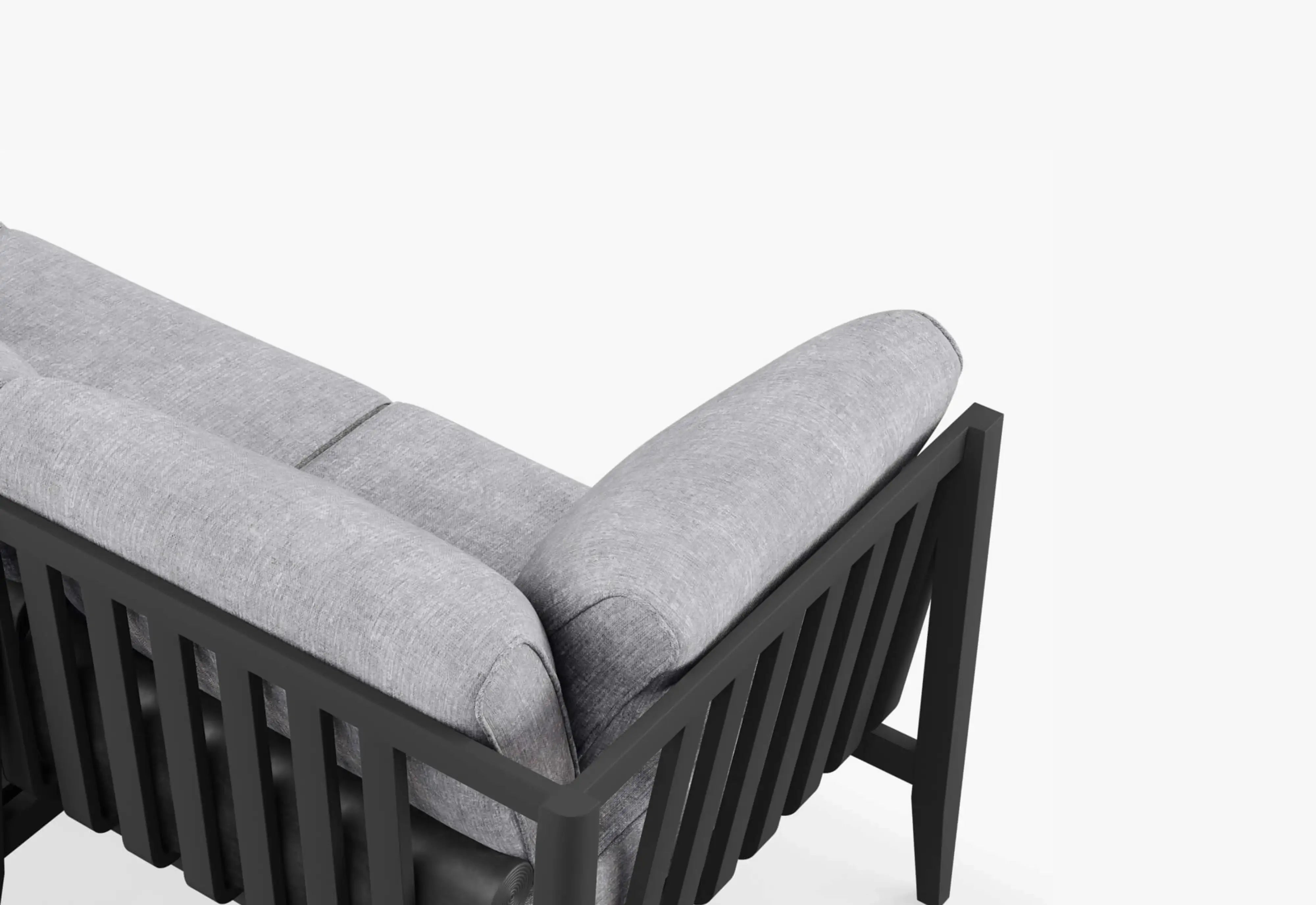
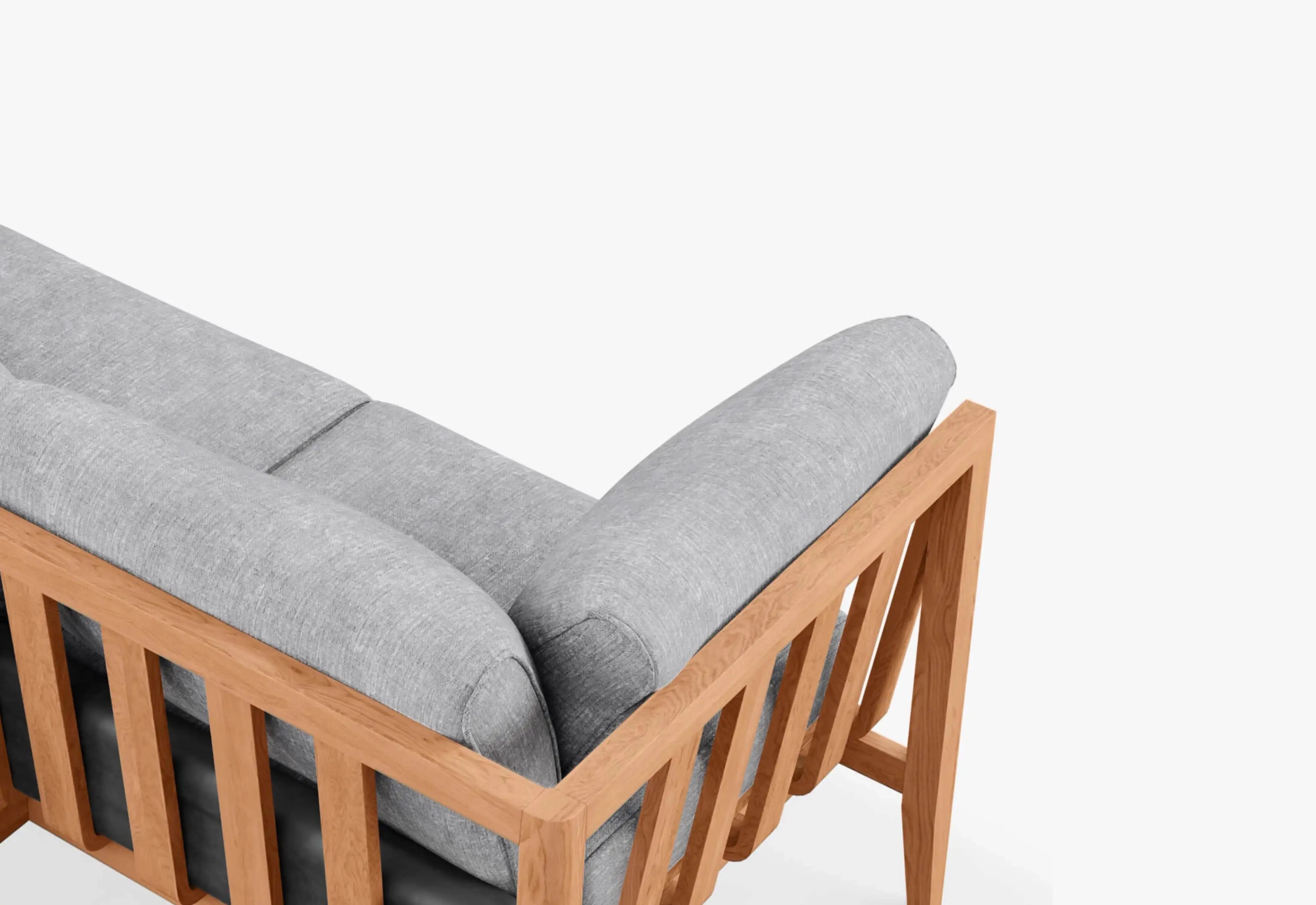
Heavy-gauge aluminum with a powder-coated finish is the benchmark for outdoor wicker frames. Aluminum stays rust-free in rain, humidity, and coastal salt air. It is lighter than steel — a sectional chair moves easily when you reconfigure the layout — and the powder coating adds a second layer of corrosion resistance without peeling or chalking.
The Steel Frame Problem
Steel costs less to manufacture, which is why it appears in lower-priced wicker sets. The trade-off shows up later. Moisture penetrates through bolt holes, weld points, and scratches in the coating. Internal rust develops invisibly. Eventually, reddish-brown stains bleed through the wicker weave and onto the patio surface beneath. The frame loses structural strength at the same time — a rusted joint can fail under body weight.

Cushion and Fabric Selection for Outdoor Comfort
Outdoor wicker furniture often anchors the main lounge area, which means the cushions live outside full-time. Density, drainage, and dye method decide whether they stay comfortable across seasons.
Multi-Layer Quick-Dry Foam
High-resilience foam cores wrapped in polyester fiber layers provide deep support while allowing water to drain quickly after rain. Single-layer cushions — common in entry-level wicker sets — hold water inside the foam and take days to dry in humid weather. Multi-layer construction separates the structural support layer from the comfort layer, so each performs its function without compromise.
Solution-Dyed Performance Fabrics
Standard printed outdoor fabrics apply color to the surface of finished fibers. UV exposure strips that surface color within months — the fabric fades to a washed-out version of itself. Solution-dyed fabrics infuse color directly into the liquid polymer before the fibers are spun. The pigment lives inside every strand. After years of direct sun, solution-dyed fabric reads as gently patinated rather than visibly faded.
Learn about OuterWeave® performance fabric
Matching Wicker Furniture Scale to Your Outdoor Layout
Wicker furniture shapes the room. A modular sectional fills a different role than a pair of armchairs flanking a side table. Match the furniture type to how the space is actually used.
Modular Sectionals for Open Patios and Fire Pit Zones
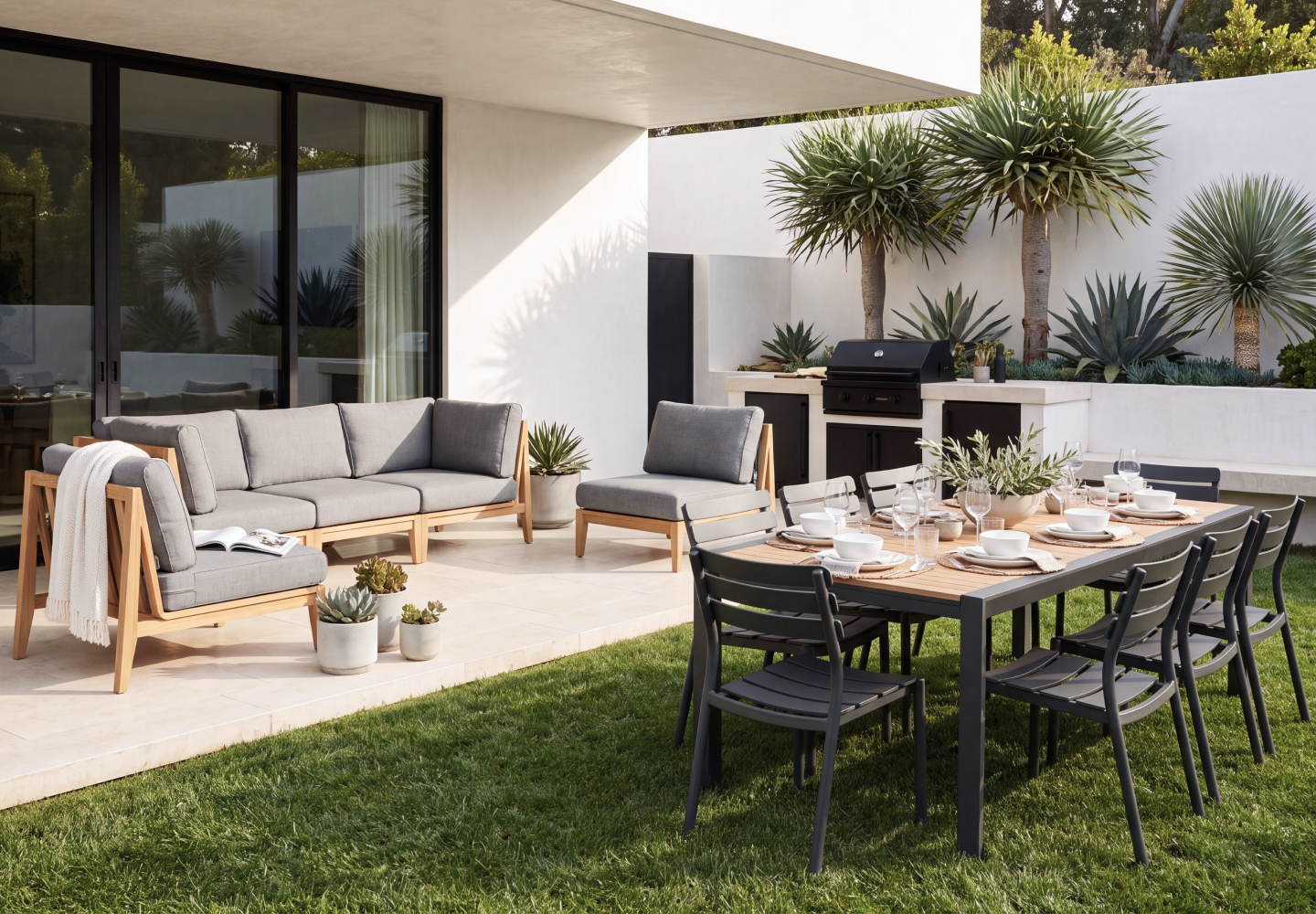
Modular wicker sectionals work when the layout needs to adapt. Add an armless chair to extend the conversation arc. Split the sectional into two facing benches for larger groups. Reconfigure around a fire pit as seasons change. Aluminum frames make reconfiguration practical — each piece weighs half of what a steel-framed equivalent would.
Armchairs and Accent Seating for Compact Layouts
A pair of wicker armchairs with a side table creates a defined conversation spot without claiming the entire patio. Armchairs work beside a pool, at the edge of a deck, or paired across from a sofa. The upright profile keeps sightlines open — a low-backed lounge chair in the same position would block the view.
Browse the all-weather wicker collection
Wicker at a Glance — How HDPE, PVC, and Natural Rattan Compare
| Factor | HDPE Resin Wicker | PVC Wicker | Natural Rattan |
|---|---|---|---|
| Weather resistance | UV-stabilized throughout. Handles rain, sun, snow, and salt air without degradation. | Minimal UV protection. Softens in heat, cracks in cold. Fades within one season of direct exposure. | None. Absorbs moisture. Swells, warps, and mildews outdoors. Indoor or fully covered use only. |
| Maintenance | Wipe with mild soap and water. No oiling, sealing, or refinishing required. | Cleans easily but degrades structurally. Maintenance becomes moot once strands snap. | Regular dusting. Avoid all moisture. Cannot be cleaned with water. Replace when weave loosens. |
| Texture & feel | Hand-woven with multi-tonal strands. Soft, varied, tactile — close to natural rattan in hand. | Machine-extruded in uniform colors. Feels slick and synthetic. Lacks depth. | The reference standard. Warm, organic, slightly irregular. The texture HDPE aims to replicate. |
| Lifespan | 8–15+ years outdoors with basic cleaning. Frame typically outlasts cushions. | 1–3 years before visible degradation begins. PVC is unsuitable as a long-term outdoor material. | 3–7 years indoors. Lifetime shortens dramatically with any moisture exposure. |
| Best climate | All climates. Performs equally in Arizona UV, Florida humidity, and Northeast freeze-thaw cycles. | Mild, covered, or fully shaded patios. Struggles anywhere with temperature extremes. | Indoor, climate-controlled spaces. Sunrooms with UV-filtered glass and no direct rain exposure. |
The table above makes the decision clean. HDPE resin wicker costs more upfront than PVC. The gap closes within two to three years — PVC sets replaced twice still cost more than one HDPE set bought once. Natural rattan belongs indoors. Shop the all-weather wicker sofa collection.
Wicker Built for Seasons
Wicker Seating Engineered for What the Weather Actually Does

Wicker Sofa — 3 Seat
Handwoven HDPE resin wicker on a powder-coated aluminum frame. OuterShell® pulls closed in 15 seconds. OuterWeave® fabric holds color through direct sun, rain, and salt air.
OuterShell® built-in
Brown wicker / Gray cushions

Wicker Sofa + Armchairs — 5 Seat
A complete conversation grouping. Two armchairs flank a three-seat sofa. Same HDPE wicker and aluminum frame construction. Same built-in weather protection.
OuterShell® on every seat
Brown wicker / Gray cushions
Common questions
All-Weather Wicker FAQ
Is all-weather wicker truly weatherproof?
HDPE resin wicker handles rain, sun, snow, and salt air without degrading. That is the defining quality of weather resistant wicker outdoor furniture: the material itself is non-porous, UV-stabilized, and flexible enough to survive freeze-thaw cycles. UV inhibitors are embedded into every strand at the molecular level. The protection never rubs off or washes away. It is not affected by moisture the way natural rattan is. It will not rust the way steel does. The cushions and frame matter just as much as the weave: solution-dyed fabric and a powder-coated aluminum frame complete the weather-ready system.
How long does HDPE wicker outdoor furniture last?
With basic cleaning, HDPE wicker on an aluminum frame lasts 8 to 15 years outdoors. The frame typically outlasts the cushions — expect to replace cushion inserts once during the furniture's lifetime. PVC wicker, by comparison, shows visible degradation within one to three years of direct outdoor exposure.
How do I clean outdoor wicker furniture?
Wipe HDPE wicker with a soft brush or microfiber cloth, mild dish soap, and water. Rinse with a hose on low pressure. Avoid pressure washers — they can force water into frame joints and loosen the weave tension. For pollen-heavy or coastal environments, rinse every two to three weeks. Salt accumulation is abrasive; fresh water removes it before it grinds into the strands.
Does outdoor wicker fade in the sun?
HDPE wicker with UV inhibitors resists fading for years. The color is embedded in the resin itself, so the strand is the same color all the way through. Over a decade or more, there may be subtle lightening, but the material never peels, blisters, or exposes a different-colored core. PVC wicker fades within months because the UV protection, if any, sits only on the surface.
Wicker vs. teak vs. aluminum — which outdoor material is best?
Each material serves a different priority. Wicker brings texture and a natural woven look. Teak brings warmth and the ability to age to a silver patina. Powder-coated aluminum brings a clean, modern profile with zero rust risk. The frame under the wicker matters more than the weave material alone. For a direct side-by-side breakdown, read our teak vs. aluminum comparison.
Can I leave wicker furniture outside in winter?
Yes. HDPE wicker handles freeze-thaw cycles without cracking because the material is flexible and non-porous — water cannot penetrate the strands and expand. Deploy OuterShell® over cushions to prevent ice from forming on the fabric. In regions with sustained heavy snow, add an All-Weather Cover over the entire piece and brush off accumulation after each storm.

Live Better. Outside.
Built for the Life You Have — Ready for the One You're Building
Handwoven HDPE wicker. Powder-coated aluminum frames. OuterShell® cushion protection built into every seat. Furniture that earns its place outdoors — season after season.