

The outdoor room edit
Covered Patio Ideas: 9 Ways to Create an Outdoor Room
The best covered patios feel like places to spend the afternoon, not merely places to escape the rain. A roof or pergola sets the boundaries; what you do beneath it makes the room.
Think about the moment you would actually use this space: coffee in morning light, dinner outside, or a quieter place to read after the house fills up. That everyday use should determine the amount of cover, the furniture, and the details you add. These nine ideas work for attached porches, freestanding pavilions, and pergolas—with different levels of shelter depending on the roof.

Choose the kind of cover for the weather you want to manage. An open-slat pergola gives patterned shade but little rain shelter; a solid roof offers more consistent overhead protection. Adjustable louvers can change light and airflow, with rain protection depending on the product and installation. Then plan the patio around one primary activity before adding anything else.
9 covered patio ideas worth using
Choose shade that can change with the day
A covered patio should respond to the sun at the hours you will be there. An open pergola preserves the feeling of sky; a solid roof creates steadier shade. If you want to adjust the balance, a louvered roof lets you change the angle of light and airflow. The Outer Pergola uses adjustable louvers and integrated rain management when closed. Check where afternoon sun enters from the side as well as what happens overhead.
Give the ceiling some attention
Under a solid roof, the ceiling is often the largest surface in view. A warm wood tone, restrained color, or simple fan can make an attached patio feel considered without filling it with decor. Under a pergola, keep the structure visible and let a few climbing plants or carefully placed lights soften its lines. Leave the structure, drainage, and any electrical work to the appropriate professionals.

Give one activity the best spot
Trying to fit a full lounge, dining room, and cooking area beneath a small roof usually makes each less useful. Choose the activity you do most often and place it where the light, view, and route from the house work best. A larger cover can hold both dining and lounging if there is a clear path between them. Use the edge of the roof as a natural boundary instead of pushing furniture against every post.
Arrange seats for conversation, not just symmetry
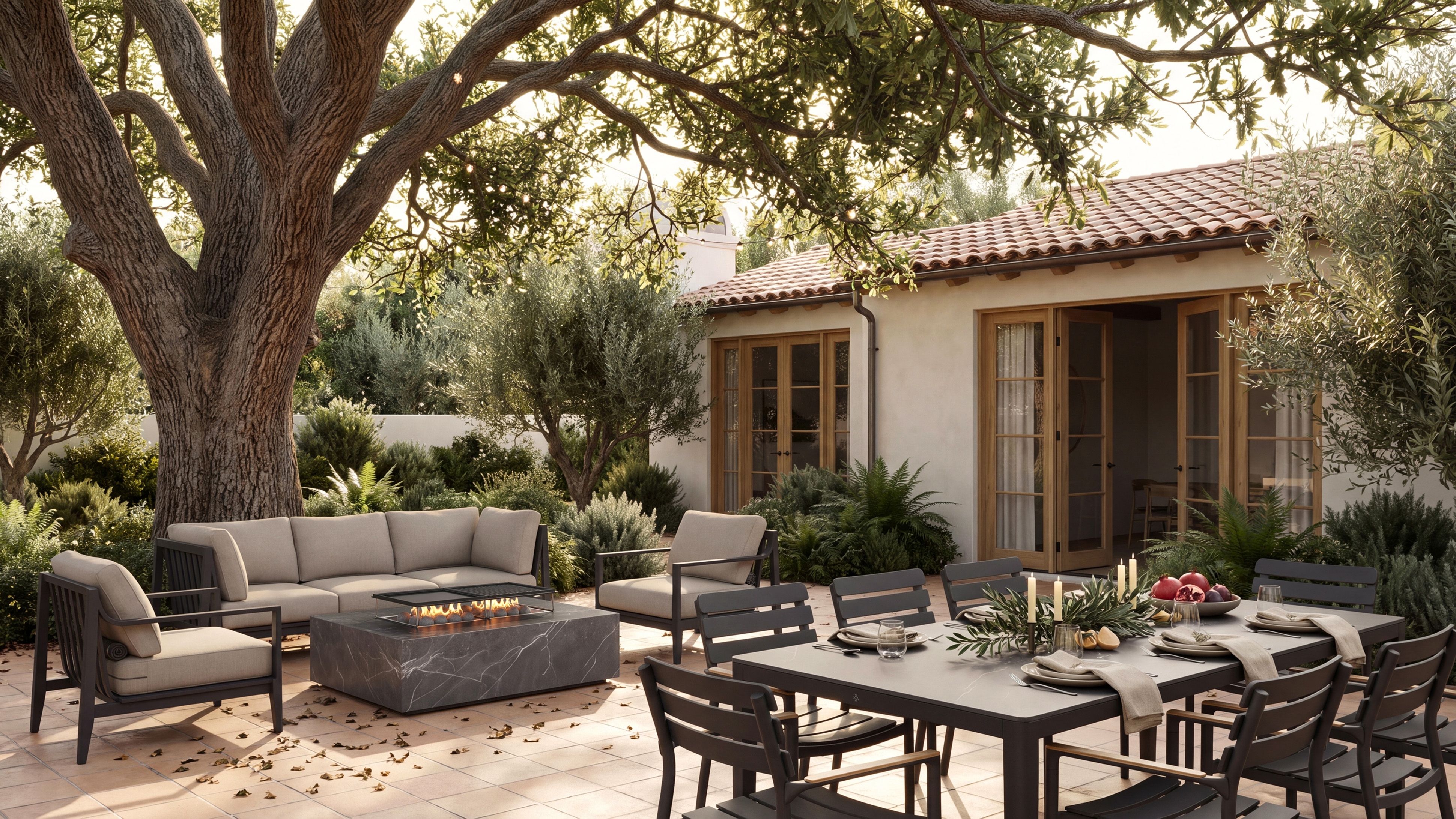
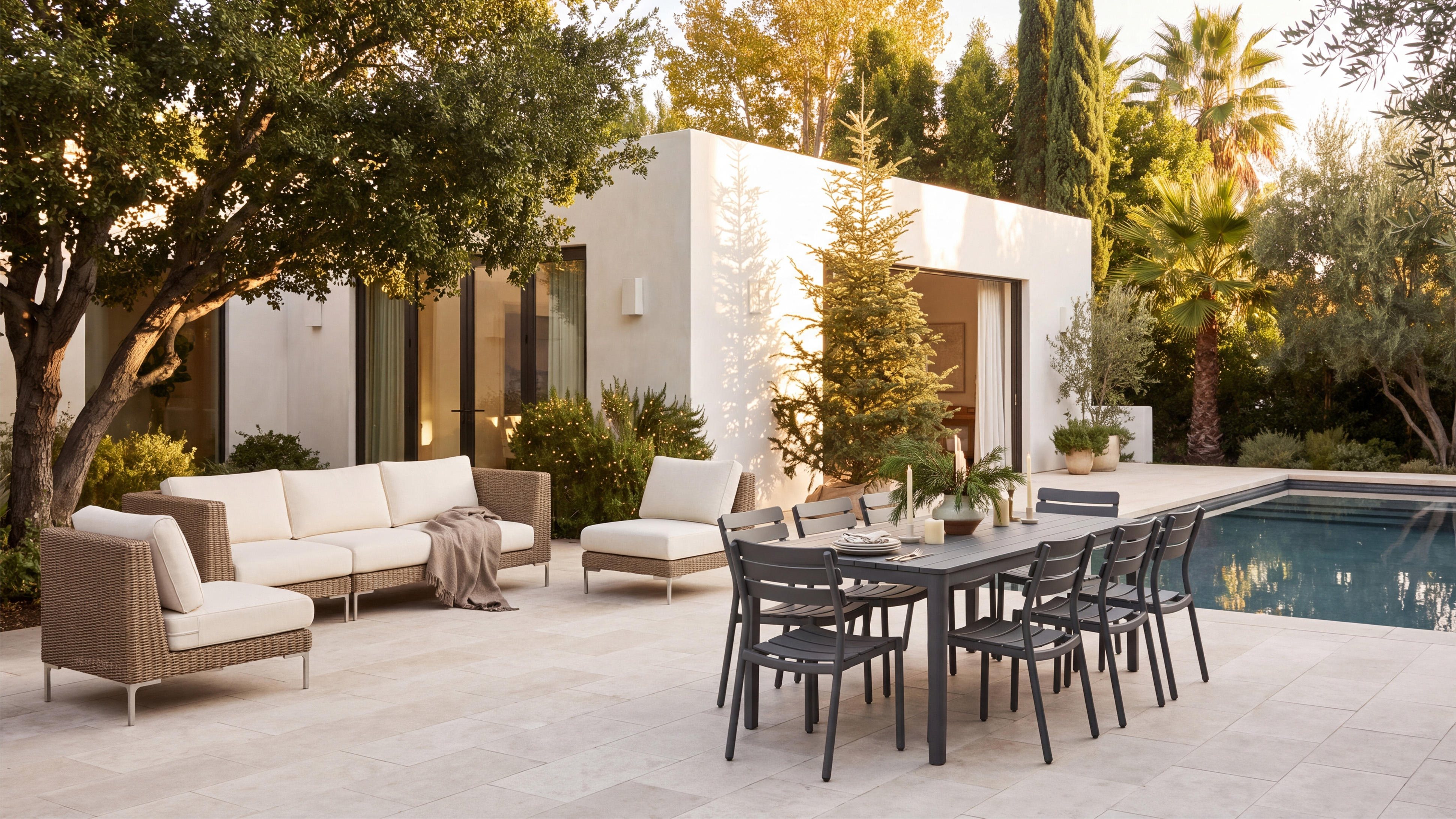
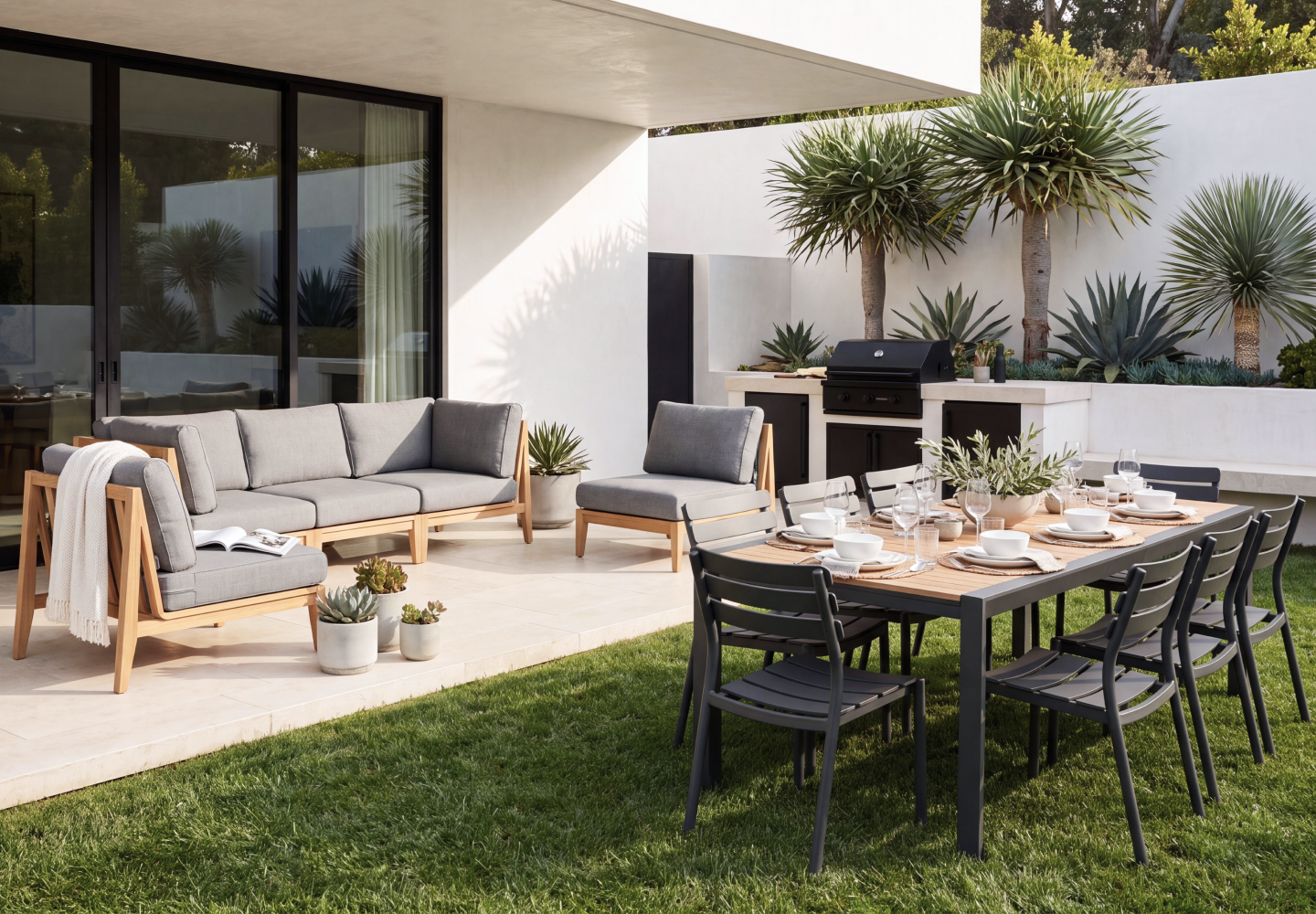
A straight sofa and two chairs can feel more welcoming than an oversized sectional if it leaves room to move. For a deeper patio, an L-shaped arrangement can turn everyone toward a central table while keeping the garden in sight. Outer’s modular seating lets you choose a layout that suits the space; measure the furniture and the walking route before committing to its final shape.
Make outdoor dining easy on an ordinary night
Position the table near a practical route from the kitchen, with enough room to pull back chairs. A covered dining area is most useful when a weeknight meal takes little setup. An extendable table can stay at a comfortable everyday size and open up when more people arrive. The Outer Teak + Aluminum Extendable Dining Table is one example for a generous covered footprint.
Layer light instead of flooding the patio
One glaring fixture makes an outdoor room feel exposed at night. Use a softer overhead glow for the table, lower light near seating, and clear lighting along steps and paths. Keep switches convenient so the patio feels inviting on a spontaneous evening. If you are planning a dining zone, Outer’s outdoor dining lighting ideas go deeper into placement.
Let texture make it feel lived in
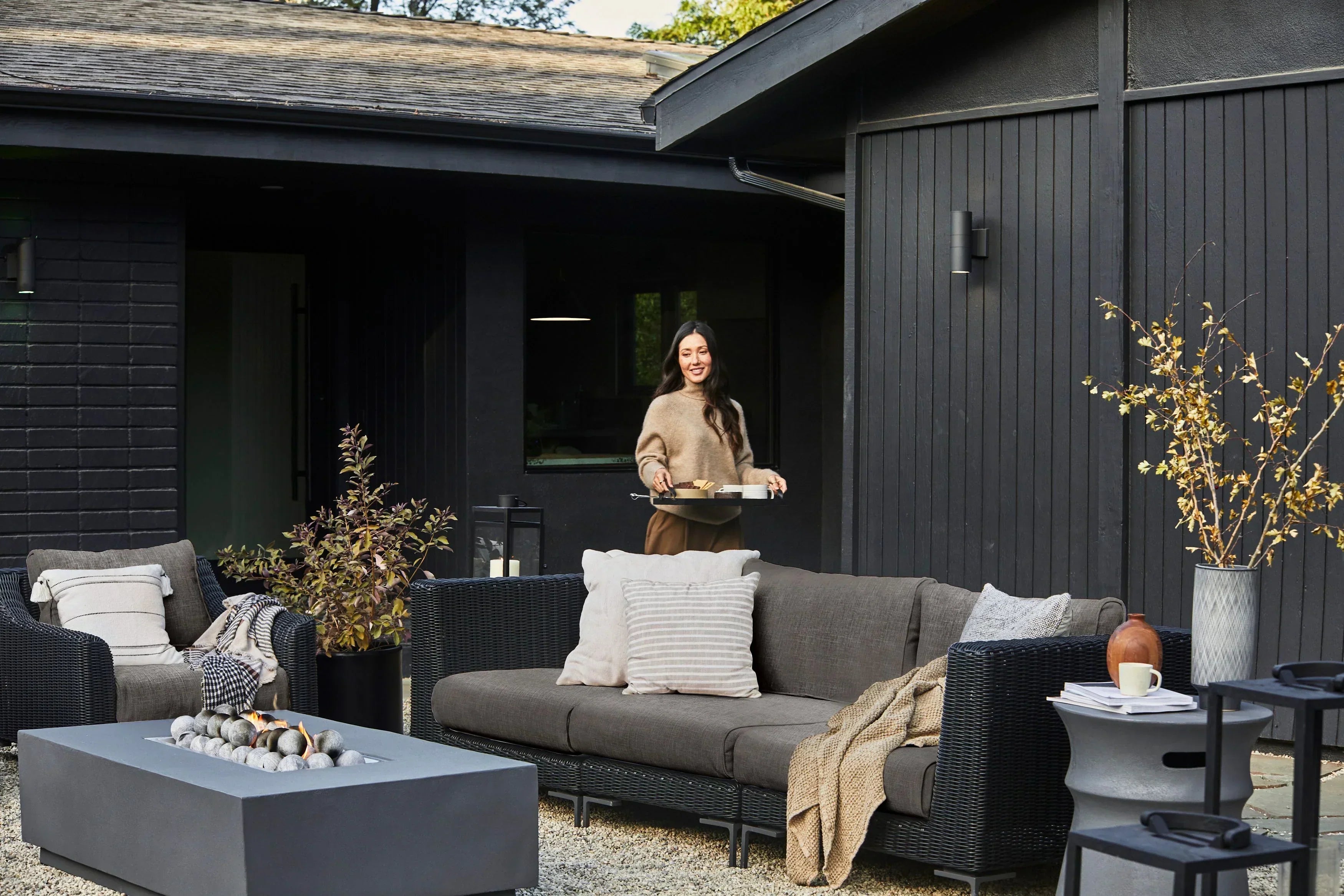
A rug can visually hold a seating group together, while a few cushions or a throw make the space more personal. Repeat one or two finishes rather than matching every piece: teak warms up a cool stone floor, while dark aluminum gives a wood ceiling a crisp counterpoint. Choose outdoor-rated textiles even beneath a roof; windblown rain, humidity, and pollen still reach covered spaces.
Add privacy without closing out the breeze
A planter at the edge, an open screen, or layered greenery can soften a view toward the neighbors while preserving the pleasure of being outside. Start with the one sightline you want to improve. Filling every opening can make a patio darker and reduce the airflow that helps furniture dry after damp weather.
Plan for the days you are not out there
Even a covered patio collects dust, leaves, and dew. Outer’s built-in OuterShell® rolls over compatible seating cushions between uses to help with everyday exposure. It is water-resistant rather than a waterproof substitute for full furniture protection. For prolonged rain, storms, or extended non-use, follow the product’s care directions and consider an All-Weather Cover or protected cushion storage.
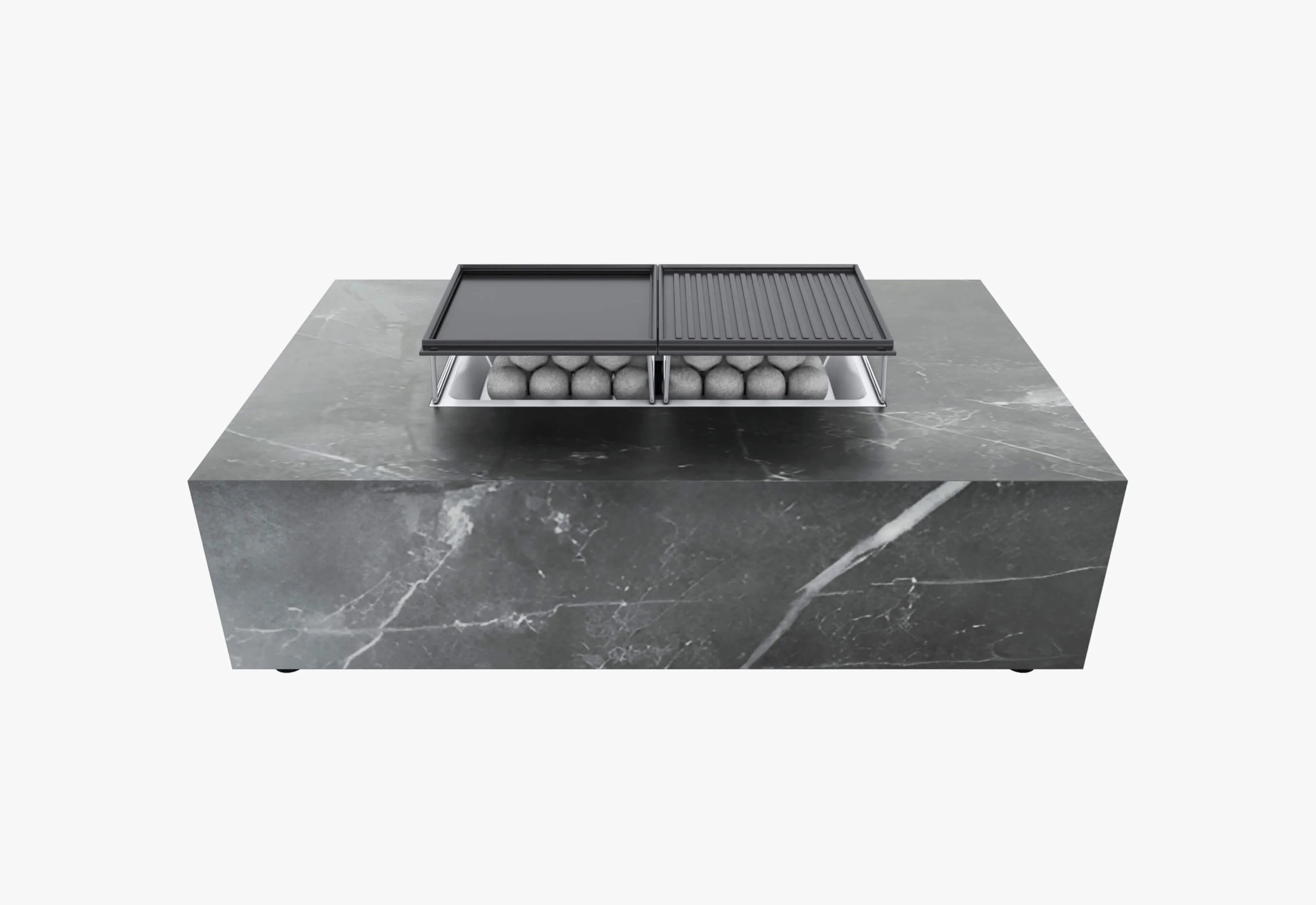
If you are considering a fire feature near a covered area, check the appliance’s required clearances, ventilation instructions, and local rules before deciding where it goes.
Pieces that help complete the room
Start with the structure if you need shade, or begin with the activity you want to bring outside. These Outer pieces address three different parts of a covered patio.

The Outer Pergola, 10' × 12'
Adjustable louvers, a powder-coated aluminum frame, and integrated rain management.
Explore the pergola →
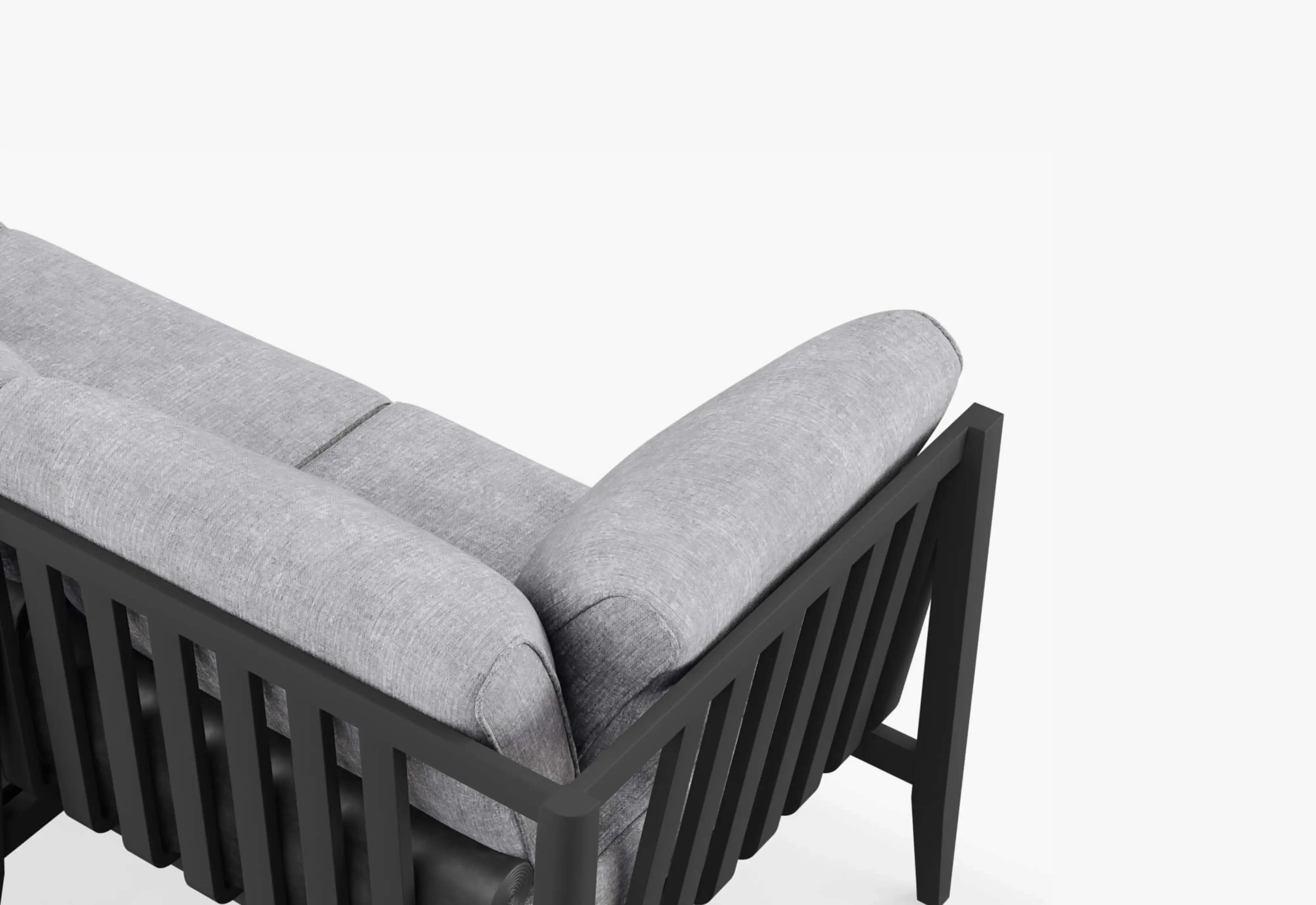
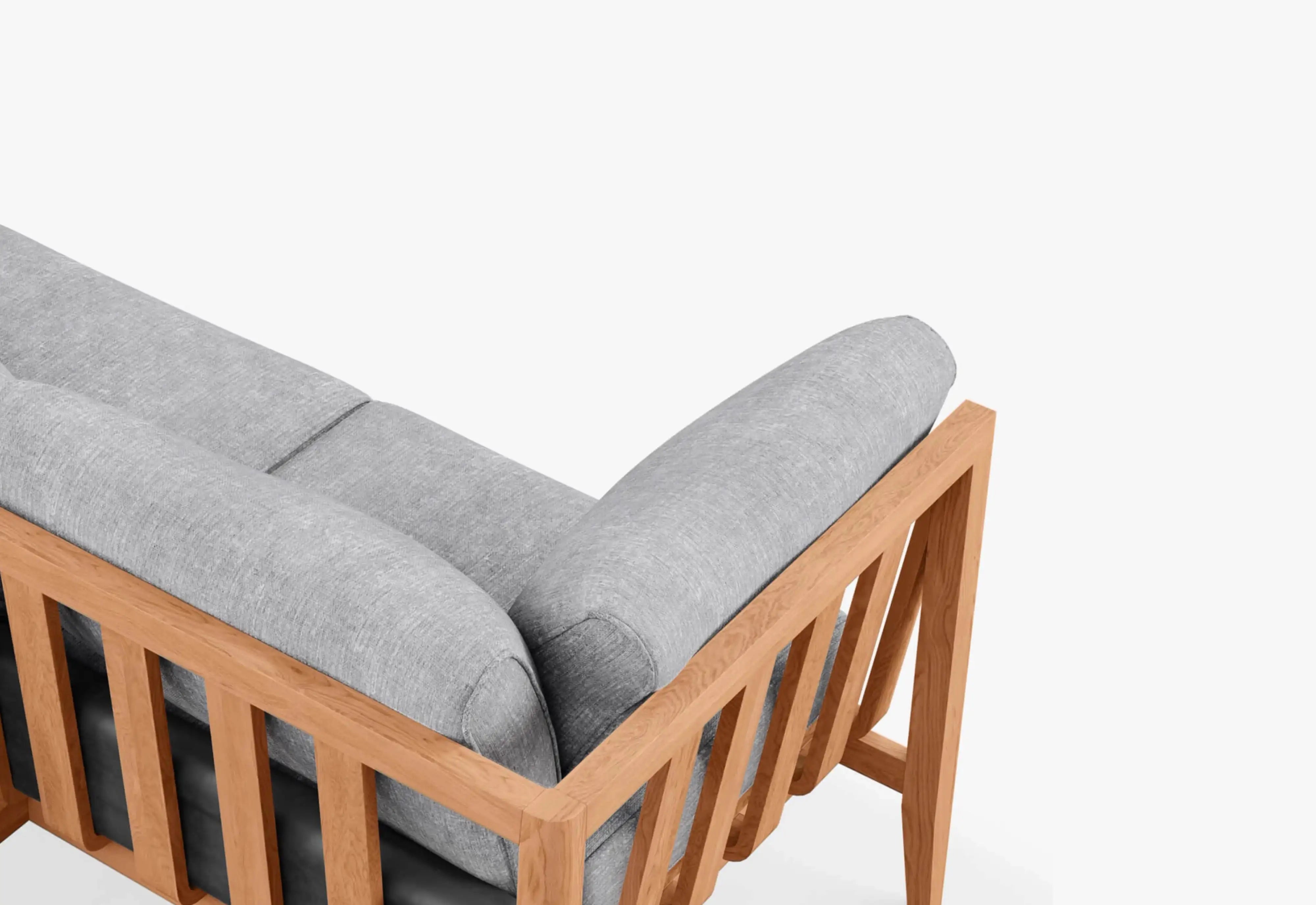
Teak Outdoor L Sectional
Natural teak, modular seating, washable cushion covers, and built-in OuterShell® protection.
Explore the sectional →
Teak + Aluminum Dining Table
A teak tabletop and hidden extension leaf for everyday meals and larger gatherings.
Explore the table →The most successful covered patio does not need every idea on this list. Give it the right amount of shelter, choose one strong purpose, and add the few details that make you want to return tomorrow.