



Fire Pit Guide
Propane vs. Natural Gas Fire Pits
Both fuels bring warmth and extend evenings outside. Which one is right for you? This is a comprehensive guide.

The quick answer
Propane vs. Natural Gas — the Core Difference
Propane runs from a portable tank. Natural gas connects to a permanent line. One gives you layout freedom. The other gives you set-it-and-forget-it convenience.
Propane = freedom to rearrange. Move the fire pit anywhere on the patio. Shift the layout between seasons. The tank tucks into a matching cover and stays out of sight — but it needs refilling.
Natural gas = built-in convenience. No tank to check, no refill to remember. The fire pit lights every time, immediately. Installation costs more upfront. Daily use costs less effort.
Burner design matters as much as fuel. BTU output and burner construction determine the flame quality. A well-built fire pit delivers a comfortable fire on either fuel. Browse Outer fire pits.
Propane vs. Natural Gas: Side by Side
| Propane | Natural Gas | |
|---|---|---|
| Fuel source | Portable 20 lb tank, concealed in a matching cover | Permanent gas line, installed by a licensed professional |
| Upfront cost | Lower — no gas line installation needed | Higher — requires trenching and line work ($500–$2,000+) |
| Operating cost | ~$15–$25 per tank refill; 8–12 hours of burn time per tank | Lower per-BTU cost; billed monthly through utility |
| Placement | Anywhere on the patio — move it seasonally | Fixed to the gas line location — permanent |
| Daily use | Check tank level periodically; swap or refill when empty | Turn the knob and light — no fuel monitoring |
| Installation | None — unpack, connect tank, use | Professional gas line installation; may require permits |
| Best for | Renters, evolving layouts, multi-use patios | Permanent outdoor rooms, frequent hosts, established layouts |
Why Propane Works for Flexible Layouts
Propane suits patios that change. Rearrange seating for a party, shift the fire pit to a new corner next season, take it with you when you move. A 20 lb tank hides inside a matching cover and powers 8 to 12 hours of flame — roughly two to three evenings of use.
The trade-off is fuel awareness. Tanks run out at inconvenient moments unless you track usage. Keeping a spare on hand solves that. A matching propane tank cover keeps the visual clean — visitors see the fire pit table with the fuel source concealed behind a matching panel.

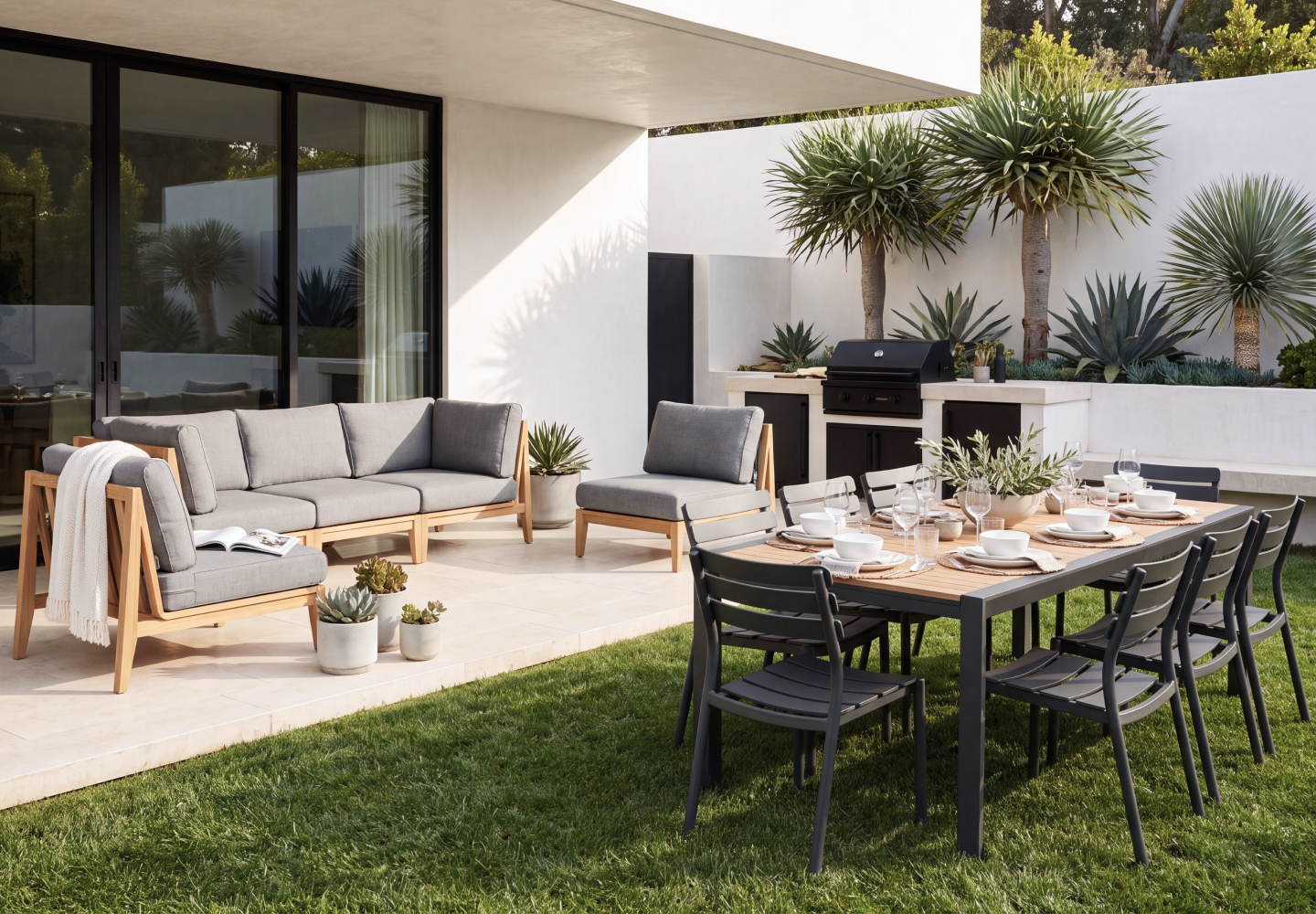
For patios where the fire pit is one element among many — dining table, lounge seating, grill station — propane preserves the ability to rethink the layout. Read the fire pit seating clearance guide for placement distances and layout dimensions.
Why Natural Gas Suits a Permanent Outdoor Room
Natural gas makes sense when the patio layout is settled. The fire pit anchors the seating zone — it stays where it is, and the furniture orbits around it. A gas line eliminates fuel management entirely. Turn the knob, press ignition, and the flame is there. Every evening. No tank checks, no refill runs, no spare tank tucked behind the sectional.
Installation is the upfront investment. Running a gas line requires a licensed professional. Costs vary by distance from the existing line, local permit requirements, and patio surface — trenching through pavers costs more than running a line along an exterior wall. Budget $500 to $2,000+ depending on complexity. Once installed, the ongoing cost is lower per BTU than propane. For households that use the fire pit weekly, natural gas typically breaks even within two to three years.
For frequent hosts, the convenience argument is decisive. A fire pit that lights instantly — with zero fuel-related friction — becomes part of the evening routine. Explore fire pit seating ideas for comfort and connection.
Heat Output: What Actually Determines Flame Quality
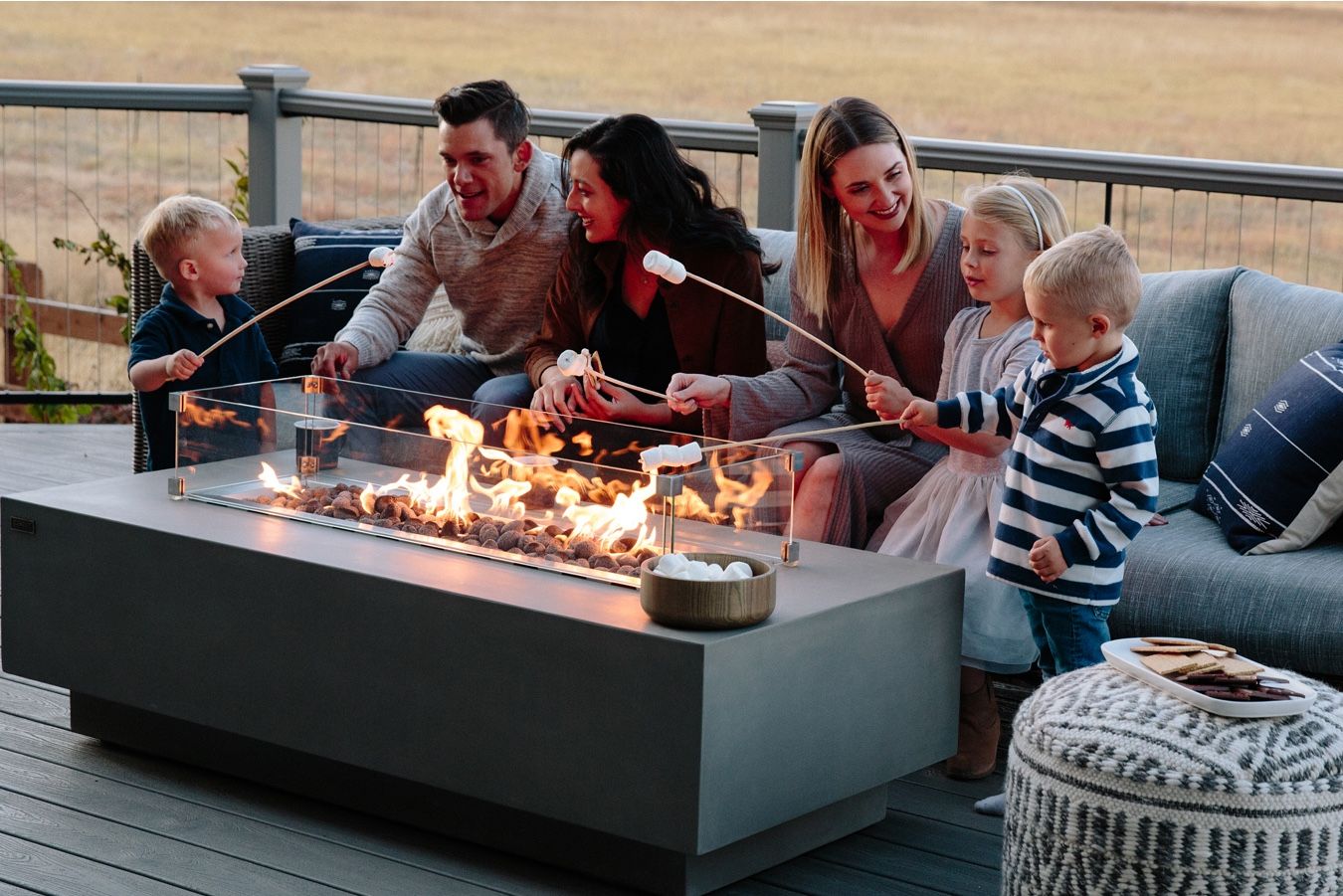
Burner design and BTU rating — rather than fuel type alone — determine how warm or inviting the fire feels. Burner design and BTU rating drive flame performance. A well-engineered burner — with properly spaced jets and even gas distribution — produces a consistent flame on either fuel. Outer fire pits deliver 50,000 BTU output, enough to warm a seating zone of six to eight people on a cool evening.
The visible difference between fuels is subtle. Propane burns slightly hotter per unit volume. Natural gas burns slightly cleaner with marginally lower soot production. For the people sitting around the fire, the distinction is academic. Both produce comfortable, clean, smokeless flame when paired with a quality burner.

Design Considerations: Shape, Scale, and Seating Distance
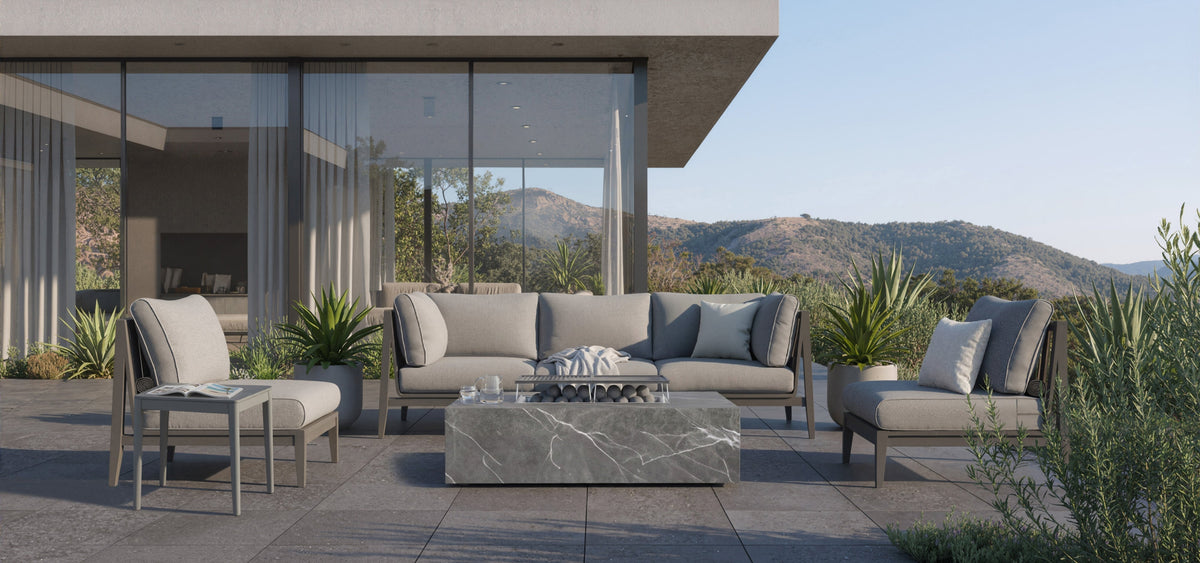
Fuel choice affects function. Design determines how the fire pit feels in the space. A rectangular fire pit table anchors a lounge arrangement and creates a strong visual line — it works as a centerpiece for sectionals and sofas. A round fire pit softens the seating zone and makes conversation feel more relaxed, with equal sightlines for every seat.
Scale matters. The fire feature should feel proportional to surrounding furniture. A table that is too small gets visually lost. One that is too large overwhelms the seating.
| Fire Pit Size | Seating Capacity | Recommended Clearance | Best Layout |
|---|---|---|---|
| Rectangular (60″ L × 32″ W) | 6–8 people | 36–48″ from seat edge to fire pit | Sectional or sofa + two armchairs |
| Round (42″ diameter) | 4–6 people | 30–42″ from seat edge to fire pit | Four armchairs, evenly spaced |
| Fire pit + dining | Varies | 48″ minimum between separate zones | Fire pit lounge + dining table as distinct areas |
Full fire pit clearance and layout guide.
What Each Fuel Costs Over Five Years
Fire Pits Designed for Everyday Living
Propane-ready fire pits. Matching tank covers. Zero smoke.

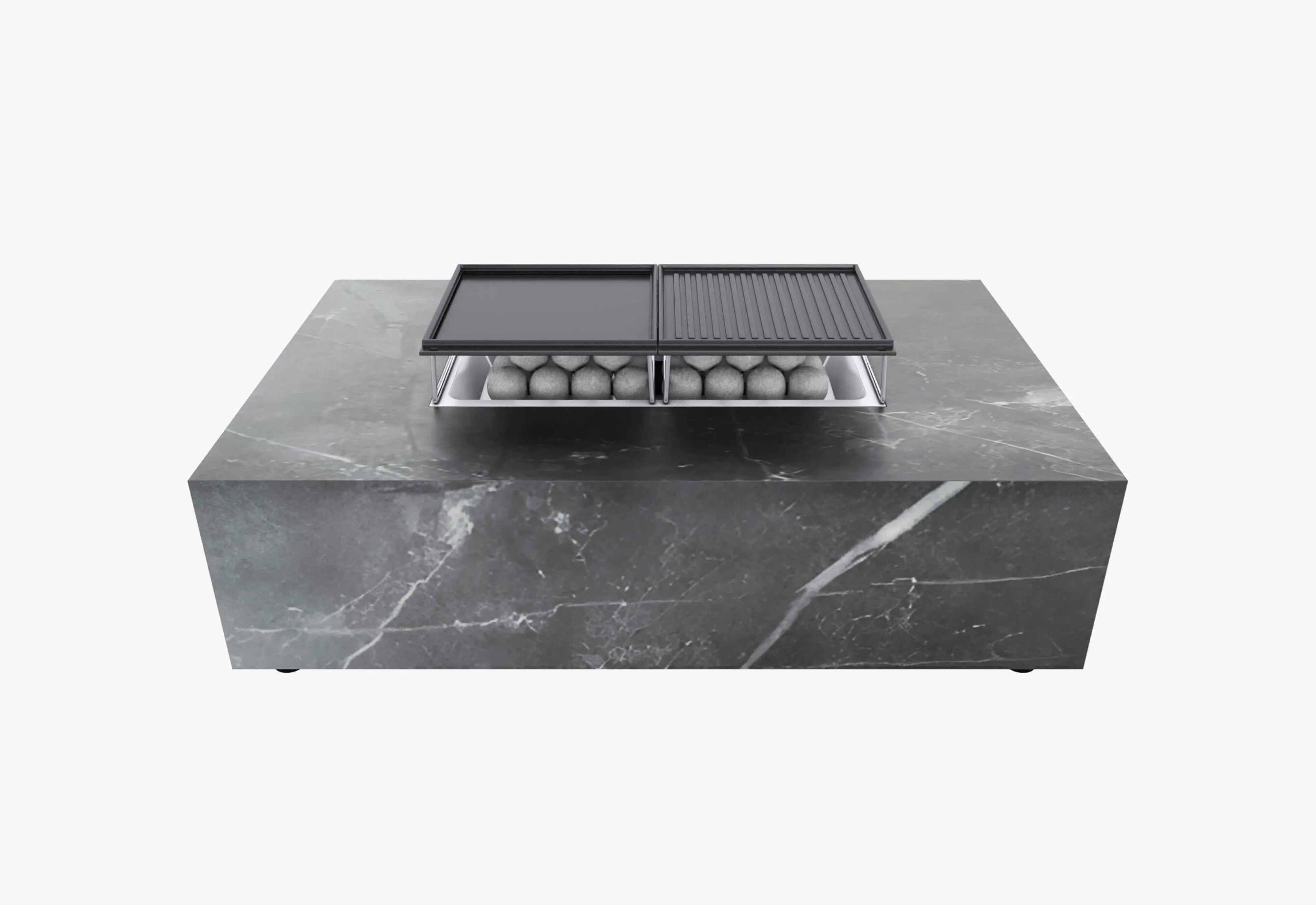
Concrete Fire Pit Table — Rectangular
50,000 BTU burner. OuterStone™ concrete composite. Concealed propane tank compartment with matching cover. Cooking grate available.
50,000 BTU
Propane ready

Concrete Fire Pit Table — Round
42″ round table. Same 50,000 BTU output. Softer silhouette for conversation-centric seating. Matching tank cover included.
50,000 BTU
Propane ready

All-Weather Cover — Fire Pit Table
Fitted, vented protection for the full fire pit. Deploy between uses or during winter storage. Clean and cool before covering.
Secured straps
Vented base

Seating for the Fire Pit Zone
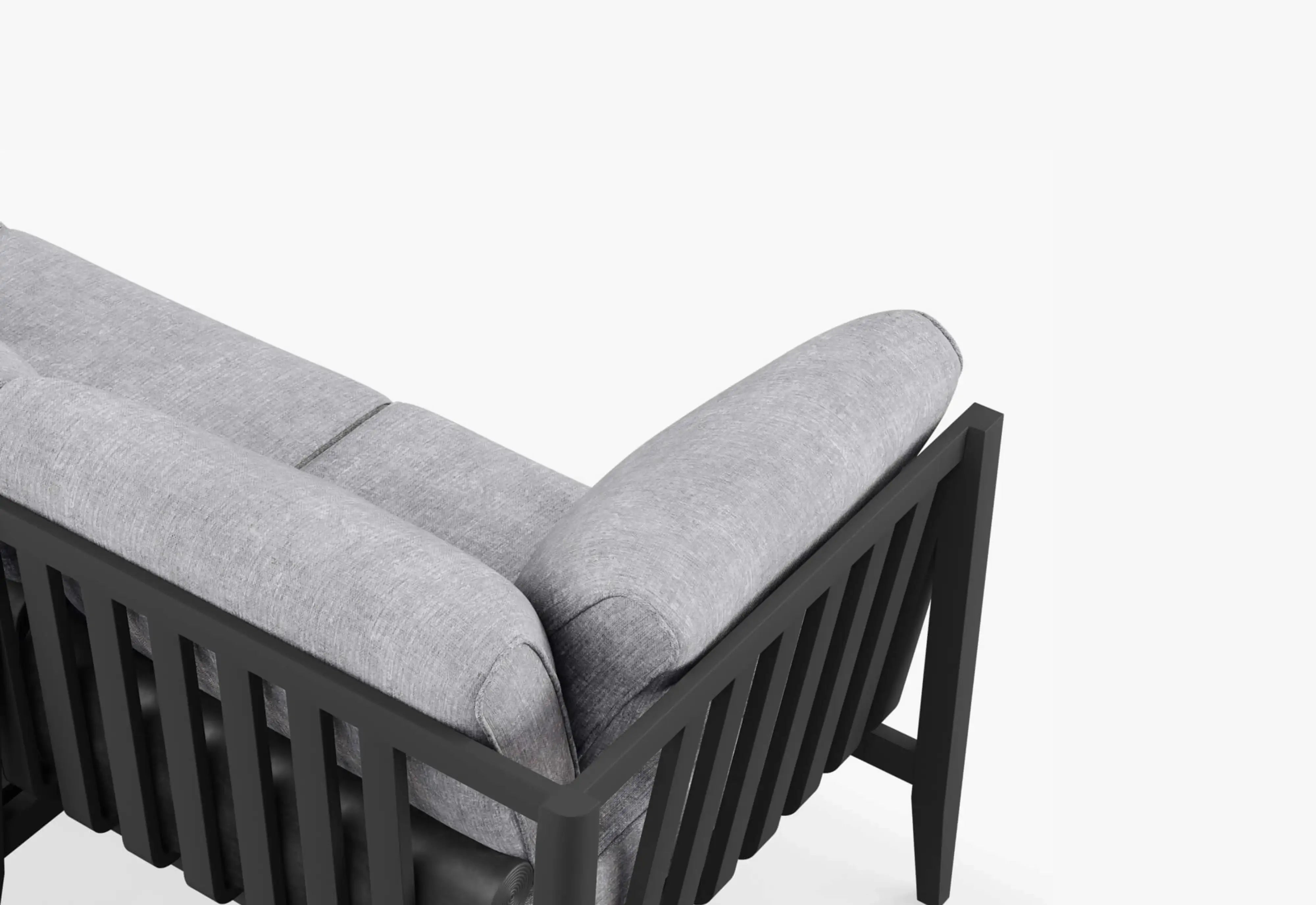
Modular sofas and sectionals with built-in OuterShell®. Arrange seating around your fire pit at 36–48″ clearance for safe, comfortable warmth.
OuterShell® on every seat
5 fabric colors
Common questions
Propane vs. Natural Gas Fire Pit FAQ
Are propane fire pits easier to install than natural gas?
Yes. A propane fire pit requires no installation — remove it from the packaging, connect the tank, and use it immediately. A natural gas fire pit requires a licensed professional to run and connect a permanent gas line. Installation costs range from $500 to $2,000+ depending on distance, patio surface, and local permit requirements.
Is natural gas cheaper than propane for a fire pit?
Natural gas costs less per BTU in most regions. The higher upfront installation cost means it takes two to three years of weekly use to break even. Propane costs roughly $15–$25 per tank refill. For occasional users, propane's lower upfront cost wins. For weekly hosts, natural gas typically wins over time.
Do propane and natural gas fire pits give off the same amount of heat?
Heat output depends on burner design and BTU rating, not fuel type alone. A well-engineered burner produces a consistent, warm flame on either fuel. Outer fire pits deliver 50,000 BTU — enough to warm a six-to-eight-person seating zone on a cool evening. Most people notice no practical difference between the two fuels at the seating position.
Which option is better for people who host often?
Natural gas is easier for frequent hosts — there is no tank to refill or replace. The fire pit lights immediately with a knob turn. Propane works well for hosting but demands fuel management: track tank levels, keep a spare on hand, and refill before gatherings. A spare 20 lb tank solves the interruption risk for propane users.
Can I convert a propane fire pit to natural gas later?
Conversion depends on the fire pit model and burner design. Some fire pits include a conversion kit. Others require burner replacement. Check the manufacturer's specifications before purchasing. If you are uncertain which fuel you want long-term, start with propane — it preserves full placement flexibility and requires no permanent modifications to the patio.

Flexibility or Permanence. Either Way, a Better Evening Outside
Outer fire pits are propane-ready, 50,000 BTU, and designed to anchor the seating zone — whichever fuel you choose.