

Fire Pit Layout Guide
How Far Should Seating Be From a Fire Pit? Clearance & Layout Guide
The right distance keeps everyone warm without leaning in — and safe without feeling far. Three numbers cover most setups.

The quick answer
How Far Should Seating Be From a Fire Pit
Wood-burning: 6–7 feet minimum. Propane or natural gas: 3–4 feet. Fire pit table: 2–3 feet. These numbers account for heat, safety, and comfort.
Heat determines the minimum. A wood fire radiates more heat than gas. The distance isn't about sparks alone — it's about whether sitting feels pleasant or intense after 15 minutes.
Pathways need 36 inches. The space behind the seating matters as much as the space in front. Guests need room to stand, walk, and step back without tripping into the fire.
Chair clearance: 24 inches behind each seat. When someone pushes their chair back to stand up, there should be space. Less than 24 inches and the back row of seating is unusable.
Fire Pit Seating Distance by Type
The fuel source, flame height, and heat output determine the right distance. Here is the breakdown for the four most common fire pit configurations.
| Fire Pit Type | Min. Distance | Comfortable Distance | Clearance Above | Best For |
|---|---|---|---|---|
| Wood-Burning | 6–7 ft | 7–9 ft | 10+ ft (no overhead) | Large backyards, rustic settings |
| Propane Gas | 3–4 ft | 4–6 ft | 8+ ft | Flexible layouts, patios, decks |
| Natural Gas | 3–4 ft | 4–6 ft | 8+ ft | Permanent installations |
| Fire Pit Table | 2–3 ft | 3–5 ft | 6+ ft | Intimate gatherings, smaller patios |
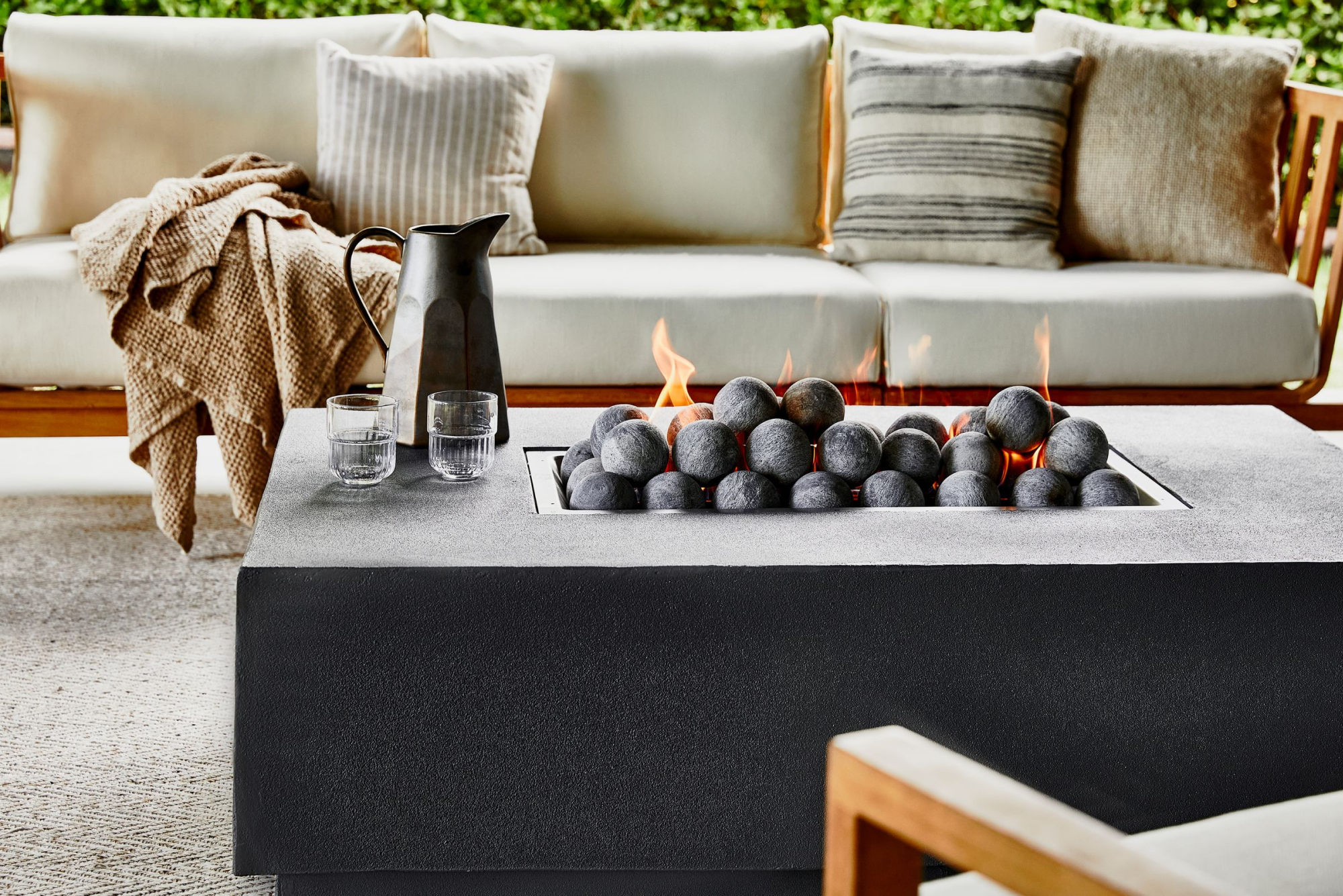
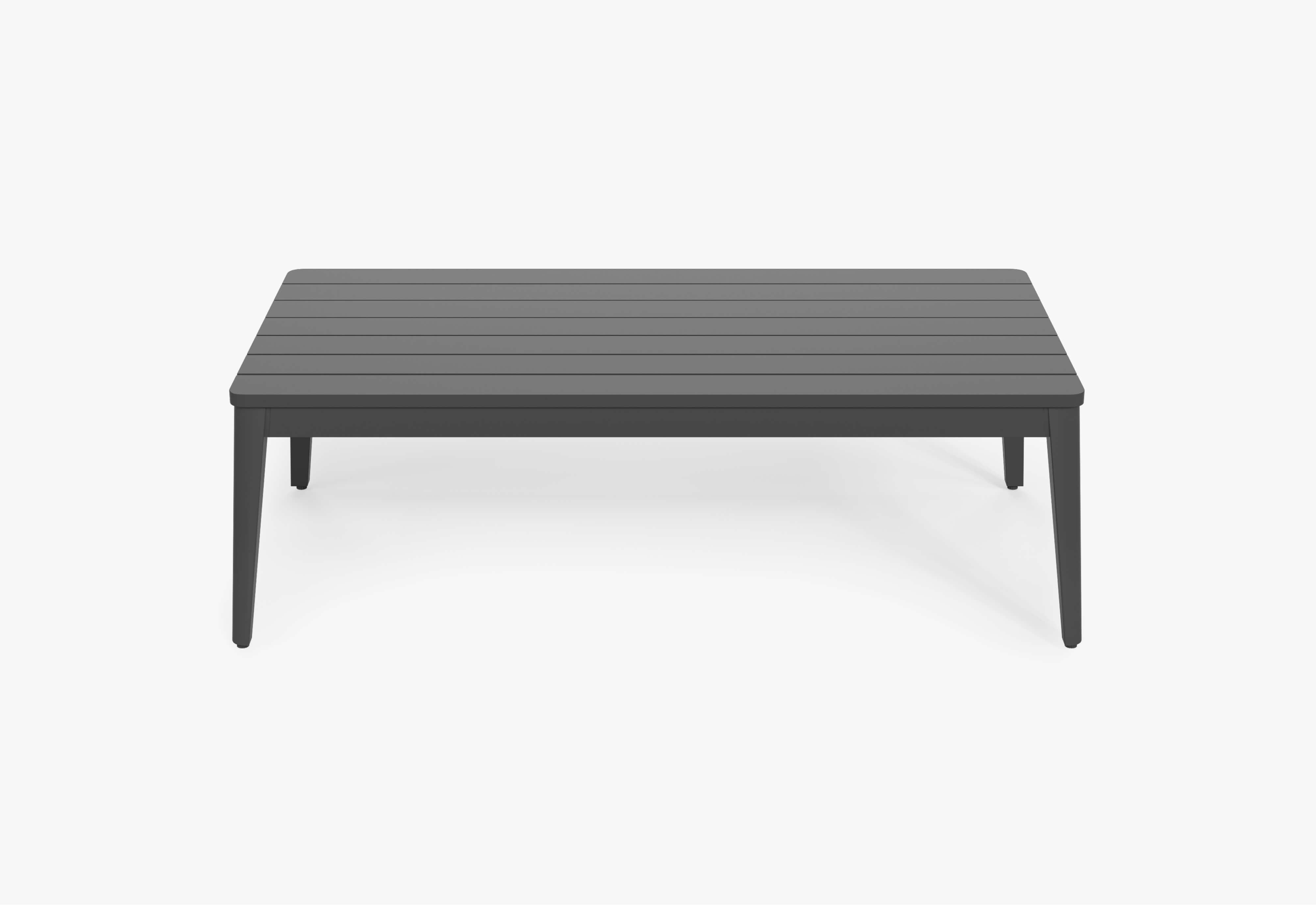
Fire pit tables — like the Outer Fire Pit Table — produce a contained flame at table height. The heat radiates upward rather than outward. That reduces the minimum comfortable distance by roughly half compared to a wood-burning pit at ground level. Browse Fire Pit Tables
Fuel Type Comparison: Heat, Cost, and Upkeep
The distance from seating to fire depends on the fuel. Heat output, flame predictability, and maintenance all shift with the choice of wood, propane, or natural gas.
| Fuel Type | Typical BTU | Seating Radius | Fuel Cost / Session | Upkeep |
|---|---|---|---|---|
| Wood | 30,000–60,000 (variable) | 6–9 ft | $5–$15 (firewood) | Ash removal after each burn. Spark screen required. Stack and store firewood. |
| Propane | 40,000–65,000 (controlled) | 3–6 ft | $3–$8 (20 lb tank = 8–10 hrs) | Tank swap. Wipe burner. Cover when idle. |
| Natural Gas | 40,000–65,000 (controlled) | 3–6 ft | $1–$3 (utility line) | Annual line inspection. Permanent install — relocation requires a plumber. |
Propane and natural gas fire pit tables produce a consistent, controllable flame. Wood fires burn hotter at peak and cooler as they die — the seating distance needs to account for the peak, not the average. For most patios under 200 sq ft, a propane fire pit table is the practical choice: closer seating, no smoke drift, and no ash cleanup between gatherings. Shop Outdoor Fire Pits
Fire Pit Layouts by Patio Size
The distance from the fire pit to the seating is the first number. The layout of the seating itself is the second. Both depend on how much space you have.
Small patio (10′ × 10′ or less).
One fire pit table centered. Four chairs placed at 2–3 ft from the edge. A 36″ walking path behind each chair. Total footprint: roughly 8′ × 8′ for the seating zone. A round fire pit table works best — no corners to navigate around. Skip the sectional. Individual chairs leave more usable floor space.
Medium patio (12′ × 14′ to 16′ × 18′).
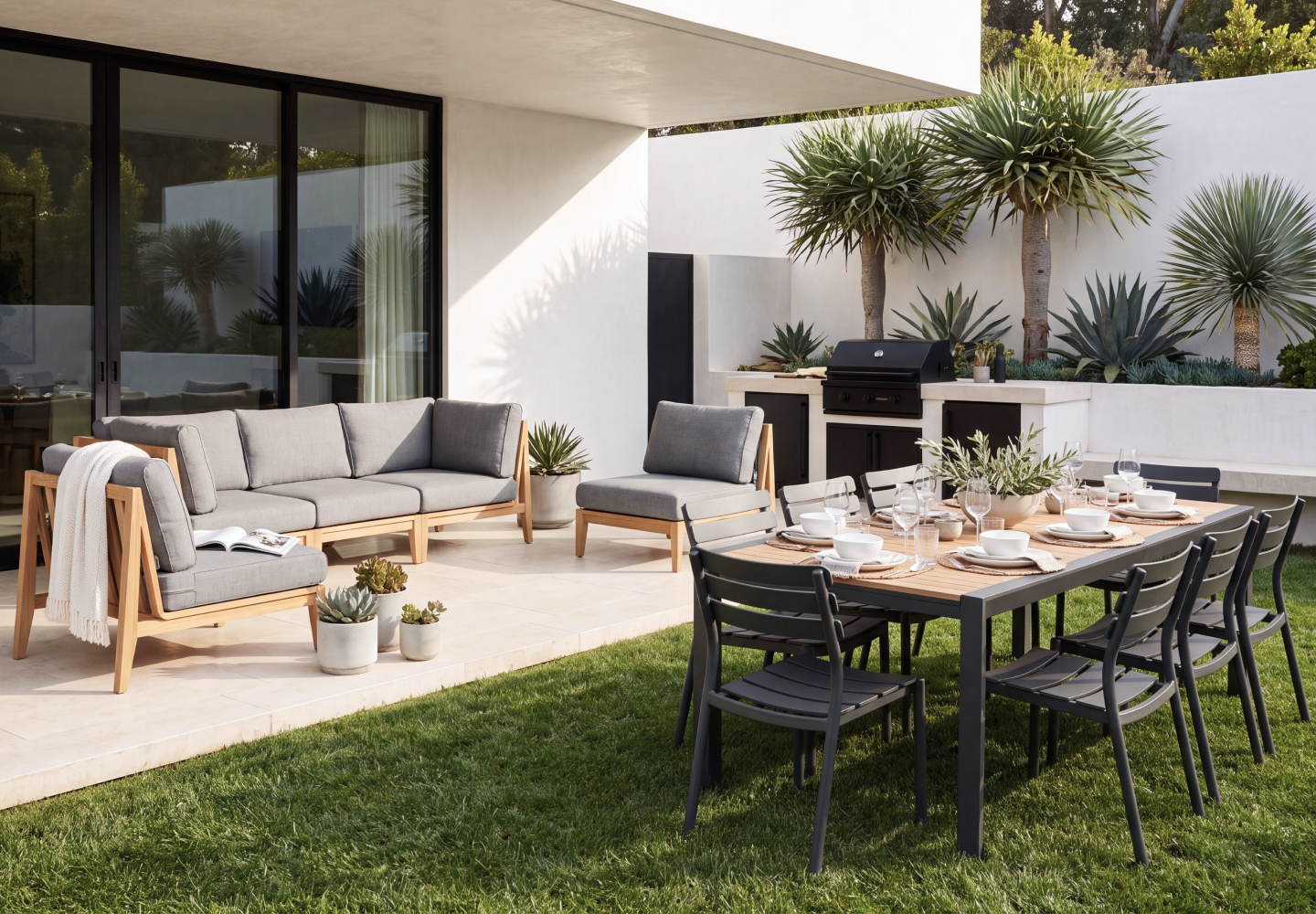
The most common setup. A rectangular fire pit table centered in the seating zone. Two sofas or one U-sectional facing the fire at 3–4 ft distance. The back of the sectional defines the edge of the seating zone — leave 36″ of walking path behind it. Total footprint: roughly 12′ × 14′ including pathways.
Large patio or backyard (20′ × 20′ and up).
Multiple seating zones become possible. The fire pit anchors zone one at 4–5 ft with a U-sectional facing it. A separate dining or lounge zone sits 8–10 ft back. The fire becomes the visual anchor but not the only gathering point. Explore Sectionals for Fire Pit Layouts
Seating Capacity by Guest Count
Match the fire pit and seating configuration to how many people you typically host. These are the minimum patio dimensions that keep walkways open and every seat at a comfortable distance from the flame.
| Guests | Fire Pit Type | Seating Configuration | Minimum Patio | Clearance from Fire |
|---|---|---|---|---|
| 2–4 | Fire pit table | 4 armchairs, 360° around the table | 10′ × 10′ | 2–3 ft |
| 4–6 | Propane fire pit table | L-sectional + 2 armchairs facing the fire | 12′ × 14′ | 3–4 ft |
| 6–8 | Propane gas fire pit | U-sectional + coffee table, 2 chairs on open side | 14′ × 16′ | 3–4 ft |
| 8–10+ | Wood-burning or large propane | U-sectional + dining set in separate zone | 18′ × 20′ | 6–7 ft (wood) / 4–5 ft (propane) |
Fire Pit Clearance and Safety Checklist
Before you place a single chairBase: Non-combustible surface — stone, gravel, concrete, or pavers. Minimum 12 ft from any structure, overhang, or tree canopy.
Wind: Position seating on the upwind side. Smoke and sparks blow downwind. Check prevailing wind direction before arranging chairs.
Sparks: Wood-burning fire pits require a spark screen. Gas fire pits need an emergency shut-off valve within arm's reach.
Surface: Never place a wood-burning fire pit directly on a wooden deck. Use a fire-rated pad underneath if deck placement is unavoidable. Gas fire pit tables can sit on decks with a protective mat.
Tools: Fire extinguisher, water bucket, or fire blanket accessible from the seating area. If you have to walk more than 10 ft to reach it, it's too far.
Pairing the Fire Pit With the Right Seating The fire pit sets the radius. The sectional fills it. A U-sectional facing a rectangular fire pit table creates the most natural conversation zone—every seat faces the flame. Individual armchairs on the open side let guests adjust their distance. For a complete walkthrough of seating arrangements at scale, read our fire pit seating guide for large groups. For help choosing between sectional configurations, see our outdoor sofa vs. sectional guide.
Fire Pit Seating Setup
The Fire Pit. The Sectional. One Complete Setup

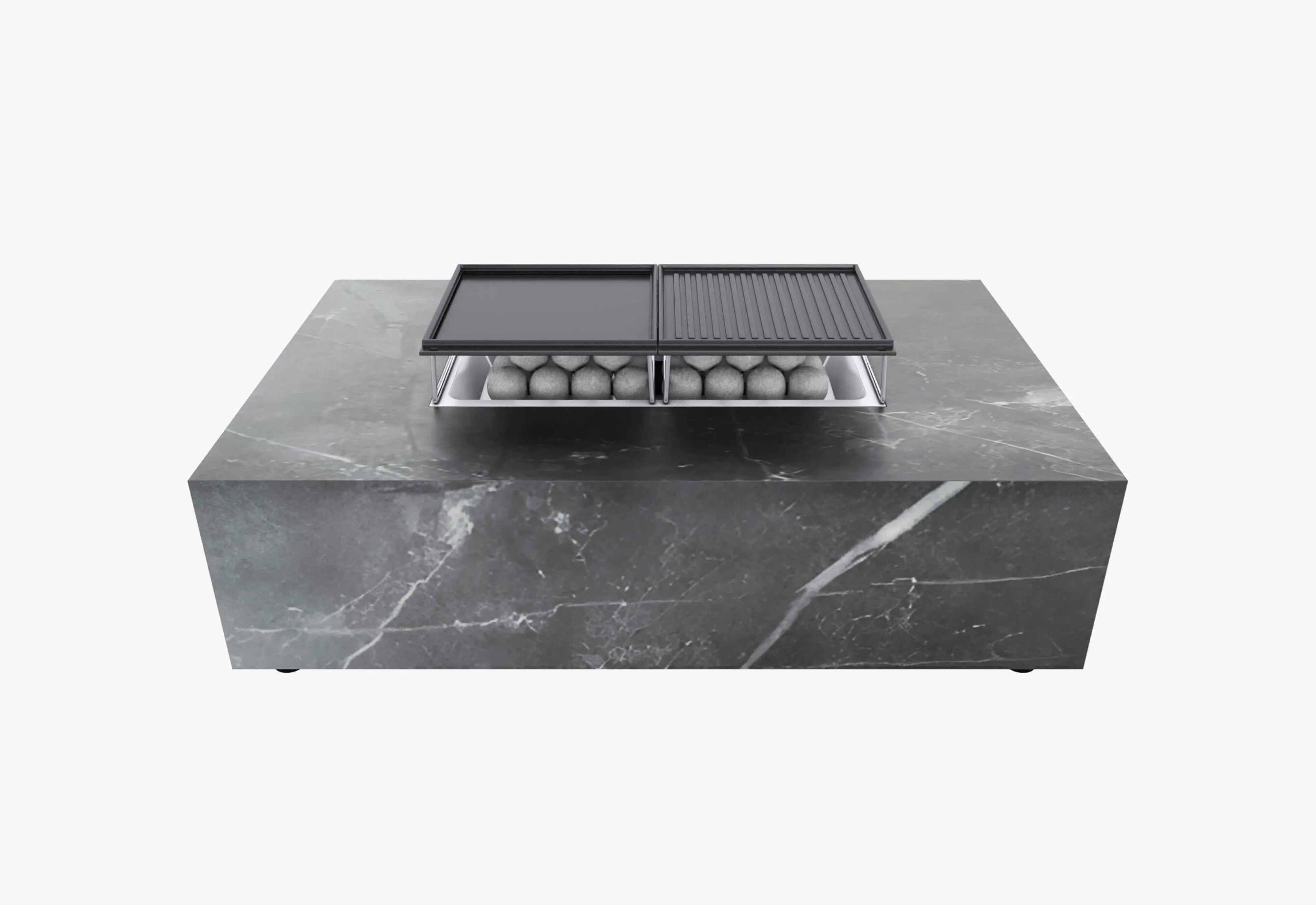
Outer Fire Pit Table — Rectangular
OuterStone® composite top. Propane-powered. Grill, fire, and table in one piece. The centerpiece your seating orbits around.
OuterStone® top
Aluminum base

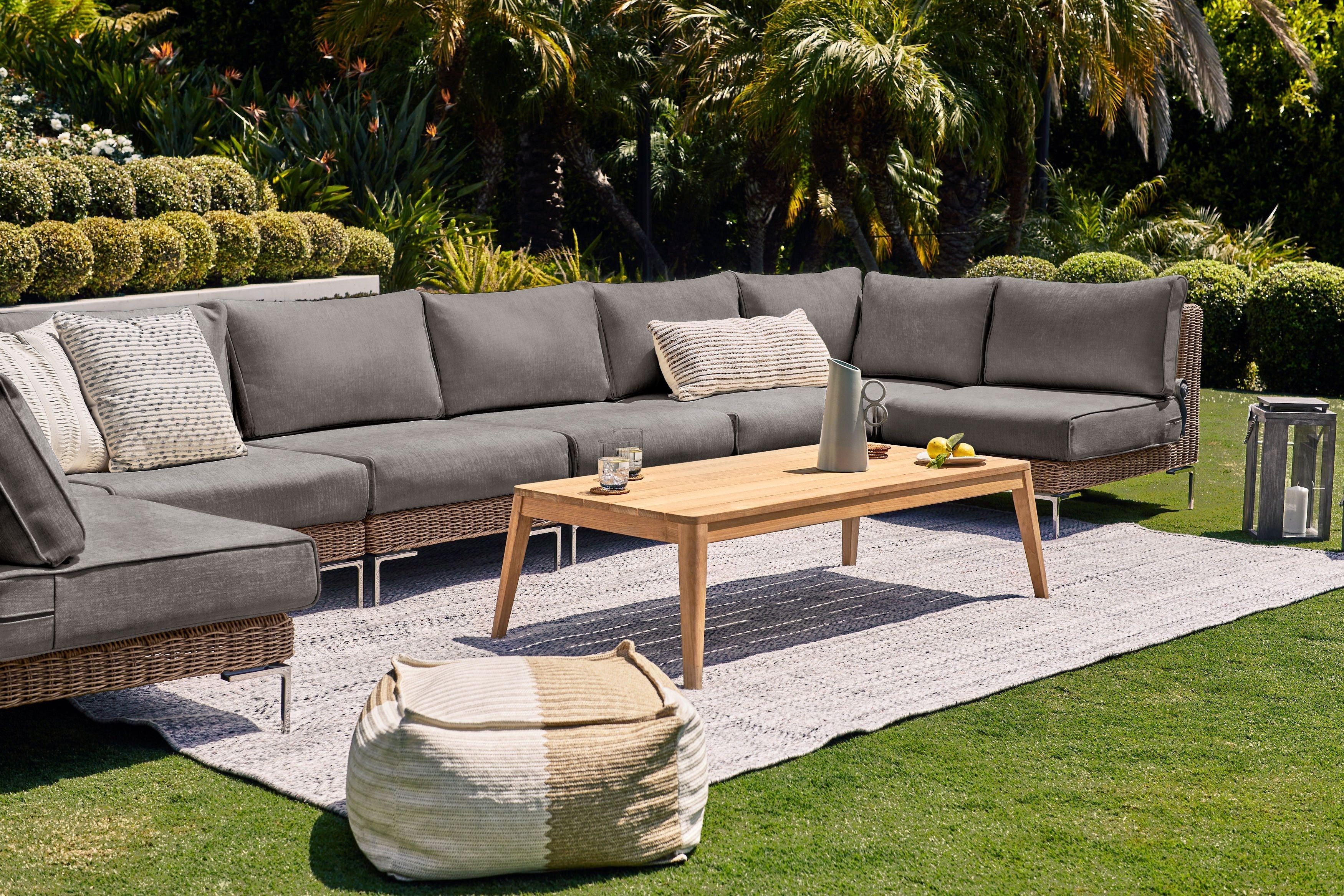
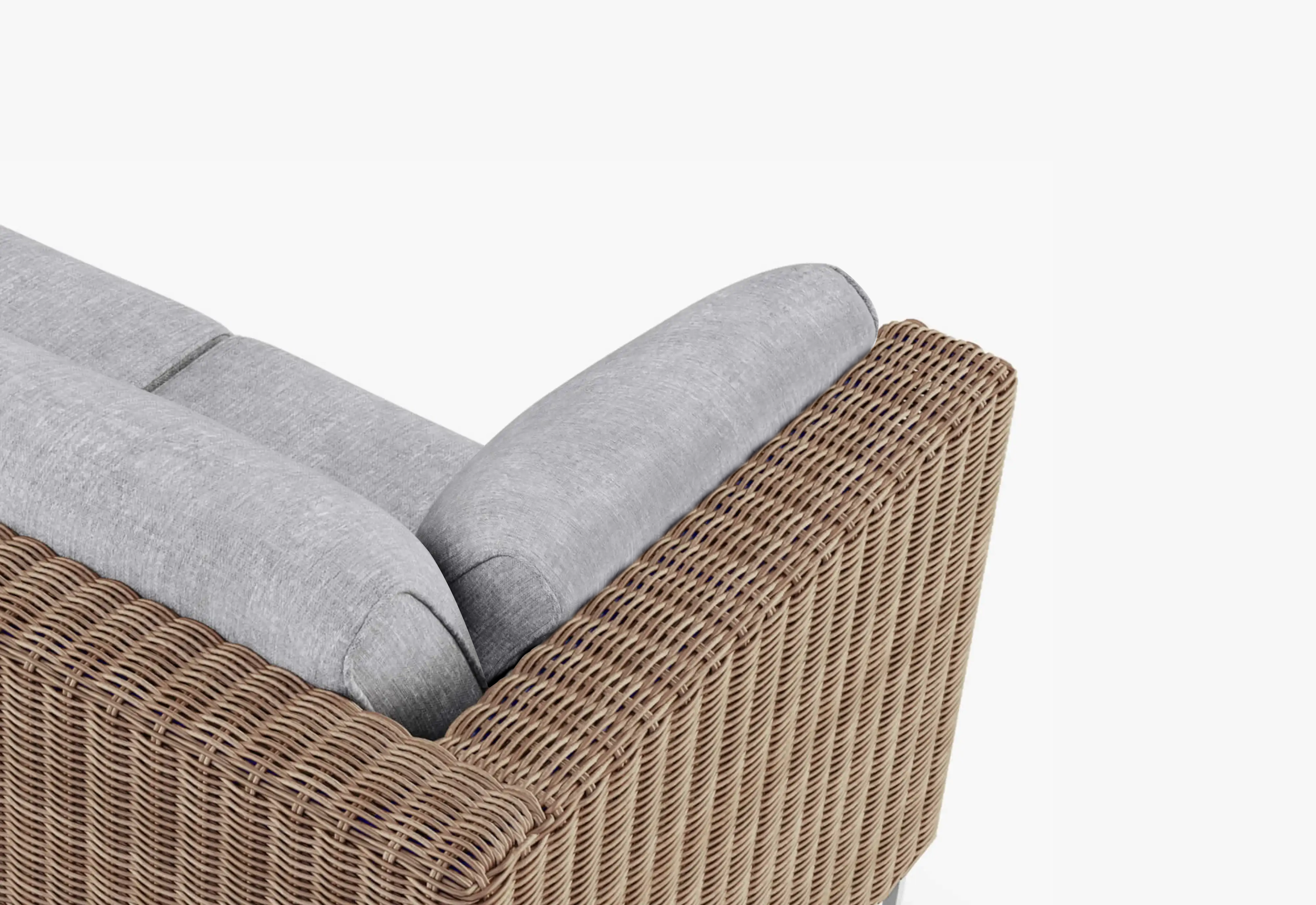
Wicker U Sectional — 6 Seat
HDPE wicker on aluminum frame. Modular — arrange to face the fire. OuterShell® built into every cushion.
OuterShell® built-in
Brown wicker

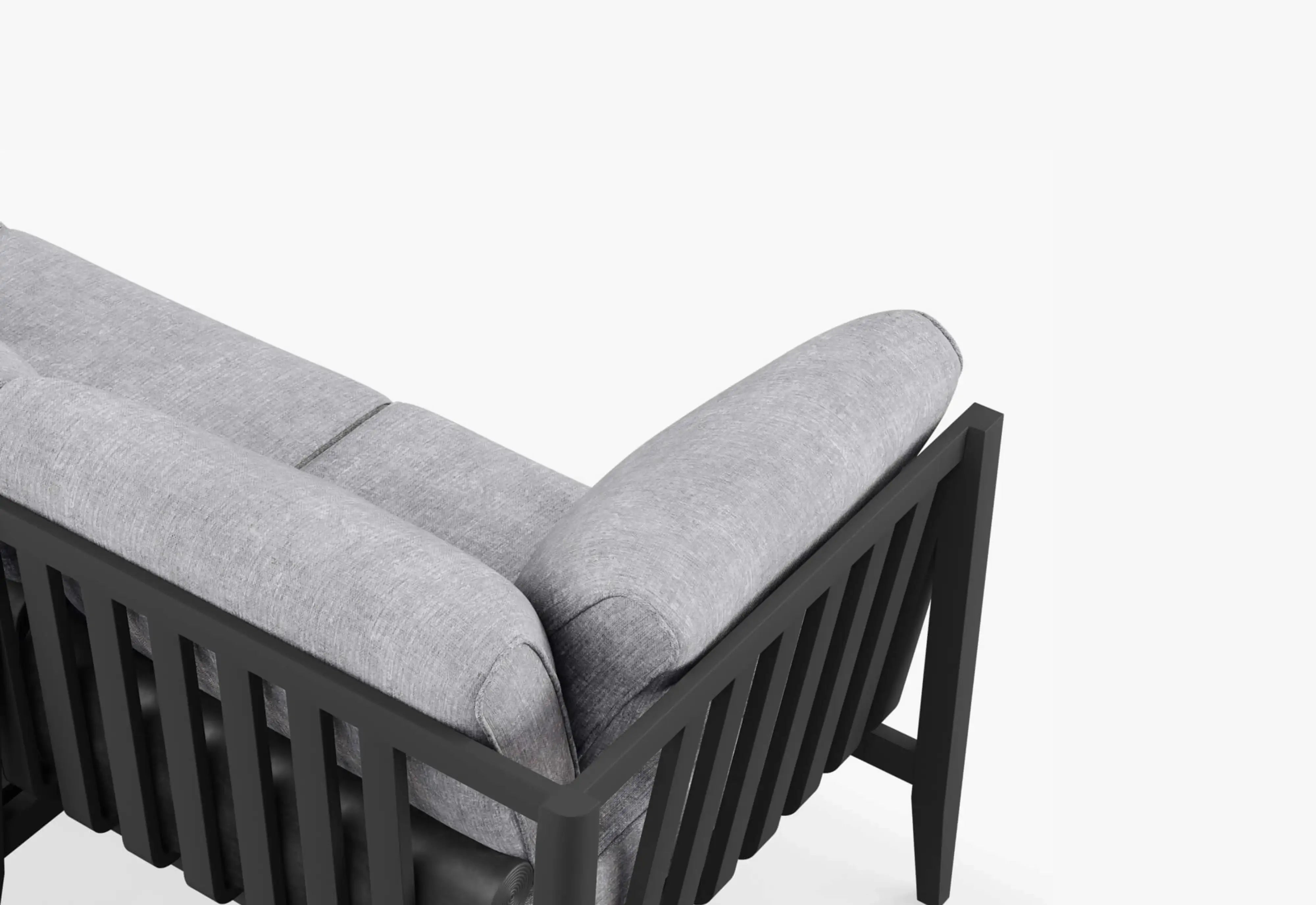
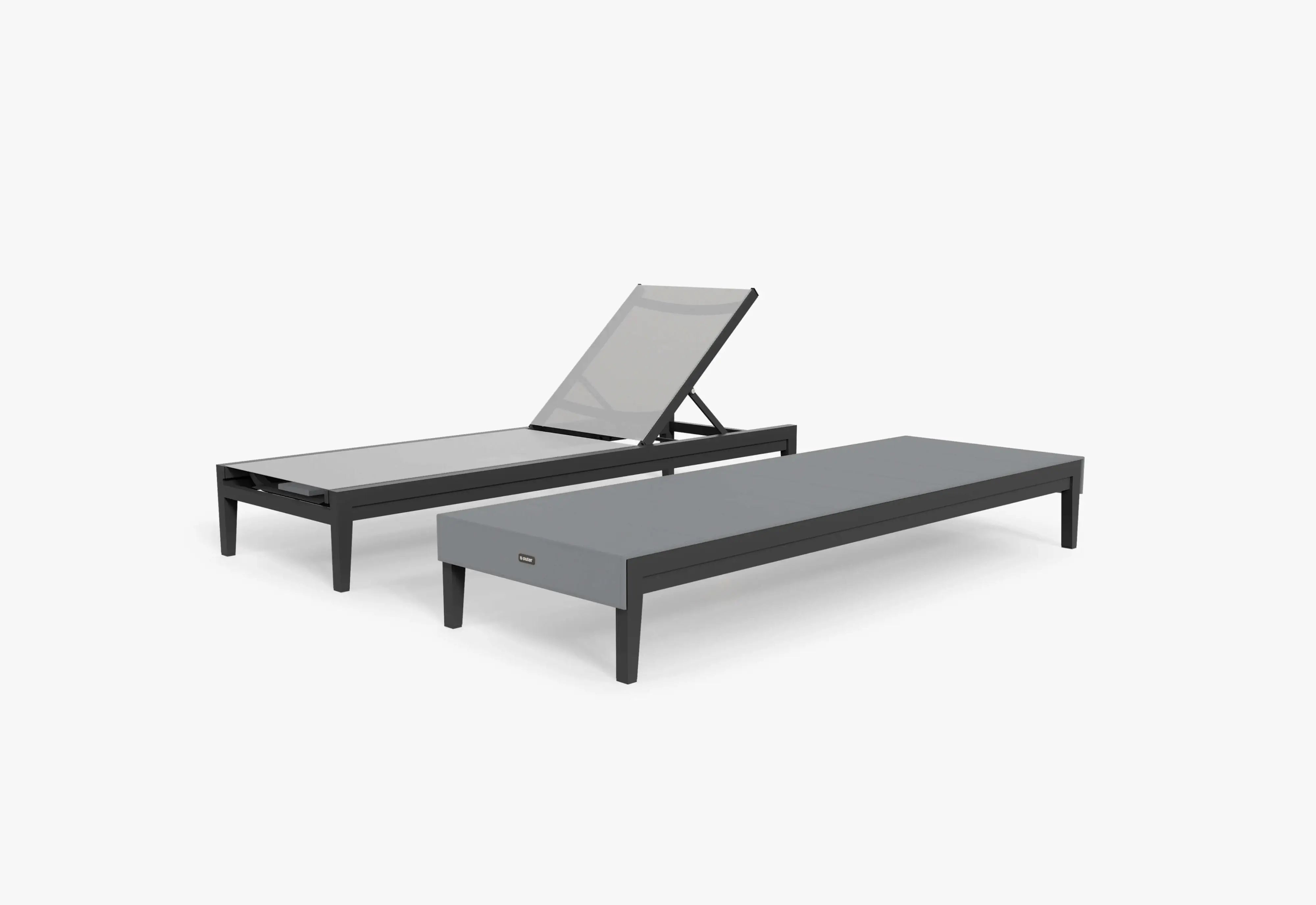
Aluminum Sofa — 3 Seat
Powder-coated aluminum frame. Clean-lined, rust-resistant. OuterShell built into every cushion.
OuterShell built-in
Charcoal / Pacific Fog Gray

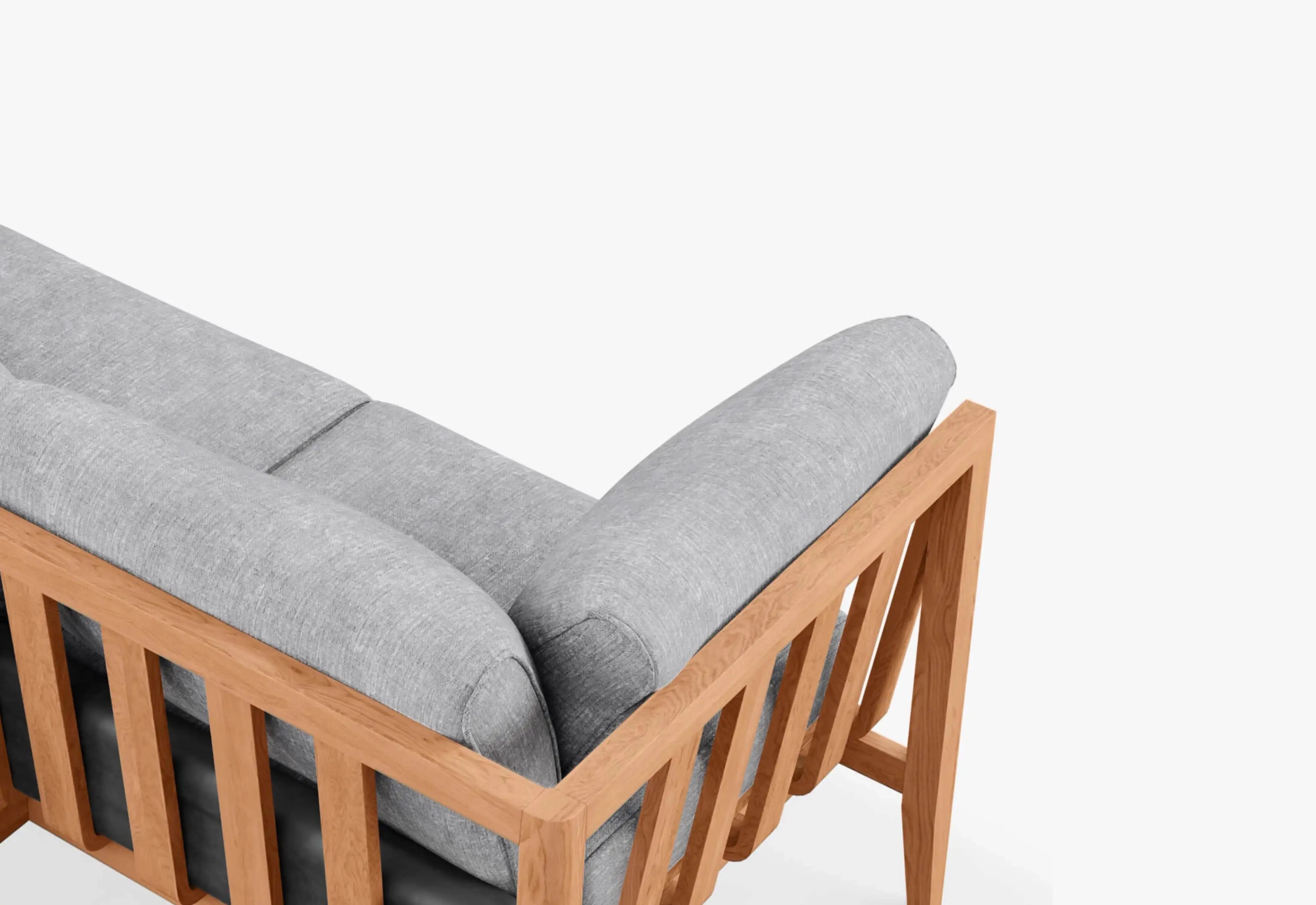
Teak Sofa — 3 Seat
Grade-A teak warms the fire pit zone. Same OuterShell system. Same 15-second routine.
OuterShell built-in
Natural teak / Pacific Fog Gray
Common questions
Fire Pit Seating Distance Questions, Answered
How far should seating be from a wood-burning fire pit?
6–7 feet minimum. The heat output is higher and less predictable than gas. At 6 feet, most adults feel comfortably warm without needing to lean in. At less than 5 feet, wood smoke becomes noticeable and sparks become a concern. The comfortable range is 7–9 feet — close enough for conversation, far enough that you're not squinting through smoke.
How many people can sit around a fire pit?
A 48″ round fire pit with chairs placed at a 4-foot radius seats 6–8 people. A rectangular fire pit table (64″ × 30″) with seating on all four sides seats 8–10. A U-sectional facing a fire pit table seats 6, with room for 2–4 additional chairs on the open side. The limiting factor is not the fire — it's the walking path. Leave 36″ of clearance behind every seat.
Can you put a fire pit on a wooden deck?
Wood-burning fire pits: no, unless you use a fire-rated protective pad with at least 2″ of non-combustible material underneath. Gas fire pit tables: yes, with a protective mat underneath and a minimum 3-foot clearance to any railing, wall, or overhang. Always check local fire codes — some municipalities prohibit any open flame on combustible decking regardless of the protective measures in place.
Do I need a permit for a backyard fire pit?
Permanent wood-burning or natural gas fire pits usually require a permit. Portable propane fire pit tables typically do not. Check with your local fire department or building permit office. In most jurisdictions, the key distinction is whether the fire pit is classified as a permanent structure (requiring permit and inspection) or a portable appliance (requiring neither).
How do I position seating around a rectangular fire pit?
Long sides: place the primary seating — a sofa or two chairs side by side — facing the long edge at 3–4 ft. Short sides: place single chairs or leave open as the entry path to the seating zone. A rectangular fire pit table creates natural focus on the long sides. Putting seating on all four sides works but the people at the short ends will feel slightly peripheral. The best layout: sectional along one long side, 2–3 chairs along the opposite long side, short sides open for access.
What is the difference between wood, propane, and natural gas fire pits?
Wood fire pits produce the highest and most variable heat — seating needs 6–7 feet of clearance. They require ash cleanup after each burn and a spark screen. Propane fire pit tables offer controlled flame height at the turn of a knob; seating can sit at 3–4 feet. A 20 lb tank provides 8–10 hours of burn time. Natural gas fire pits connect to a utility line for unlimited runtime and the lowest per-session cost, but they require professional installation and a fixed location. For patios under 200 sq ft, propane is the most flexible option. For large backyards with permanent hardscaping, natural gas or wood make more sense.
How far should a sectional be from a fire pit table?
Position the front edge of the sectional 2–3 feet from the edge of a fire pit table. This puts seated guests roughly 3–4 feet from the flame — close enough to feel the warmth, far enough that the heat does not feel intense after 20 minutes. For a U-sectional, center the fire pit table so the open side of the U faces outward. This creates a natural entry path and keeps every seat at the same comfortable distance from the fire.
The Right Distance. The Right Seating. One Complete Setup
Every Outer Fire Pit Table pairs with modular sectional seating designed to orbit the fire. OuterShell® protects every cushion between uses.