


Cushion Cleaning Guide
How to Clean Outdoor Cushions: A Step-by-Step Guide
Learn how to wash removable cushion covers, clean cushions with fixed covers, treat common stains, and rinse and dry each part properly.

The quick answer
The Best Way to Clean Outdoor Cushions
Remove loose dirt, blot stains, and choose the method allowed by the care label. Wash removable covers separately when permitted; clean fixed covers in place without soaking the filling. Rinse away the cleaner and air-dry thoroughly before reassembling, covering, or storing.
Identify what can be washed. Check the cover, filling, and attached accessories separately. A zipper gives access to the insert; it does not guarantee machine washing is allowed.
Start with mild cleaning. Remove loose debris and blot spills before applying an approved cleaner. Work from the stain's outside edge toward its center.
Finish with rinsing and drying. Soap residue can leave marks and attract dirt. Damp filling can remain wet after the fabric surface feels dry.
Before You Start: Check the Cushion's Care Instructions
Outdoor cushions differ in fabric, filling, construction, and surface treatments. The safest way to clean patio cushions is to identify the parts you have before choosing a cleaning method. Look for the sewn-in label and check the manufacturer's instructions if the label is missing or unclear.
| What you have | Cleaning route | Important check |
|---|---|---|
| Removable, machine-washable cover | Remove the cover and wash according to its label. | Detach non-washable accessories and keep the insert out of the machine unless its own instructions permit washing. |
| Removable, hand-wash-only cover | Follow the approved hand-washing or spot-cleaning method. | Do not substitute a gentle machine cycle for a hand-wash-only instruction. |
| Fixed or non-removable cover | Clean the fabric in place with controlled amounts of water. | Avoid saturating the filling; allow extra time if moisture reaches the interior. |
| Foam or other cushion filling | Use the insert manufacturer's instructions. | Do not assume the filling can be washed because the outer cover can. |
Gather simple cleaning supplies
- A soft brush or vacuum attachment for ordinary loose dirt.
- Clean white cloths or towels for blotting.
- A bucket, mild soap or detergent approved for the fabric, and clean water.
- A soft sponge or soft-bristle brush.
- A spray bottle or gentle rinse source, if the care instructions allow water cleaning.
- A drying space with good airflow and protection from rain.
Test a cleaner on an inconspicuous area and let the test patch dry before treating a larger surface. Check for changes in color, texture, or finish. Use the dilution recommended for your cushion rather than increasing the detergent concentration to tackle a difficult stain.
Remove ordinary debris and blot fresh spills
Take cushions off the furniture where practical. Brush or vacuum away ordinary dust, pollen, crumbs, and loose soil, including the seams and zipper channels. If a cushion has visible mold or mildew, avoid aggressive dry brushing that disperses the growth; use the separate treatment guidance below.
For a fresh spill, lift solid material gently and blot liquid with a clean cloth. Work from the outer edge toward the center to avoid spreading the mark. Switch to a clean section of the cloth as it absorbs liquid. Do not scrub the spill into the fabric.

How to Wash Removable Outdoor Cushion Covers
If the cover comes off, cleaning it separately gives you more control and helps avoid soaking the filling. Follow the care label even when the fabric is described as outdoor, stain-resistant, or easy-care.
Step 1: Remove the cover and separate accessories
Open the zipper carefully and ease the cover off without pulling hard on seams or corners. Take note of the insert's orientation so you can put the cushion back together correctly. Set the filling somewhere clean and dry.
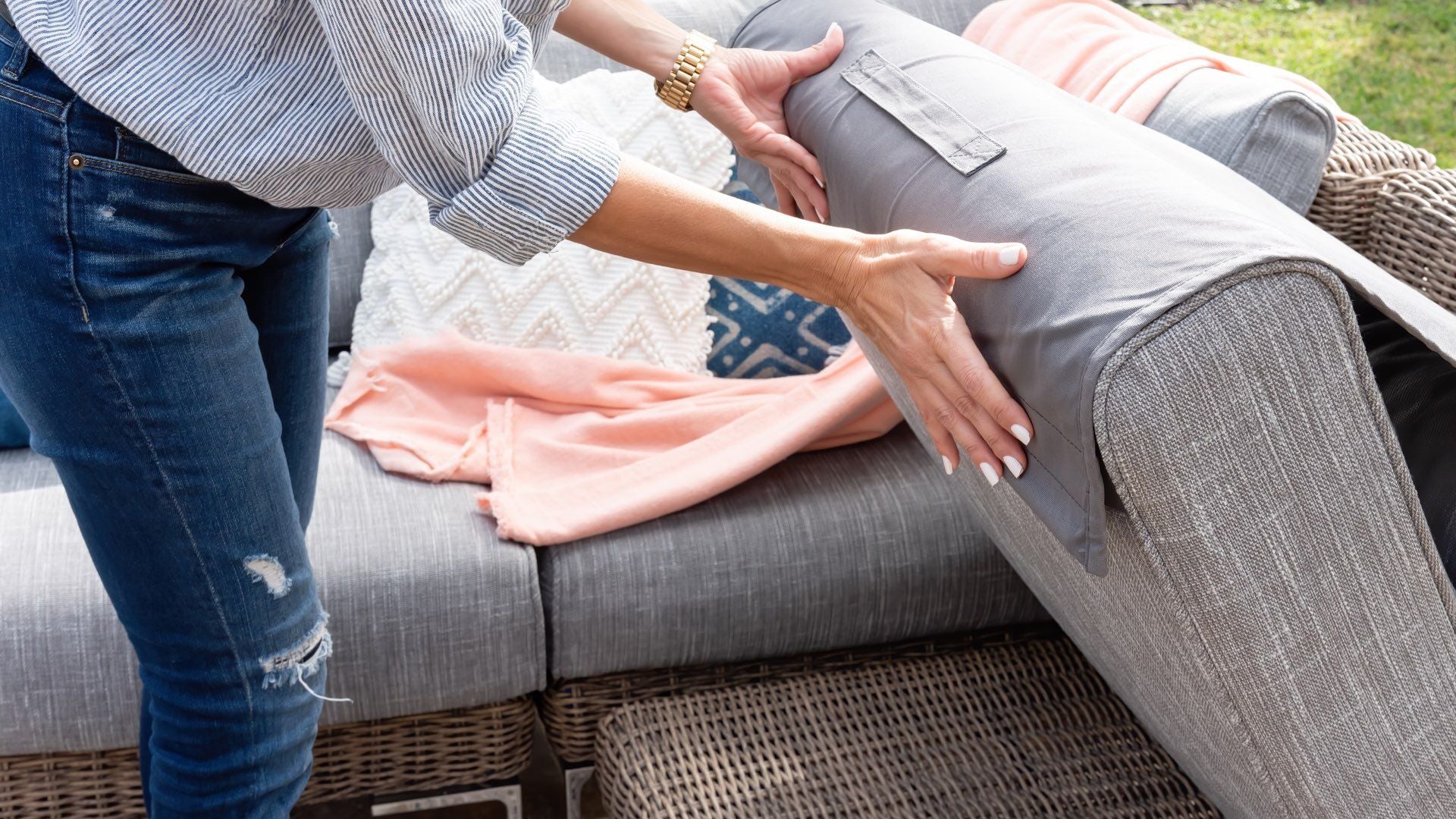
Remove any attached component that is not approved for the wash cycle. For Outer cushions, detach the OuterShell® from the cushion fabric before machine washing. OuterShell contains an aluminum support rod and must not go in the washing machine. Removing only the rod is not the stated machine-washing procedure.

Step 2: Pre-treat visible stains
Use an approved mild cleaning solution on stained areas before washing. Gently work the solution into the affected fabric without harsh scrubbing. Follow the cleaner's instructions for application and contact time, and avoid letting cleaner dry on the surface.
Do not assume bleach is appropriate for every stain. Begin with the least aggressive method permitted for the fabric and check the stain guide before escalating.
Step 3: Choose machine washing or hand washing
Machine-washable covers: use the cycle, water temperature, and detergent specified on the label. Avoid overloading the machine; tightly packed covers are harder to clean and rinse. Follow instructions for zippers, straps, and hook-and-loop fasteners.
Outer cushion covers can be machine-washed on a gentle cycle in cold water with mild detergent after the OuterShell is detached. Use the supplied protective strips for hook-and-loop fasteners as directed to help prevent pilling. Do not place Outer cushion covers in the dryer.
Hand-wash-only covers: use the approved water temperature and cleaning solution. Gently move the fabric through the solution rather than twisting or aggressively scrubbing it. If the label permits only spot cleaning, do not immerse the cover.
Step 4: Rinse and check the stain
Remove detergent thoroughly using the method allowed by the label. Before drying, inspect the stained area. If a mark remains, repeat an approved treatment rather than applying heat or mixing additional cleaners.
Step 5: Air-dry and reassemble
Hang or lay the cover as directed, keeping it supported so its weight does not distort the shape. Follow the manufacturer's instructions for when to refit it; for Outer covers, allow them to hang dry. Confirm that both the cover and insert are dry before returning the cushion to use or storage.
How to Clean Outdoor Cushions with Non-Removable Covers
A fixed cover needs a different approach because any water you apply can reach the filling. The aim is to clean the fabric and remove residue while keeping interior wetting to a minimum. If the manufacturer specifies professional cleaning, follow that instruction.
Step 1: Work on a clean, suitable surface
Place the cushion where you can reach its edges and underside without setting it in dirt. Protect the furniture frame and nearby surfaces from cleaning solution. Clean one cushion at a time so you can control how much liquid is applied.
Step 2: Apply a small amount of approved solution
Apply mild cleaning solution with a damp cloth, sponge, or controlled spray. Begin with the affected area and gently clean beyond the visible edge where appropriate to reduce uneven marks. Use a soft brush only if the fabric instructions permit it.
Do not pour a bucket of solution onto the cushion or leave it soaking. More water is not automatically more effective, especially when the filling cannot be removed for drying.
Step 3: Lift soil without hard scrubbing
Blot and gently agitate the fabric rather than rubbing forcefully. Replace dirty cleaning solution and switch to fresh cloth surfaces so removed soil is not transferred back onto the cushion. Repeat light passes instead of one aggressive scrub.
Step 4: Remove the cleaning solution
If the cushion allows rinsing, use a gentle, controlled rinse. For spot-clean-only upholstery, use repeated passes with a clean damp cloth as directed. Replace the rinse water regularly and continue until soap residue is removed.
A pressure washer is not a substitute for rinsing. It can force water into the filling and damage fabric or seams.
Step 5: Drain and dry thoroughly
Blot excess moisture with clean towels. Position the cushion so air reaches both sides and any wet lower edge can drain. Rotate it periodically and keep it away from further rain. If the interior has become wet, allow additional drying time before covering or storing.
How to Remove Common Stains from Outdoor Cushions
The first treatment should match the stain as well as the fabric. Start with blotting and mild cleaning. Specialty products, bleach, or solvents require explicit approval from the cushion manufacturer.
| Stain | First action | Next step | Avoid |
|---|---|---|---|
| Mud and ordinary dirt | Let ordinary mud dry, then gently remove loose material. | Clean remaining marks with approved mild soap and rinse. | Rubbing wet mud across a larger area. |
| Coffee, wine, or juice | Blot liquid from the edge inward. | Use approved spot cleaning, then rinse or wash as allowed. | Scrubbing, heat, or letting cleaner dry on the mark. |
| Food, grease, or sunscreen | Lift solids and blot excess oil. | Use a fabric-approved mild detergent or stain treatment. | Unapproved solvents and concentrated detergent. |
| Bird droppings | Wear gloves and gently lift deposits; dampen dried material instead of grinding it into the fabric. | Clean and rinse according to the fabric's instructions. | Aggressive dry brushing or rubbing particles into the weave. |
| Tree sap | Gently lift excess without pulling the fibers. | Ask about an approved sap treatment if mild cleaning is insufficient. | Unapproved solvents, sharp scraping, or heat. |
| Mold or mildew | Separate the affected cushion and check both fabric and filling. | Use the manufacturer's approved treatment and dry fully. | Dispersing growth by aggressive dry brushing or assuming bleach is safe for every fabric. |
| Natural teak oil transfer | Separate the cushion from the wet wood and treat the mark promptly. | Follow the furniture manufacturer's oil-stain instructions and rinse thoroughly. | Returning damp fabric to the same wet frame before cleaning and drying. |
When can you use bleach?
Use bleach only when the fabric manufacturer explicitly permits it. An outdoor label, removable cover, or light fabric color does not establish that bleach is safe. Keep any bleach treatment away from components or surfaces that are not bleach-compatible.
For stubborn stains on Outer cushion fabric, the published care instructions allow no more than 2 tablespoons of bleach in 1 gallon of water. Apply lightly without soaking, rinse immediately, and do not leave the solution on for more than 2 minutes. This is an Outer-specific instruction, not a universal mixture for all outdoor cushions.
Never mix cleaning chemicalsDo not mix bleach with vinegar, ammonia, or other cleaners. Use one approved method at a time and follow its label. If a stain persists, ask the manufacturer about the next treatment instead of increasing the strength.
What if mildew or a musty smell comes back?
Recurring odor may mean moisture remains in the filling or that the source has not been fully removed. Allow the cushion to dry thoroughly and inspect it again. Persistent odor, extensive growth, or damage may require professional assessment or replacement of the affected component. Do not assume a surface wash has cleaned the interior.
Rinsing and Drying: The Steps That Finish the Job
A cushion is not ready to return outdoors simply because the visible stain is gone. Remaining detergent and trapped moisture can create new problems after cleaning.
How to tell whether soap has been rinsed out
Check for visible suds, a slippery feel, or cleaner collecting along seams. Continue with clean rinse water or fresh damp cloths as appropriate for the cushion. If a washed cover still feels soapy, an additional rinse may be needed.
Use low pressure and avoid directing a strong jet at zippers or stitched edges. With fixed covers, balance thorough residue removal with the need to avoid saturating the filling.
How to dry outdoor cushions properly
- Remove surface water. Blot with clean towels. Do not twist the cushion or wring the filling unless the instructions permit it.
- Separate washable covers from inserts. Dry each component using its specified method.
- Allow airflow around wet cushions. Stand suitable cushions on an edge or support them so air can reach both faces.
- Rotate periodically. Check the lower edge, seams, underside, and areas that stay shaded or rest against a surface.
- Keep them protected from new moisture. Choose a ventilated drying area and avoid drying on damp ground.
- Check before reassembling. If a component remains damp or moisture appears when gently compressed, continue drying.
Drying time depends on how much water entered the cushion, the filling thickness, temperature, humidity, and airflow. A lightly cleaned cover and a soaked foam cushion can take very different amounts of time. Do not promise yourself a fixed same-day drying window.
Use shade or filtered sunlight if recommended for the fabric. Avoid heaters, hair dryers, or tumble drying unless the manufacturer allows them. For Outer cushion covers, air drying is the specified method.
Which Cushion Parts Can Go in the Washing Machine?
Check each component separately. “Washable cushions” may refer to removable fabric covers rather than the complete assembled cushion.
| Component | Machine washing | What to do |
|---|---|---|
| Removable cushion cover | Only if its care label permits it. | Use the specified cycle, temperature, detergent, and drying method. |
| Outer cushion fabric cover | Cold water, gentle cycle, mild detergent, with OuterShell detached. | Follow fastener-protection instructions and hang dry. Do not tumble dry. |
| OuterShell® | No. | Detach it before washing the cushion cover and clean it separately by the approved hand-cleaning method. |
| Foam insert or cushion filling | Do not assume it is permitted. | Use the filling manufacturer's instructions; cover washability does not apply to the insert. |
| Fixed-cover cushion | Do not machine-wash unless the complete cushion is explicitly approved. | Use the appropriate in-place cleaning and drying process. |
Read Outer Care and Maintenance Instructions
Keep Cushions Cleaner Between Washes
Remove leaves, pollen, and crumbs regularly, and treat fresh spills before they dry. Check cushions after rain and let wet areas air out instead of immediately covering them again.
OuterShell® provides everyday protection from dew, debris, and lighter rain. It is water-resistant rather than fully waterproof. For prolonged rain, storms, snow, or extended non-use, use suitable All-Weather Covers or move cushions to a protected area.
Before seasonal storage, clean as needed and let every component dry. Store in a suitable dry location and inspect periodically for moisture. Our winter furniture storage guide covers the next steps.
Common questions
Outdoor Cushion Cleaning FAQ
Can I put outdoor cushions in the washing machine?
Only if the manufacturer explicitly approves the complete cushion. Many washable designs have removable covers that can be washed, while the foam insert and attached accessories require different care. Read the instructions for each part before putting anything in the machine.
How do I clean outdoor cushions without removable covers?
Remove ordinary loose dirt, blot stains, and apply a small amount of approved mild cleaning solution. Gently clean the affected fabric, remove residue with the permitted rinse method, and dry the cushion thoroughly. Avoid soaking the filling or using a pressure washer.
How do I wash Outer cushion covers?
Detach the OuterShell from the cushion fabric and remove the insert. Wash the fabric cover on a gentle cycle in cold water with mild detergent, following the instructions for hook-and-loop fasteners. Hang dry and do not use a tumble dryer. OuterShell itself must not go in the washing machine.
Can I use bleach on outdoor cushions?
Only when the fabric manufacturer permits it. Use its exact dilution and contact-time instructions. Outer provides a diluted bleach treatment for stubborn stains on its cushion fabric; other fabrics may require a different method or prohibit bleach. Never mix bleach with vinegar, ammonia, or other cleaners.
Can I use vinegar or baking soda instead?
Do not assume a household ingredient is compatible with every outdoor fabric or finish. Start with the cleaner recommended by the cushion manufacturer. Avoid combining products, and test any approved treatment on an inconspicuous area before treating the full cushion.
How long do outdoor cushions take to dry?
There is no single drying time. Fabric covers usually dry differently from thick or saturated filling, and humidity and airflow can change the process substantially. Check seams, lower edges, and the insert rather than relying only on a dry-feeling surface. Continue drying if any component remains damp.
How do I remove mold or mildew from outdoor cushions?
Separate the affected cushion and inspect the fabric and filling. Use the manufacturer's approved cleaning method, rinse as directed, and dry fully. Avoid aggressive dry brushing that disperses growth. If odor or growth persists after cleaning and drying, ask about professional assessment or replacement of the affected part.
Can I hose down outdoor cushions?
Only when the product's instructions allow water rinsing. Use gentle pressure and avoid unnecessarily soaking the filling. A fixed-cover cushion may need a controlled damp-cloth rinse instead. Never substitute pressure washing for the approved cleaning method.
Why are there water rings after cleaning?
Possible causes include leftover cleaner, soil moved toward the wet area's edge, or uneven cleaning and drying. Follow the approved method to clean the affected area evenly and remove residue. Do not keep adding stronger detergent; it may leave more material to rinse out.
How often should I clean outdoor cushions?
Remove loose debris regularly and treat spills promptly. Plan a more thorough clean when the cushions are visibly soiled, before seasonal use, or before storage. Exposure to pollen, trees, pets, rain, and frequent use matters more than a universal washing schedule.
After the Cleaning Guide
Explore Seating and Protection for Easier Outdoor Care

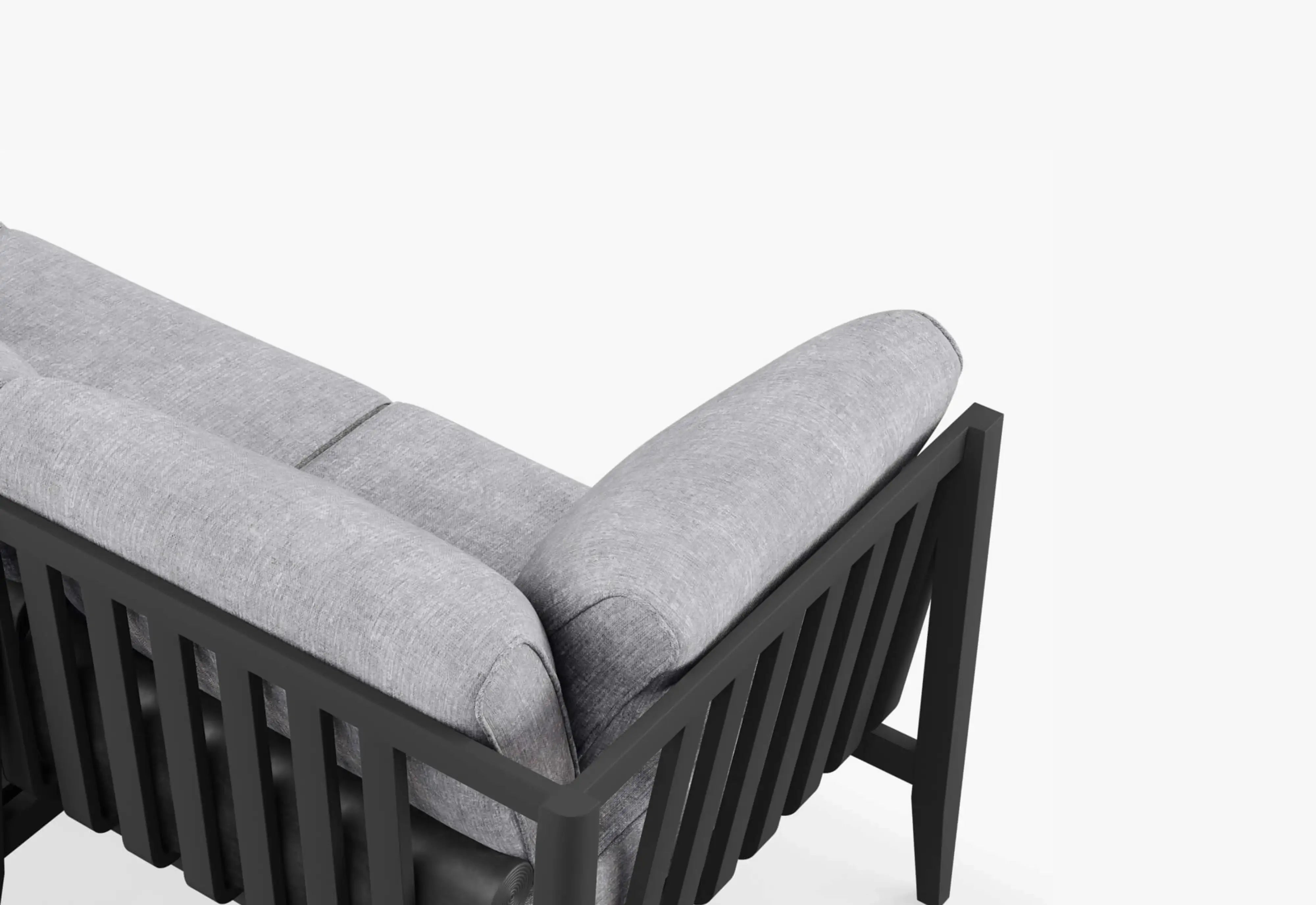
Aluminum Sofa — 3 Seat
A powder-coated aluminum frame with removable cushion covers and built-in OuterShell® protection. Check the product page for current fabric options and care details.
Built-in OuterShell®
Aluminum frame

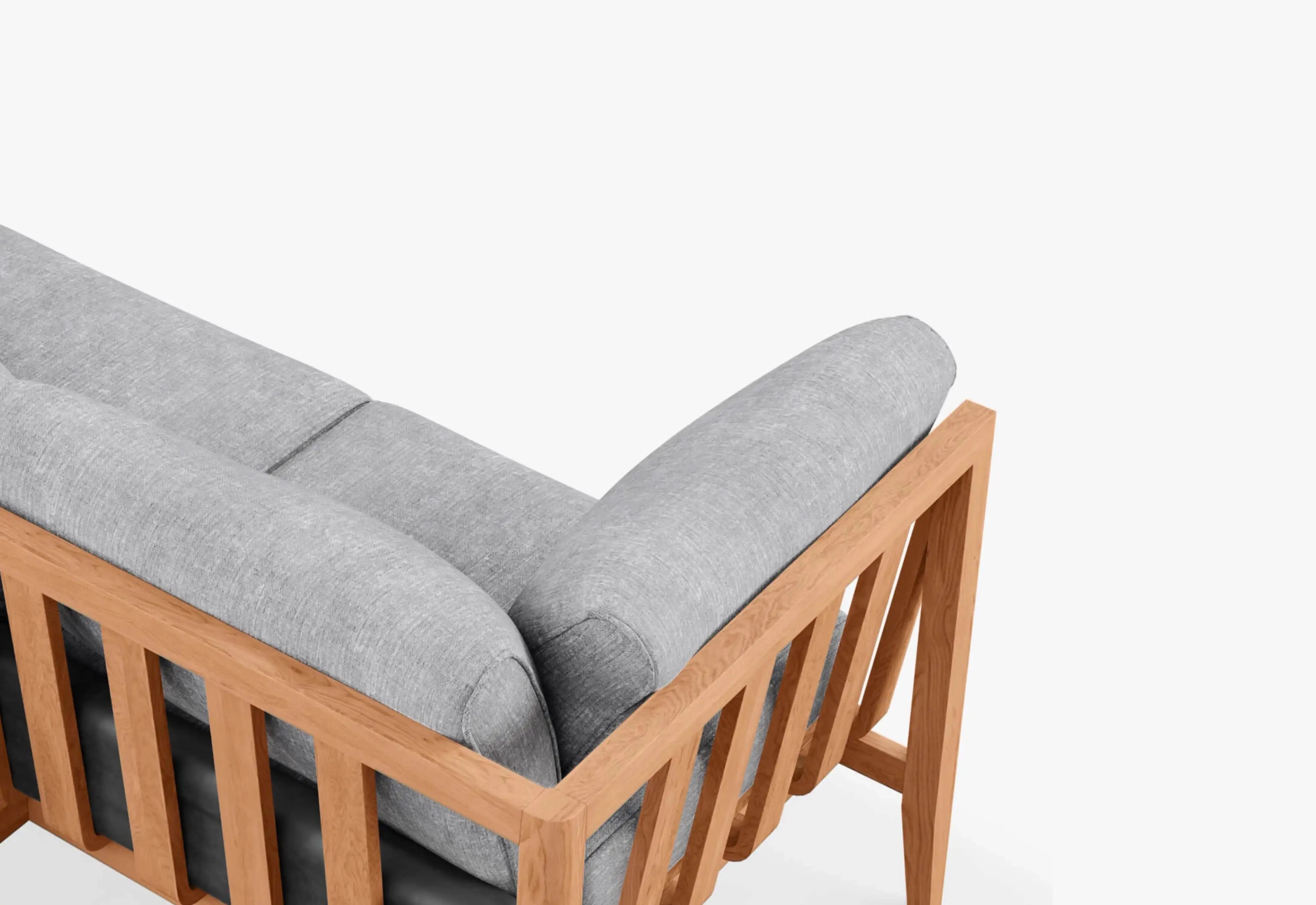
Teak Sofa — 3 Seat
Natural teak paired with removable cushion covers. Follow separate care instructions for the wood frame, cushion fabric, and built-in protection.
Built-in OuterShell®
Teak frame

All-Weather Covers
Explore full-furniture covers for heavier weather and extended non-use. Choose the fit for your configuration and cover only after furniture and cushions have dried.
Check cover instructions
Cover dry cushions

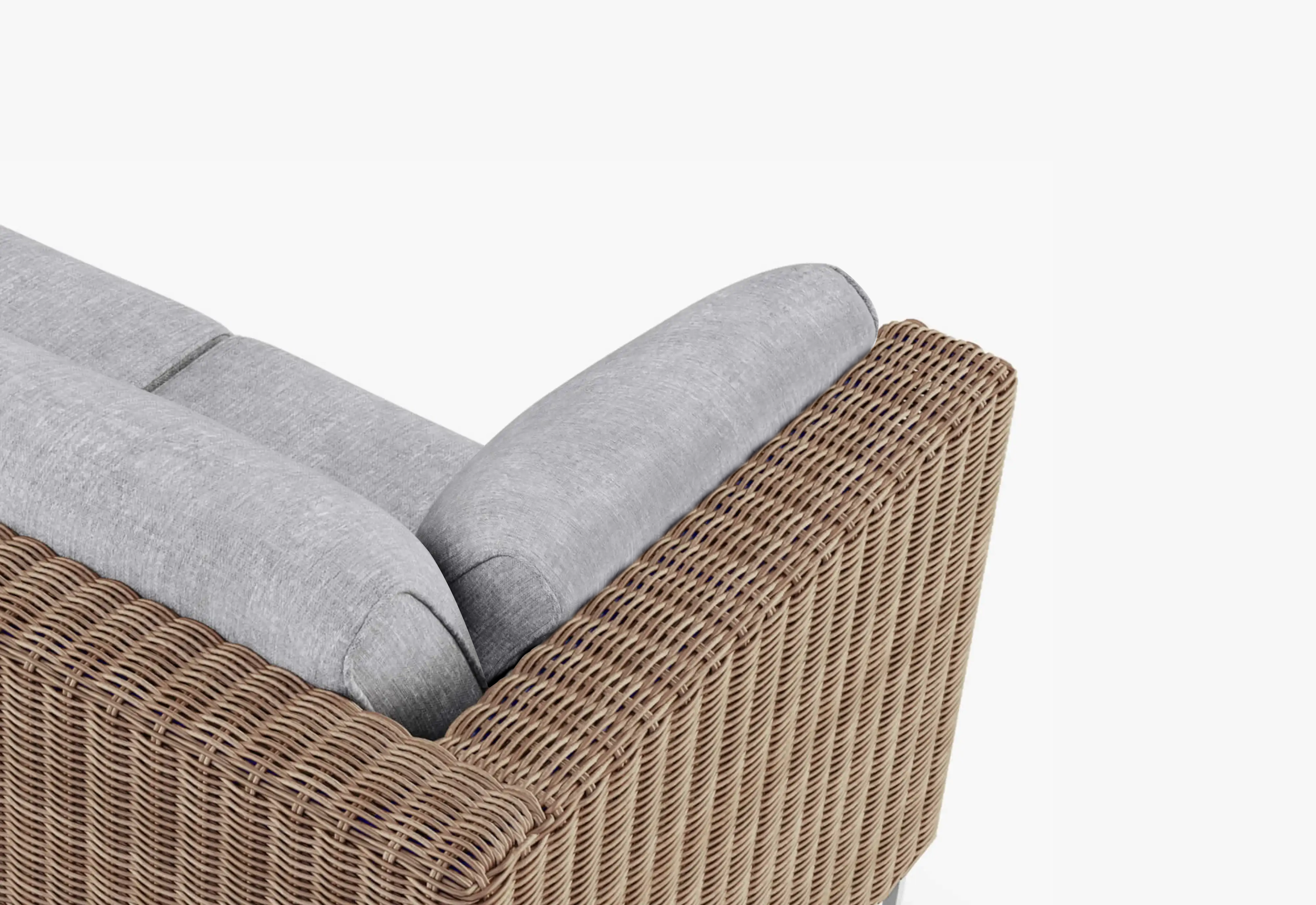
Outdoor Sofas and Sectionals
Compare modular seating in aluminum, teak, and wicker. Review cushion construction, cover care, and protection features alongside size and comfort.
Compare frame materials
Check product details

Clean Carefully. Dry Fully. Protect Between Uses.
Choose seating with care requirements that fit your routine, and the right protection for the weather your patio faces.