

Where Beauty Meets Strength: A Seating Depth Guide for the Modern Patio

Seating depth is one of the most quietly influential decisions in outdoor design. It shapes how a space looks, how it feels to sit, and how well it supports everyday use over time. Too shallow, and seating feels upright and temporary. Too deep, and it can feel heavy, difficult to use, or visually overwhelming.
Where beauty meets strength is in finding the depth that balances visual proportion with physical support—creating seating that looks composed, feels comfortable, and performs reliably season after season.
What Seating Depth Really Controls
Seating depth isn’t just a comfort metric. It affects three critical layers of patio design at once:
- Visual weight: deeper seats read more relaxed and grounded.
- Posture support: depth influences how the body distributes weight.
- Usability: the ease of sitting down, standing up, and shifting positions.
A well-chosen depth allows seating to feel inviting without sacrificing structure.
Shallow vs. Deep: Understanding the Trade-Offs
Shallower seating tends to look crisp and upright. It works well for dining-adjacent areas or spaces meant for shorter stays. However, it can feel restrictive for lounging or extended conversations.
Deeper seating signals relaxation. It encourages leaning back, cross-legged sitting, and longer use. Visually, it creates a softer silhouette—but if not designed carefully, it can appear bulky or sink-heavy.
The goal isn’t choosing one extreme, but selecting a depth that supports the intended behavior of the space.
Depth and Visual Proportion
From a design perspective, seating depth affects how furniture relates to its surroundings.
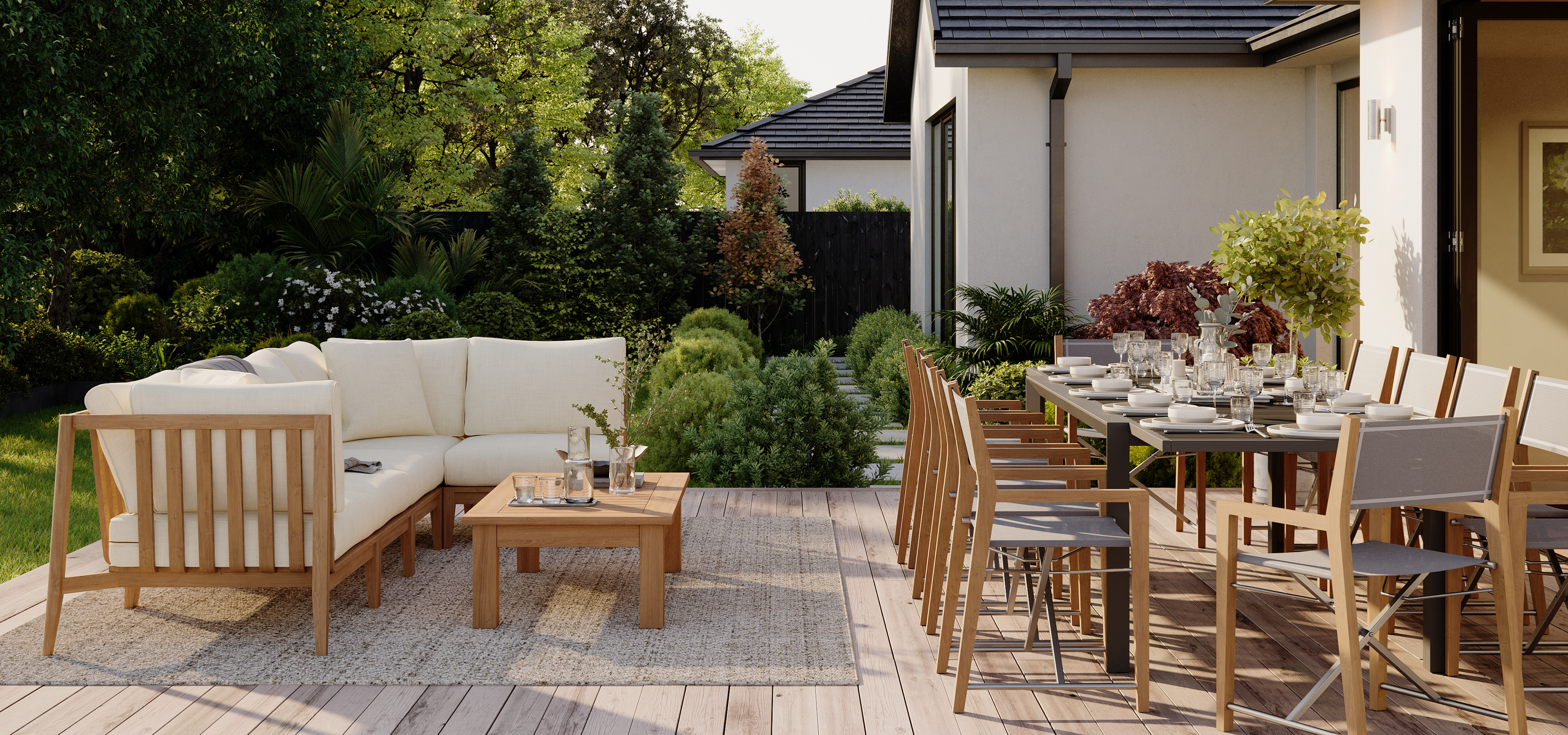
- Deeper seats anchor open patios and prevent them from feeling sparse.
- Moderate depths preserve openness in tighter layouts.
- Consistent depth across pieces creates visual rhythm.
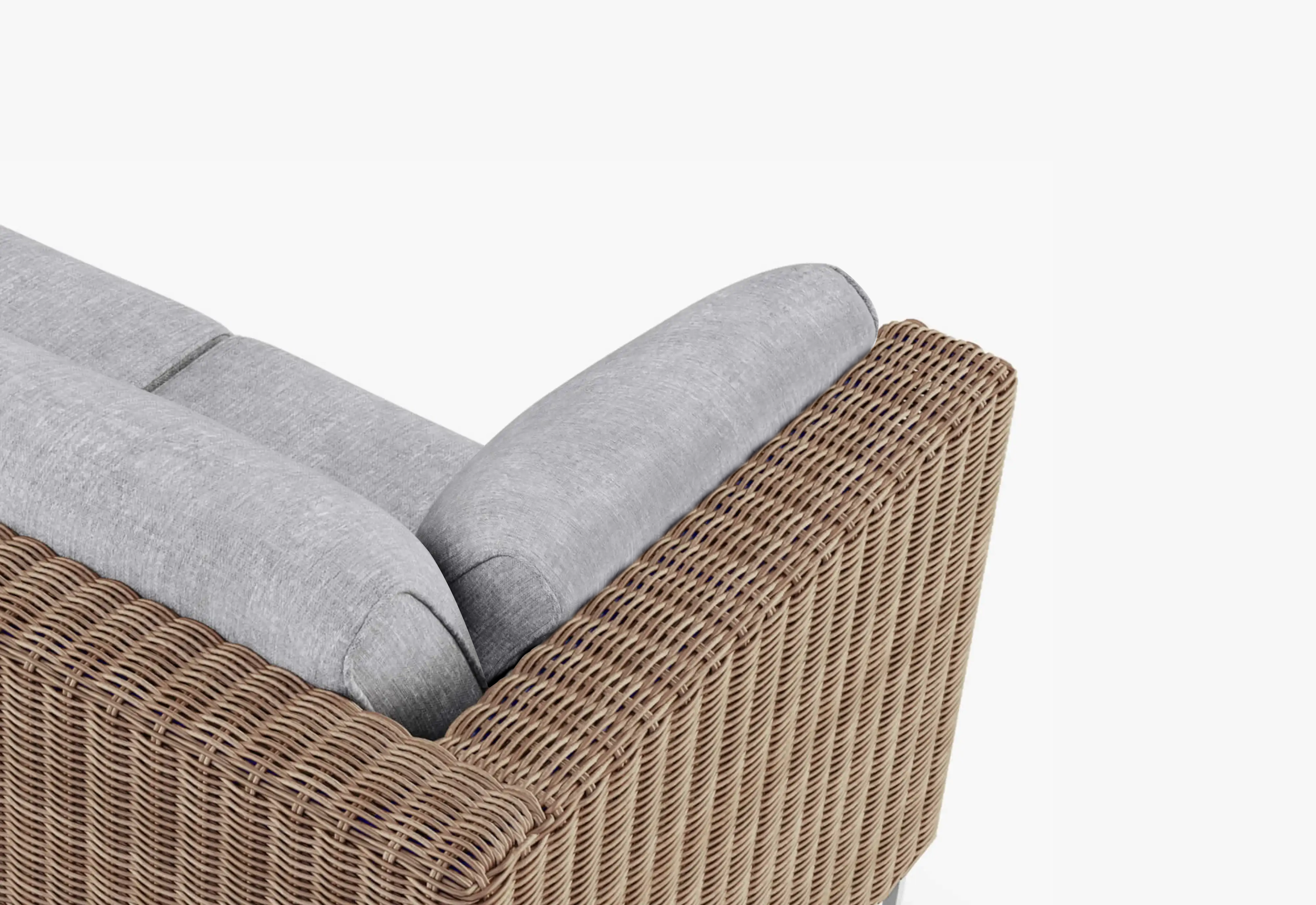
Seating collections within the Teak Outdoor Sofa and Wicker Outdoor Sofa ranges use depth to balance presence with lightness, allowing furniture to feel substantial without overwhelming the space.
Depth and Body Support
Comfort is where strength becomes physical. Seating depth determines how the back, hips, and legs are supported.
A depth that’s too shallow shifts weight forward, increasing pressure on the lower back. Too deep, and the sitter may lose lumbar support unless cushions and back angles are carefully engineered.
This is where internal cushion structure matters. Systems like OuterCloud® are designed to work with seat depth, allowing deeper seating to remain supportive rather than slouch-inducing.
Different Depths for Different Zones
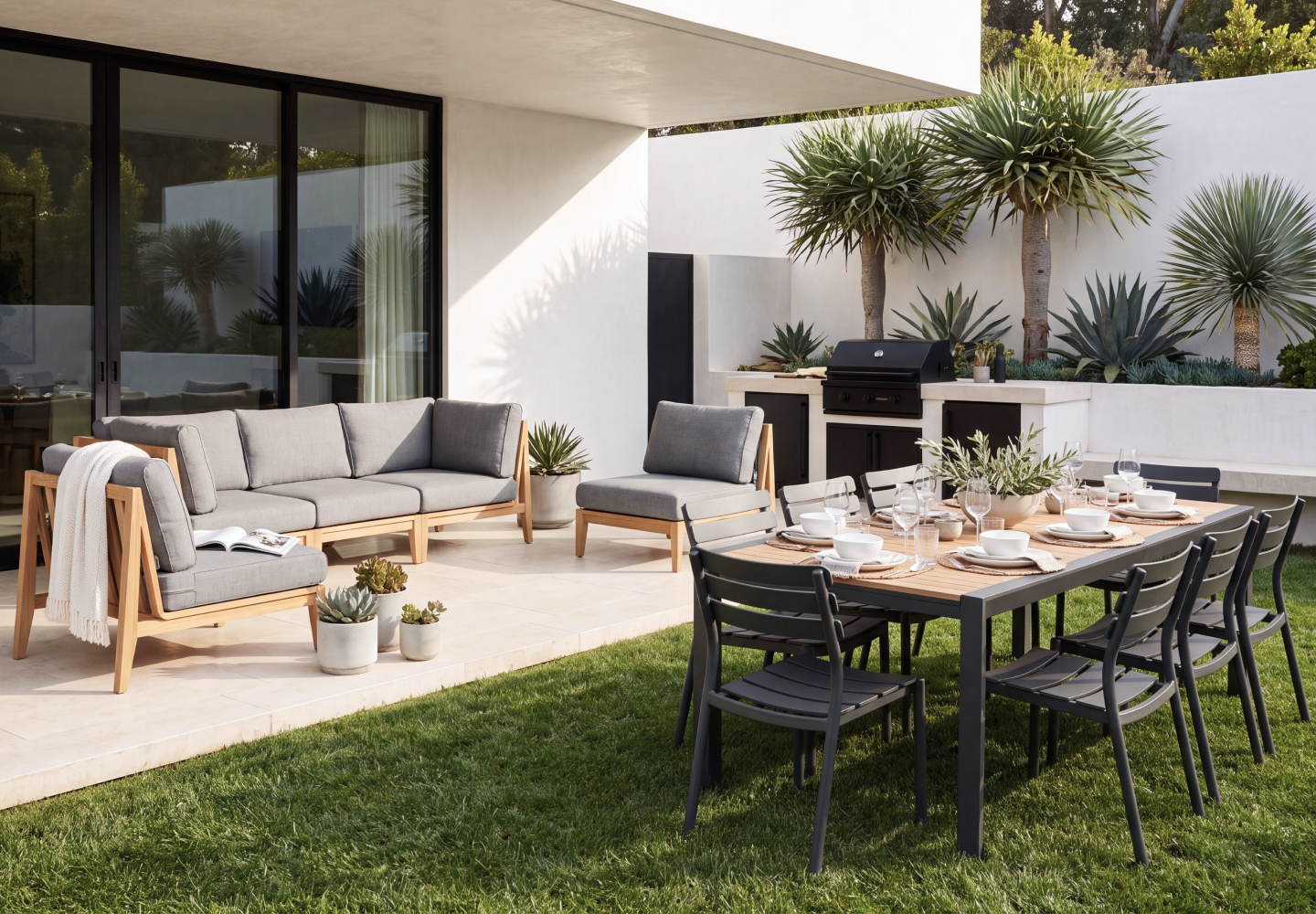
Modern patios often combine multiple seating experiences. Depth can help define these zones without walls or dividers.
- Dining areas benefit from slightly shallower seating for upright comfort.
- Conversation zones work well with medium depth that supports relaxed posture.
- Lounging areas thrive with deeper seats that invite lingering.
When paired thoughtfully, these variations create a layered space that feels intentional rather than mismatched.
Strength Beneath the Comfort
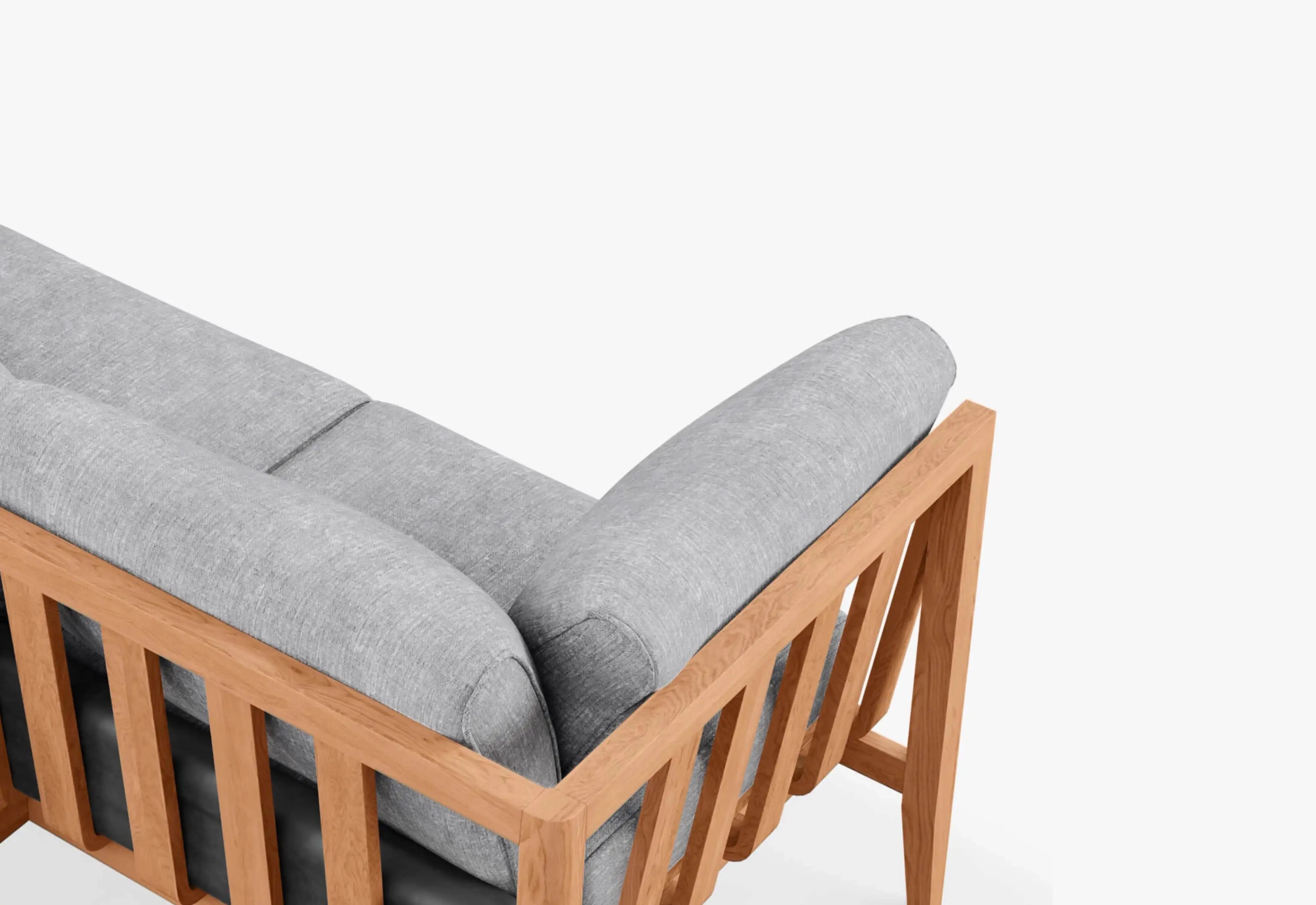
Deeper seating places different demands on the frame beneath it. Longer seat platforms must support weight evenly to prevent sagging or misalignment over time.
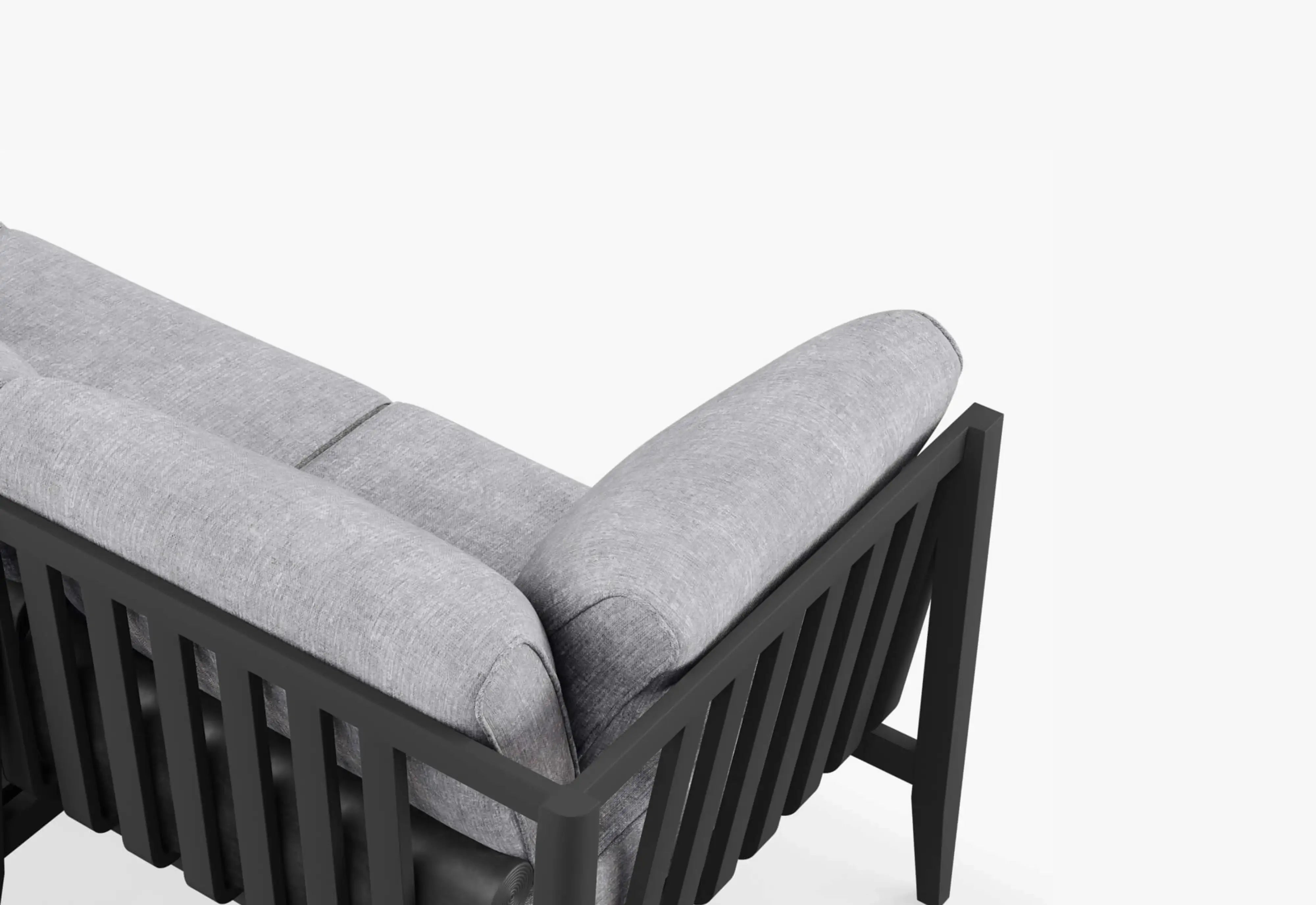
Lightweight but rigid structures—such as aluminum frames—provide the strength needed to support deeper cushions without adding visual bulk. This balance of material efficiency and structural integrity is what allows seating to feel both relaxed and enduring.
Depth, Movement, and Everyday Use
Seating depth also affects how people move through the space.
- Deeper seats encourage staying put, anchoring social moments.
- Moderate depths make it easier to transition between sitting and standing.
- Consistent depth across pieces improves flow and predictability.
In family and entertaining settings, this balance helps seating adapt to different ages, postures, and moments throughout the day.
Supporting Depth With Fabric and Protection
Deeper seating often means more cushion volume—and more exposure to the elements. Material choice plays a key role in preserving both comfort and appearance.
Performance textiles like OuterWeave® maintain their structure and color even with larger cushion profiles, while integrated protection such as OuterShell® helps manage moisture without compressing cushions.
During extended downtime, breathable options from the Covers collection help deeper seating retain its shape and support.
Choosing the Right Depth Is a Design Decision
Seating depth isn’t something to correct later—it’s something to choose deliberately. The right depth reinforces how a patio is meant to be used, how it’s meant to feel, and how it’s meant to age.
When depth is balanced correctly, seating looks composed, feels supportive, and holds its structure over time. That’s where beauty meets strength—not in excess, but in proportion.
In the modern patio, the best seating depth is the one that quietly supports every moment it’s part of—without calling attention to itself.