


A Natural Extension of Home
Outdoor Furniture for Traditional Homes: Create a Timeless Patio
Brick, stone, painted siding, a porch that opens to the garden. Choose outdoor furniture that feels at home with the architecture and comfortable for the way you live today.
The Short Answer
Let a few familiar details guide the furniture.
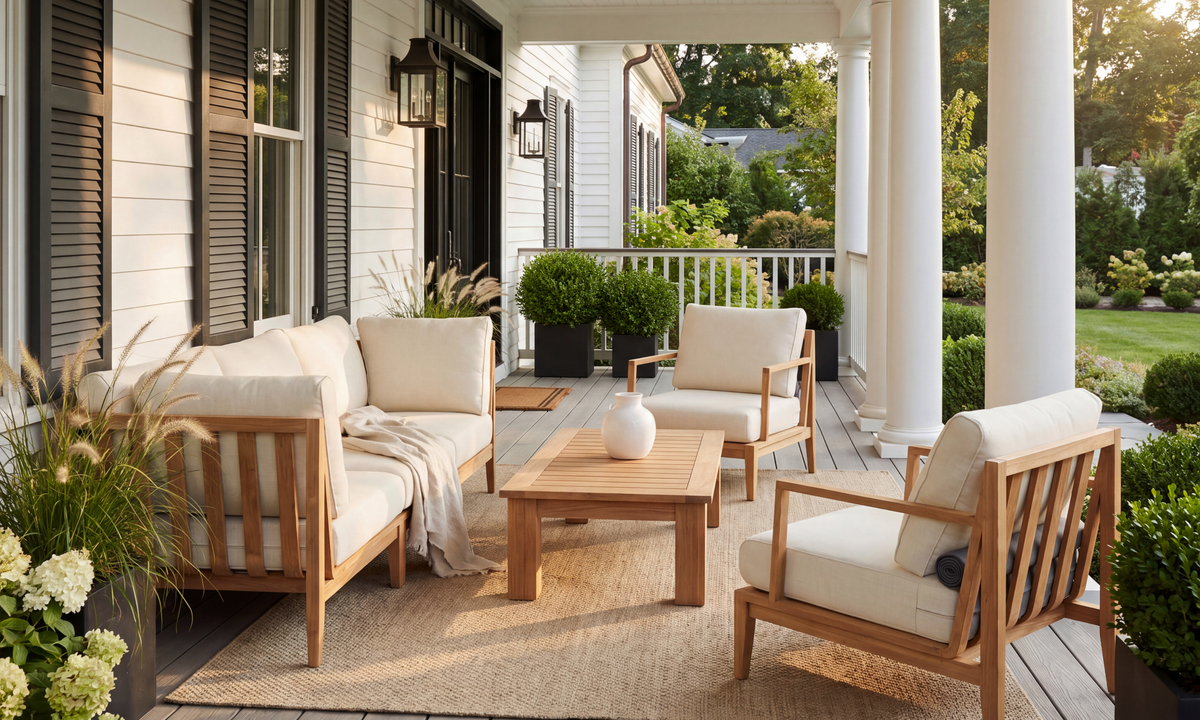
Choose outdoor furniture for traditional homes by connecting the frame material, cushion color, and furniture proportions to features already present in the house. Teak, all-weather wicker, and aluminum can each work when the arrangement relates to the architecture and leaves room for comfortable everyday use.
Begin with two or three details you love: the warmth of brick, the line of a dark window, or the texture of garden stone. Carry those relationships into the outdoor seating.
Look at the whole view. Consider the house from the patio and the patio from the rooms that overlook it.
Compare finishes together. Check frame finishes and fabric swatches beside the paving, walls, and painted trim.
Let comfort shape the arrangement. Fit the seats, useful tables, and walking routes into the architecture you have.
Start with What Makes the House Yours
Notice the materials that already belong together.
Traditional homes can have very different outdoor settings. A painted porch, a brick terrace, and a stone courtyard each offer a different starting point. Look closely at the surfaces that will surround the furniture.
Brick may contain several shades, while mortar can read warmer or cooler than the brick itself. Stone may include gray, beige, or brown. Painted trim and metalwork introduce another set of tones. Collect photographs and samples of the features you plan to keep.
Choose one main relationship to explore first. You might connect teak with warm paving, a woven frame with the garden’s texture, or charcoal aluminum with dark railings. The combinations below are starting points to compare in your own light.
| Exterior detail | A combination to try | Compare in the space |
|---|---|---|
| Warm brick and light mortar | Teak or brown wicker with a light neutral cushion. | How the wood or weave relates to both the brick and mortar. |
| Painted siding and dark shutters | Natural wood with light fabric, or a dark frame that repeats the shutters. | The contrast among siding, frames, and cushions. |
| Gray stone and dark railings | Charcoal aluminum with a compatible neutral fabric, or teak for warmth. | The stone’s undertones and the visual weight of the furniture. |
| A shaded porch facing planting | Woven seating with a simple cushion palette and a small amount of pattern. | How fabric and weave appear in the porch’s actual shade. |

Bring Texture into the Conversation
Let the garden soften the architecture.
Woven seating can introduce another texture beside painted boards, masonry, and planting. A simple cushion color gives that texture room to show, while a few patterned pillows can carry colors from the garden.
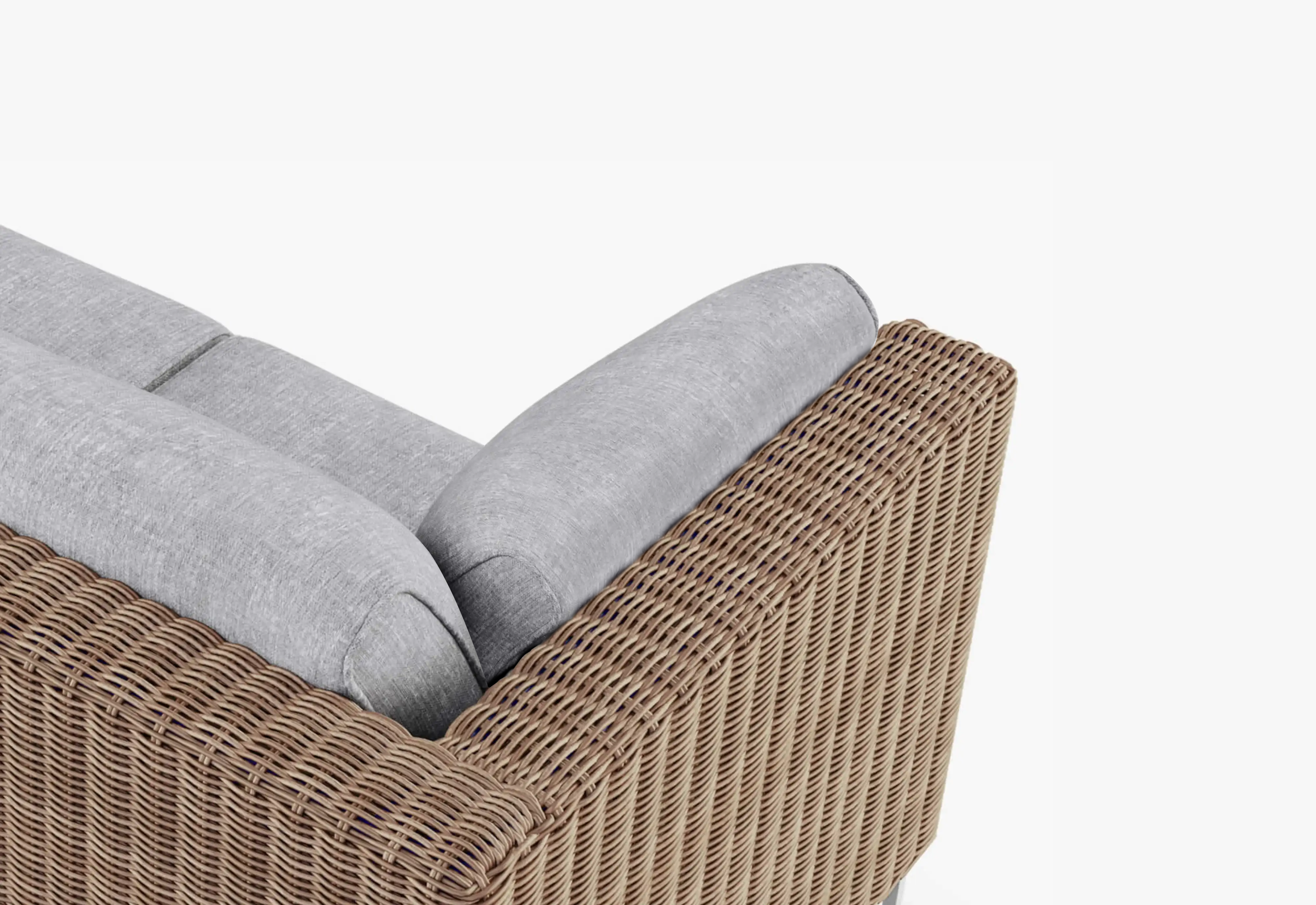
Choose woven furniture made for the exposure it will receive. Outer’s All-Weather Wicker is handwoven over aluminum frames, combining a familiar woven appearance with materials intended for outdoor use.
Compare the weave at the scale of the whole seating group. A single sample shows color and texture; a full arrangement also shows how much visual space the frames occupy.
Explore All-Weather Wicker →Three Materials, Different Relationships
Choose the frame for its appearance and the way it ages.
Compare each material with the house and your preferred care routine. The right choice should feel satisfying when the furniture is new and as it spends more seasons outdoors.
Teak
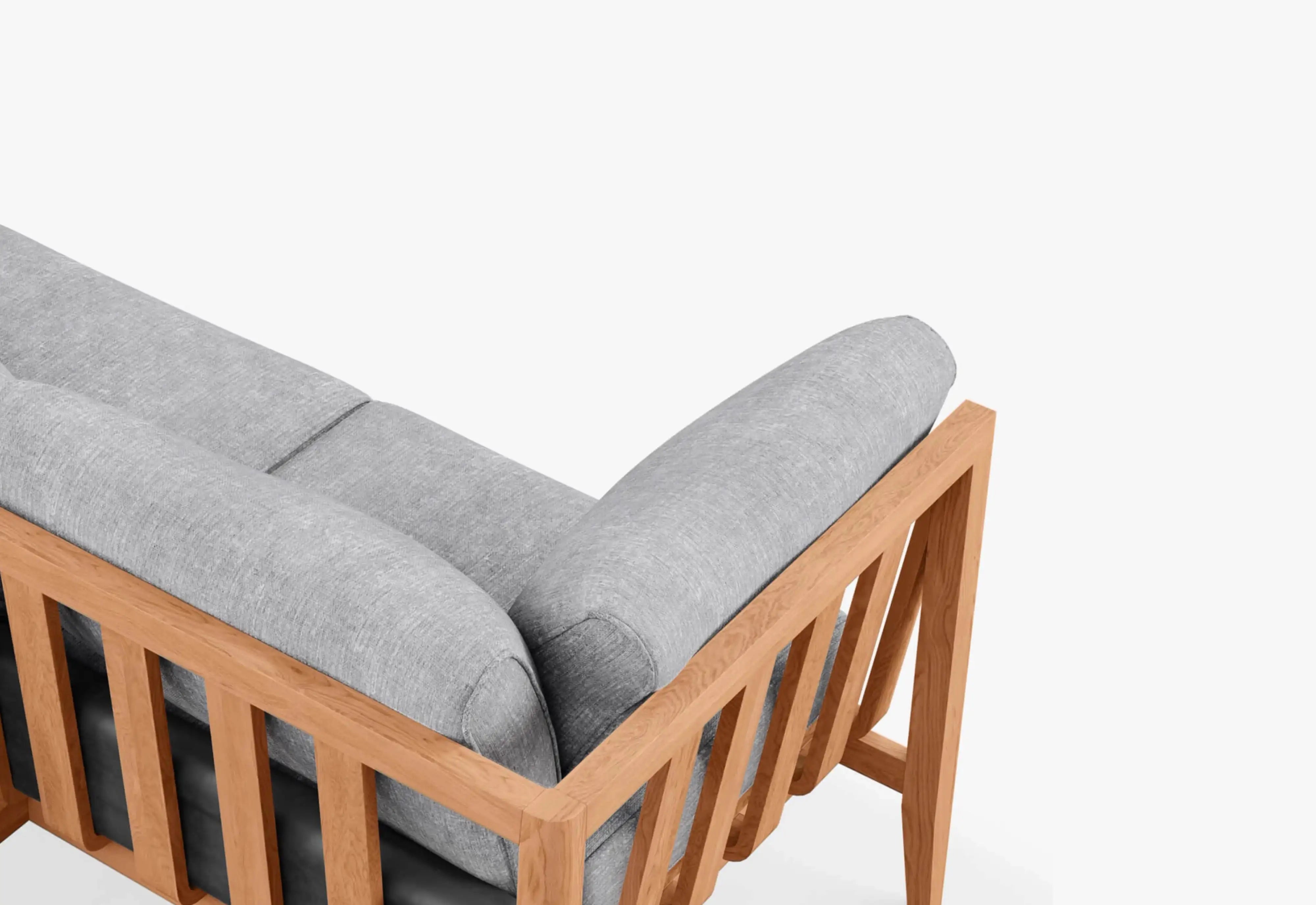
Natural grain and a warm wood tone can connect a seating area with stone, brick, and planting. With outdoor exposure, teak develops a silver-gray patina. Consider that future appearance alongside the home’s finishes.
Explore Teak →All-weather wicker
A woven frame adds texture to a porch or garden terrace. Compare the weave color against the walls and paving, and consider how its fuller outline balances the surrounding space.
Explore Wicker →Aluminum
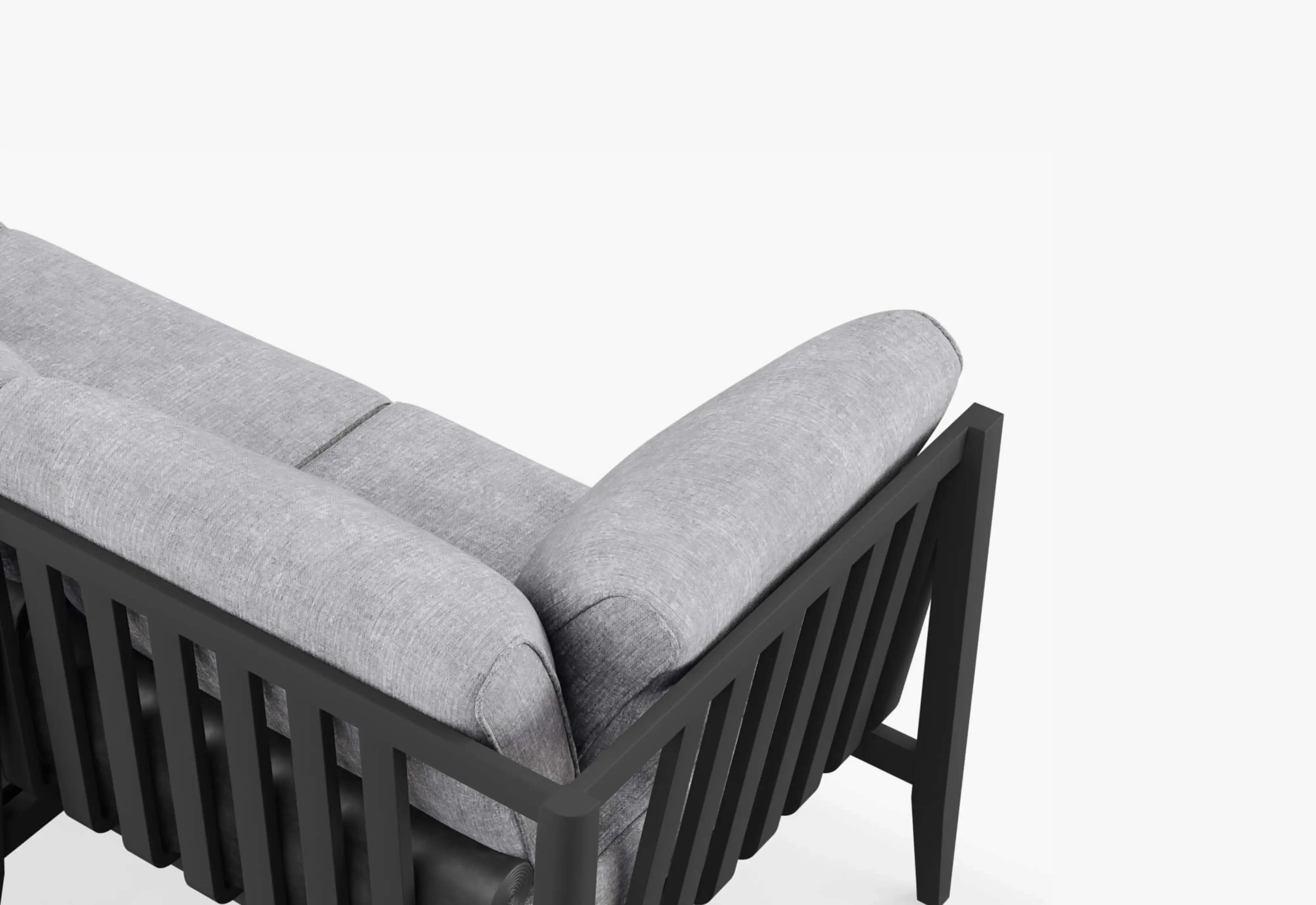
A powder-coated frame offers a clear, simple outline. A dark finish can repeat window frames or railings, while the cushions and surrounding planting bring softness to the arrangement.
Explore Aluminum →You can also combine materials through a shared color or finish. A woven sofa and a wood table can work together when their proportions and tones relate. Our guide to mixing outdoor furniture materials offers more ways to approach the combination.
Give the Architecture Room to Be Seen
Check the furniture against columns, doors, and windows.
A porch may look spacious until a column interrupts the sofa position or a door opens into a chair. Draw these fixed features into a measured plan before choosing the arrangement. Include table footprints, chairs in use, and access to the garden.
Look at the height of sofa backs and chair frames from inside the house. Check whether they sit comfortably beneath windows or across a garden view. On a narrow porch, a loveseat or a pair of chairs may fit the architecture better than a larger sofa group.
Paired chairs can echo the order of windows or columns. Test the arrangement with people seated: each person should have an easy way in and out and a convenient surface for a glass. Use our patio layout dimensions guide to review the space around the furniture.
Build the color palette in a few considered steps.
- Choose the main cushion color. Compare swatches with the wall, paving, and frame finish together. View them in the shade and sunlight where the seating will stand.
- Repeat an existing detail. A dark table frame can connect with railings; a warm wood surface can relate to a door or garden structure.
- Add pattern at a smaller scale. Pillows or an outdoor rug can introduce a color from the garden or an adjoining room while keeping the main furniture palette consistent.
Order fabric swatches before deciding. A pale cushion may appear different beside warm mortar than beside a bright painted wall.
Explore Texture and Contrast
Compare complete arrangements in the context of your home.
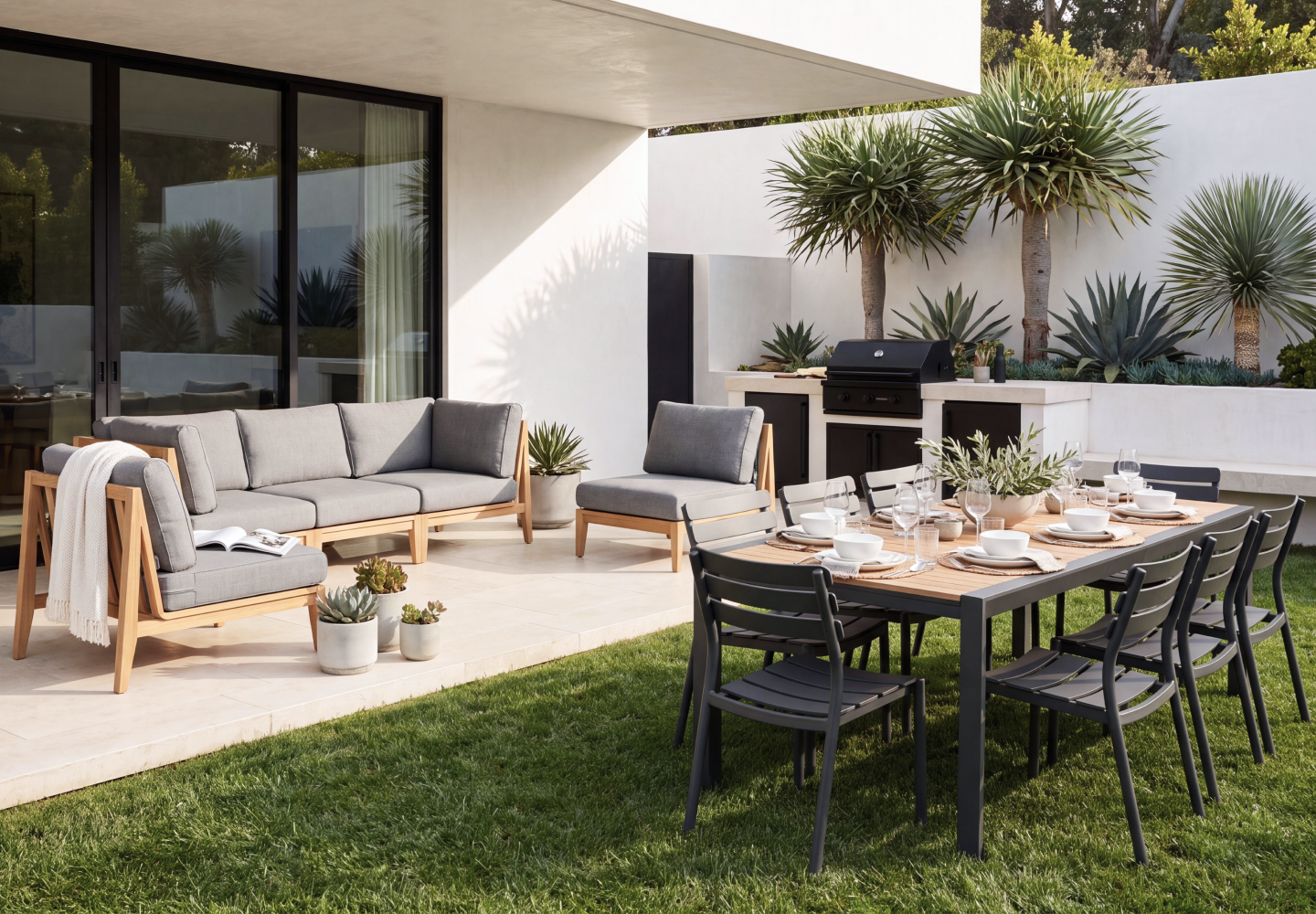
These styled settings illustrate two useful relationships: woven texture with a simple table, and a dark furniture outline that connects with dark architectural details. Review the actual dimensions and selected configuration against your own space.

Brown Wicker Sofa + Coffee Table Set
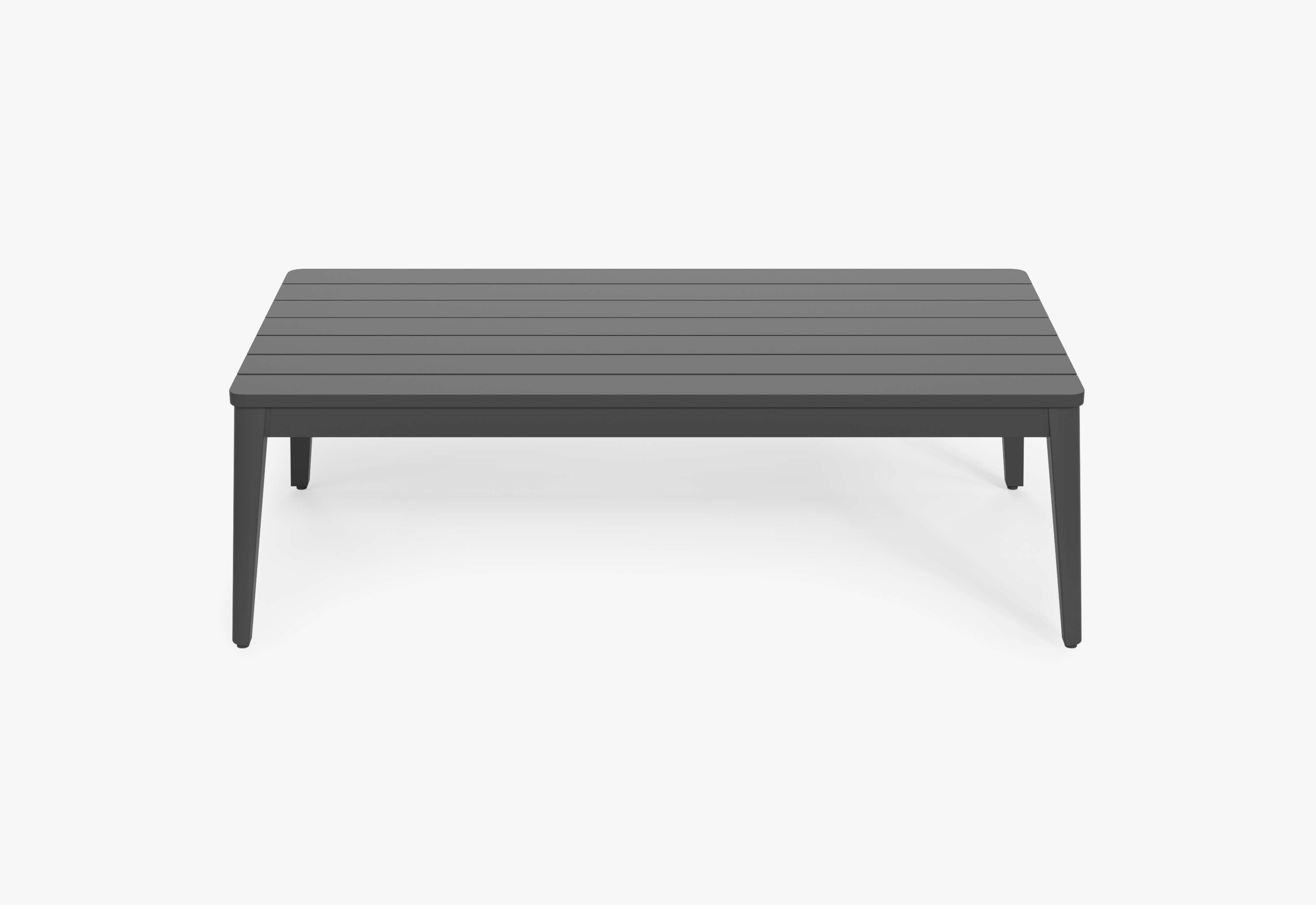
Woven seating and a rectangular aluminum coffee table create a combination of texture and clean lines. Compare the brown frame with the brick, wood, or planting around your seating area.
Explore the Wicker Set →
Charcoal Aluminum Sofa + Coffee Table Set
The dark frames in this setting repeat the line of the windows. Consider a similar relationship with your home’s shutters, railings, or doors, then compare cushion colors with the paving.
Explore the Aluminum Set →Bring the View and the Experience Together
Make the patio feel connected and easy to use.
Stand in the room that opens onto the patio and look at the full arrangement. Repeat a color, wood tone, or textile detail you enjoy indoors. Check the view with cushions and accessories in place, then sit outside and try the tables and walking routes.
If you are keeping an existing dining table, let it help guide the new lounge furniture. Compare the finishes and the scale of both areas. You can explore that decision in our guide to outdoor furniture sets vs. individual pieces.
Plan a care routine for the exposure your space receives. OuterShell® provides everyday protection from dew, dust, pollen, and light rain. For heavier weather or extended non-use, follow product guidance for compatible All-Weather Covers or protected cushion storage. Let cushions dry fully before covering or storing them.
Follow the material-specific care instructions so the furniture can continue to complement the house as it spends time outdoors.
Traditional Home Outdoor Furniture FAQ
A few questions to guide your choice.
Can modern outdoor furniture work with a traditional house?
Yes. A simple furniture silhouette can connect with a traditional house through its material, color, or proportions. Try repeating a wood tone, the color of a shutter, or a line from the railings, then assess the whole view.
What outdoor furniture colors work with red brick?
Start by looking at the brick’s color variations and the mortar. Compare light neutral cushions with teak, brown wicker, or dark metal frames in the actual space. The right combination depends on the paving, trim, and outdoor light as well as the brick.
Does outdoor wood furniture need to match the house exactly?
A related tone or texture can create a connection without an exact match. Compare the wood with doors, decking, paving, and planting. If you choose teak, consider its eventual silver-gray patina as part of the palette.
Is all-weather wicker suitable for a traditional porch?
It can be a useful choice when you want woven texture in an outdoor setting. Outer’s All-Weather Wicker is handwoven over aluminum frames. Check the full furniture dimensions, cushion color, and care requirements for your porch.
How do I furnish a narrow porch?
Measure the usable area between columns, doors, and railings. Compare a loveseat or a pair of chairs with a larger sofa group, including tables and access. Check the arrangement from indoors and with someone sitting in each seat.
How can I make lounge and dining furniture feel coordinated?
Repeat a material, frame finish, or fabric color between the areas. Compare their proportions and allow comfortable movement between them. Bring photographs of existing furniture and exterior finishes when reviewing new pieces.
Create a Comfortable Relationship with Home
Find the furniture that belongs in your view.
Share photographs of your home, patio measurements, and the pieces you want to keep. Outer’s complimentary design consultation can help you compare materials, colors, and arrangements for your space.


