

Layout Dimensions Guide
Patio Furniture Layout Dimensions Guide: Sofas, Tables, Fire Pits & Dining (2026)
The numbers that determine whether a patio feels spacious or cramped. Sofa depth, fire pit clearance, dining table spacing.

The quick answer
Patio Furniture Dimensions at a Glance
Three numbers cover most of what you need: 36 inches for walkways, 24 inches behind each chair, and 3-7 feet from fire to seat depending on fuel type.
Walkways need 36 inches. The path behind seating, between zones, and around the perimeter. Less than 36 inches and guests have to turn sideways. This is the single most common layout mistake.
Seating depth: allow 30-36 inches per person. A sofa that seats 3 needs roughly 7.5 linear feet. Add 24 inches of clearance behind it for chair push-back. Add 18-24 inches in front for leg room.
Fire pit clearance depends on fuel. Wood-burning: 6-7 ft. Propane/natural gas: 3-4 ft. Fire pit tables: 2-3 ft. These numbers are for comfort and safety — not minimum code.
Sofa and Sectional Dimensions for Patio Layouts
The standard outdoor sofa is 89″ L × 35″ D × 32″ H. An L-sectional doubles that in one direction — 89″ × 89″. A U-sectional spans roughly 110″ × 110″. These are the footprints. The clearance around them determines whether the layout works.
| Piece | Width (L) | Depth (D) | Height (H) | Seats |
|---|---|---|---|---|
| 3-Seat Sofa | 89″ | 35″ | 32″ | 3 |
| Armchair | 35″ | 35″ | 32″ | 1 |
| Armless Chair | 27″ | 35″ | 32″ | 1 |
| Corner Chair | 35″ | 35″ | 32″ | 0 (connector) |
| L-Sectional | 89″ | 89″ | 32″ | 5–6 |
| U-Sectional | 110″ | 110″ | 32″ | 6–8 |
Clearance is where most patios fail. Behind a sofa or sectional, leave 24 inches for push-back if the seating backs up to a wall or railing. In front, leave 18-24 inches for leg room plus 14-18 inches more for a coffee table. The walking path around the perimeter needs 36 inches — less and guests turn sideways to pass. A patio 16 ft × 16 ft accommodates an L-sectional with room to walk. A 12 ft × 12 ft patio fits a 3-seat sofa plus two armchairs — and nothing more. Shop outdoor sofas and sectionals
Coffee and Side Table Dimensions
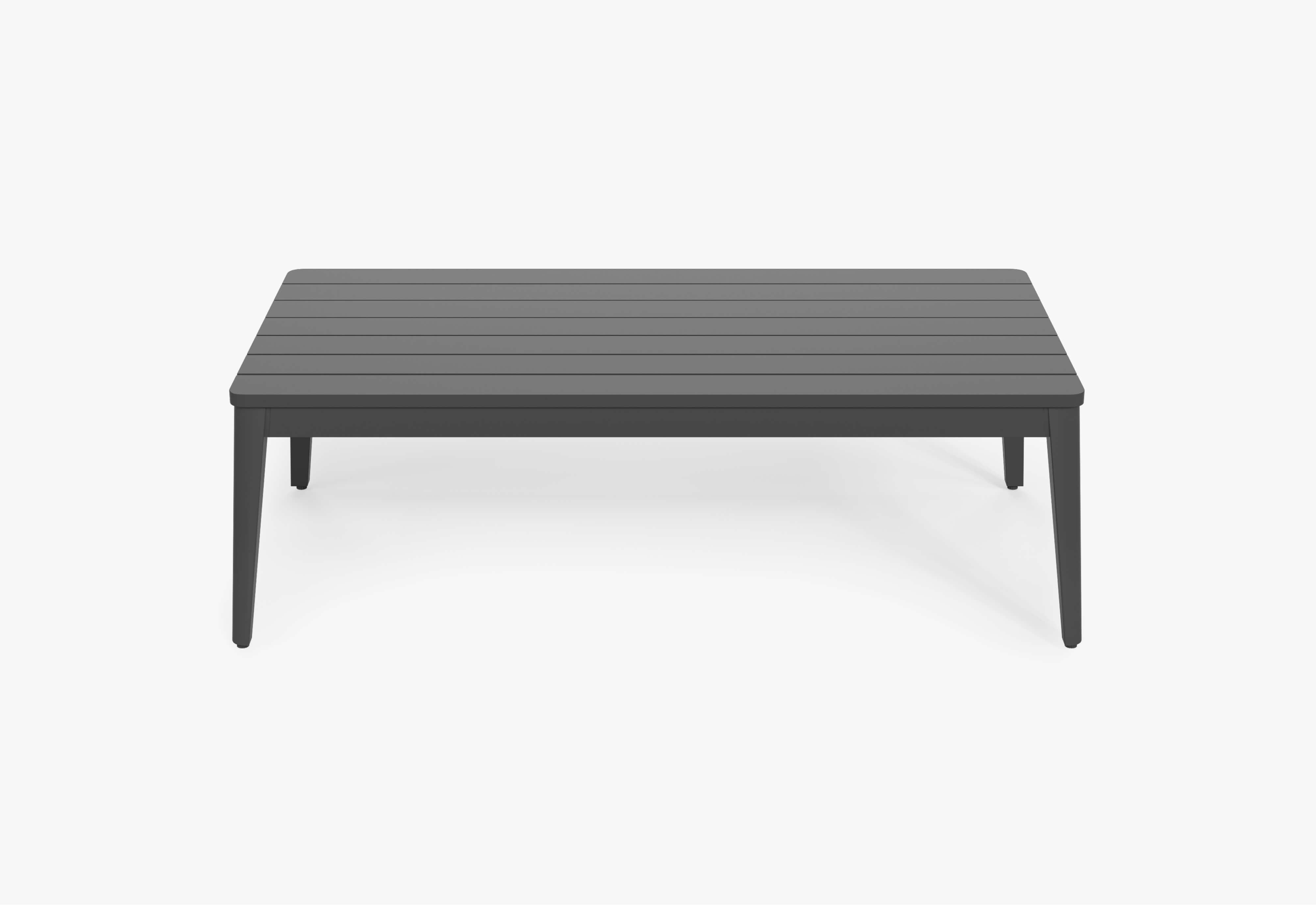
A coffee table anchors the seating zone. A side table holds a drink within arm's reach. Both need clearance around them to function.
| Table Type | Typical Size | Height | Clearance Around | Best With |
|---|---|---|---|---|
| Square Coffee Table | 36″ × 36″ | 16″–18″ | 14″–18″ from sofa edge | L-sectional, 3-seat sofa |
| Rectangular Coffee Table | 48″ × 28″ | 16″–18″ | 14″–18″ from sofa edge | U-sectional, large sofas |
| Round Coffee Table | 36″–42″ diameter | 16″–18″ | 14″–18″ from sofa edge | Curved sectionals, fire pit zones |
| Side / End Table | 16″ × 16″ | 18″–20″ | 12″ from armrest | Armchairs, sectional arms |
How to test your layout before buyingChalk out the furniture footprint on your patio — every piece, including clearance zones. Mark the 36-inch walkway perimeter. Walk the paths. Sit in the marked seating zones. If you cannot walk from the seating to the house or grill without turning sideways, the layout needs adjusting. This 20-minute exercise prevents the most common outdoor furniture regret: ordering pieces that technically fit but functionally crowd the space.
Outdoor Dining Table Spacing and Clearance Requirements
Dining layouts need more clearance than seating layouts. A chair pushed back from the table extends roughly 30 inches. The table itself is 36-42 inches wide. Total dining zone depth: 8 feet minimum — 3 ft for chairs on one side + 3 ft for the table + 3 ft for chairs on the other. For the table ends, add 30 inches of chair clearance beyond the table edge.
| Table Size | Seats | Minimum Patio Width | Minimum Patio Depth |
|---|---|---|---|
| Square (42″ × 42″) | 4 | 8′–9′ | 8′–9′ |
| Rectangular (72″ × 36″) | 6 | 10′ | 8′–9′ |
| Rectangular (96″ × 42″) | 8 | 12′ | 10′ |
| Expandable (71″–118″ × 39″) | 6–12 | 10′–14′ | 8′–9′ |
Between the table edge and any wall or railing, leave 42-48 inches. This allows a seated guest to push back, stand up, and walk behind another seated guest without asking them to scoot in. Less than 42 inches and the person at the back of the table is trapped until the meal ends. Browse outdoor dining tables
Fire Pit Clearance and Seating Distance by Fuel Type
Fire pit clearance depends on fuel type. Wood fires radiate more heat and produce sparks — they need more distance. Gas fires are more predictable — the flame height and heat output are controlled. Fire pit tables operate at lower BTUs and allow closer seating. Browse outdoor fire pits for dimensions on specific models.
| Fire Pit Type | Min. Distance | Comfortable Distance | Clearance Above | Best For |
|---|---|---|---|---|
| Wood-Burning | 6–7 ft | 7–9 ft | 10+ ft (no overhead) | Large backyards, rustic |
| Propane Gas | 3–4 ft | 4–6 ft | 8+ ft | Flexible layouts, decks |
| Natural Gas | 3–4 ft | 4–6 ft | 8+ ft | Permanent installations |
| Fire Pit Table | 2–3 ft | 3–5 ft | 6+ ft | Intimate gatherings, patios |
Fire Pit Safety Checklist
◻ Base: Non-combustible surface — stone, gravel, concrete, or pavers. Minimum 12 ft from any structure, overhang, or tree canopy.
◻ Wind: Place seating on the upwind side. Smoke and sparks blow downwind.
◻ Sparks: Wood-burning needs a spark screen. Gas needs an emergency shut-off valve within reach.
◻ Surface: Never place wood-burning directly on a wooden deck. Gas fire pit tables can sit on decks with a protective mat.
◻ Tools: Fire extinguisher, water bucket, or fire blanket within 10 ft of the seating zone.
Patio Layout Scenarios: Furniture Configurations for 4 to 10+ Guests
Guest count determines the furniture footprint. Below are four common hosting scenarios — each with the minimum patio size, recommended seating configuration, and fire pit clearance to keep the zone safe and walkable.
| Guests | Minimum Patio | Seating Configuration | Fire Pit Type | Clearance from Fire |
|---|---|---|---|---|
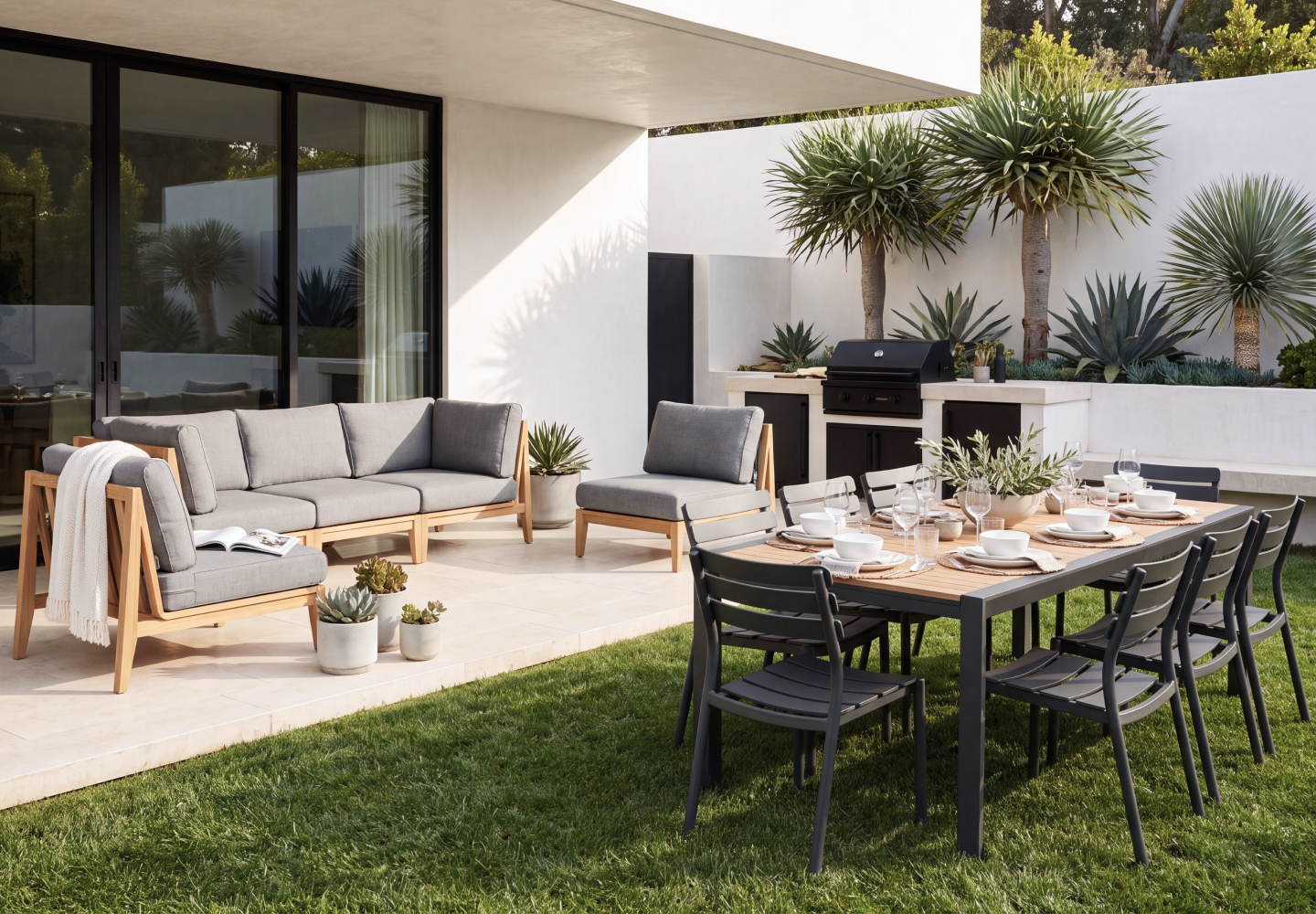
| 4 | 12′ × 12′ | 3-seat sofa + 2 armchairs | Fire pit table | 2–3 ft |
| 6 | 14′ × 14′ | L-sectional + 2 chairs + coffee table | Propane fire pit table | 3–4 ft |
| 8 | 16′ × 18′ | U-sectional + 2 armchairs | Propane gas | 3–4 ft |
| 10+ | 20′ × 20′ | U-sectional + dining set (6–8 seats) | Wood-burning (dedicated zone) | 6–7 ft |
How to Scale Your LayoutStart with the largest piece — usually the sectional. Place it so the longest sightline faces the fire pit or the view. Add chairs across from and perpendicular to the sofa. Leave the 36-inch walkway around the perimeter. Scale the dining zone independently on the opposite side of the patio. For a complete breakdown of seating arrangements around a fire feature, read our fire pit seating guide for large groups. If you are choosing between sectional configurations, sofa vs sectional walks through the trade-offs.
Complete the Setup
Patio Layout Essentials: Fire Pit and Sectional Seating

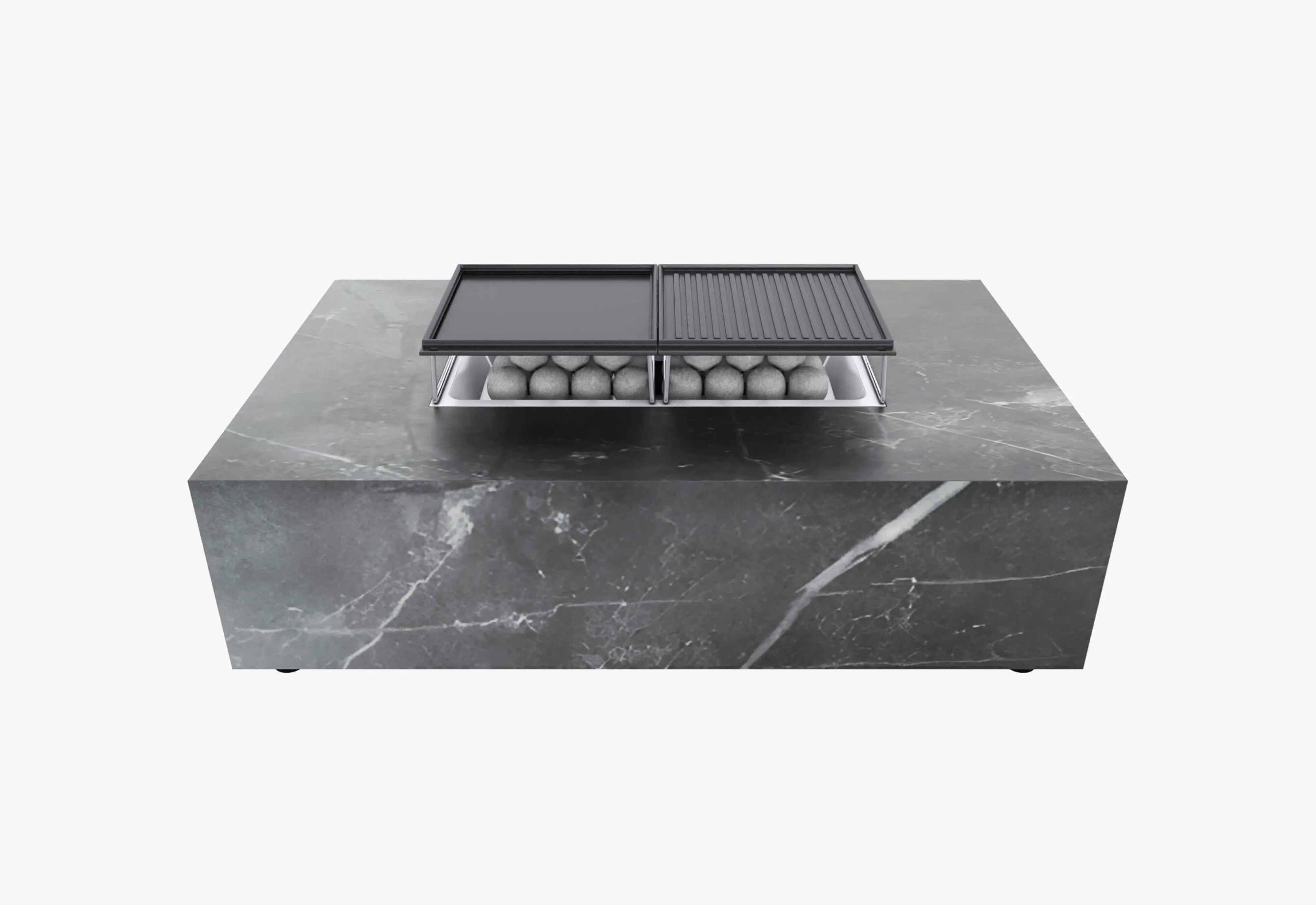
Outer Fire Pit Table — Rectangular
OuterStone composite top. Propane-powered. Grill, fire, and table in one.
OuterStone top
Aluminum base

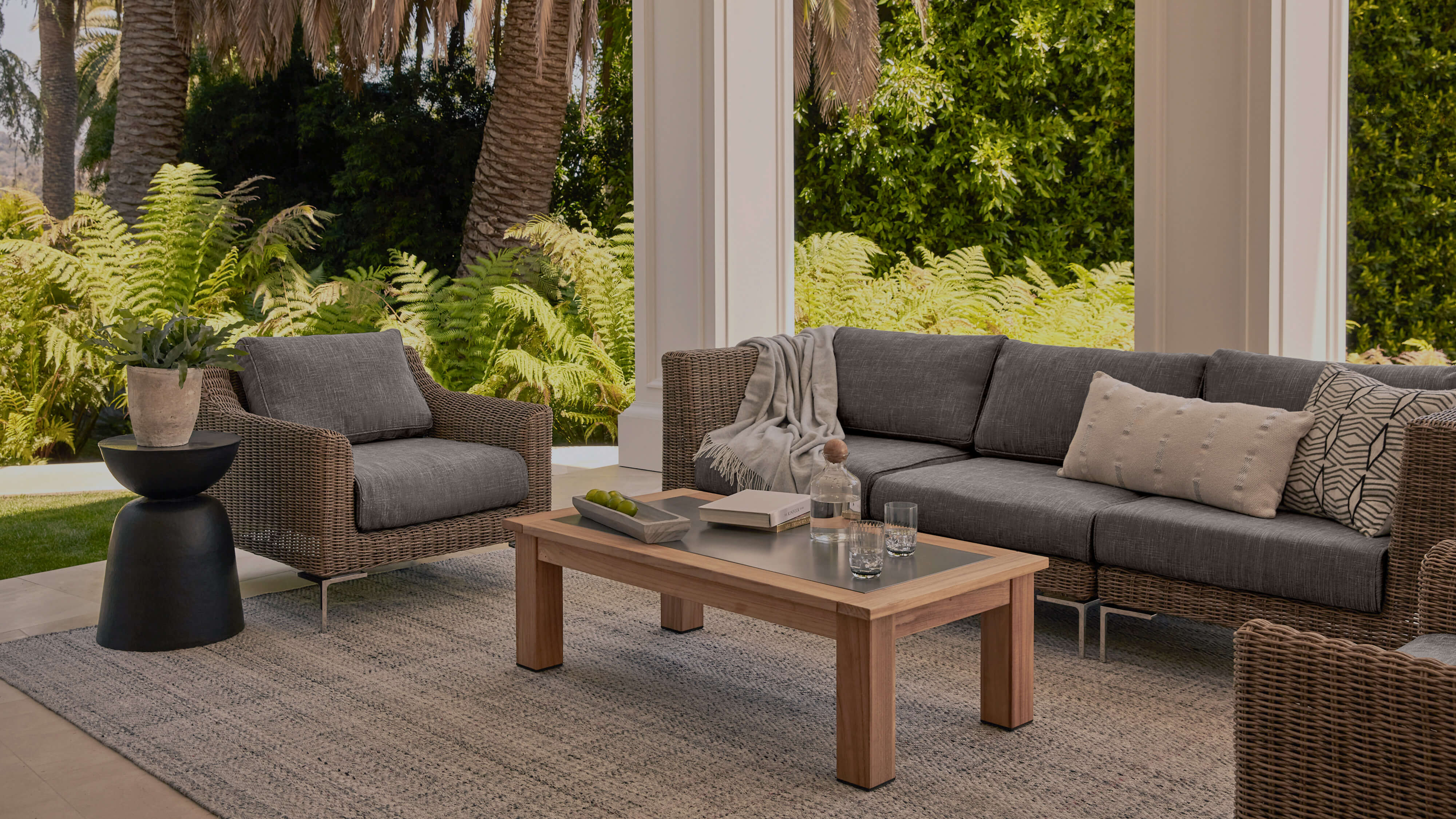
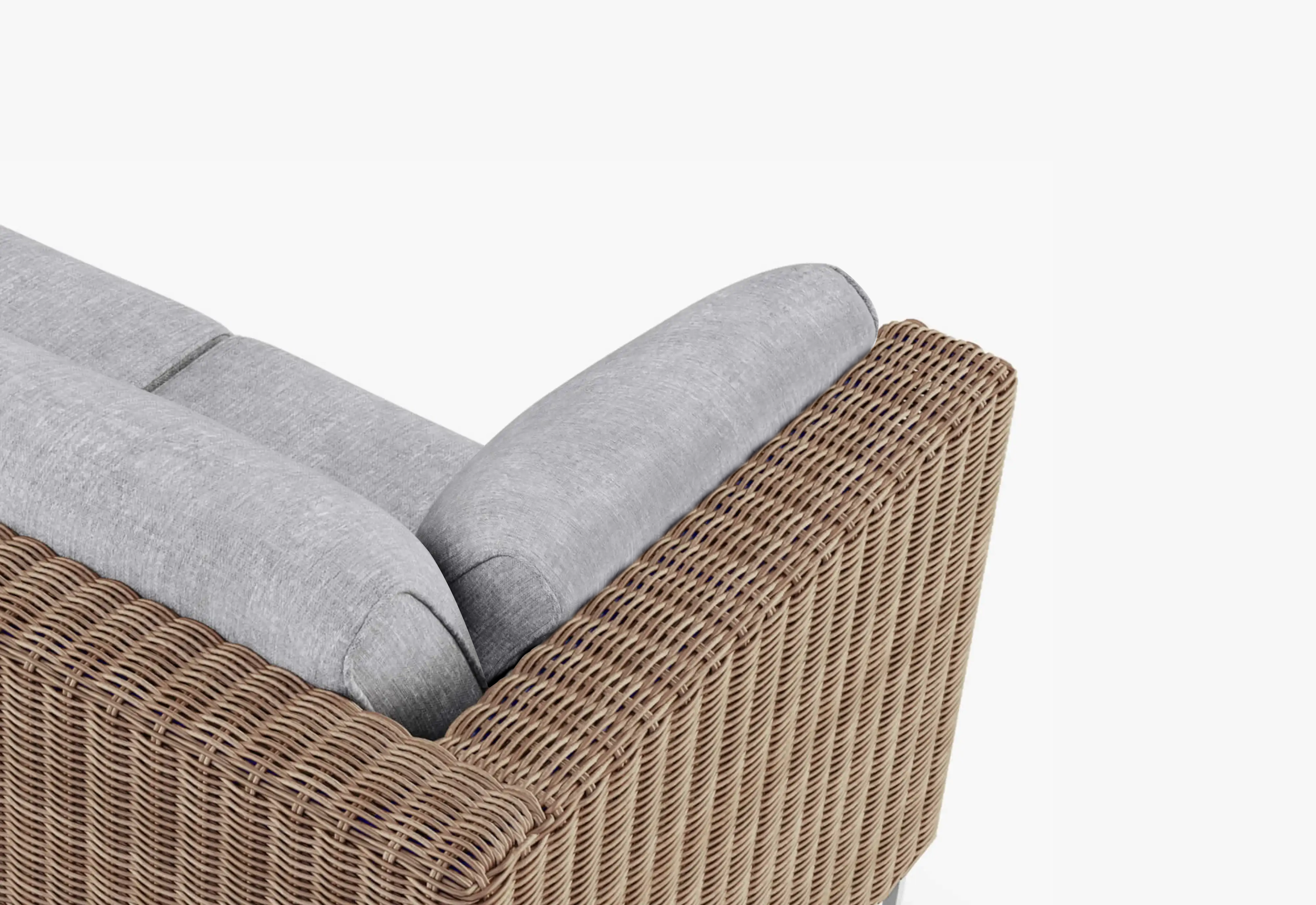
Wicker U Sectional — 6 Seat
Modular HDPE wicker on aluminum. Arrange to face the fire. OuterShell built in.
OuterShell built-in
Brown wicker

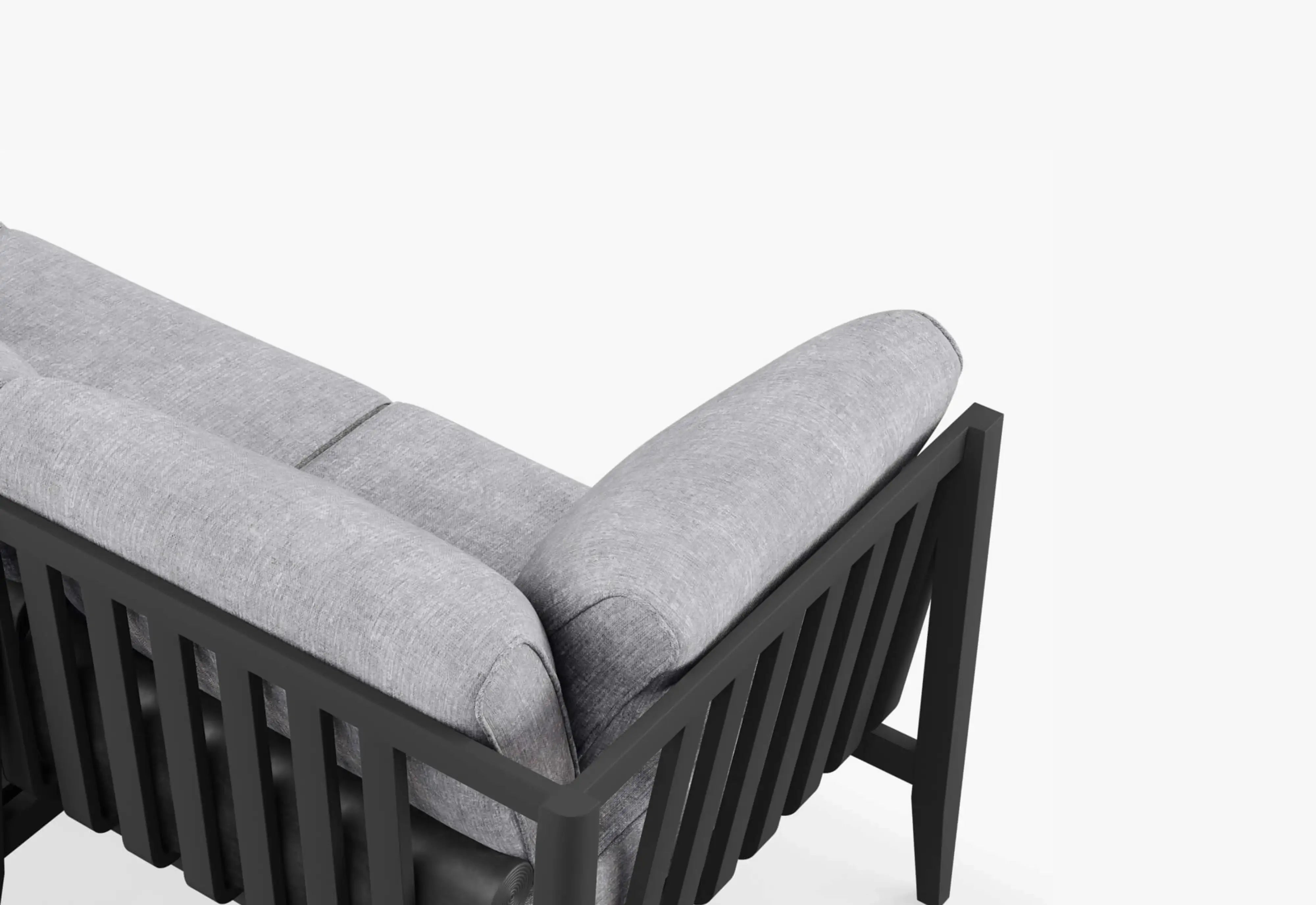
Aluminum Sofa — 3 Seat
Powder-coated aluminum frame. OuterShell built-in. Clean-lined option for modern patios and poolside layouts.
OuterShell built-in
Charcoal / Pacific Fog Gray

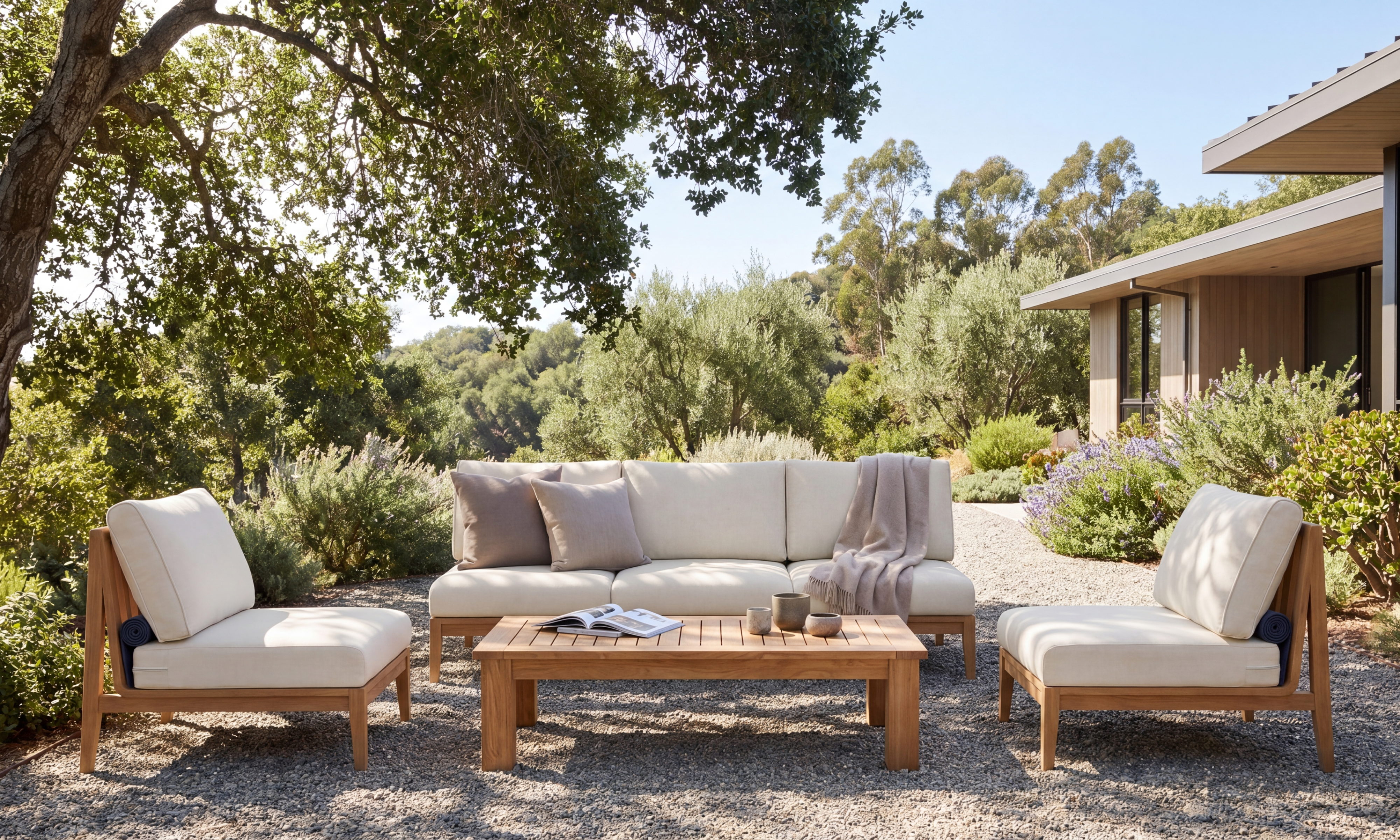
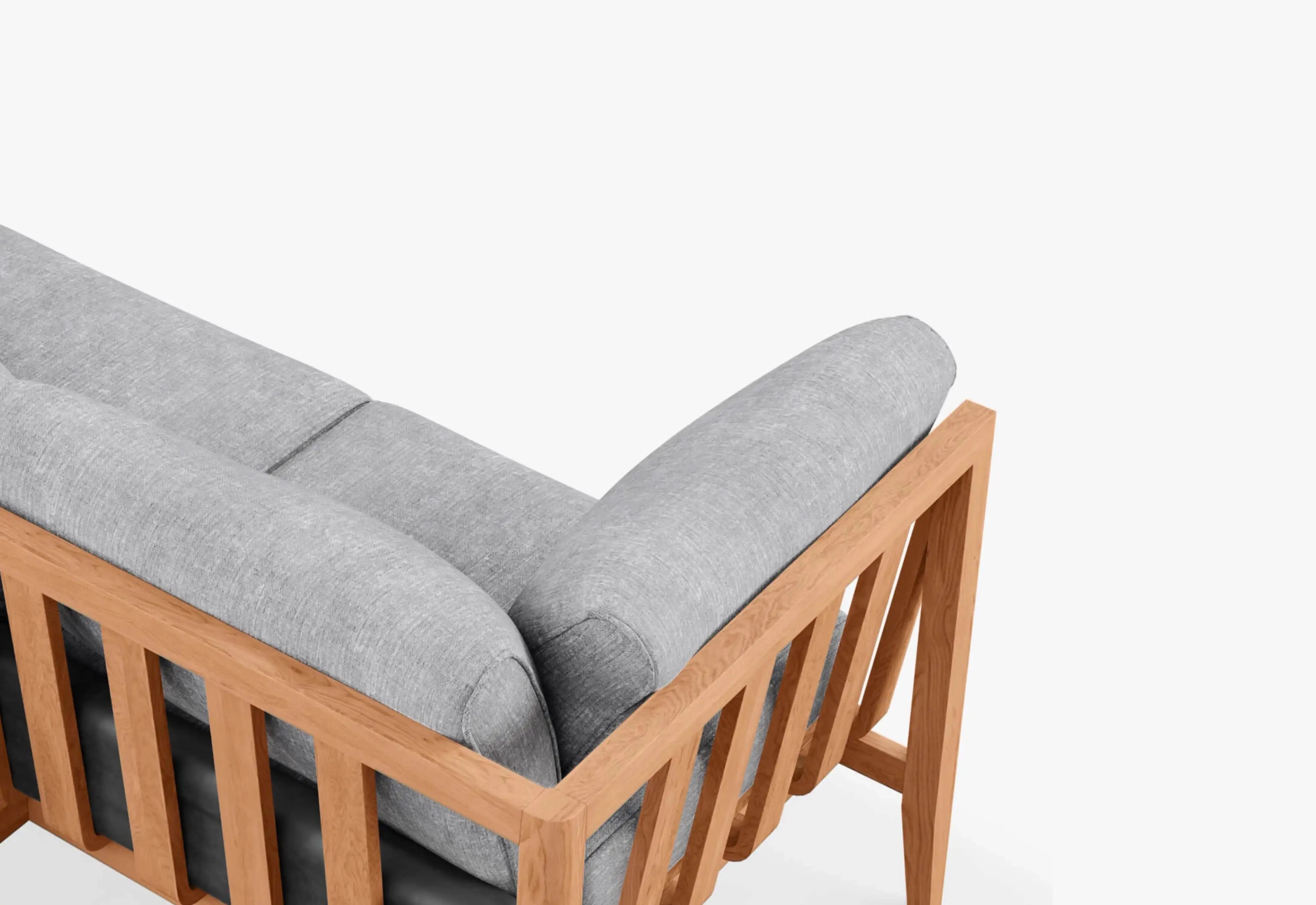
Teak Sofa — 3 Seat
Grade-A teak warms the fire pit zone. Same OuterShell system. Same 15-second routine.
OuterShell built-in
Natural teak / Pacific Fog Gray
Common questions
Patio Layout Dimensions FAQ
How far should seating be from a fire pit?
Wood-burning: 6-7 feet minimum. Propane/natural gas: 3-4 feet. Fire pit table: 2-3 feet. These distances account for heat, spark risk, and walking paths.
How many people can sit around a fire pit?
A 48 inch round fire pit seats 6-8 with chairs. A rectangular fire pit table seats 8-10. A U-sectional facing a fire pit table seats 6 with room for additional chairs.
What is the best material for a fire pit?
OuterStone composite: resists heat, weather, stains, never cracks. Cast concrete is durable but heavy. Powder-coated aluminum bases are rust-proof and lightweight.
Can you put a fire pit on a wooden deck?
Wood-burning: no without a fire-rated pad. Gas fire pit tables: yes with a protective mat and 3-foot clearance. Always check local fire codes.
Do I need a permit for a backyard fire pit?
Permanent installations usually require a permit. Portable propane fire pit tables typically do not. Check with your local fire department.
How much space do I need for a fire pit and sectional together?
For a U-sectional facing a propane fire pit table, plan at least 14′ × 14′. The sectional footprint is roughly 110″ × 110″ (about 9′ × 9′). Add 3–4 feet of clearance between the sectional edge and the fire pit. Add a 36-inch walkway behind the sectional. The total patio needs to clear the sectional depth + fire pit clearance + walkway perimeter. At 8 guests, step up to 16′ × 18′ minimum.
What is the best seating layout around a fire pit table?
A U-sectional facing the fire pit table creates the most natural conversation zone — everyone faces the flame. Add two armchairs opposite the sectional for guests who prefer individual seating and easier access. The coffee table sits between the sectional and the fire pit table if space allows. Keep the fire pit table 2–3 feet from the nearest seat edge for fire pit tables, or 3–4 feet for standalone propane units.
The Fire Pit. The Sectional. One Complete Outdoor Room
Every Outer piece includes OuterShell built-in cushion protection.