

Size Guide
Outdoor Rug Size Guide: How to Choose the Right Rug for Your Patio
The rug should extend 12-24 inches beyond the furniture footprint on all sides.

The quick answer
Outdoor Rug Size — The Quick Rules
The rug should be large enough that all furniture legs sit on it, with 12-24" of rug extending beyond. For a dining table, add 24-30" beyond the table edge on all sides for chairs.
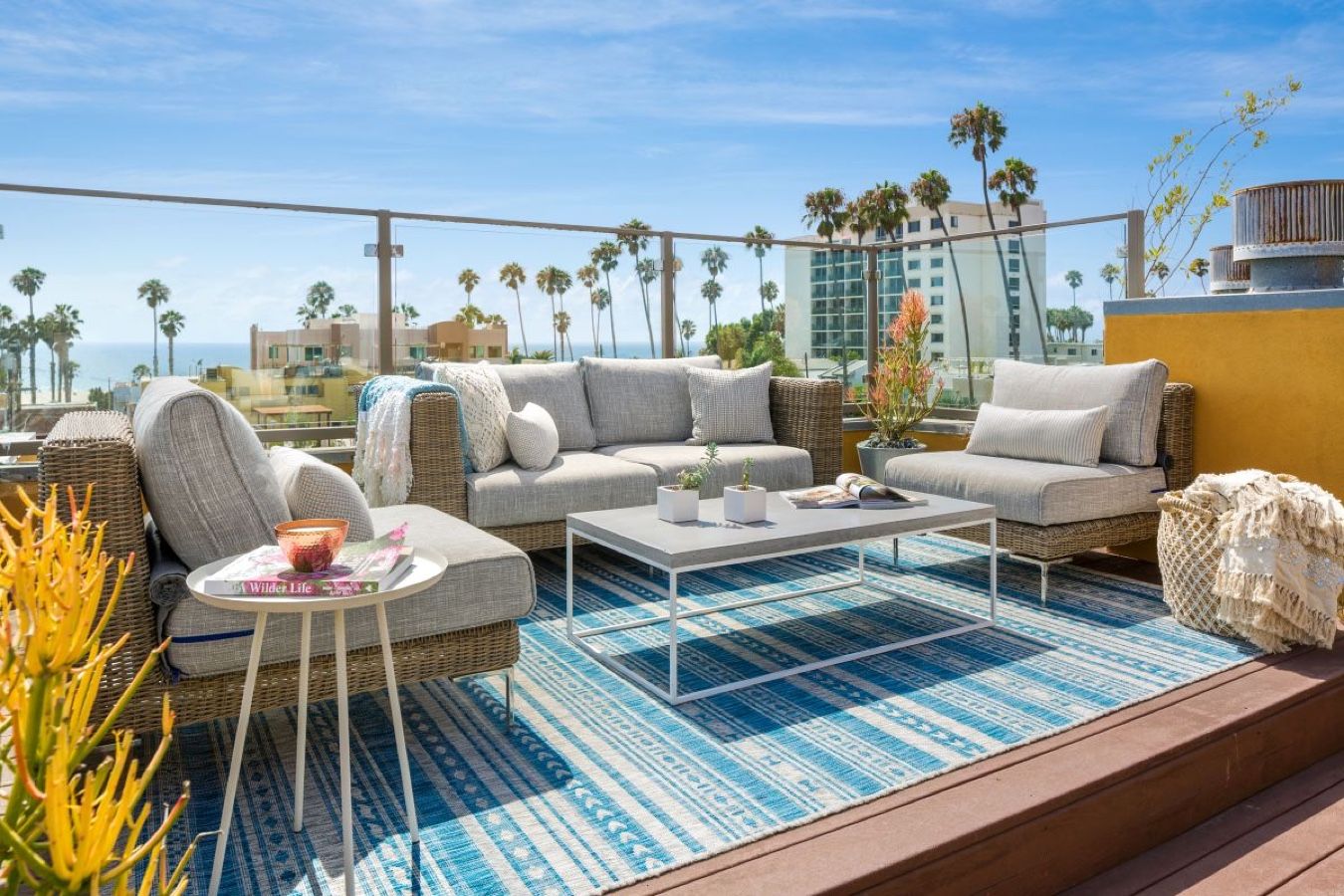
All furniture legs on the rug. At minimum, the front legs of every seating piece should sit on the rug. Full coverage — all legs on the rug — reads as more polished. The rug visually connects separate pieces into one room.
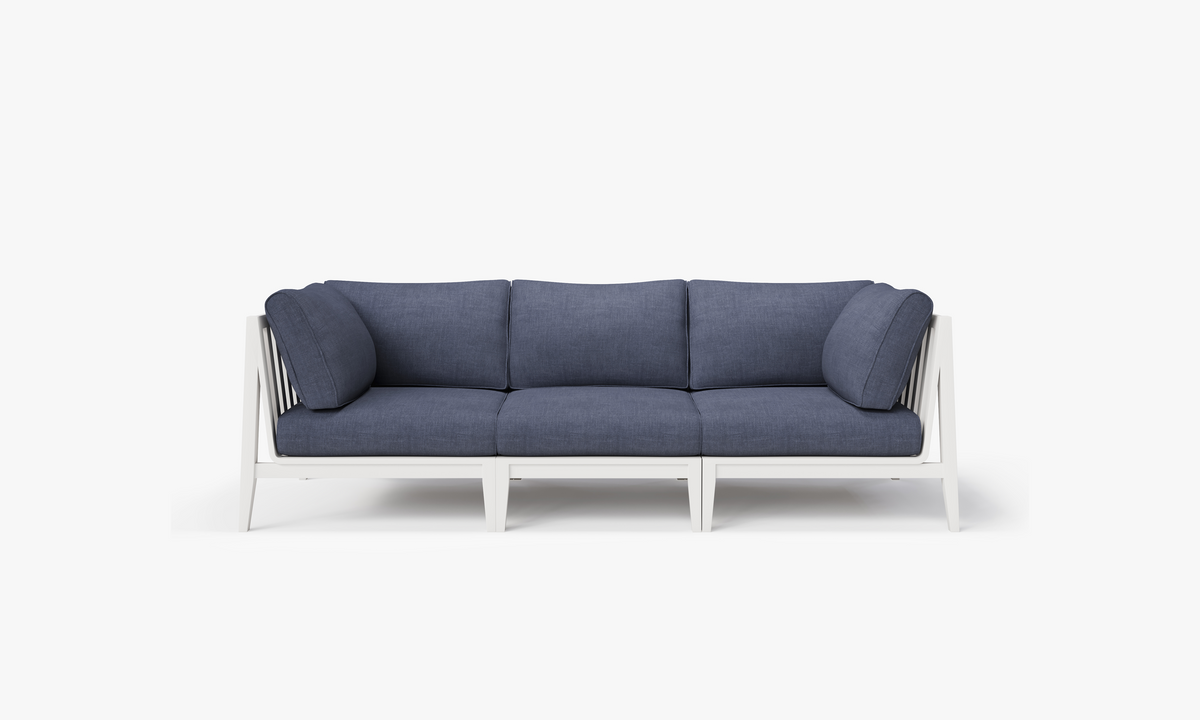
Extend 12-24 inches beyond the furniture. A sofa that is 89" long needs a rug at least 113-137" long (9.5-11.5 ft). This is why outdoor rugs in 8' × 10' and 9' × 12' are the most common sizes — they fit standard sofa footprints.
Dining tables need more rug. A table for 6 (72" × 36") needs a rug at least 10' × 8' — 24" beyond the table edge on all sides for chairs to slide in and out without catching the rug edge.
Outdoor Rug Sizes for Every Furniture Layout
A rug too small makes the furniture look disconnected. A rug too large overwhelms the patio. Here are the dimensions that work for each common outdoor setup.
| Furniture Layout | Recommended Rug Size | Why |
|---|---|---|
| 3-Seat Sofa | 8′ × 10′ or 9′ × 12′ | Sofa is 89″ L. An 8′ × 10′ rug gives 12-24″ beyond each arm. All legs sit on the rug. |
| L-Sectional | 9′ × 12′ minimum | Sectional footprint is roughly 89″ × 89″. 9′ × 12′ rug provides 12-18″ extension on all sides. |
| U-Sectional | 10′ × 14′ | Larger footprint (110″ × 110″). Needs a rug that extends beyond all seating edges for visual anchoring. |
| Dining Table (Seats 6) | 8′ × 10′ or 9′ × 12′ | Table is 72″ × 36″. Rug must extend 24-30″ beyond all table edges so chairs slide without catching the rug edge. |
| 4 Chairs + Fire Pit | 8′ round | A round rug centers the fire pit at the edge. Chairs sit on the rug. The fire pit sits on the hardscape directly adjacent. |
The rug-first measuring methodBefore ordering, tape out the rug dimensions on your patio with painter's tape. Place your furniture on the outline. Walk around it. Check that chair legs stay on the rug when pulled out. Walk the perimeter — 36 inches of hardscape path should remain around the rug's edge. The tape test catches sizing mistakes before the rug arrives.
What Makes an Outdoor Rug Different from Indoor
An indoor rug moved outside becomes a mildew trap within weeks. Outdoor rugs are made from materials that handle rain, sun, and foot traffic without degrading. The construction is the difference.
Material. The Outer Outdoor Rug is made from 100% recycled PET — the same polymer used in plastic bottles, spun into soft, weather-resistant fibers. PET does not absorb water. It drains. It dries quickly. It resists staining, fading, and mildew. Polypropylene is another common outdoor option — less soft underfoot than PET, but equally weather-resistant. Avoid cotton, jute, and wool rugs outdoors. They absorb moisture, develop mold, and rot within a single season.
Weave. Outdoor rugs use a flatweave or low-pile construction. The tight weave prevents debris from embedding in the fibers and allows water to drain through rather than pooling on top. Flatweave also dries faster than loop pile — important if the rug sits in an uncovered area.
UV stability. Solution-dyed fibers are colored during the manufacturing process — the pigment is part of the fiber itself, not applied to the surface. This means the color resists fading even under direct sun for multiple seasons. Surface-dyed rugs, common in indoor products, will fade noticeably within 3-6 months outdoors. See the Outer Outdoor Rug
Outdoor Rug Placement Defines the Outdoor Space
Where the rug sits relative to the furniture determines whether the space reads as one room or several disconnected pieces. Placement is about edges and sightlines.
All-legs-on vs front-legs-only. The ideal: every leg of every seating piece sits on the rug. This creates a fully unified visual zone. The practical alternative: front legs on the rug, back legs off. This works for sectionals against a wall or railing. Both methods create a visual anchor. The only wrong answer is no legs on the rug — the pieces will read as separate islands.
Dining rug placement. The rug must extend far enough that pulled-back chairs remain on it. Measure the table, add 24-30 inches per side. For a 6-seat table (72″ × 36″), the rug must be at least 120″ × 84″ (10′ × 7′). If the space cannot accommodate that, skip the dining rug entirely — a too-small rug under a dining table is worse than no rug at all.
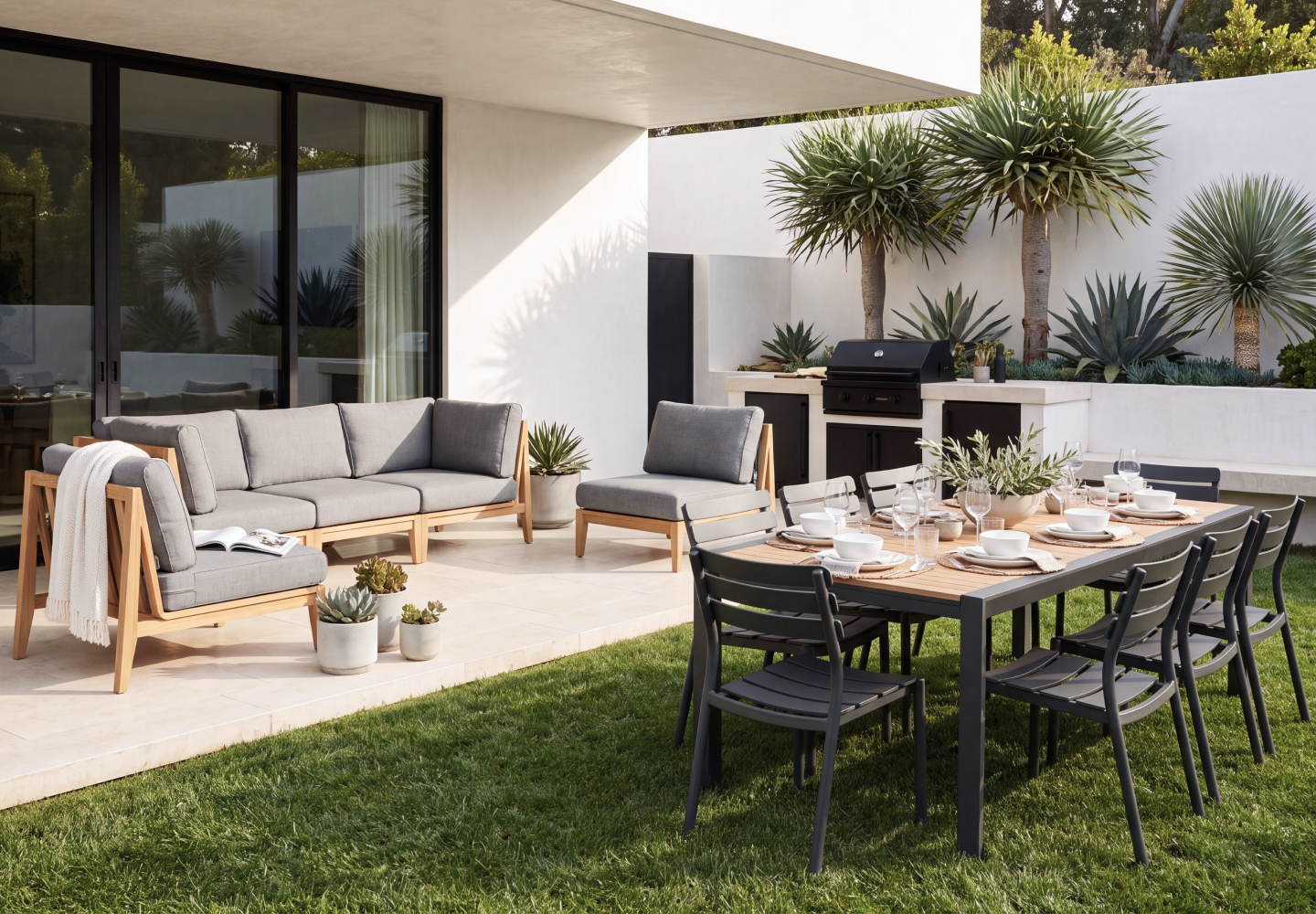
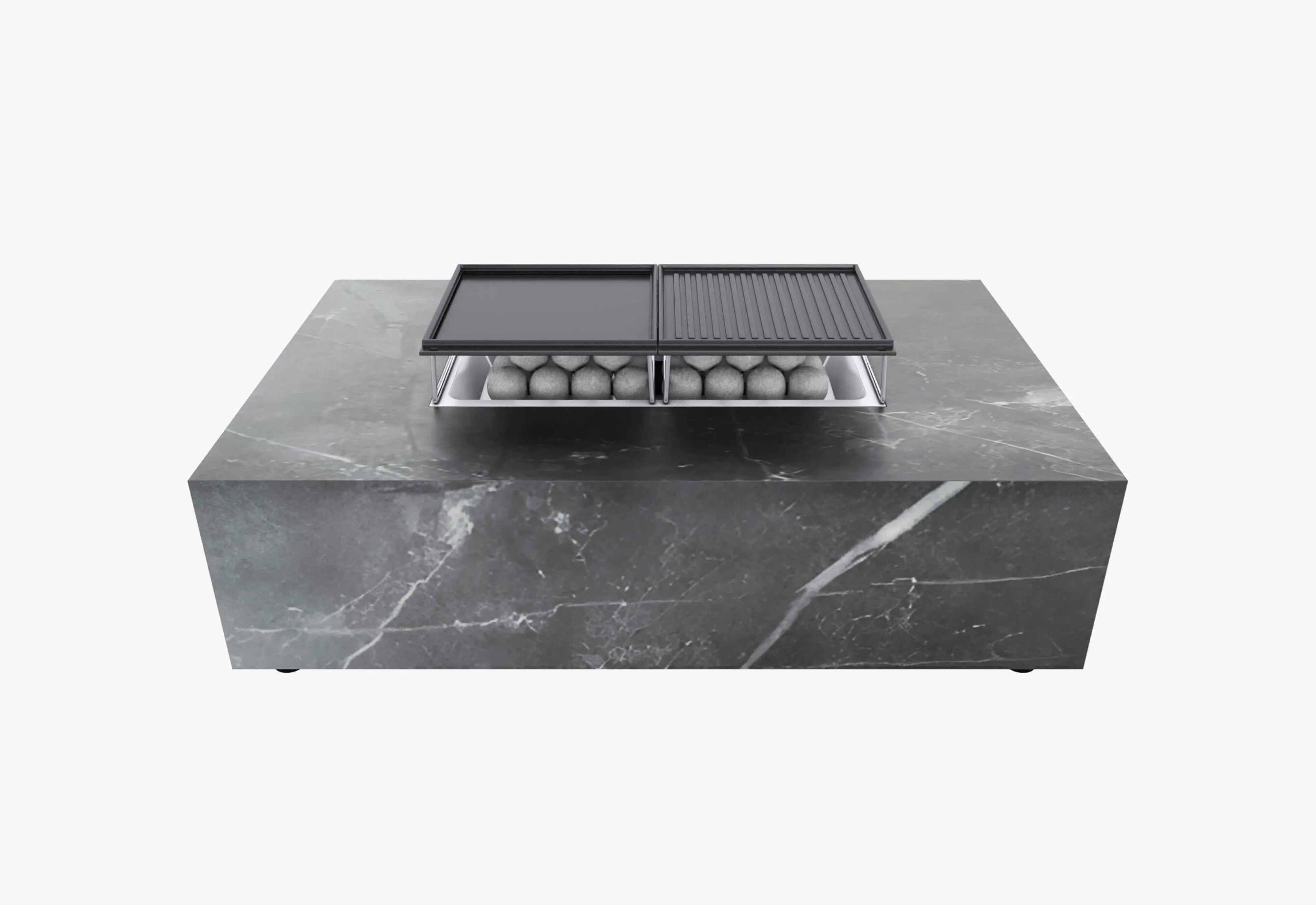
Fire pit rug placement. The rug sits under the seating. The fire pit sits off the rug — on stone, concrete, or pavers — at the rug's edge. This creates a two-zone surface: soft textile for lounging, hardscape for the heat source. The contrast is intentional and visually anchored. Never place a fire pit on an outdoor rug, even a propane model. Radiant heat will damage the fibers at close range.
Shop the Collection
Outdoor Rug Collection: Sizes for Every Patio Layout

Eco-Friendly Outdoor Rug
100% recycled PET. Soft underfoot. Drains, resists stains, UV-stable.
Stain-resistant
Easy to clean

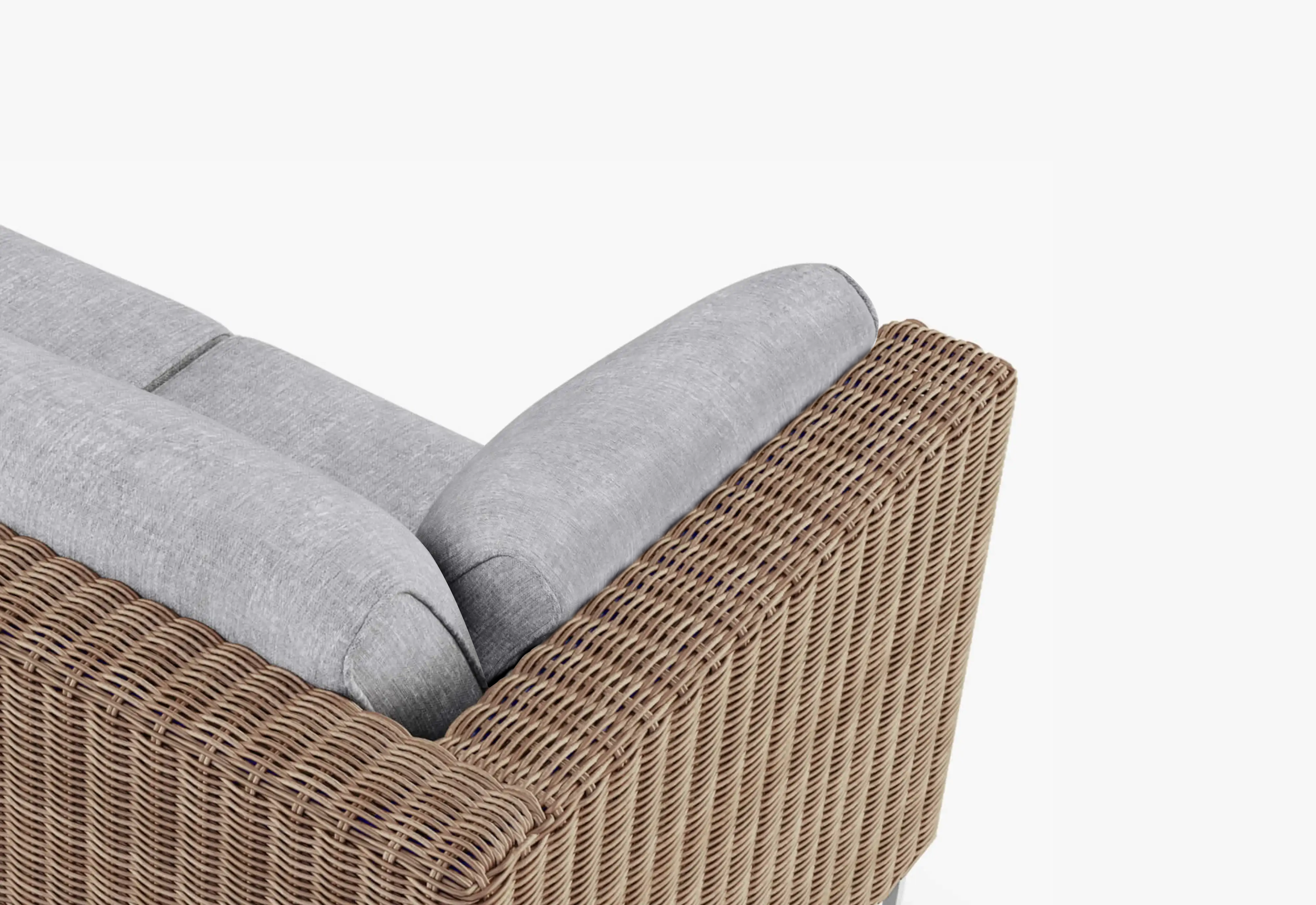
Wicker U Sectional — 6 Seat
Modular seating that sits on the rug. OuterShell built into every cushion.
OuterShell built-in
Brown wicker
Common questions
Outdoor Rug Size Questions, Answered
What size outdoor rug do I need for a sectional?
An L-sectional (89" × 89") needs a 9' × 12' rug minimum. A U-sectional (110" × 110") needs a 10' × 14' rug. The rule: all furniture legs should sit on the rug with 12-24" of rug extending beyond on all sides.
Can outdoor rugs get wet?
Yes — if they are designed for outdoor use. The Outer Outdoor Rug is made from recycled PET and allows water to drain through. It dries quickly and does not develop mildew. Indoor rugs moved outside will absorb water, develop mold, and fade within weeks.
How do I clean an outdoor rug?
Vacuum regularly. Hose off with water for deeper cleaning. Mild soap for stains. Air-dry in the sun. The Outer rug can be scrubbed without damaging the fibers. Avoid pressure washers — they can fray the edges.
Should a rug go under a fire pit?
No. The fire pit should sit at the rug's edge — not on it. Even propane fire pits produce radiant heat that can damage rug fibers at close range. The seating should sit on the rug. The fire pit sits on the hardscape surface (stone, concrete, or pavers) adjacent to the rug.
What color outdoor rug works with any furniture?
Neutral tones — sand, warm gray, or charcoal — work across teak, aluminum, and wicker without clashing. A neutral rug becomes the visual base that ties different materials together. Add color through throw pillows and accessories rather than the rug.
The Right Outdoor Rug Anchors the Entire Patio
Recycled PET. Weatherproof. Soft underfoot. The foundation every outdoor seating zone needs.