

Before the Listing Goes Live
Outdoor Staging: Prepare Your Patio Before Selling
Help buyers picture a morning coffee, a quiet evening, or dinner outside. A considered furniture layout and a simple plan for photos and showings can give your patio a clear purpose.
The Short Answer
Show buyers how the space can be used.
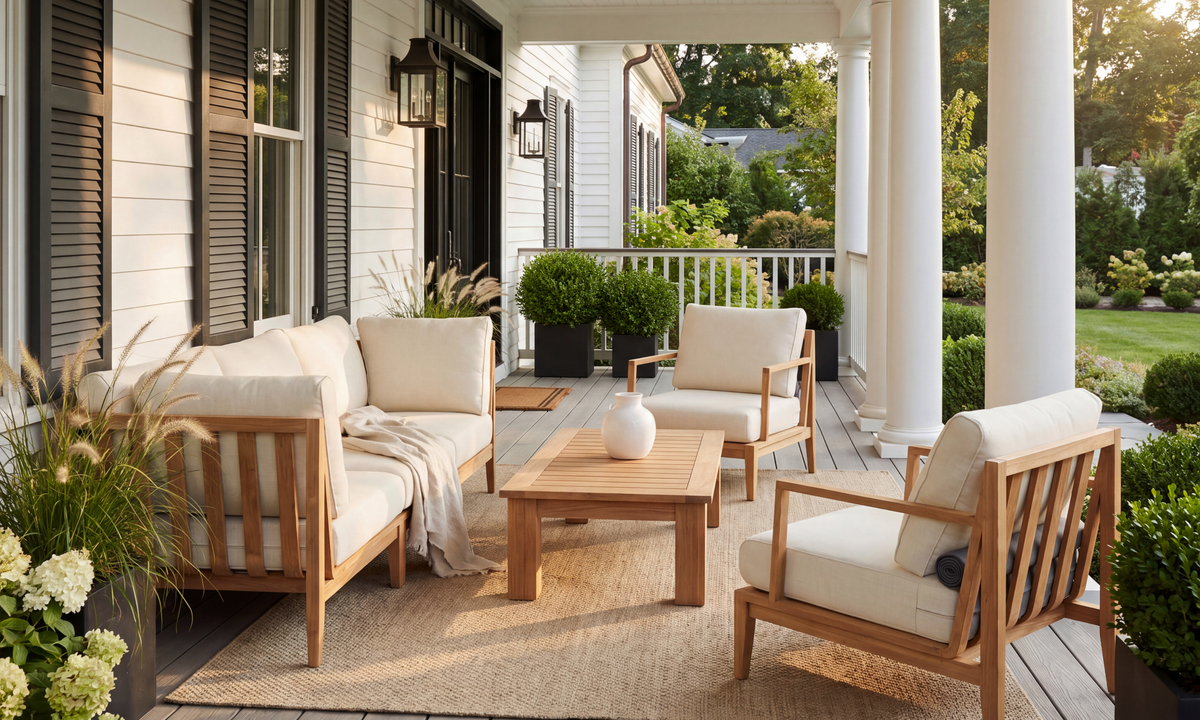
To stage a patio before selling, clear away clutter, clean the space, and arrange furniture around one everyday activity. Keep doors and walking routes open, then prepare the same setup for listing photos and in-person showings.
Begin with furniture you already own. Add pieces only when they fill a specific gap, and decide where everything will go after the sale before committing to a purchase or rental.
Make the function obvious.A pair of chairs and a useful table can explain a small patio better than several unrelated pieces.
Keep the house in view.Furniture should frame doors, garden views, and architectural features while leaving comfortable access.
Plan beyond photo day.Account for weather, repeat showings, delivery timing, and where the furniture goes when you move.
Start With What Is There
Prepare the patio before adding furniture.
Walk outside from the room that opens onto the patio. Notice what you see first: the seating, the garden, a stack of storage bins, or the back of a large sofa. That first view gives you a useful place to start.
The National Association of REALTORS® describes home staging as presenting a property's strengths and helping buyers imagine living there. For an outdoor area, translate that into a clear layout and a space that feels cared for.
- Clear the overflow.Move packing boxes, spare pots, garden tools, pet supplies, and unused furniture to appropriate storage. Leave the patio ready to walk through.
- Clean the surfaces buyers will see.Sweep the ground, wipe tables and chair frames, clean accessible glass, and follow the care instructions for cushions and decking. Allow surfaces to dry before arranging the space.
- Address condition before decoration.Check wobbly furniture, loose railings, damaged boards, and other visible problems. Arrange appropriate repairs; a rug or planter should not cover an unresolved defect.
- Edit the furniture.Keep usable pieces that suit the area. A cleaner arrangement may mean removing an extra chair or oversized table rather than adding anything new.
Ask your listing agent which outdoor views and features matter most for the property. Use that conversation to prioritize the work before ordering furnishings or planning a larger update.
Give the Space a Purpose
Choose a place to sit, dine, or pause.
A narrow porch might suggest coffee for two. A patio beside the kitchen might work naturally as a dining area. A sheltered corner with a garden view might suit a lounge.
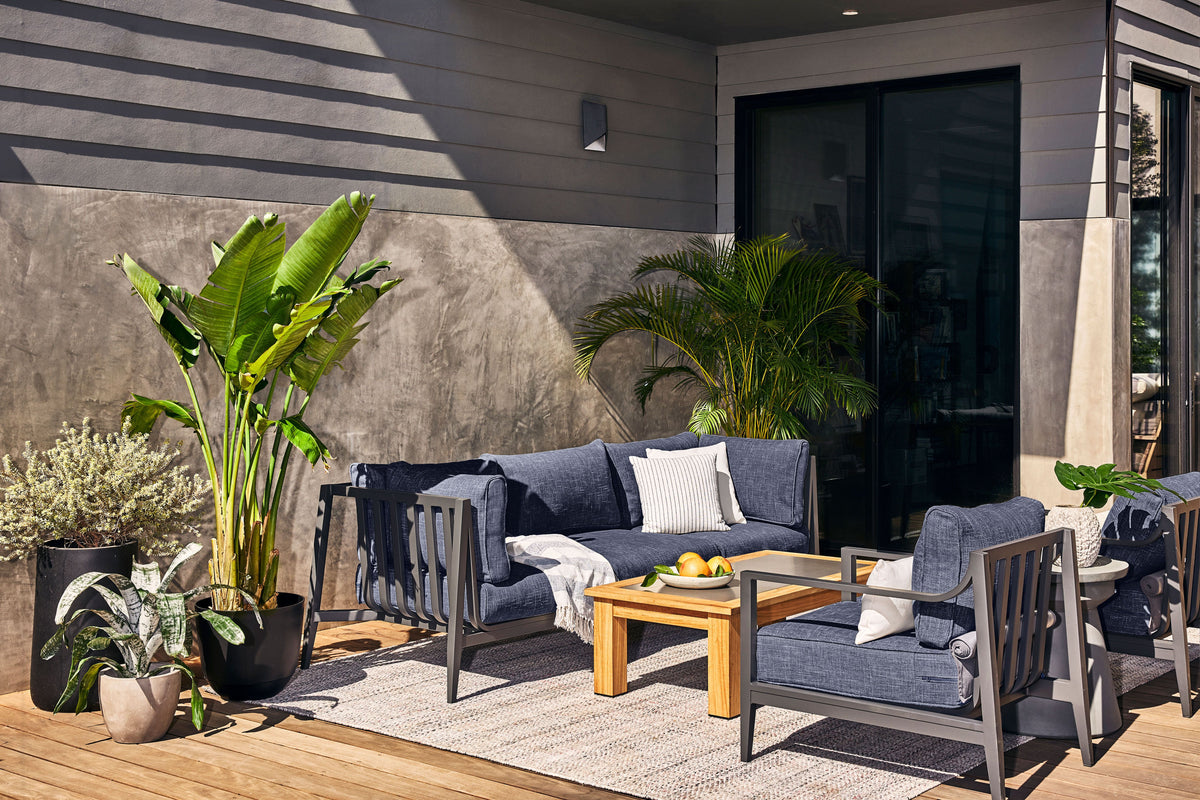
Choose the activity that makes sense for the space. Arrange the seats so people can converse, and put a table where it is useful. Leave enough room to approach, sit down, and return to the house.
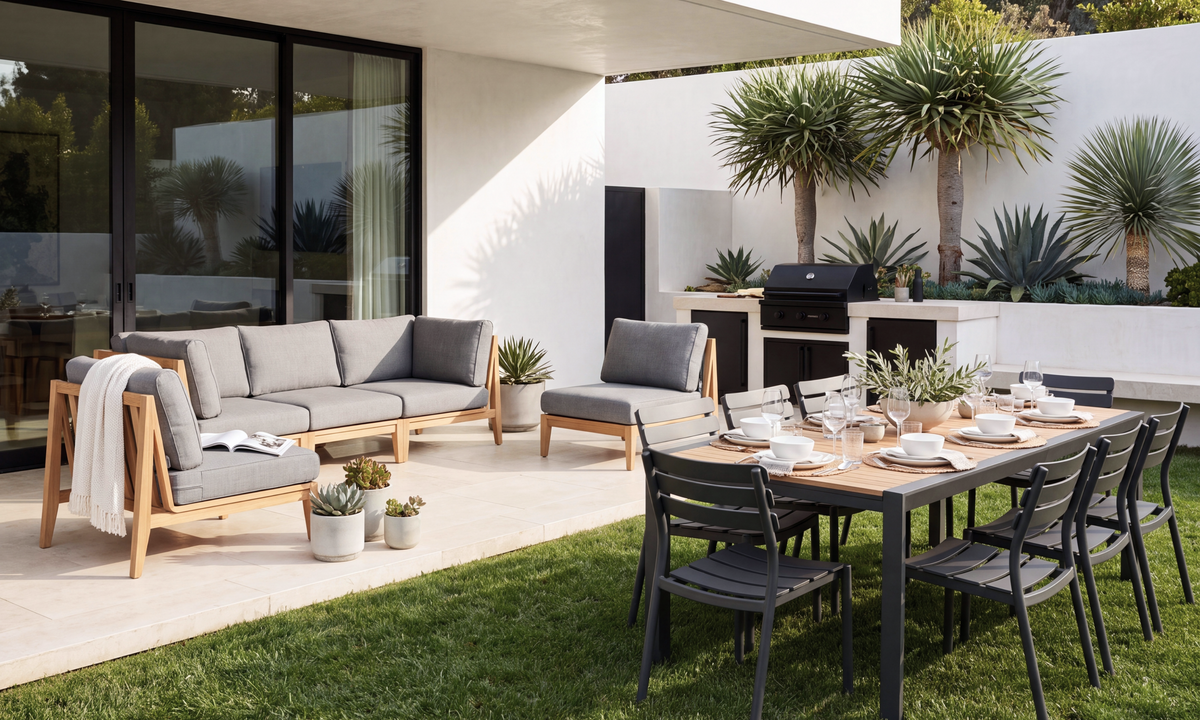
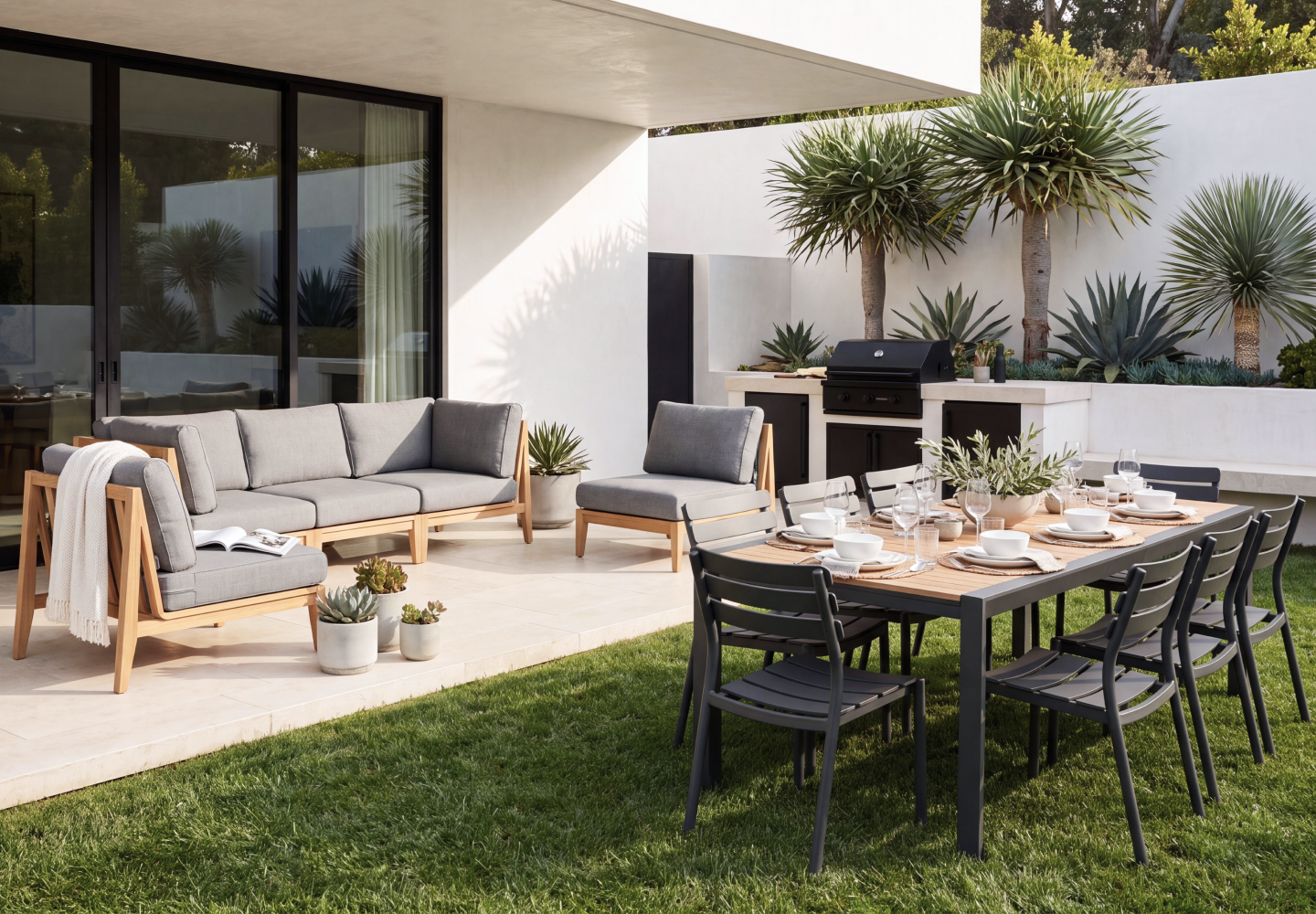
On a larger terrace, a lounge and dining area can work together when the route between them stays clear. On a small patio, one complete arrangement may be all you need.
Work With the Footprint
Outdoor staging ideas for different spaces.
Use these arrangements as starting points. Measure the furniture you plan to use, including chairs pulled away from a table, and walk the route from the door to the yard.
| Outdoor space | A starting arrangement | Keep clear |
|---|---|---|
| Front porch | Two proportionate chairs and a small shared table, if space permits. | The entry, steps, door swing, and house number. |
| Small patio or balcony | A compact sitting or dining setup that fits the actual depth. | The route to each seat, doors, and usable floor space. |
| Patio beside the kitchen | A dining table and a suitable number of chairs for its size. | Chair movement and the path used to carry food outside. |
| Garden-facing lounge | A sofa or pair of lounge chairs with a reachable table. | The view from inside and the route into the garden. |
| Large terrace | Distinct lounge and dining areas, each with a complete arrangement. | The connection between zones, doors, and access to the yard. |
For example, if two chairs already fit a small patio comfortably, adding a side table may complete the setting. A sofa that narrows the doorway would create a new problem. Start with the missing function, then choose the piece.
Choose How to Furnish It
Keep, borrow, rent, or buy?
The right approach depends on what you already have, how long you need the arrangement, and whether the furniture has a useful place after the move. Work through those questions before comparing styles.
| Option | When to consider it | What to confirm |
|---|---|---|
| Keep and rearrange | Your furniture is clean, stable, and appropriately sized. | Which pieces help the layout and which can go into storage. |
| Borrow suitable pieces | One or two missing items would complete an existing arrangement. | Outdoor suitability, transport, care, and an agreed return date. |
| Rent through a staging provider | You need a temporary arrangement and do not plan to keep it. | Outdoor approval, rental term, delivery, pickup, extension charges, and responsibility for weather exposure. |
| Buy for continued use | You want the furniture after the sale and have a realistic plan for its next location. | Fit at both homes, delivery timing, storage, moving arrangements, and the complete cost. |
Compare the whole project.
For a rental, ask for the total through the expected pickup date and what happens if the listing period extends. For a purchase, include delivery, any covers you need, and the cost of storing or moving the pieces afterward.
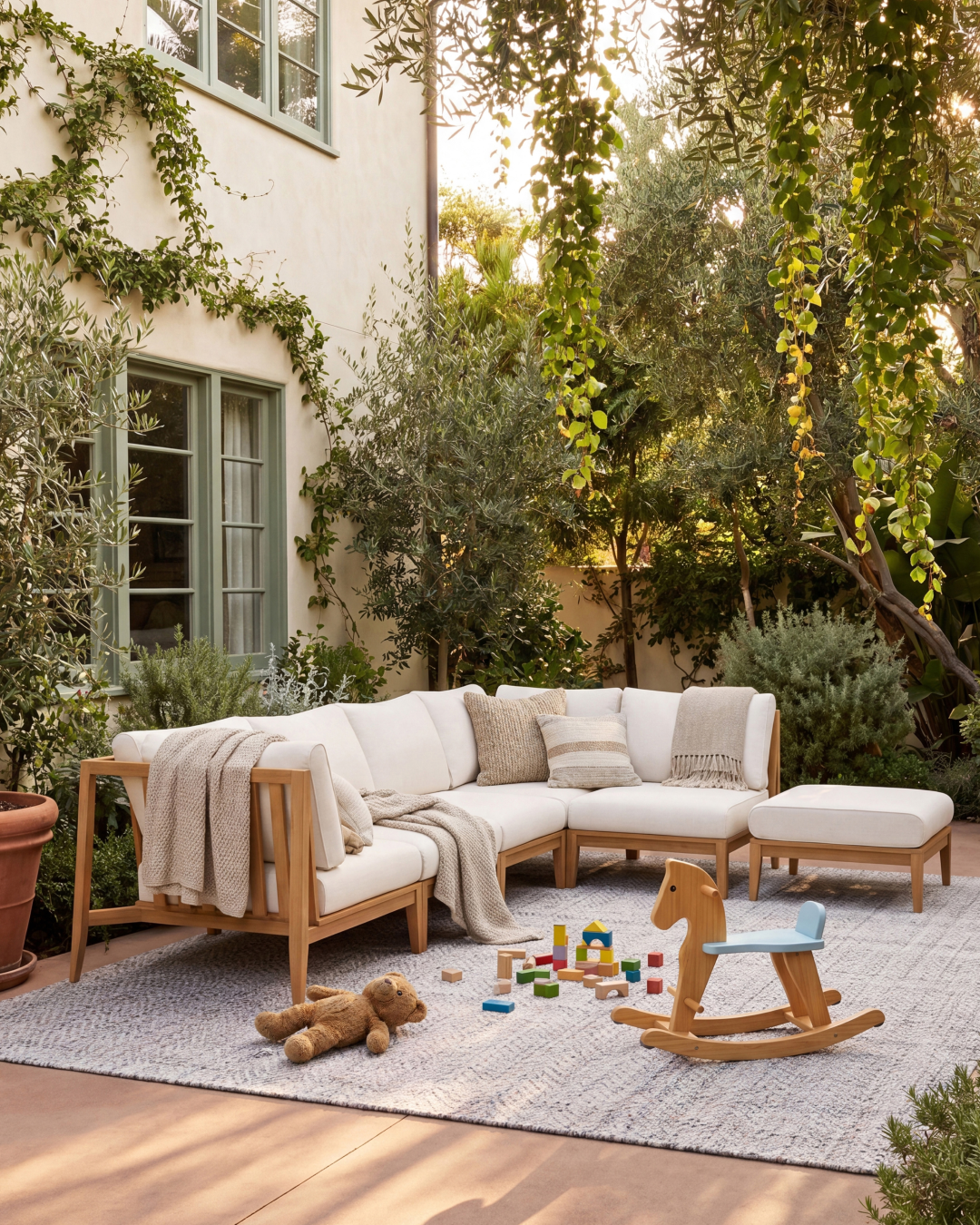
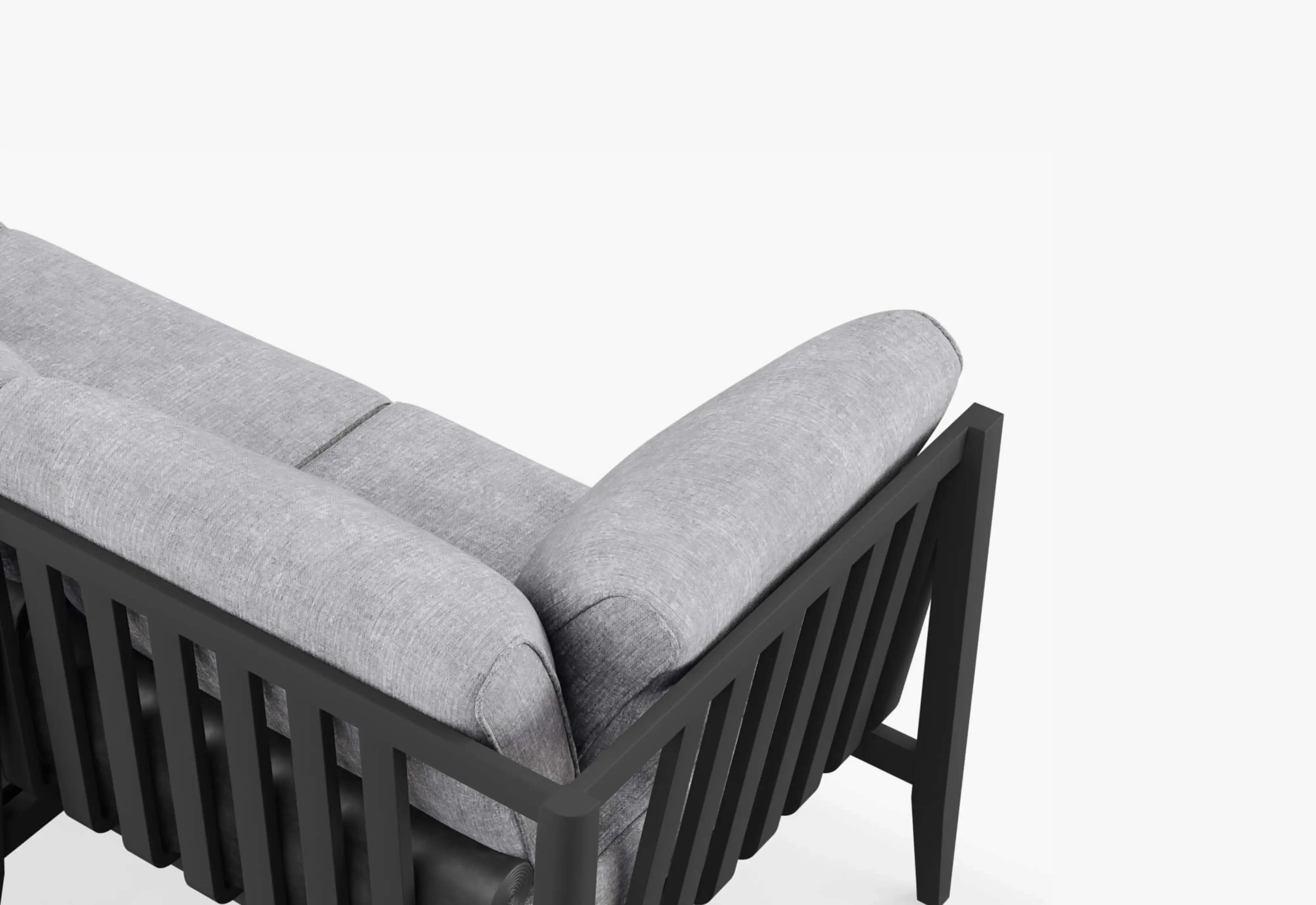
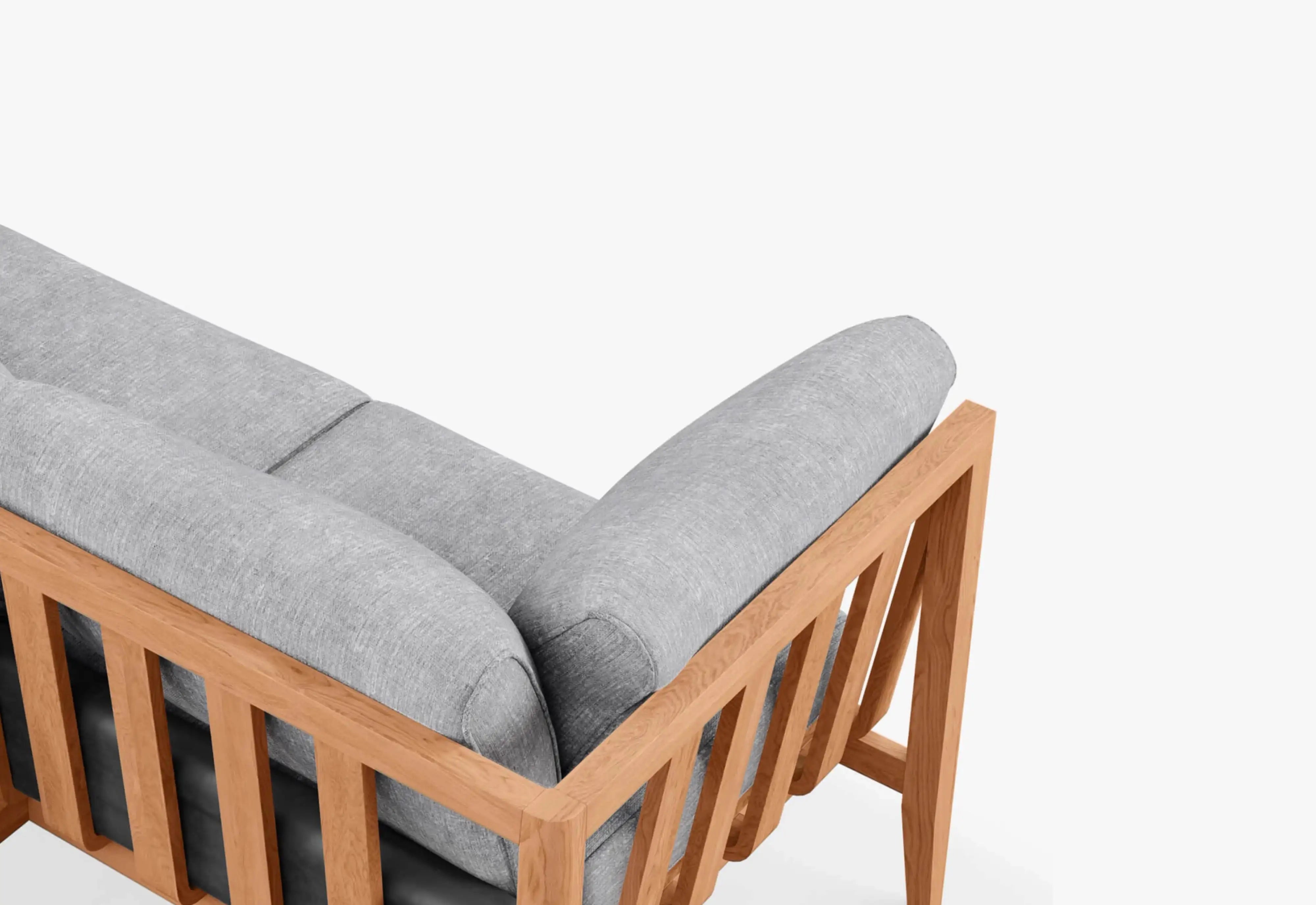
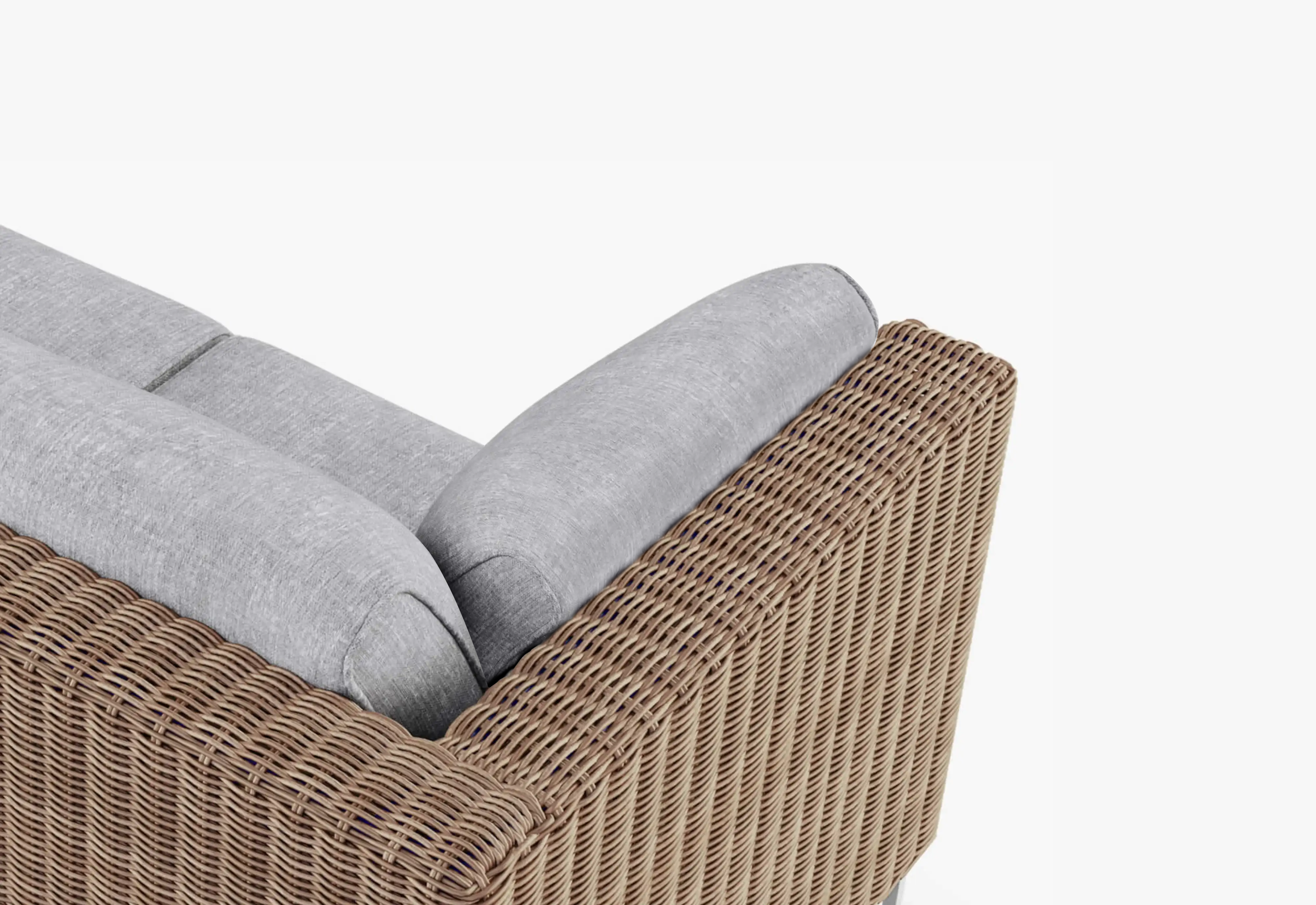
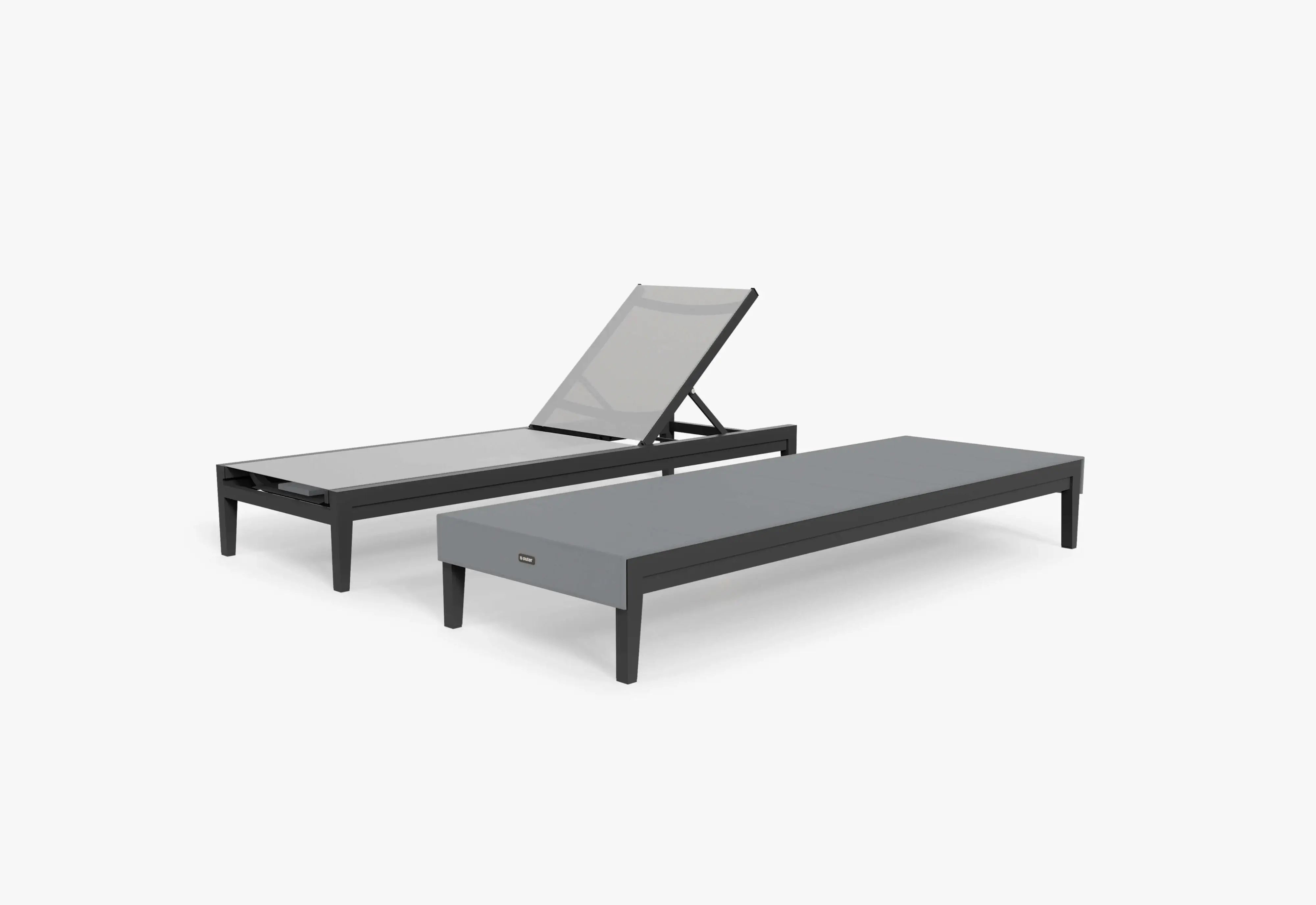
If you decide to buy, compare outdoor sofas and seating or outdoor dining furniture against your measurements. A coordinated arrangement can be convenient, but every included piece still needs a place. Our guide to outdoor furniture sets vs. individual pieces explains how to make that comparison.
Prepare for Listing Photos
Look from the doorway, then from the yard.
Review the setup from inside the house, at the patio entrance, and from the garden. A chair that looks well placed from one angle may block a view or doorway from another.

Ask the photographer to show both the arrangement and its relationship to the house. A close view of cushions cannot explain where the seating sits or how much room remains around it.
Use a restrained finishing layer: clean cushions, a plant suited to the setting, and a clear tabletop. Keep enough of the furniture visible for buyers to understand its scale.
Photos, Showings, and Moving Day
Give the staging plan three dates.
The photography appointment, first showing, and furniture removal date serve different purposes. Keep each one visible when arranging deliveries or working with a staging provider.
Before photography
Finish cleaning and repairs. Confirm furniture is delivered, assembled, and placed before the photographer arrives.
Between showings
Keep a repeatable setup. Remove debris, wipe surfaces, arrange dry cushions, and return furniture to its planned positions.
Before you move
Confirm rental pickup or your own moving arrangements. Make sure everyone involved knows when the patio will be cleared.
Before ordering Outer furniture for a listing, confirm availability and the estimated delivery window for the selected items. Mixed orders may arrive separately. Check the current shipping and delivery details against your photography schedule.
Make the setup practical between visits.
Have a dry place for cushions or accessories when appropriate, and use protection suited to the furniture and conditions. Before a visit, uncover the arrangement when weather allows so buyers can see its purpose. Afterward, restore the care routine. If you need furniture covers, match them to the exact configuration.
If you are already planning the next move, our guide to outdoor furniture for a new home can help you decide which pieces belong in your first outdoor area.
Before Each Showing
Your outdoor staging checklist.
Walk the same route a visitor will use, from the room inside to the patio and garden. Check these details before leaving the property ready for a visit.
- Doors, steps, gates, and the route through the seating area are accessible.
- Loose leaves, garden tools, pet items, packing materials, and unused accessories are put away.
- Seats are stable, cushions are dry, and visible surfaces are clean.
- Dining chairs have space to move, and tables can be reached from the seats.
- The furniture arrangement leaves key views and features visible from inside.
- Protective covers are stored neatly while the furniture is on display, when conditions allow.
- The setup resembles the listing photos, with any changes communicated to your agent.
- Someone is responsible for restoring furniture protection after the visit.
Common Questions
Outdoor staging before a home sale.
What should I put on a patio when selling my house?
Start with furniture that demonstrates a clear use for the space: a pair of chairs and a shared table, a compact lounge, or a proportionate dining arrangement. Choose the setup that fits the footprint, then keep the route from the house open.
Should I buy new outdoor furniture just for staging?
First see whether cleaning and rearranging existing pieces will complete the space. Borrowing or renting may suit a temporary need. Consider buying when you want to keep the furniture and have accounted for delivery, moving, storage, and its next location.
How do I stage a small patio or balcony?
Give it one purpose and check furniture depth as well as width. Two suitable chairs and a small table may work better than a larger lounge arrangement. Open the door fully, approach each seat, and check that the setup is comfortable to use.
Should patio furniture be uncovered for listing photos?
When conditions allow, uncover the furniture and arrange clean, dry cushions so its function is visible. Coordinate with the photographer and protect the furniture again afterward according to its care instructions and the weather.
Will outdoor staging increase my home's sale price?
Use staging to communicate how the outdoor area works and present it in a cared-for condition. A specific furniture arrangement does not establish a sale-price increase. Discuss the property's presentation and priorities with your listing agent before setting the project scope.
How early should I arrange furniture before listing?
Work backward from the photography appointment. Allow for the selected item's confirmed delivery estimate, placement, cleaning, and any changes to the layout. If timing is tight, discuss available furniture or local staging options rather than relying on an unconfirmed arrival date.