




Fuel Comparison
Propane vs Natural Gas Fire Pits: Which Is Right for Your Outdoor Space?
Propane gives you placement freedom. Natural gas gives you built-in convenience. The right choice depends on your patio layout, how often you gather, and whether flexibility or permanence matters more.

The quick answer
Propane vs Natural Gas: How to Decide
Propane = flexibility. No gas line required. Place the fire pit anywhere. Rearrange seasonally. The tradeoff: tank monitoring, replacement, and discreet storage.
Natural gas = permanence. Connected to your home's gas line. No tanks, no refills, no fuel storage. The fire pit becomes part of the patio architecture.
Both beat wood-burning. No ash, no smoke management, no firewood storage. Clean flame at the turn of a knob. BTU output depends on burner design, not fuel type.
Why Propane Works Well for Flexible Patio Layouts
Propane suits spaces that change through the year — rearranging for gatherings, shifting between lounge and dining configurations, or avoiding the commitment of a fixed gas line. The tank lets you place the fire pit wherever the layout needs it. One evening calls for a lounge-first arrangement with the fire pit anchoring the seating. The next shifts the pit to open up movement for a larger group. Propane accommodates both without locking the patio into a single plan.
The tradeoff is fuel awareness. A propane tank runs out — typically after 8–12 hours of burn time depending on BTU output and flame height. Keeping a spare tank on hand eliminates the interruption. Discreet storage — a matching tank cover or a dedicated enclosure — keeps the patio looking clean.
Why Natural Gas Suits a More Permanent Outdoor Space
Natural gas fits when the patio layout is established and the fire pit should read as part of the architecture. A gas line runs underground to a fixed connection point. The fire pit stays in one location. There is no tank to check, replace, or conceal. The flame is ready any evening of the week — turn the knob and the fire starts.
That everyday ease matters for households that use the fire pit as a routine rather than an event. When the fire pit is integrated into the patio design — centered in a sectional layout, positioned at the heart of a defined outdoor room — the permanence of natural gas becomes a feature. The installation requires a licensed professional and existing gas line access. The upfront cost is higher. Over years of frequent use, the lower operating cost per BTU narrows the gap.
| Factor | Propane | Natural gas |
|---|---|---|
| Installation | Minimal — connect tank, place fire pit. No gas line needed. | Requires licensed professional and existing gas line access. Higher upfront cost. |
| Placement freedom | High — move anywhere the tank can sit discreetly. | Fixed — fire pit stays at the connection point. |
| Fuel management | Monitor tank level. Replace when empty. Store spare tank discreetly. | No tank. No refills. Continuous supply from the gas line. |
| Operating cost | Moderate — tank refills add ongoing cost. | Lower per BTU — natural gas is typically cheaper than propane. |
| Burn time per tank | 8–12 hours on a standard 20-lb tank. | Unlimited — continuous supply. |
| Heat output | 50,000–65,000 BTU typical for gas fire pit tables. | 40,000–60,000 BTU typical. Burner design determines heat, not fuel type. |
| Best for | Multi-use patios, renters, frequent rearrangers, DIY setup. | Established layouts, frequent hosts, permanent outdoor rooms. |
Performance, Comfort, and the Way You Actually Use the Space
Burner design and BTU output matter as much as the fuel itself. Both propane and natural gas fire pit tables from Outer produce a clean, consistent flame — no ash, no smoke, no firewood to manage. The real question is how each option fits your routine. Propane edges out for adaptability — rearrange the patio, move the fire pit, change the layout between seasons. Natural gas stands out for a low-maintenance experience that feels ready any evening of the week. Both eliminate the work of wood-burning fire pits entirely.
Design Considerations Beyond the Fuel Source
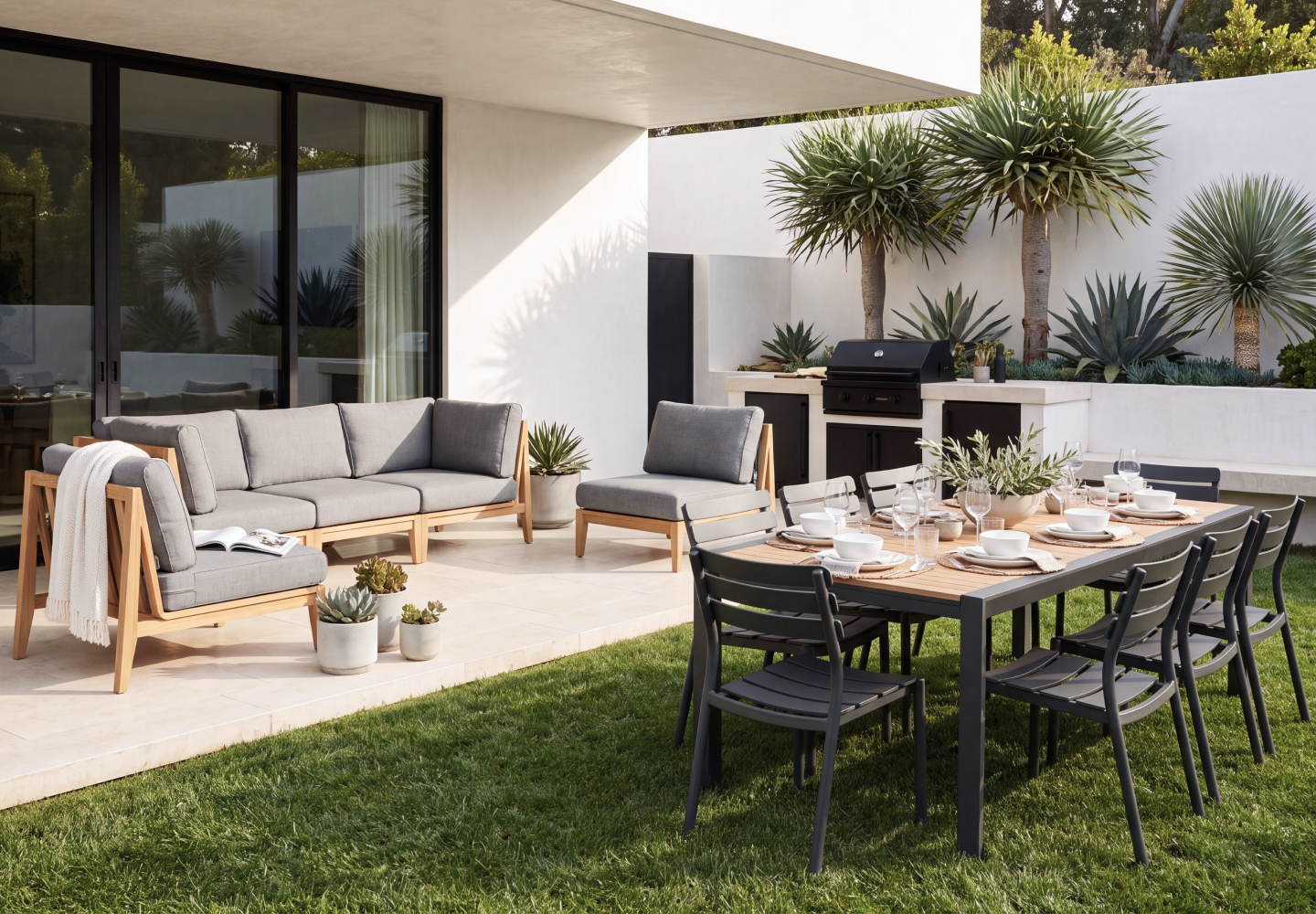
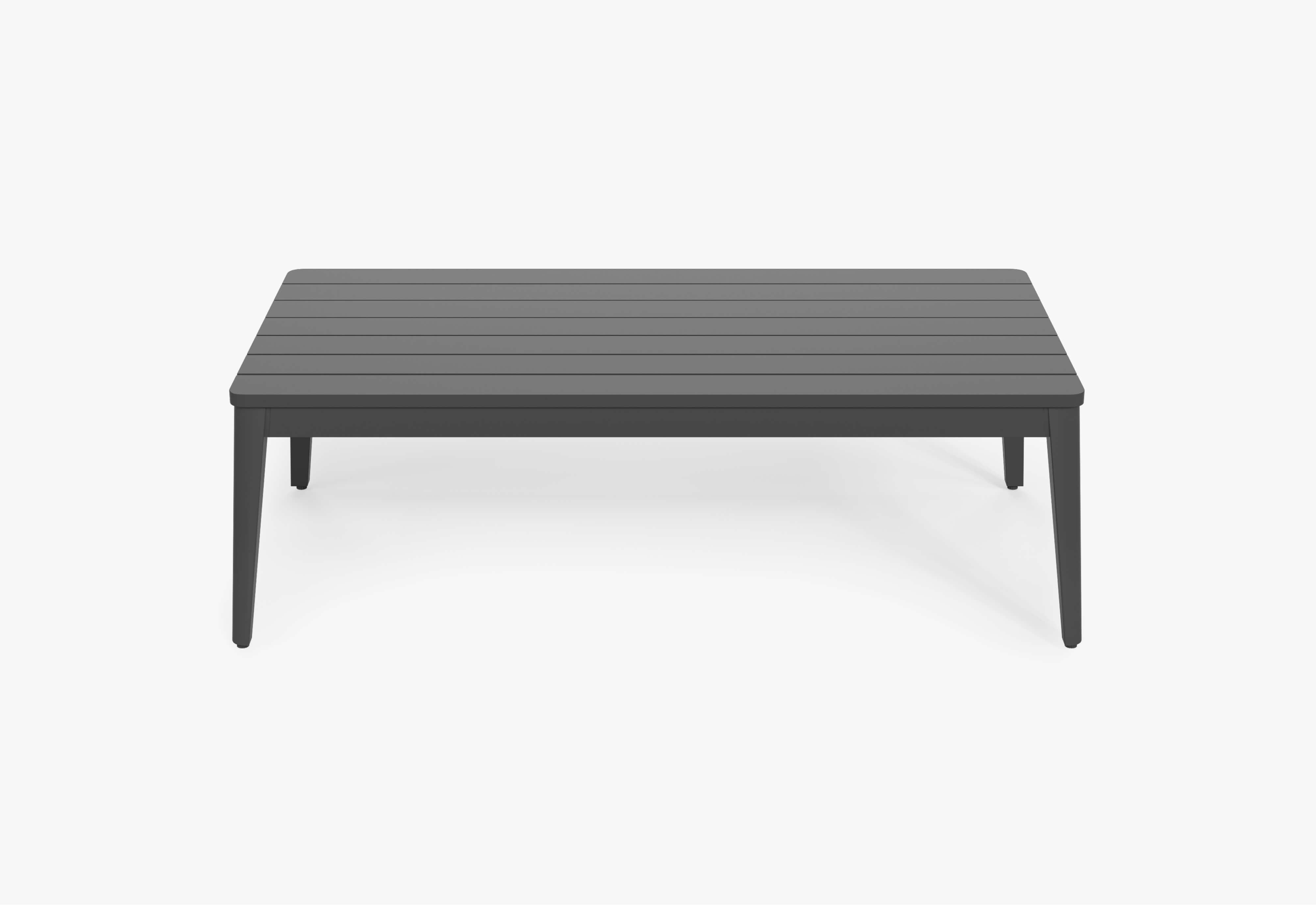
Fuel choice affects function, but the fire pit's design carries equal weight. A rectangular fire table anchors long sectionals and larger seating groups. A round fire pit softens angular patios and creates a more intimate gathering point. Size should feel proportional to the seating — substantial enough to hold the center of the arrangement, compact enough to leave room for movement. OuterStone® fire pit tables in concrete and stone-look finishes provide a sculptural centerpiece that reads as architectural rather than portable.
Key pointIf you want easier placement, less installation work upfront, and freedom to adjust the layout, propane fits better. If you want the fire pit fully integrated into the patio and simpler to run over time, natural gas is the stronger choice. Both fuels create a clean, inviting flame with a well-designed table.
Fire Pit Collection
Fire Pit Tables Ready for Propane or Natural Gas — Your Choice

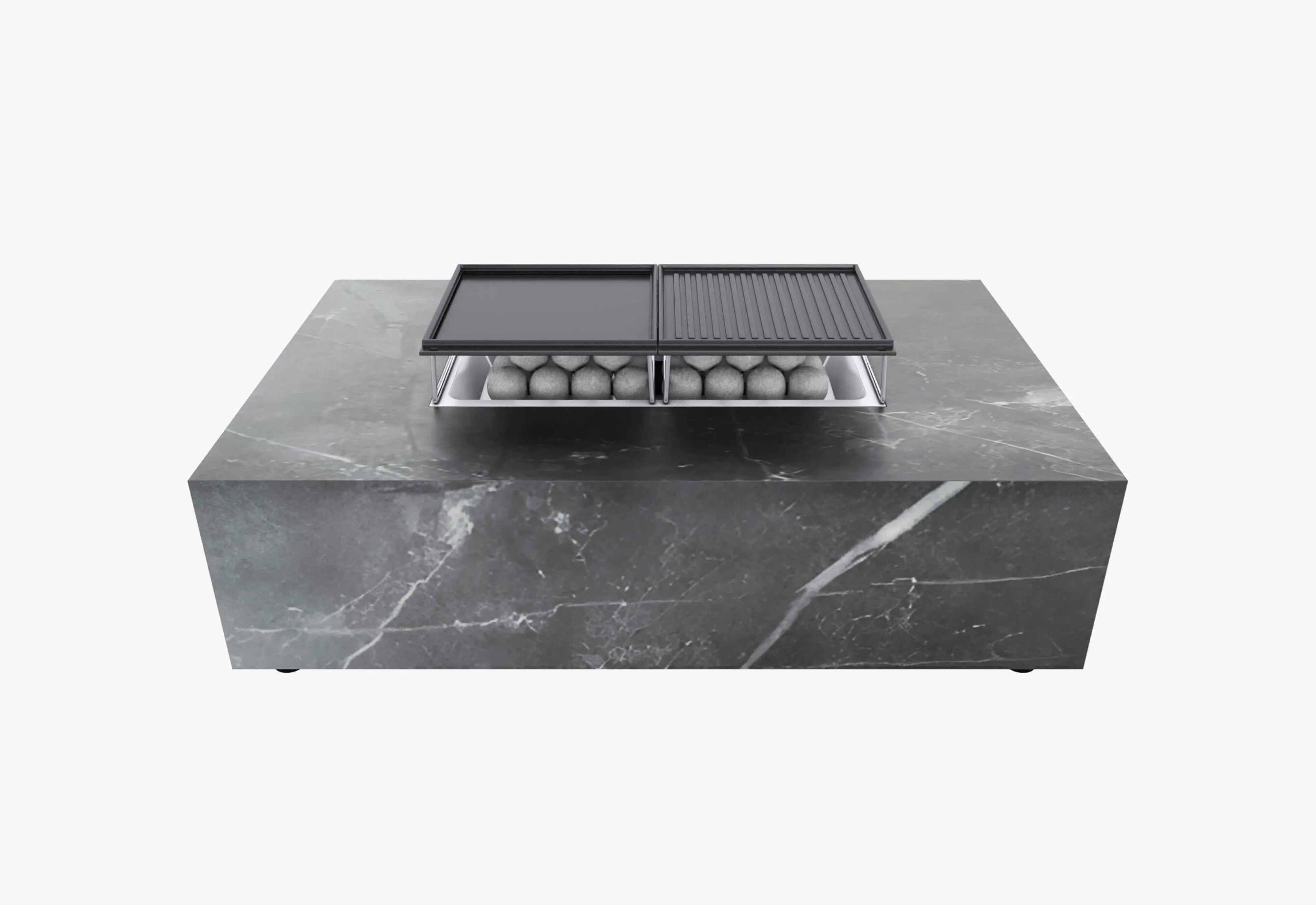
Rectangular Fire Pit Table
Anchors long sectionals and larger seating groups. Available in propane or natural gas. OuterStone® finish reads as architectural.
Concrete / OuterStone®
Cooking set available

Round Fire Pit Table
Softer profile for conversation-forward layouts. Compact enough for small patios. Propane for placement freedom; natural gas for permanence.
Concrete finish
Compact footprint

Outdoor Sofas & Sectionals
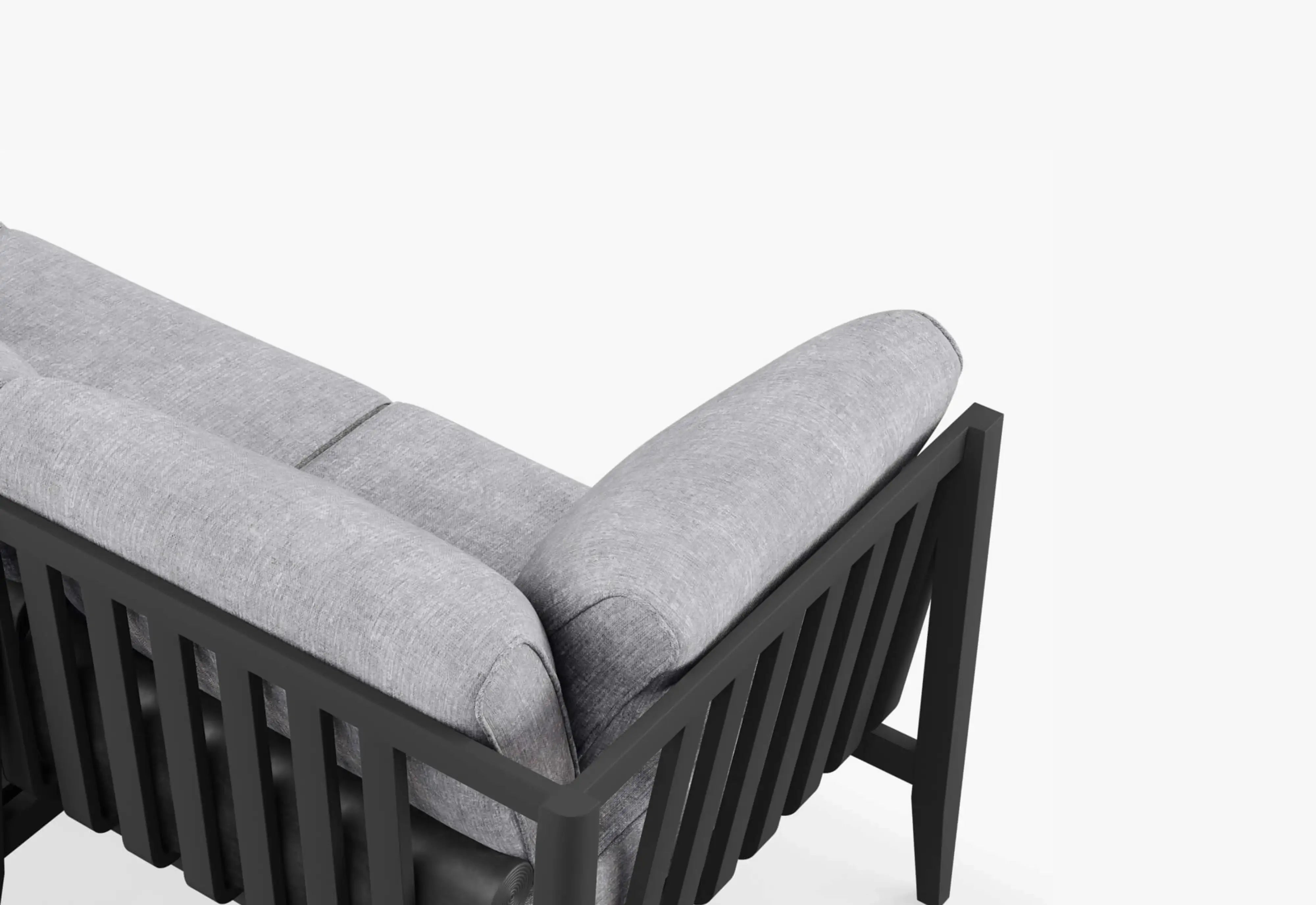
Pair with your fire pit table at the right clearance distance. OuterShell® deploys in 15 seconds after the evening ends.
OuterShell® built-in
Machine-washable covers

All-Weather Covers
Protect the fire pit table, seating, and entire setup between uses. Deploy after the fire is off and the table is cool.
Wind straps + buckles
Vented base
Common questions
Propane vs Natural Gas Fire Pit FAQ
Is propane or natural gas cheaper for a fire pit?
Natural gas typically costs less per BTU to run, though installation costs more upfront — especially without existing gas line access. Propane has lower setup costs but higher ongoing fuel expense. For frequent use (multiple evenings per week year-round), natural gas narrows the total-cost gap over time. For seasonal or occasional use, propane's lower setup cost often wins.
Does a natural gas fire pit produce more heat than propane?
Heat output depends on burner design and BTU rating, not the fuel type. A well-designed propane fire pit table at 55,000 BTU produces heat comparable to a natural gas table at the same output. Both fuels create a clean, consistent flame. Choose based on placement flexibility and daily convenience rather than heat expectations.
Which is better for frequent entertaining: propane or natural gas?
Natural gas is often preferred for frequent hosting — no tank to refill, no fuel to monitor, the fire starts instantly any evening. For households that gather around the fire multiple times per week, the convenience of a permanent gas line outweighs the higher upfront installation cost. Propane works well for entertaining too — keep a spare tank on hand and the experience is nearly identical.
Can I convert a propane fire pit to natural gas later?
Some fire pit tables support conversion with a kit; others require different internal components. Check the manufacturer specifications before purchasing. If there is a chance you will run a gas line in the future, confirm that the fire pit model you choose supports both fuel types. A licensed professional should handle any gas line installation or conversion.
Propane or Natural Gas — Your Patio, Your Choice
Browse Outer fire pit tables — available in both fuel types, with seating, covers, and rugs to complete the outdoor room.


