

Teak vs Aluminum vs Sintered Stone: Which is Best Outdoor Dining Table Material?
Beyond surface materials, the right table defines your outdoor living experience. Consider how you host, the space your layout requires, and how naturally the dining zone integrates into your outdoor landscape.

Choose teak for natural warmth, aluminum for the effortless maintenance, or sintered stone for architectural permanence. Material establishes a bespoke atmosphere, but for 8 to 12 guests,
table length, chair width, and total footprint shape outdoor experience.
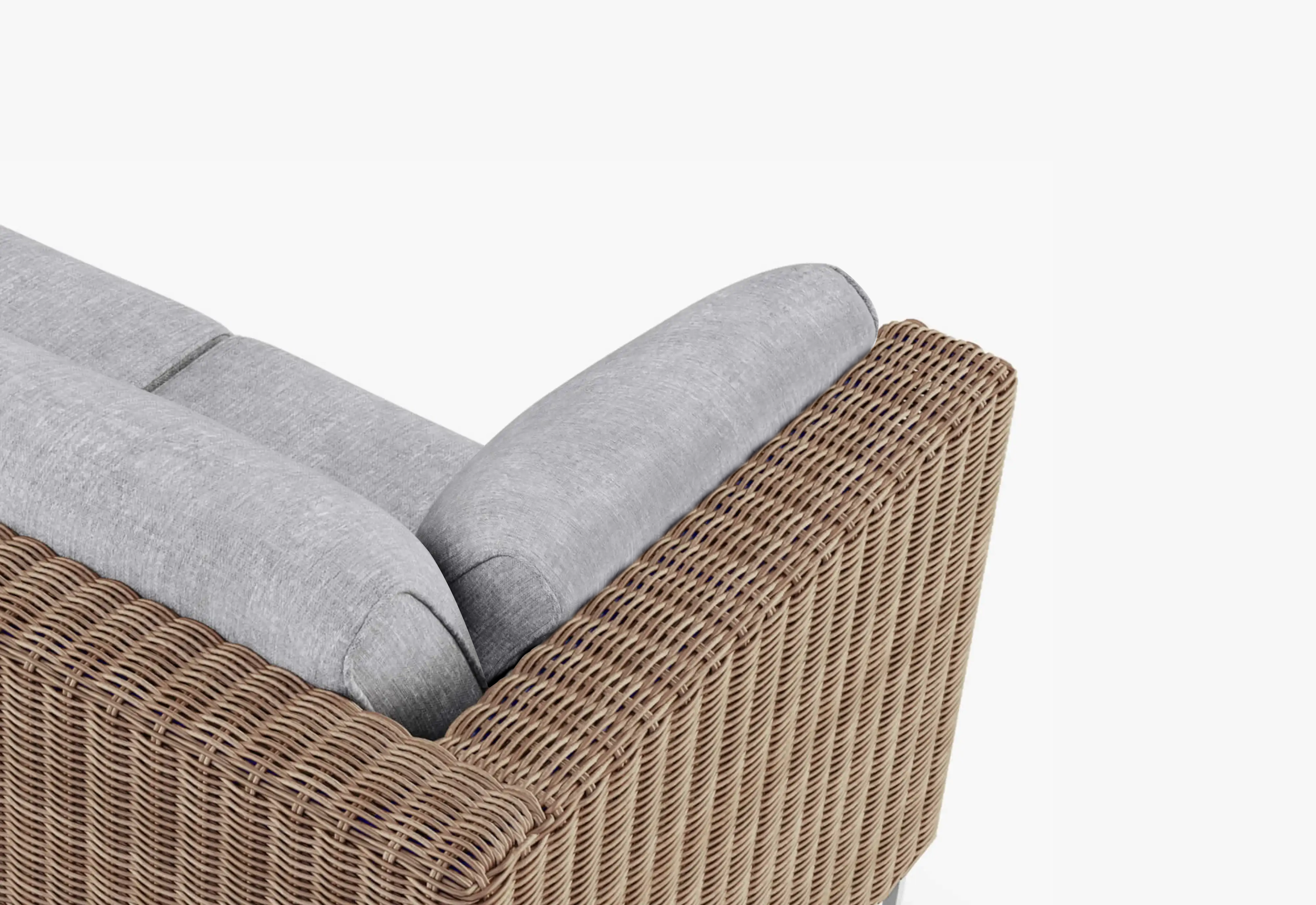
Natural warmth
Ideal for spaces grounded in organic warmth, suited to those who appreciate a rich honey-toned surface that gracefully ages into a soft, silver-gray patina.
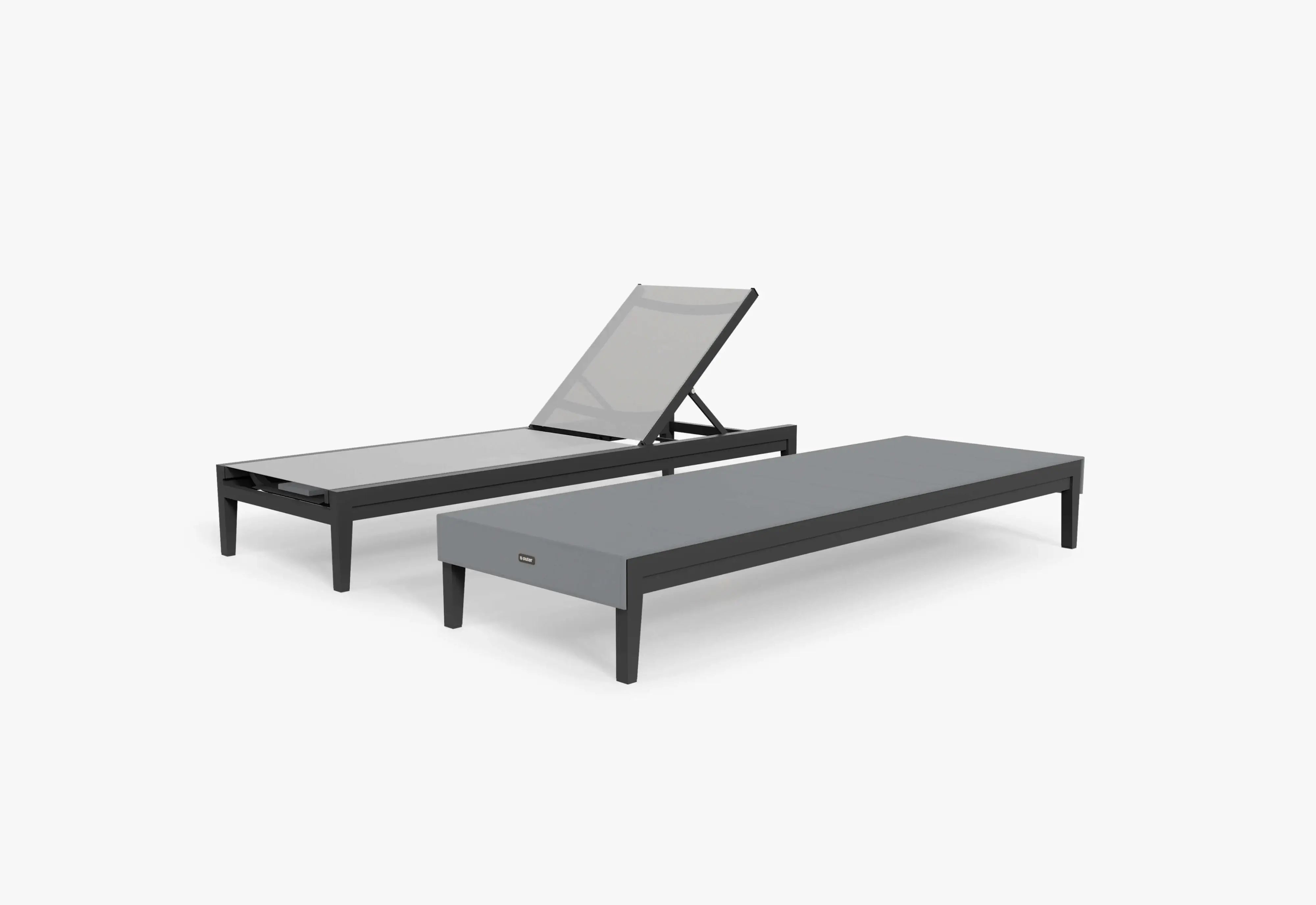
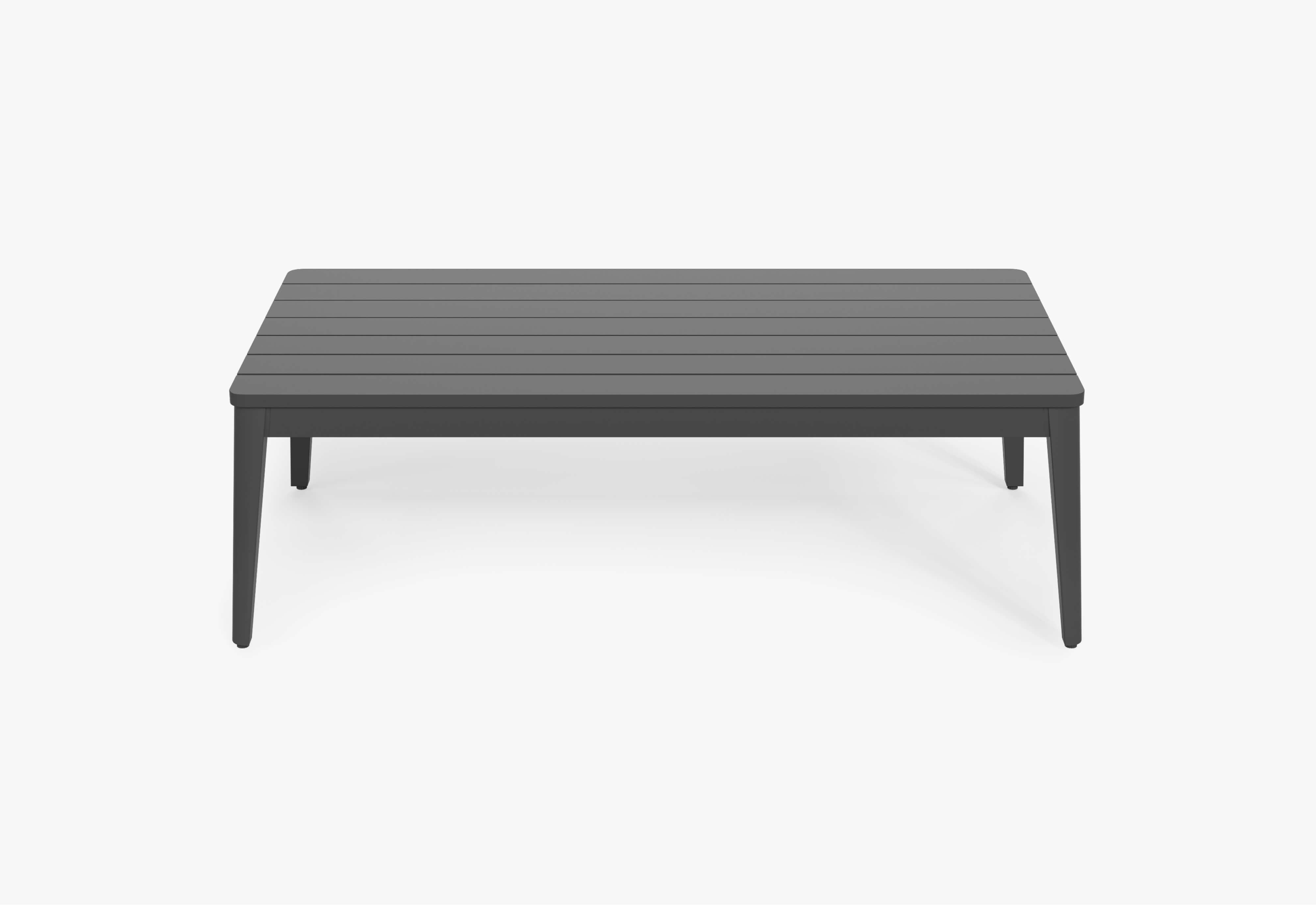
Easy upkeep
Best for modern outdoor rooms, frequent dining and layouts that need a lighter table or chairs that can be rearranged as hosting needs change.
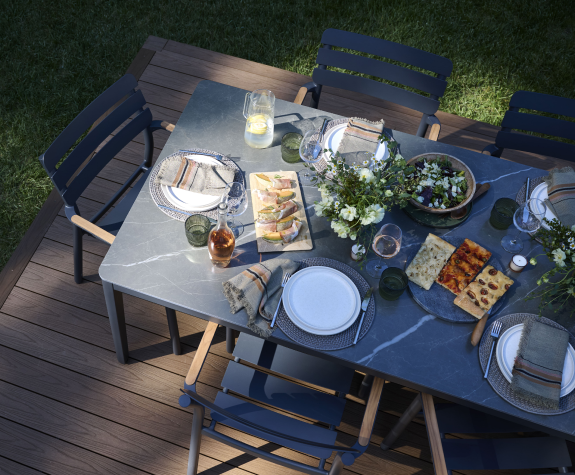
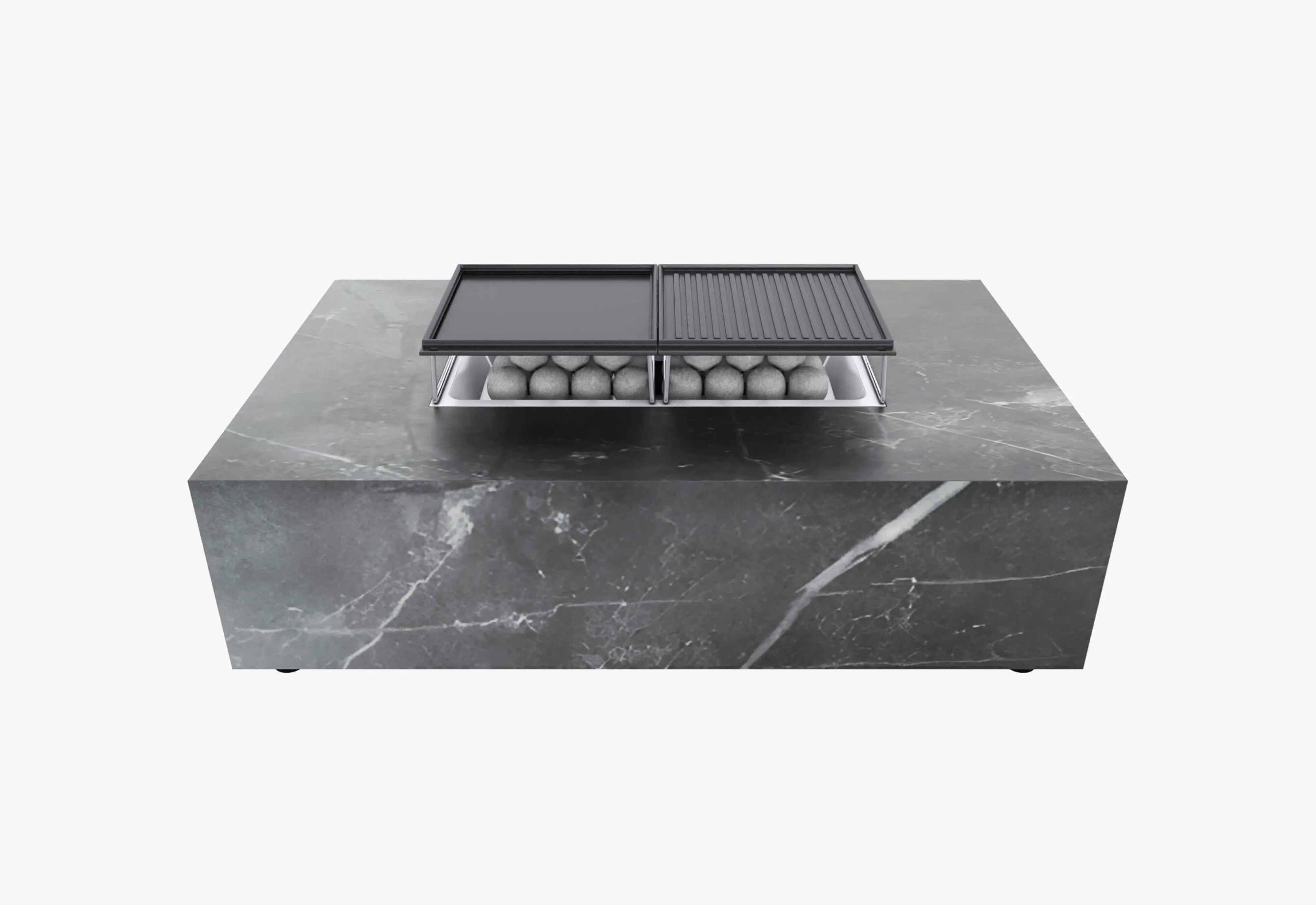
Solid surface
Best for a fixed dining zone and frequent entertaining, offering a continuous, smooth plane that bridges the dining area and outdoor kitchen.
Key Takeaway: teak changes beautifully, aluminum asks the least of you, and OuterStone® gives the tabletop an architectural presence.
The decision in one view
Material names only become useful when they are tied to the way the table will be cleaned, moved, extended and used around food.
| Decision factor | Teak | Powder-coated aluminum | Sintered stone / OuterStone® |
|---|---|---|---|
| Best if | You want warmth, natural grain and a table that gains character. | You want easy upkeep, clean lines and easier reconfiguration. | You want a stable, solid surface that is easy to wipe after meals. |
| Surface experience | Warm and tactile. Often slatted to support drainage and natural movement. | Clean and architectural. Slatted metal tops feel visually light and shed rain. | Smooth and substantial. A continuous surface supports platters, glassware and fast cleanup. |
| Daily cleanup | Use mild soap and water; clean between slats after food-heavy gatherings. | Swift to rinse and simple to keep pristine; avoid abrasive pads on the finish. | A damp cloth handles most spills; use mild soap water for deeper cleaning. |
| How it changes | Evolve from honey brown toward silver gray unless appearance care is used. | Retains a uniform finish; occasional touch-ups preserve coating integrity. | Holds a permanent, weather-proof stone aesthetic over time. |
| Weight & movement | Grounded and stable; generally harder to reconfigure alone. | Lightweight yet durable; easier to reposition or store. | The heaviest choice here; best when the dining zone is unlikely to move. |
| 8–12 guests | Excellent when used in an extendable teak-and-aluminum design. | Flexible for six-to-eight-seat tables and chairs placement flex. | Best suited to fixed, statement dining configurations. |
| Outdoor kitchen | Softens stone, stucco and metal kitchens with natural contrast. | Coordinates with dark cabinetry, grills and streamlined architecture. | Creates the clearest visual bridge to stone, porcelain or concrete surfaces. |
| Trade-off | Demands acceptance of natural patina or routine maintenance. | Darker finishes absorb midday heat; coating requires sensible care. | Substantial weight limits spontaneous spatial reconfiguration. |
Teak
Aluminum
OuterStone®

Teak brings warmth to outdoor dining
Teak is the most visually ideal choice when a large dining table feels hard or overly formal. Its grain and color soften the scale of an eight-to-twelve-person setting and connect naturally with planting, wood decks and stone landscapes.
Outdoor teak does not need oil for durability. Left untreated, it gradually develops a silver-gray patina; cleaning or appearance products are aesthetic choices, not requirements for outdoor durability. Slatted construction also allows water to drain and gives the wood room to respond to changing conditions.
For a deeper comparison of weather, heat, maintenance and longevity, use our teak vs aluminum outdoor furniture guide.
Warm, organic and landscape-led outdoor rooms
Easy structural care; visible color change over time
Food in slat gaps and expectations around patina

Aluminum keeps daily dining simple
Powder-coated aluminum is the most effortless choice when the table is used often and the routine needs to stay light. Rust-proof and significantly lighter than teak or stone counterparts, its slim design smoothly integrates into patios already rich with plants, textiles, and seating.
For post-meal cleanups, mild soapy water and a soft cloth are usually all you need. The powder coat is part of the material system, so avoid abrasive pads and metal-on-metal scraping. In direct sunlight, dark finishes can feel warm; shade placement and the timing of meals matter just as much as your choice of material.
Frequent use, modern spaces and flexible furniture layouts
Low maintenance and a more consistent appearance
Abrasive cleaning, finish chips and full-sun surface heat

Sintered stone tabletop built to last
Sintered stone is a dense surface made from mineral materials formed under heat and pressure. In a dining setting, its advantage is obvious: plates and serving dishes sit on a continuous plane, common spills are easy to wipe, and the tabletop creates a cleaner visual bridge to outdoor kitchens and hardscape.
OuterStone® pairs that surface with a powder-coated aluminum frame. The result feels more permanent than a slatted table and suits a dedicated dining zone. It is highly practical, but not indestructible: use basic care around exposed edges, avoid dragging rough objects across the top and plan delivery before deciding on its final placement.
Outdoor kitchens, regular serving and permanent dining zones
Easy wipe-downs and no wood-color maintenance decision
Weight, delivery path and impacts at exposed edges
Slatted vs. solid dining tables: which to choose?
Material and surface construction are connected, but they are not the same decision. Think about rain, crumbs, glassware and the way food moves from kitchen to table.

Drainage and visual lightness
- Rain and rinse water can pass through instead of pooling.
- Separate boards allow natural wood to respond to changing conditions.
- The rhythm of the slats keeps a large table from looking too heavy.
- Crumbs and sauces may require cleaning between the gaps.

Serving and quick cleanup
- Platters, glassware and small items sit on one continuous surface.
- Most post-meal cleaning happens with a single wipe rather than between slats.
- The tabletop reads as a stronger architectural focal point.
- Weight and delivery matter more, especially in a finished backyard.
Choose slatted for quick drainage and harmony with your outdoor landscape. Choose solid for serving, easy wiping and matching outdoor kitchens.
For 8–12 guests, plan the room—not only the table
Buy for the number of people you seat most often, then check the maximum gathering with every chair pulled out and the table fully extended.
Entertaining sweet spot
Look for roughly 84–96 inches of table length and a dining zone around 12 by 14 feet or larger. A fixed table works when eight is the normal count.
Regular larger hosting
Use about 108 inches as a planning point and a zone near 14 by 16 feet. Extendable designs keep the everyday footprint more useful.
Full gathering mode
Plan for approximately 120–132 inches of table length and a zone around 15 by 18 feet. Always measure the table in its open position.
Fixed or extendable outdoor dining table? Use two guest counts
“How many can it seat?” is only half the question. Calculate your daily headcount alongside your peak hosting total to decide whether a fixed-length table or an extendable design fits your lifestyle best.
8 peak
Choose a fixed six-to-eight-seat table. You will use the full surface often, and there is little benefit in storing extension capacity you rarely need.
10–12 peak
Choose extendable. The closed table preserves circulation on normal days; the open position earns its size only when the guest list grows.
most weeks
Plan the patio around the expanded footprint from the beginning. A large fixed table or an extendable table kept mostly open can both work; leg position and full-time walkways matter more than the mechanism.
Patio table capacity lies in spatial clearance
Keep at least 36 inches from the table edge to a wall, railing or nearby furniture so a chair can pull out. Where someone must walk behind a seated guest—especially between an outdoor kitchen and the table—42 to 48 inches is more comfortable.
Chair width also changes real capacity. Armless chairs use less table edge than armchairs, while end chairs need clear knee room around legs, aprons and extension hardware.
Which Outer table fits your space? 3 tables compared by dimension
| Configuration | Table dimensions | Table weight | Best use |
|---|---|---|---|
| Aluminum rectangular | 86.6″ L × 41″ W × 30″ H | 95 lb | Fixed six-to-eight-seat dining with low upkeep |
| Teak + aluminum extendable | 87.6″ closed / 134″ expanded × 41.7″ W × 30″ H | 118 lb | Everyday eight-seat use with room to host up to twelve |
| OuterStone® | 87″ L × 41″ W × 30″ H | 172 lb | Fixed six-to-eight-seat dining and outdoor-kitchen adjacency |
Aluminum rectangular
86.6″ L × 41″ W × 30″ H
95 lb
Fixed six-to-eight-seat dining with low upkeep
Teak + aluminum extendable
87.6″ closed / 134″ expanded × 41.7″ W × 30″ H
118 lb
Everyday eight-seat use with room to host up to twelve
OuterStone®
87″ L × 41″ W × 30″ H
172 lb
Fixed six-to-eight-seat dining and outdoor-kitchen adjacency
Planning note: always confirm current product specifications, selected chair width, door swings and the usable patio zone before ordering.
Minimum dining zone after adding 36 inches at each table edge.
Minimum zone with chair clearance and no through-traffic behind diners.
Uses 42–48 inches on the serving side and 36 inches opposite.

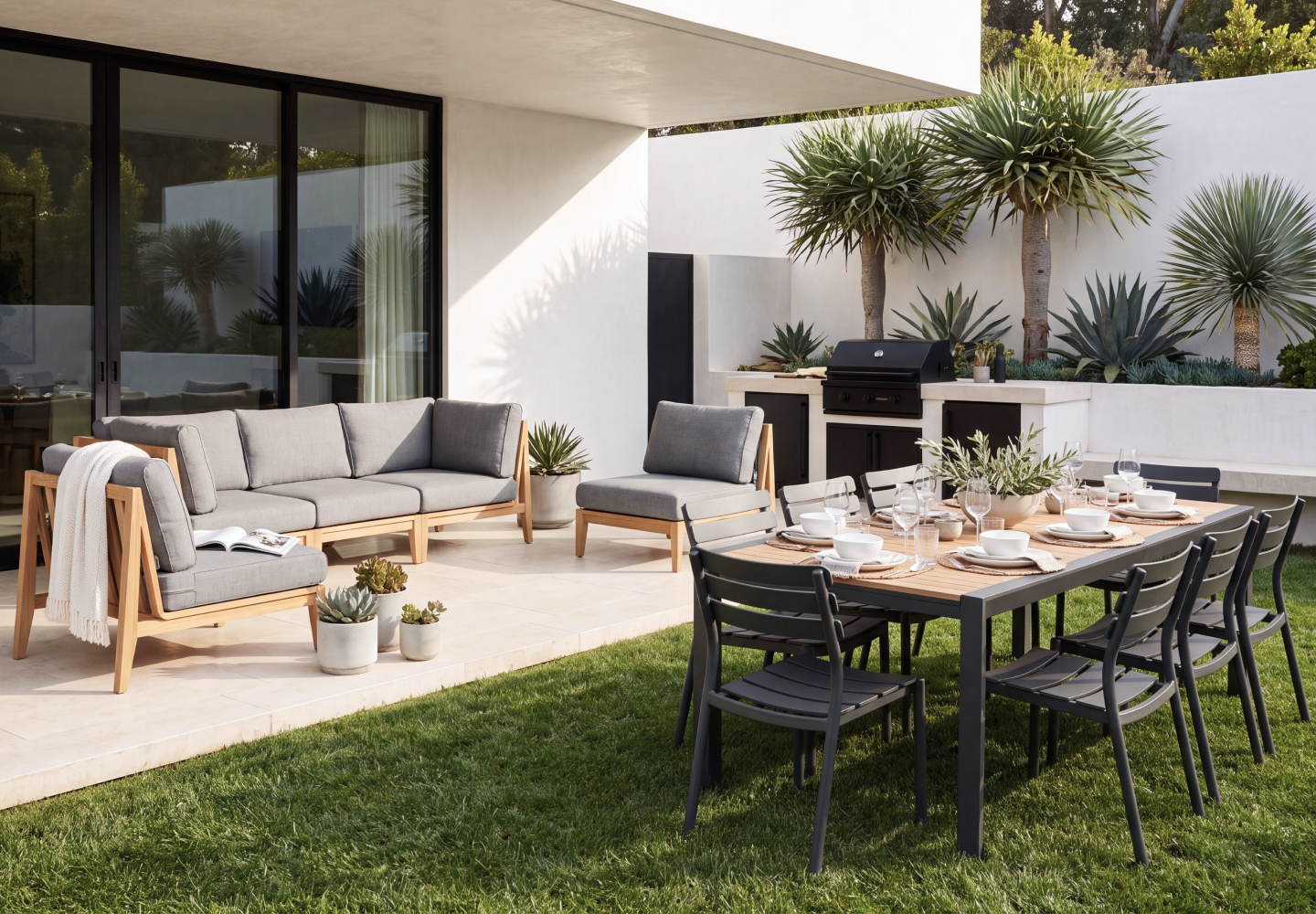
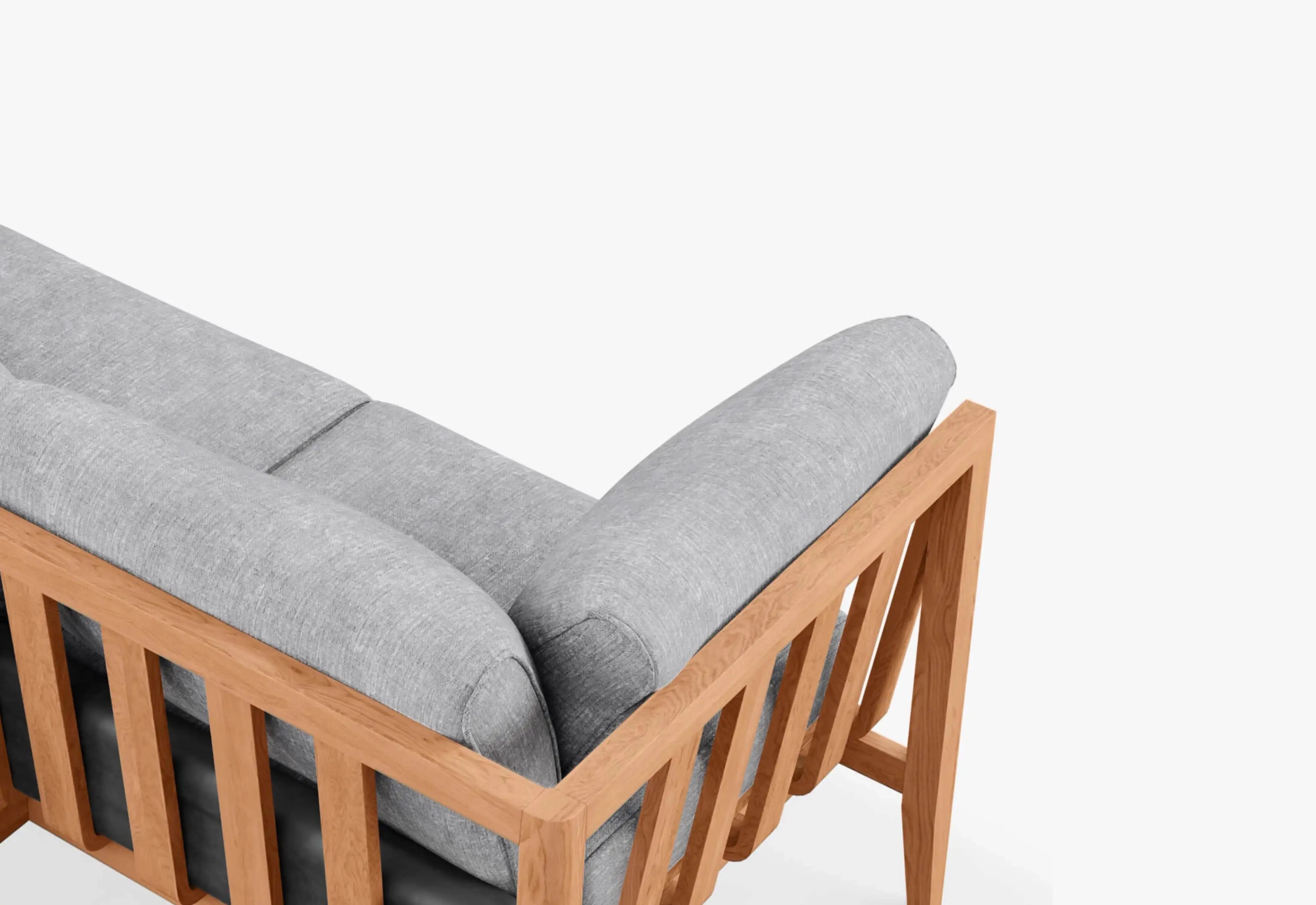
Teak Sofa + Extendable Dining Entertaining Set
The premier layout for large-scale outdoor entertaining. Designed for expansive patios, this integrated lounge and dining set pairs a natural teak sofa—which anchors the space with warm, organic texture—with a versatile extendable table. The base arrangement includes eight armless dining chairs for elevated daily use, expanding effortlessly to seat 10 or 12. Simply add matching chairs as needed, taking care to maintain proper end-seat and walkway clearance for seamless spatial flow
Connect your outdoor kitchen and dining space
The best outdoor table material doesn't need to mirror every existing patio finish. Instead, it echoes core design elements—such as natural warmth, structural lines, or surface texture—while preserving a direct serving route for effortless entertaining

Warm wood or stucco
Introduce teak to soften cold hardscapes. When styling the space, echo the warm timber through gently, with chair accents or a nearby lounge frame, to create visual rhythm without over-matching.
Metal cabinetry and grills
Powder-coated aluminum seamlessly translates the sleek architectural language of the cooking zone into the dining space, which is ideal for agile layouts that reconfigure often.
Stone or porcelain counters
OuterStone® creates the strongest surface connection. Its continuous, non-porous plane offers flawless visual continuity and effortless hosting.
Keep a direct route from prep counter to table without crossing the main grill area.
Allow 42–48 inches where a server walks behind occupied dining chairs.
Measure appliance doors, drawers and trash pullouts in their open positions before placing the table.
Follow the appliance maker’s heat and combustible-clearance requirements; dining circulation is not a substitute for safety clearance.
Two layout plansto complete your patio design
Complete your outdoor living space with 2 curated patio plans. Match your lounge furniture finishes to your dining table for a cohesive, elevated look.

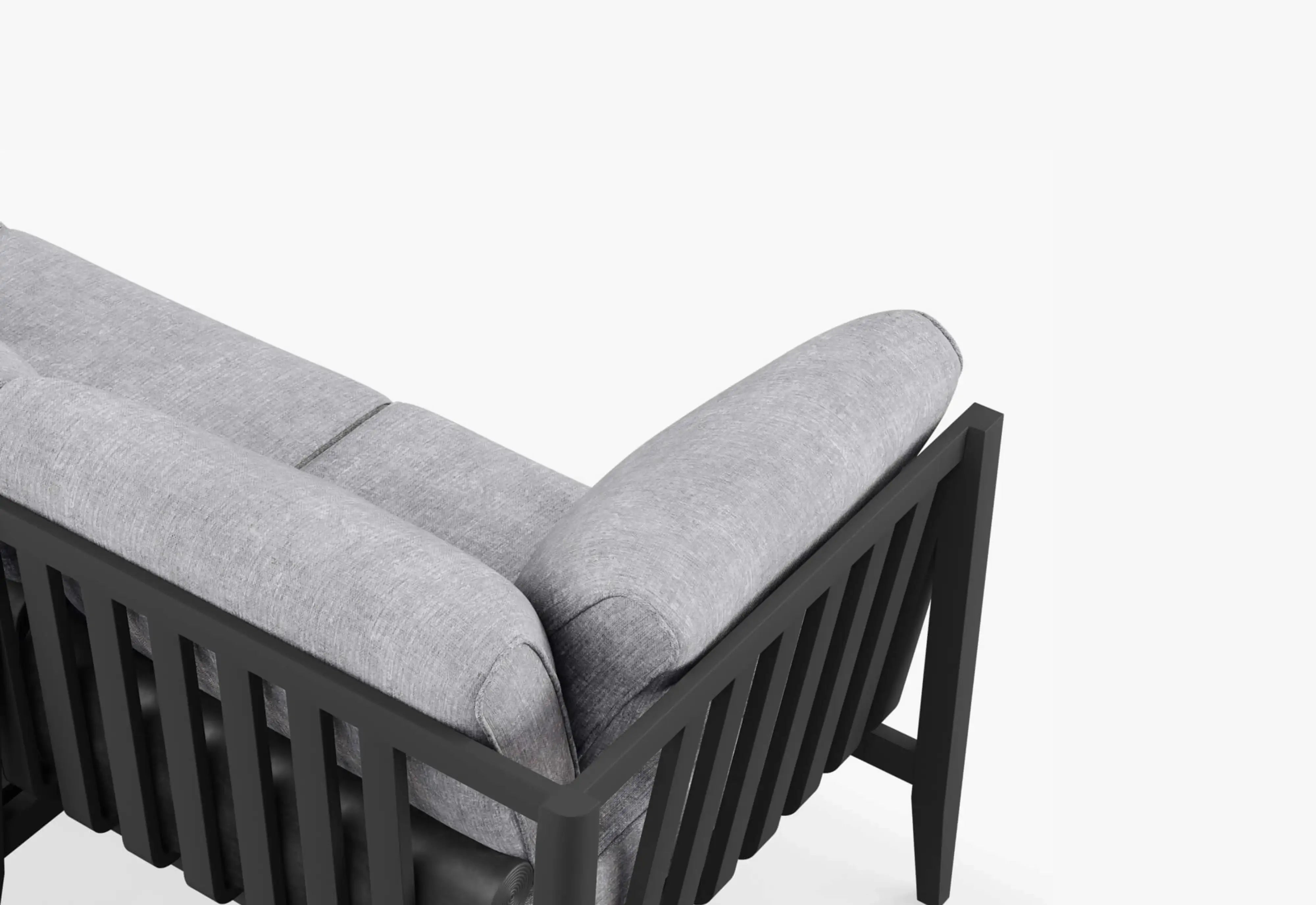
Charcoal Aluminum Sofa + 8 Seat Dining Set
A coordinated lounge and fixed dining setup with rust-resistant powder-coated aluminum and clean lines throughout.
Explore the aluminum set
OuterStone® Table + 8 595 Armless Chairs
A fixed eight-seat configuration with a smooth sintered-stone surface and armless chairs that use table-edge space efficiently.
Explore the OuterStone® setOn outdoor dining table materials
What is the best material for an outdoor dining table?
Is teak or aluminum better for an outdoor dining table?
Is sintered stone good for an outdoor dining table?
Is a slatted or solid tabletop better outdoors?
Which outdoor dining table material is easiest to clean?
Should I choose a fixed or extendable table for 8–12 people?
Which table material works best beside an outdoor kitchen?
Choose the table that makes gathering easier
Start with your seating needs, measure your usable dining footprint, and choose a material whose finish remains aesthetic and care routine effortless when the party is over.