

After the Final Point
Tennis Court Seating Ideas for Homes: From Court to Patio
A place to pause between games. A comfortable spot to stay after the match. Plan your home’s outdoor seating around both moments, with a practical courtside area and a welcoming patio for conversation.

The Short Answer
Give each part of the afternoon its own place.
The most useful tennis court seating ideas for a home address two needs: an easy place for a brief courtside pause, and a comfortable lounge for gathering afterward. Plan the court’s playing clearances and access first, then arrange the patio around your usual group.
A home court can be the start of a relaxed weekend with friends. A considered seating plan gives everyone somewhere to put a water bottle, watch a few games, and settle into conversation when the racquets are put away.
Keep the court ready for play. Locate furniture outside the playing and run-off areas, with gates and circulation routes clear.
Make brief breaks simple. Prioritize easy access, a comfortable place to sit, and a spot for water and personal items.
Plan the longer stay on the patio. Use sofas, chairs, and reachable tables to welcome players and friends after the match.
Courtside and At Home
A quick pause and a long conversation ask for different seating.
During play, you want to sit down, find your water, and return to the court easily. Afterward, the pace changes. Friends may stay for a drink, lunch, or a conversation that lasts longer than the final set.
| Consideration | Courtside break area | After-match patio lounge |
|---|---|---|
| Main purpose | Brief rests, waiting for a turn, or watching a few games. | Relaxing together, sharing refreshments, and continuing the afternoon. |
| Seating priorities | A practical seat that feels easy to sit in and get out of. | Comfortable sofas or lounge chairs arranged for conversation. |
| Useful surfaces | A place for water, with a separate spot for bags and towels. | Coffee and side tables within reach of the seats. |
| Orientation | A view of play from a suitable position outside required clearances. | Seats facing one another, with a court or garden view where it fits. |
| Location | A designated area coordinated with the court layout. | An outdoor living area with convenient access to the house. |
Between Games
Keep the courtside setup practical.
Begin with the location. The space beyond the painted lines includes room needed for play. Work from the complete court plan and confirm furniture placement with your court designer or contractor, including run-off areas and gate access.
Within a suitable seating area, try the chairs or bench you are considering. Check how easily you can sit down and stand up, and whether the seat feels comfortable for the kind of short breaks you take.
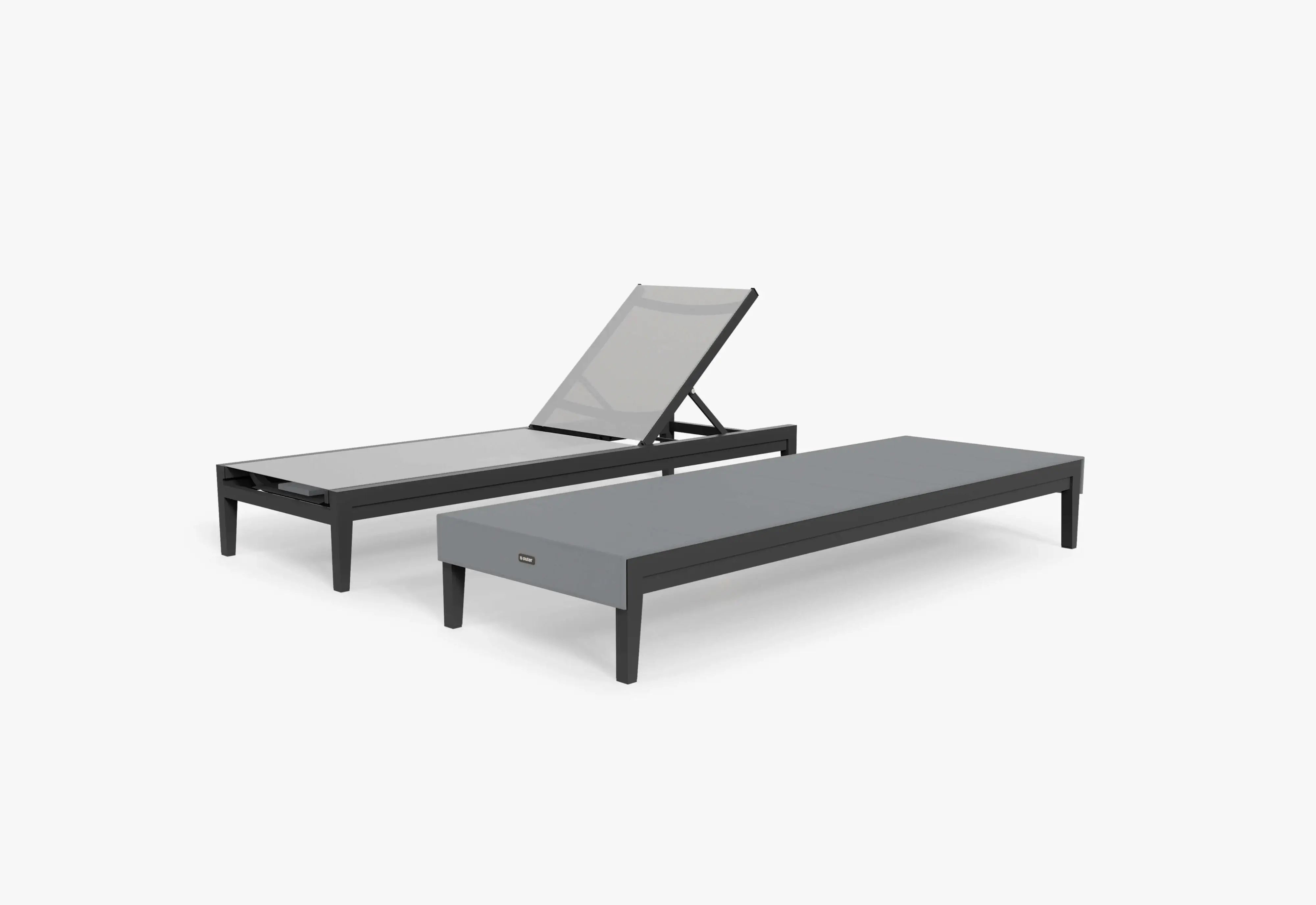
Give water bottles a convenient surface and assign bags and towels a place away from the walking route. Keep the seating itself available for people waiting to play. If friends regularly come to watch, count them separately when deciding how many seats this area needs.
Visit at your usual playing time to check the sun and existing shade. Include any proposed shade structure or umbrella base in the placement discussion with the court professional.

For court planning context, the ITF facilities guide covers domestic, club, and tournament facilities. Use the requirements appropriate to your own court when planning the surrounding space.
Stay a Little Longer
Let the conversation move onto the patio.
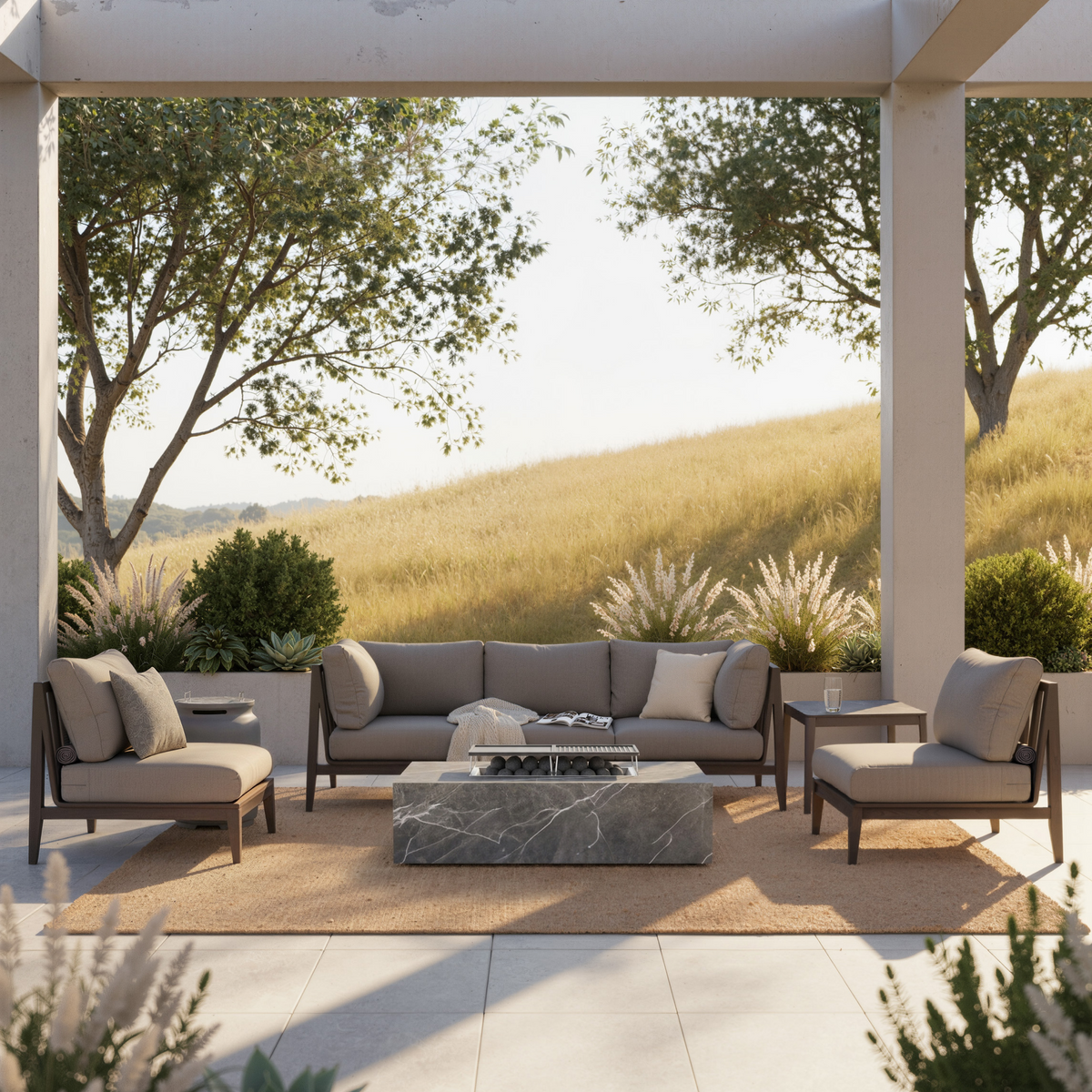
Once the match is over, give the group somewhere to settle in. A sofa with separate lounge chairs can bring everyone into the conversation while leaving a choice of places to sit.
Angle chairs toward the group and keep the coffee table reachable. Add side tables for seats beyond the main table, so guests have somewhere convenient to put a drink.
If the patio overlooks the court, test the view while seated. Preserve a connection to the game without turning every seat away from the people you are hosting.
Keep the route from the court gate to the patio open, and choose a consistent place for racquets, bags, and used towels. The lounge can then be ready for players and anyone who came along to watch.
Two Ways to Bring It Together
Let the relationship between the court and house guide the layout.
When the patio is close to the court
Use the patio as the main gathering area, with a smaller, separately planned spot for brief breaks near the court. Orient the lounge so some seats enjoy the view of play and the group can talk comfortably afterward.
Check the gate’s movement and the approach to the patio with furniture in place. A coffee table or chair should fit within the lounge arrangement while preserving that connection.
When the court sits farther into the garden
Keep the courtside area suited to brief rests and watching. Let the larger lounge remain near the house, where bringing out drinks or lunch is convenient.
Give guests a clear destination after play. A familiar seating arrangement on the terrace can make the walk back feel like the next part of the afternoon, with racquets put away before everyone sits down.
Try the plan with your usual group
Mark the actual furniture footprint and walk the route as if guests were arriving. Include people already seated, someone carrying a tray, and the space needed to approach each chair. Use the complete court plan to protect the areas required for play.
Furniture for the Afternoon After
Choose a lounge you’ll enjoy beyond tennis.
The patio can serve the rest of the week, too: morning coffee, family visits, or dinner that turns into an evening outdoors. Choose the arrangement for those everyday moments as well as your regular tennis group.
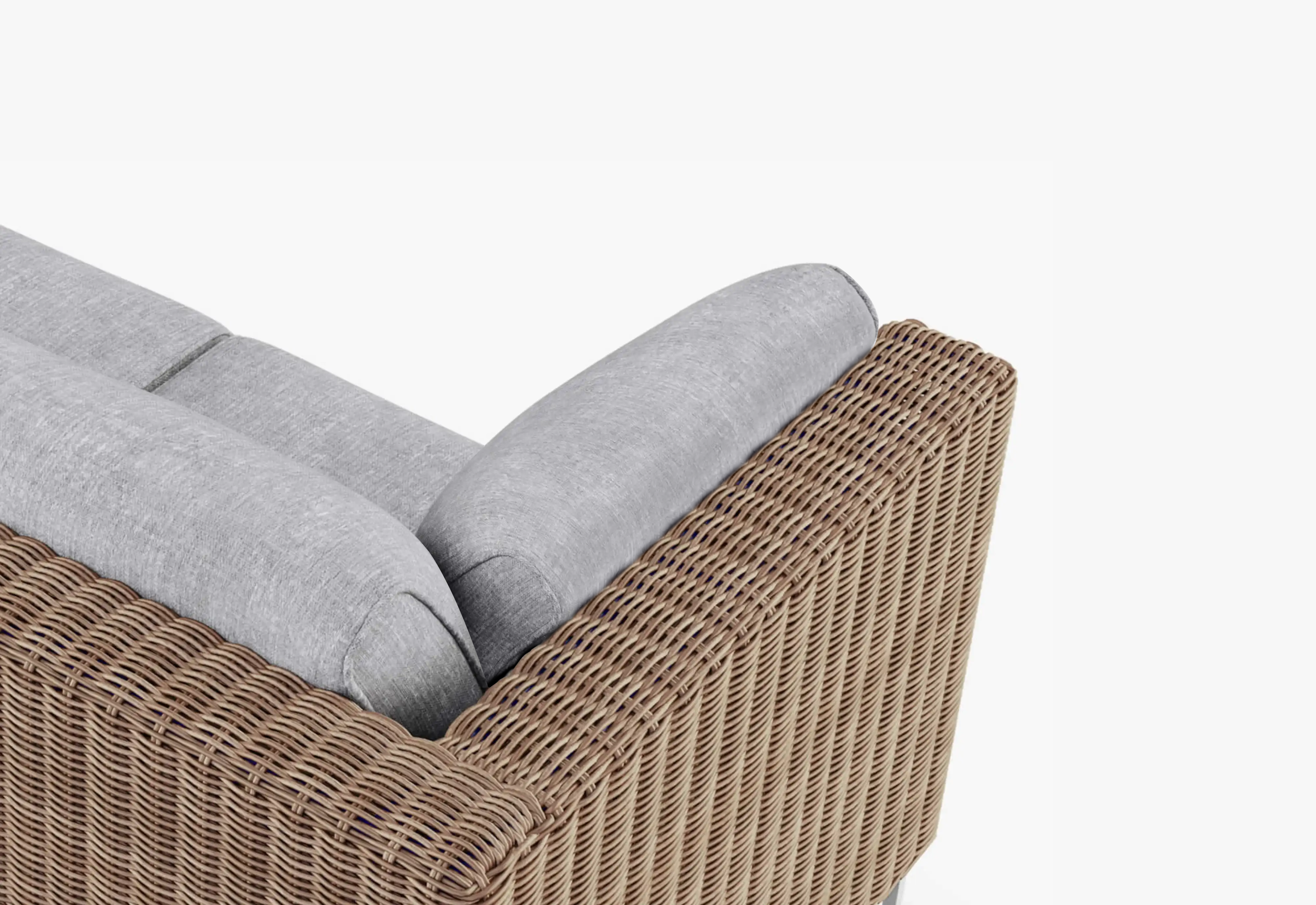
Compare seat depth, back support, and the table heights you prefer. OuterCloud® cushions combine memory foam with supportive foam layers for outdoor comfort. OuterWeave® performance fabric is designed to resist stains, fading, mold, and mildew.
For the frame, consider how aluminum, teak, or handwoven wicker complements the house and garden. Check the specific collection’s dimensions and supported configurations before planning a modular arrangement or future additions.
A Defined Patio Conversation Area
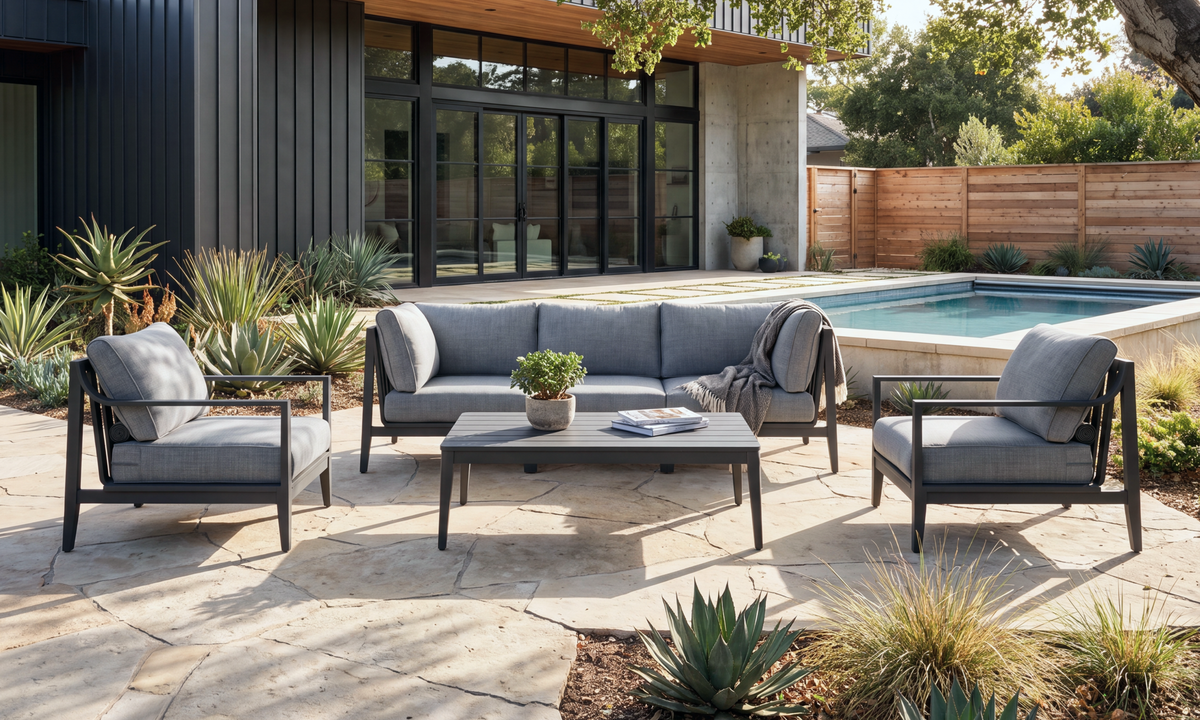
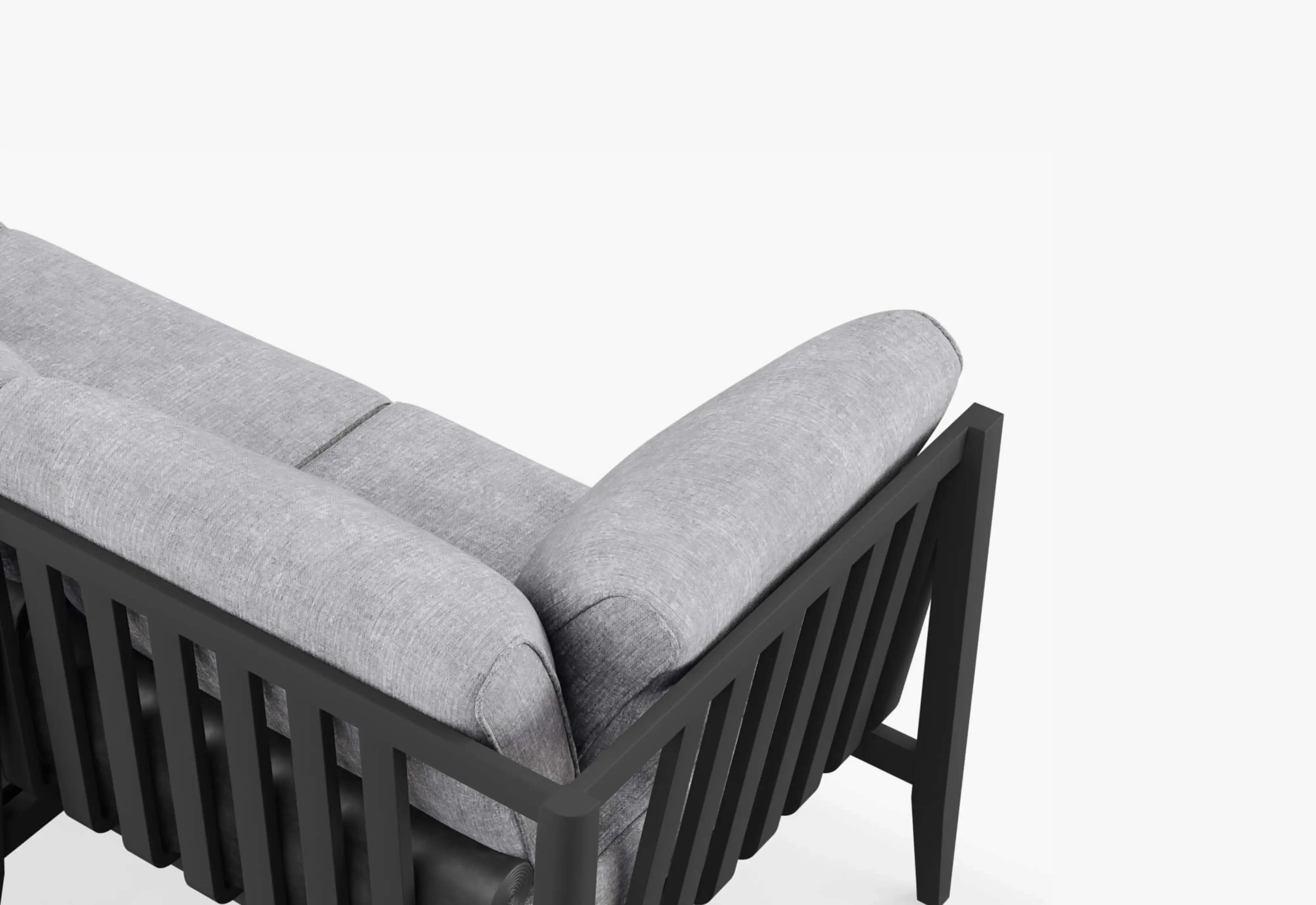
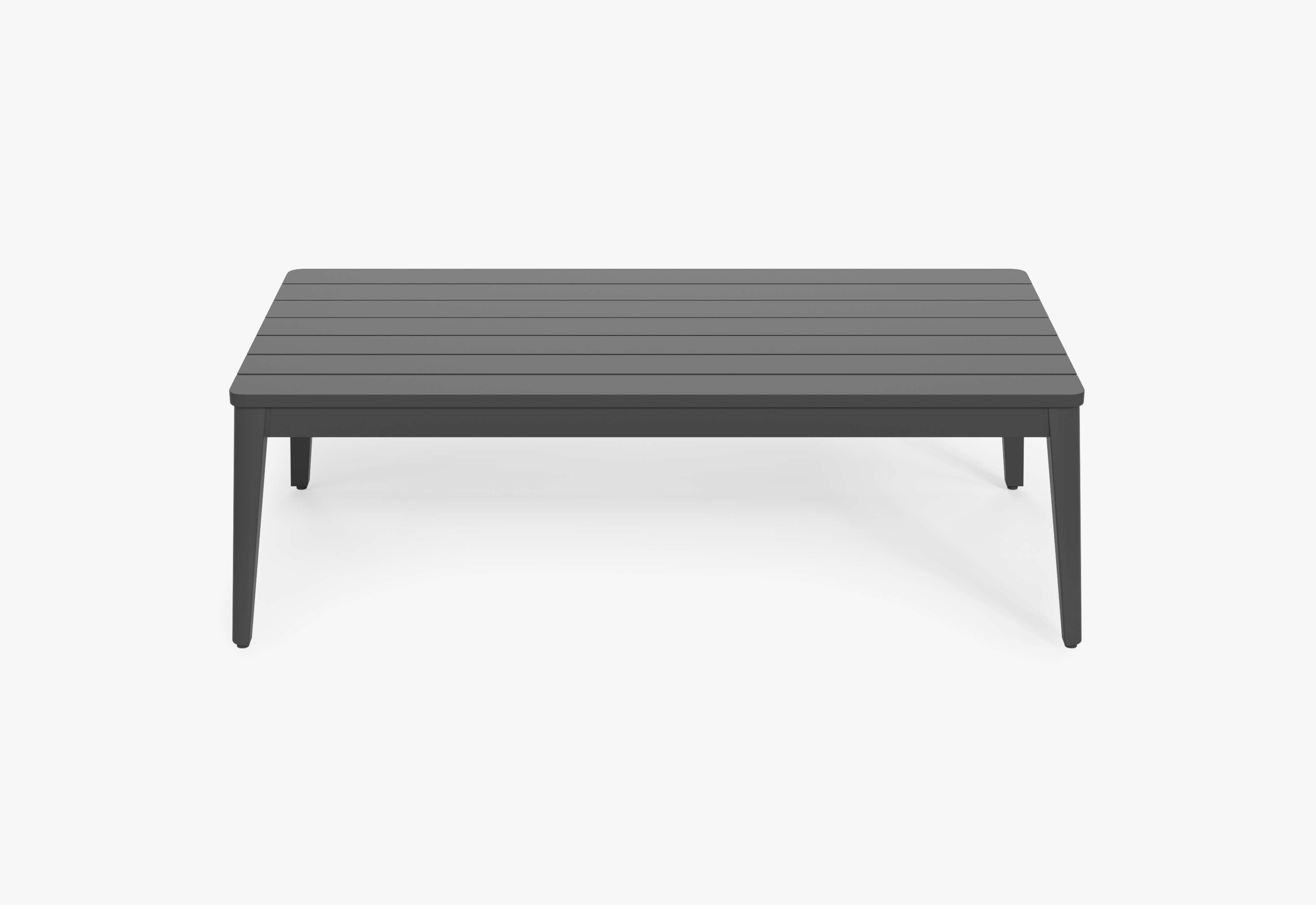
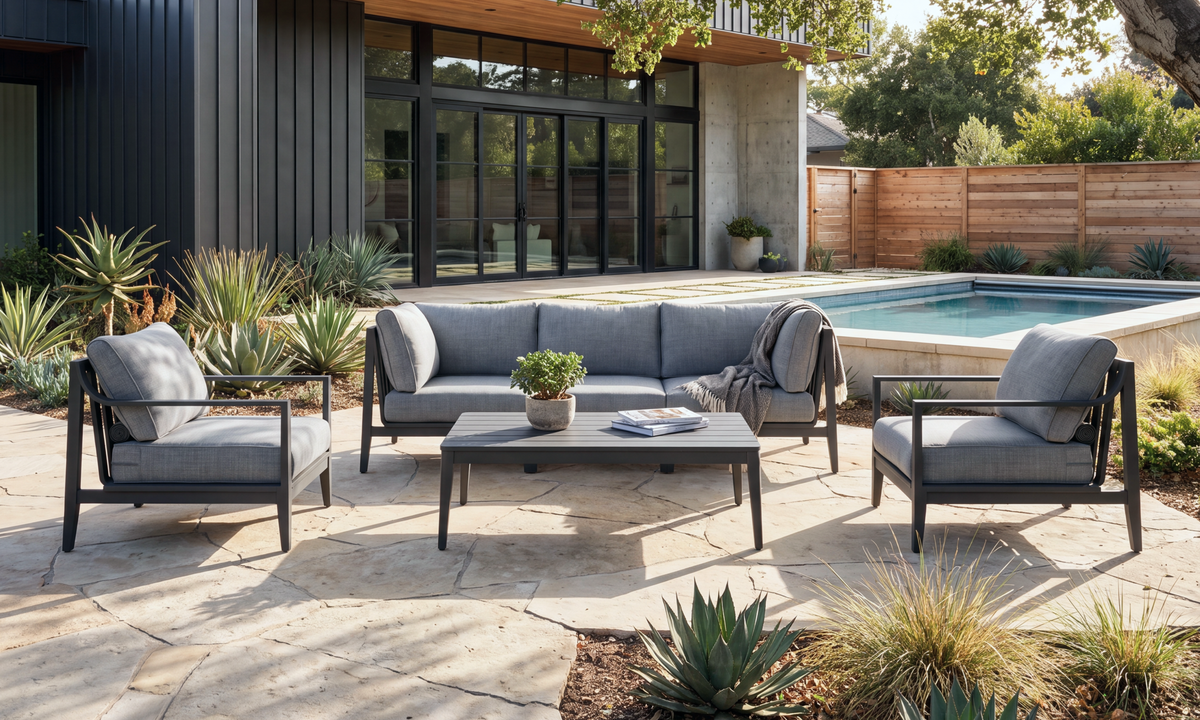
Charcoal Aluminum Sofa + Coffee Table Set
Modular lounge seating with armchairs and a rectangular aluminum coffee table. Consider this arrangement for the patio where the group gathers after play, with additional seating planned around your usual guest count.
Explore the Aluminum Lounge Set →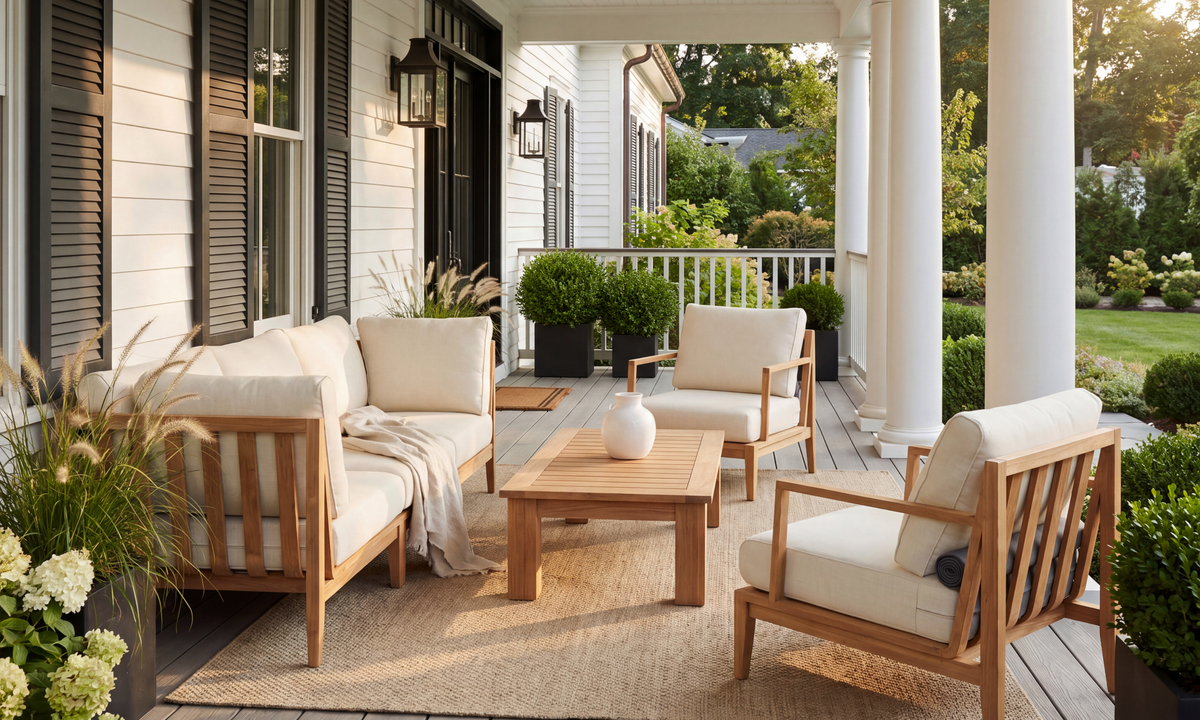
Natural Warmth for a Garden Terrace
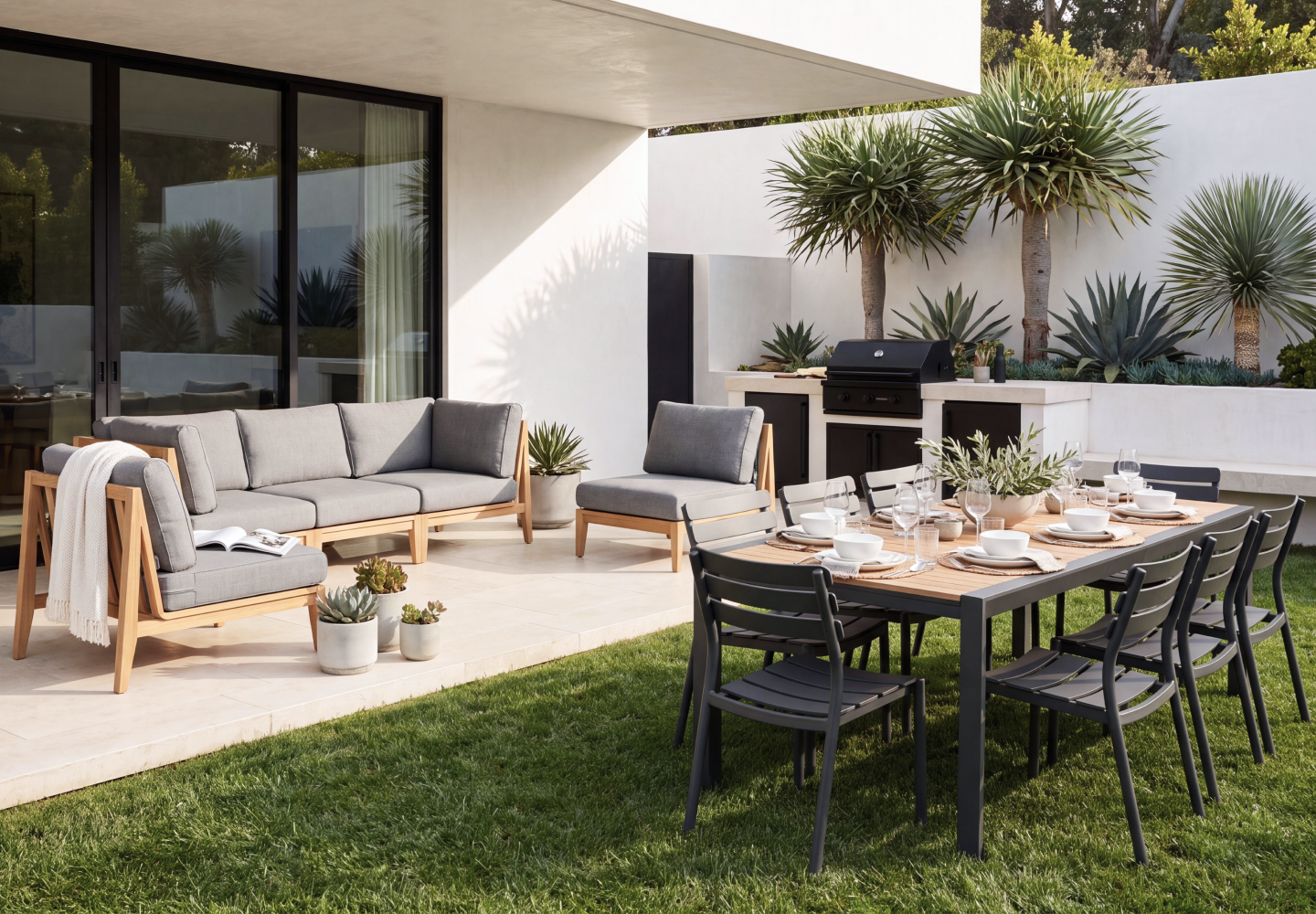
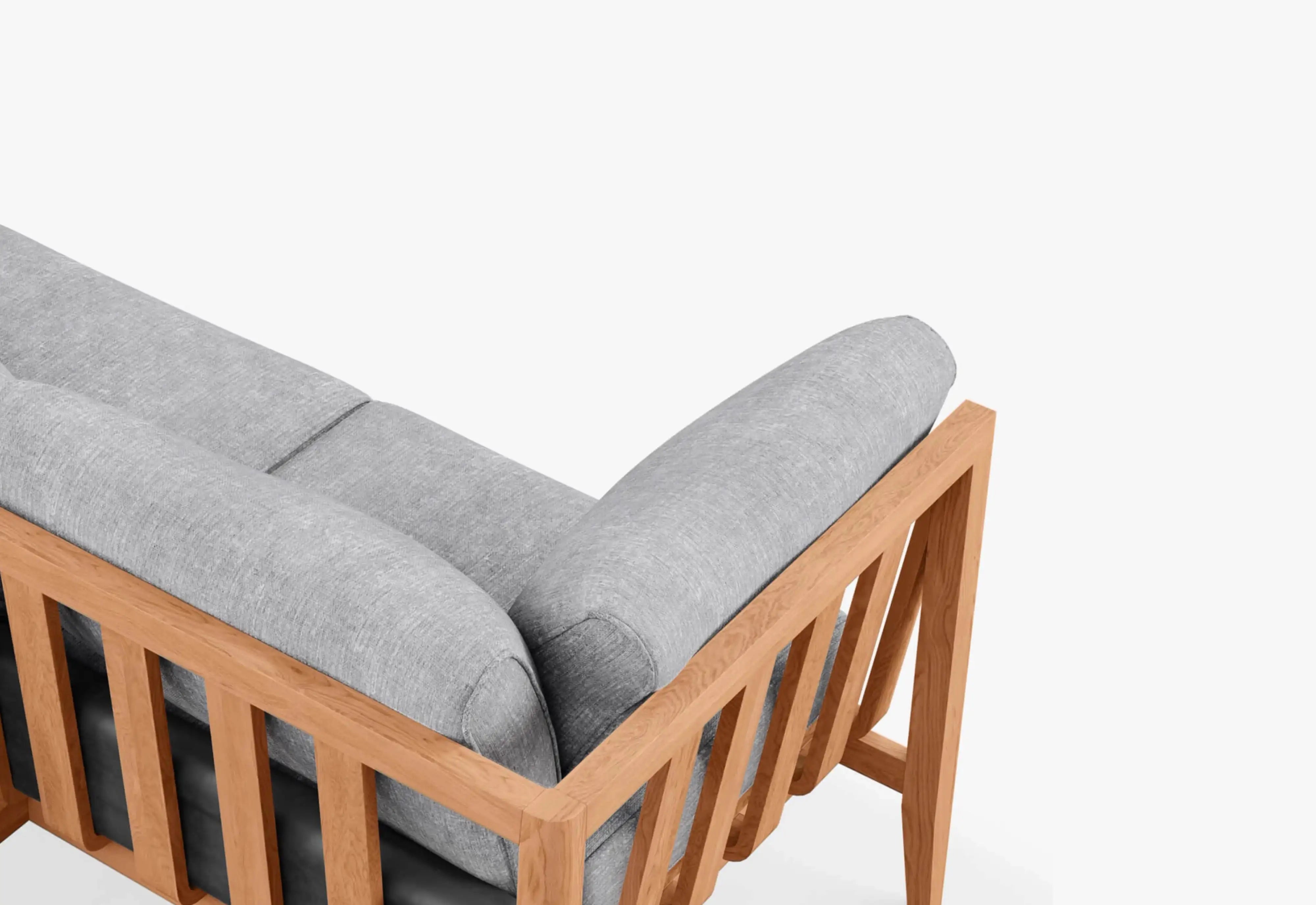
Teak Sofa + Coffee Table Set
A teak lounge arrangement with a sofa, armchairs, and coffee table. Compare its proportions and natural wood tones with the terrace, planting, and exterior finishes around your outdoor gathering area.
Explore the Teak Lounge Set →These examples are for the patio lounge. Confirm the selected configuration, included pieces, complete footprint, and compatible covers. Plan courtside placement separately with your court professional.
Ready for the Next Visit
Give the furniture a simple care routine.
Keep a place for towels and personal items, clean up spills, and follow the furniture’s material-specific care instructions. Removable OuterWeave® cushion covers can be washed according to the guidance for your product.
OuterShell® helps protect cushions from everyday dew, dust, pollen, and light rain between uses. For severe weather or extended non-use, follow product guidance for a compatible All-Weather Cover or protected cushion storage.
Cushions are weather-resistant rather than completely waterproof. If they become wet, uncover them and allow them to dry completely before covering or storing. See the care and maintenance guide for your collection.
Home Tennis Court Seating FAQ
Plan the seats around the way you play and gather.
What seating works for short breaks beside a home tennis court?
Look for a practical outdoor seat that feels comfortable to sit in and get out of, with a nearby place for water. Confirm its suitability and location for your particular seating area, outside the court’s playing and run-off spaces.
How far should furniture be from the tennis court?
Work from the full court plan, including the run-off areas beyond the painted lines. Confirm the appropriate clearances and furniture location with your court designer or contractor, and keep gates and access routes clear.
Can a patio lounge face the court?
Yes, where the layout allows it. Test the view from seated height and angle some chairs toward the action. Keep the group arranged so conversation also feels comfortable once play has finished.
How many patio seats should I plan for a doubles afternoon?
Start with the four players, then include anyone who regularly watches or joins afterward. For example, four players and two non-playing guests need six usable lounge seats if everyone stays together.
Should I place the main lounge beside the court or near the house?
Consider the court’s position, available space, shade, and the route for refreshments. A small courtside break area can serve play while the main lounge stays near the house for longer visits and everyday use.
What should I measure before choosing patio furniture?
Measure the usable lounge area, furniture footprint, gate movement, and walking routes. Include tables and access to every seat. Share the court-to-patio relationship in photos while keeping the court’s required clearances in the plan.
Make an Afternoon of It
Create a place to stay after the match.
Share photos of the connection between your court and patio, the lounge area’s measurements, and your usual group size. Outer’s complimentary design consultation can help you explore patio furniture and layout options for gathering outside.