

The outdoor fabric edit
Sunbrella vs. Olefin: Which Outdoor Fabric Is Right for You?
Sunbrella or olefin? The answer is more interesting than a single winner. Both can make excellent outdoor cushions, but the fiber is only one part of how a seat looks, feels, and holds up outside.
Shopping for outdoor furniture brings a surprising number of fabric terms into the conversation. Sunbrella sounds like a material. Olefin sounds like a brand. In fact, it is the other way around: Sunbrella is a fabric brand whose performance upholstery uses solution-dyed acrylic, while olefin is a category of synthetic fiber, commonly polypropylene. Some olefin fabrics are also solution-dyed. Understanding that distinction makes the comparison much more useful.

In this article: the fiber difference · strengths and tradeoffs · sun, rain, cleaning, and comfort · where OuterWeave® fits
Choose Sunbrella when you want a specific, well-established acrylic fabric with a broad design library and a defined fabric warranty. Choose a quality olefin upholstery when its texture, performance specifications, care, and complete cushion construction suit your space. Neither fiber makes a whole cushion waterproof; check the actual fabric and furniture details.
First, what are you comparing?
Sunbrella® is a branded performance fabric. Its upholstery fabric is made from solution-dyed acrylic: pigment is incorporated into the fiber before yarn is spun, helping the color resist fading. Sunbrella offers a particularly wide selection of colors, weaves, and textures, with care guidance and a limited upholstery fabric warranty. The exact furniture maker still determines the cushion fill, seams, construction, and whether the covers can be removed.
Olefin describes a family of synthetic fibers; in outdoor upholstery, that usually means polypropylene. The word alone tells you less about the finished fabric than the brand name Sunbrella does. Weave, yarn quality, dyeing method, finish, and cushion design vary between products. A solution-dyed olefin made for outdoor furniture deserves a different evaluation from an unspecified inexpensive olefin cushion.
That is why “Sunbrella vs. olefin” is useful as a starting point, but the fairest final comparison is between two specific fabrics on two specific pieces of furniture.
Sunbrella vs. olefin: at a glance
| Consideration | Sunbrella upholstery | Outdoor-grade olefin |
|---|---|---|
| What it is | A branded performance fabric made with solution-dyed acrylic. | A fiber category, typically polypropylene; properties vary by maker and fabric. |
| Color outdoors | Solution-dyed yarn is made to resist fading. | Solution-dyed versions also resist fading; verify the product specification. |
| Water | Water-resistant fabric, depending on product and finish; the whole cushion still matters. | The fiber takes up little moisture; seams, fill, and finish still determine the cushion experience. |
| Feel and look | Broad range of textures, patterns, and colorways. | Can feel soft and substantial; assess the particular weave and swatch. |
| Cleaning | Sunbrella publishes detailed cleaning guidance; many removable upholstery covers can be washed. | Follow the furniture maker’s instructions; some removable covers are machine washable. |
| Price and warranty | Often a premium fabric choice; a five-year limited fabric warranty applies to eligible upholstery. | Pricing and coverage vary widely; compare the actual furniture and cushion terms. |
A fabric warranty and a furniture or cushion warranty cover different things. Always check the current terms for the exact product you are considering.
Where Sunbrella shines—and where to look more closely
The advantages
- Established color performance. Solution-dyed acrylic is made with color through the fiber, a meaningful benefit for furniture exposed to sunlight.
- Design range. Sunbrella offers many patterns and textures, useful when matching an existing space or designing a more layered patio.
- Documented care. The brand provides specific instructions for spills, deeper cleaning, and many removable upholstery covers.
- Defined fabric coverage. Its upholstery line carries a five-year limited fabric warranty, subject to its terms.
The tradeoffs
- Cost. It may be priced above other outdoor fabrics, although the finished furniture price depends on much more than upholstery.
- Not a rain shield. Resistant fabric does not seal cushion seams or make foam dry instantly after a storm.
- Care still matters. Dirt left on a surface can support mildew; stain resistance does not mean spills can be ignored.
- A label is not the entire chair. Comfort, cover removal, fill, and storage are decisions made by the furniture brand.
Where olefin shines—and where to look more closely
The advantages
- Practical around moisture. Polypropylene fibers absorb little water, making olefin a useful starting point for outdoor upholstery.
- Color options with the right process. Quality solution-dyed olefin places color within the fiber rather than relying only on surface dye.
- A comfortable range of hand-feels. A thoughtful weave can have a soft, natural-looking texture that works well for lounging.
- Potential value. Olefin can offer strong performance for the price, but judge it by the actual specifications, not fiber name alone.
The tradeoffs
- Quality is not uniform. “Olefin” does not tell you whether a fabric is solution-dyed, well woven, or covered by a meaningful warranty.
- Heat sensitivity. Polypropylene can be damaged by high direct heat; follow the label and avoid ironing or machine drying unless allowed.
- Spills and grime still need attention. Oils, sunscreen, and embedded dirt may need prompt, fabric-specific cleaning.
- The fill can stay wet. A low-absorbency face fabric does not guarantee a dry interior after prolonged rain.

How they compare in actual outdoor life
Direct sun and color
Both Sunbrella acrylic and well-made solution-dyed olefin are designed for outdoor sun. Sunbrella’s branded formulation and fabric warranty make it straightforward to evaluate. With olefin, ask whether the yarn is solution-dyed and read the stated fade-resistance information for that particular product. No outdoor textile is immune to every combination of exposure, cleaning, and time; shade and protection during long periods of non-use help preserve either choice.
Rain, humidity, and drying
Think beyond droplets beading on the surface. Water can reach a cushion through seams, zippers, or the underside, and drying depends on the fill and ventilation as well as the outer cloth. Sunbrella and olefin can both work in humid environments when the cushion is cared for properly. Brush off debris, let damp cushions dry with airflow, and use appropriate covers during extended rain. If a retailer promises a “waterproof cushion,” look closely at what part of the product that claim actually covers.
Spills, cleaning, and everyday use
Sunbrella recommends brushing off dirt, blotting spills, using a mild soap solution, rinsing thoroughly, and air drying. Its instructions also describe treatment for certain stubborn stains; those instructions should not be assumed safe for another brand’s olefin or for a whole assembled cushion. Olefin care varies by manufacturer. For any outdoor sofa, removable covers and clear wash directions can matter more in daily life than an impressive-sounding stain claim.
Price, feel, and warranty
A higher fabric price does not automatically mean a more comfortable seat. Sit on the furniture if you can, or compare swatches alongside cushion thickness, support, and cover construction. Sunbrella specifies a five-year limited warranty for its upholstery fabric. Olefin has no single industry-wide warranty: the furniture maker’s terms are what count. Compare fabric coverage, cushion coverage, exclusions, and the replacement options available for your exact model.
Where OuterWeave® fits into the comparison
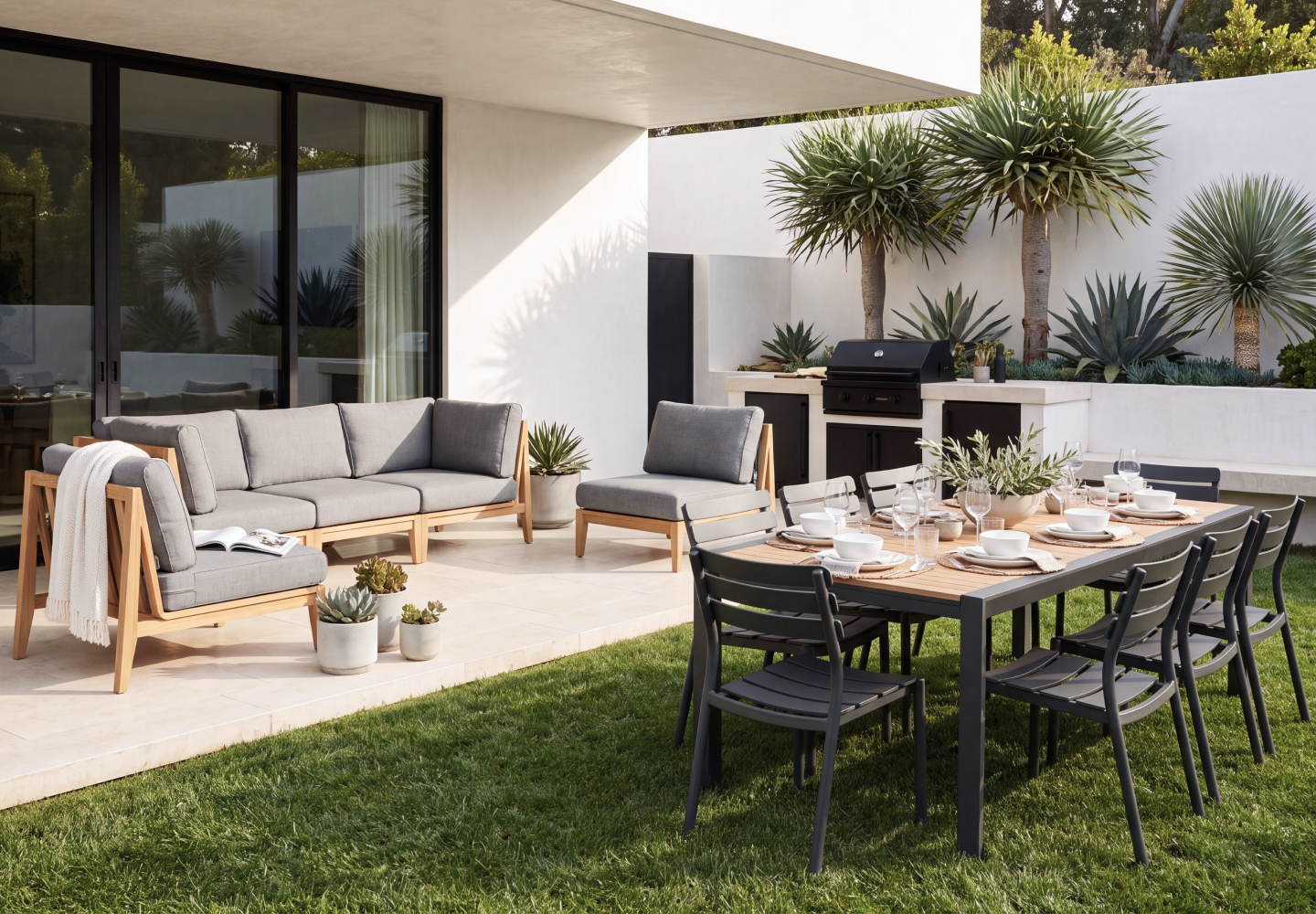
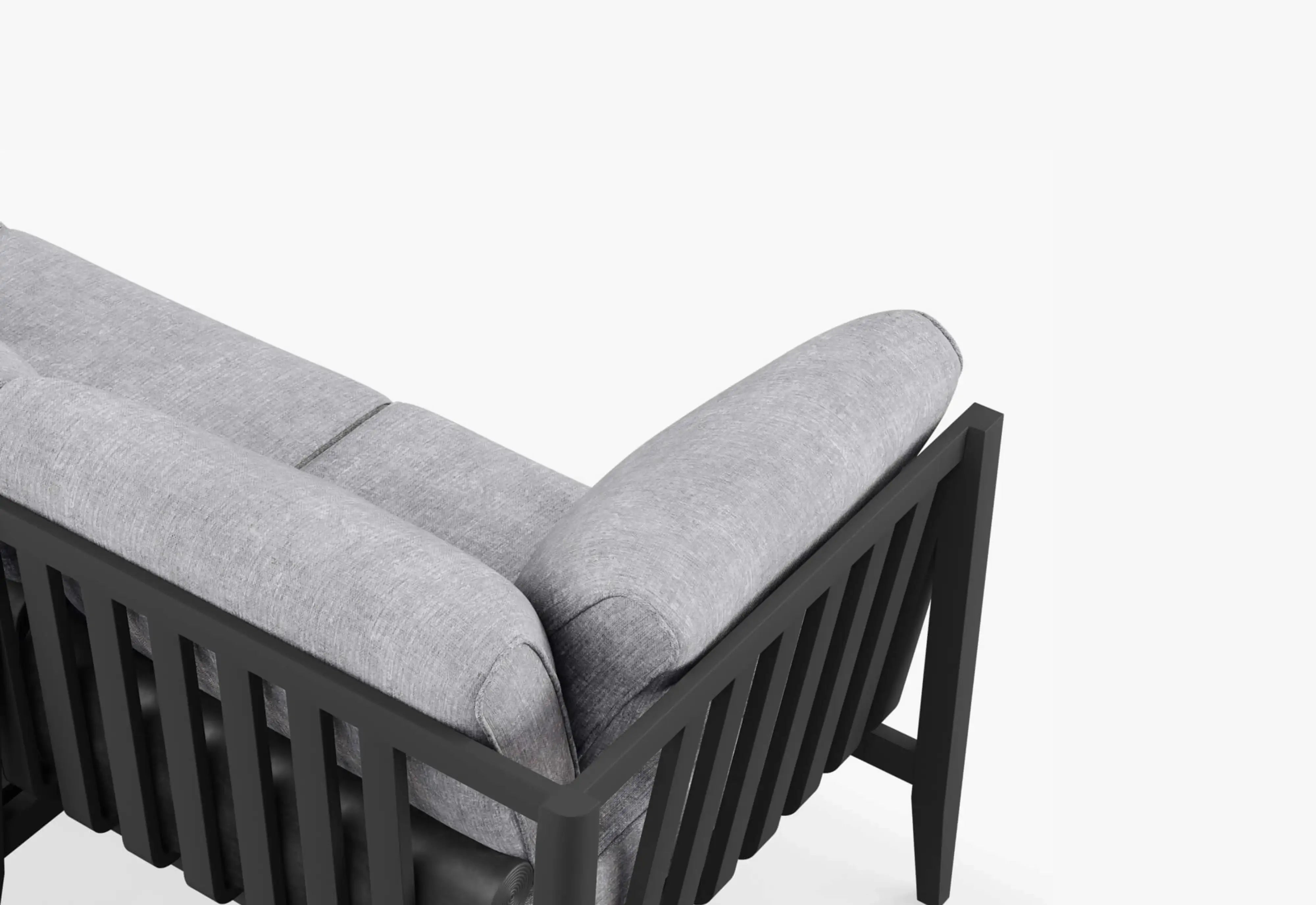
Outer makes this comparison concrete. The cushion fabric specified on its Teak Outdoor Sofa – 3 Seat and White Aluminum Outdoor Sofa – 3 Seat is 100% solution-dyed olefin. Outer calls its performance fabric OuterWeave®. It is designed to feel soft against the skin while resisting water, stains, fading, mold, mildew, and everyday outdoor wear.
Those qualities answer only the fabric part of the question. The removable OuterWeave® covers are machine washable according to Outer’s care instructions. OuterCloud® provides the cushion’s comfort and support. OuterShell® is the built-in cover that rolls over the cushions between uses to help protect them from everyday dirt, debris, and dew. For prolonged or severe weather, Outer advises using an All-Weather Cover or storing cushions as appropriate. OuterWeave® is water-resistant, not a waterproof seal for the whole seat.
For readers considering fabric chemistry as well as weather performance, Outer says its sofa cushion fabrics use a PFAS-free C0 finish, and its sofa seat and back cushion cover fabrics are OEKO-TEX® STANDARD 100, Product Class II certified. These details apply to those stated product categories; check the specifications of other items separately.
Outer’s case for olefin is not that the fiber wins every laboratory comparison. It is that solution-dyed OuterWeave®, washable covers, supportive OuterCloud® cushions, and the built-in OuterShell® are designed to work together in the rhythm of ordinary outdoor life.
Explore the fabric on actual furniture
Two different frames, one useful way to see how OuterWeave® behaves in a complete seating system.

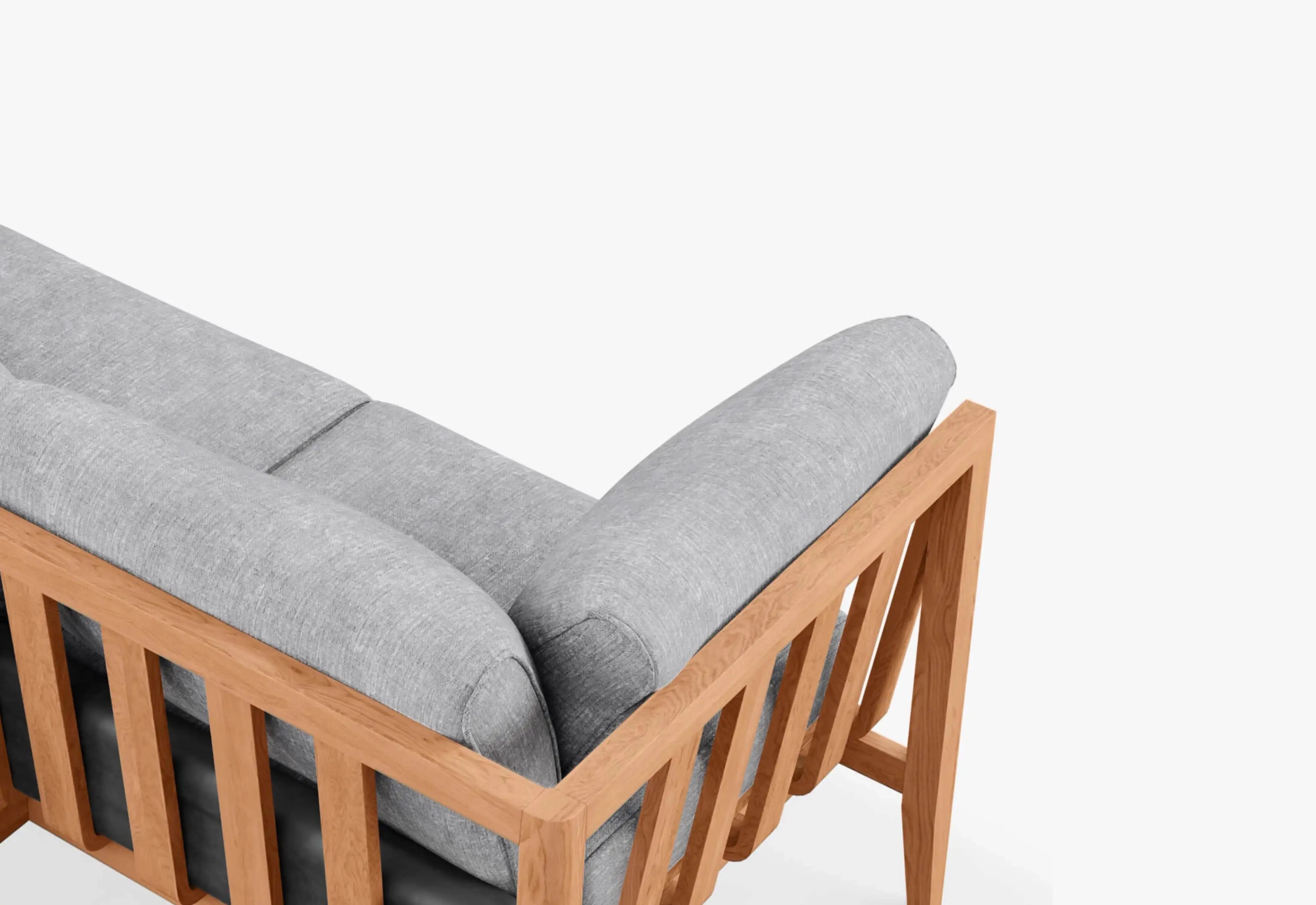
Teak Outdoor Sofa – 3 Seat
FSC®-certified teak paired with solution-dyed olefin cushions, washable covers, and built-in OuterShell® protection.
Explore the sofa →
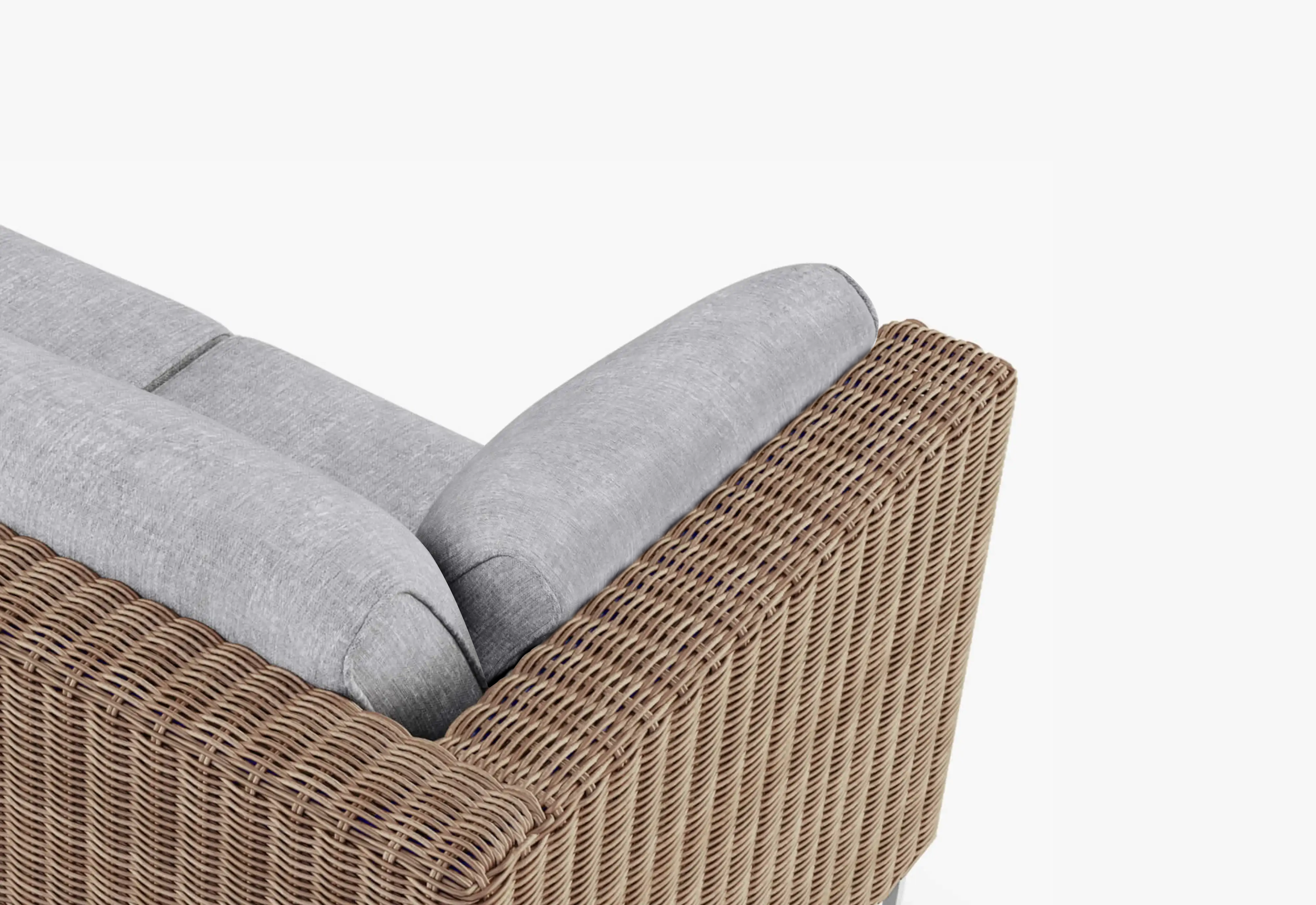
White Aluminum Outdoor Sofa – 3 Seat
A modular aluminum setting with OuterWeave® cushion covers, OuterCloud® comfort, and the integrated OuterShell®.
Explore the sofa →So, which one should you choose?
Choose a Sunbrella-upholstered piece if you love a particular acrylic weave or pattern and value its published care guidance and fabric warranty. Choose a well-specified olefin piece when you like its hand-feel and its complete cushion design answers the practical questions of cleaning, comfort, and protection. Outer’s solution-dyed OuterWeave® is one example of that more complete approach.
Before deciding, place swatches in your actual light. Feel them at midday, look at them in shade, and consider how you will use the space after a passing shower. You can request Outer fabric swatches to make that part of the decision at home.
Frequently asked questions
Is Sunbrella the same thing as olefin?
No. Sunbrella is a brand of performance fabric whose upholstery uses solution-dyed acrylic. Olefin is a fiber category, generally polypropylene in outdoor cushions.
Is solution-dyed fabric always Sunbrella?
No. Solution dyeing is a manufacturing method used with different fibers. Outer’s specified sofa cushion fabrics, for example, are solution-dyed olefin.
Are Sunbrella or olefin cushions waterproof?
Do not assume so. A water-resistant outer fabric is different from a waterproof complete cushion. Seams, zippers, fill, and exposure time all matter.
Can I machine wash outdoor cushion covers?
It depends on the finished product. Many removable Sunbrella upholstery covers can be machine washed according to its guidance; removable OuterWeave® covers are machine washable following Outer’s instructions. Check the label before washing or drying any cover.