



Materials / The origin of teak
Where Does Teak Wood Come From? Origins, History & Responsible Sourcing
A teak frame begins long before it reaches a patio. Where the tree grew, how its timber was sourced, and what happens to the wood afterward are all part of its story.

Where does teak come from? The teak tree, Tectona grandis, is native to parts of India and mainland Southeast Asia. It has also been grown for centuries in Indonesia. Outer sources its FSC®-certified Grade A teak from responsibly managed fields in Central Java.
Teak’s original home
Teak grows naturally in India, Myanmar, Thailand, and Laos. People have long valued its warm grain, strength, and natural resistance to weathering, putting it to work in buildings, boats, and furniture. As demand grew, teak was planted well beyond its native range.
Those uses are part of why teak developed such a reputation. It can be worked into precisely fitted components, while the natural oils and characteristics of mature heartwood help it cope with exposure to moisture. Its appeal was never only practical: the golden-brown tone and visible grain made the wood desirable in spaces where the material itself would be seen.
Why so much furniture teak comes from Java
Indonesia is part of teak’s long cultivation history. The UN Food and Agriculture Organization describes teak as an old introduction to Java, where it became an important plantation timber. So “Indonesian teak” describes where a tree was grown; it does not mean that Indonesia is the species’ original native home.
Managed teak planting in Java has its own long history. Over time, cultivation made the island a significant source of timber for furniture makers. It is a different story from harvesting trees in teak’s native forests, and the distinction matters when a brand explains where its material comes from.
A country name also cannot tell you everything about a finished table or sofa. The quality of the selected wood, its drying, and the construction of the frame matter just as much.
Teak beyond its native range
Teak is now grown in other parts of tropical Asia, Africa, and the Americas. A plantation’s site and management affect the way trees grow, and timber from different sites can vary in color and form. This is why labels such as “Burmese teak” or “Indonesian teak” are useful starting points, but poor substitutes for information about a specific piece of furniture.
When you compare pieces, look for the wood’s actual source and whether the maker can explain its selection and construction. An appealing country name cannot tell you whether the frame uses mature heartwood, how the components were dried, or how the joints were made.
What Outer knows about its teak
Outer identifies Central Java as the source of the teak used in its teak furniture collection. The collection uses FSC®-certified Grade A teak. FSC® relates to responsible sourcing and the tracking of forest-based materials; the Grade A description addresses the timber chosen for the furniture. They answer different questions.
In practical terms, the FSC® claim provides a sourcing framework that follows forest-based material through production. It does not promise that every board will have identical grain or that a finished sofa is free from normal weathering. Those are questions of natural variation, material selection, furniture design, and care.
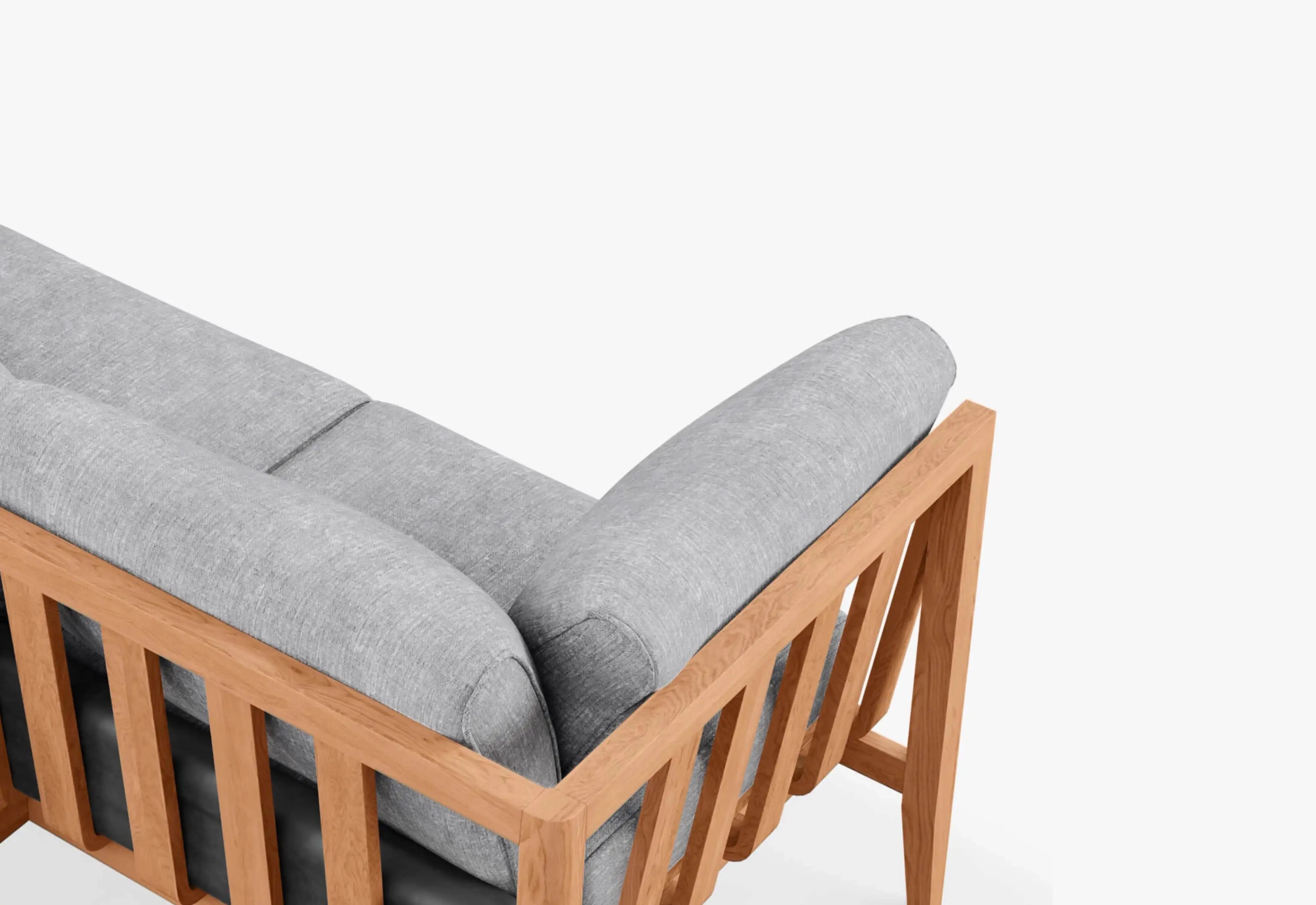
At production, Outer checks the incoming wood for maturity, grain, color, and visible characteristics. Selected pieces are cut, dried under controlled conditions, shaped, joined, and hand sanded. Because the frames are left naturally finished, the wood’s grain and the work on each joint remain visible. The full process is shown in How Outer Teak Furniture Is Made.
Outer’s process photographs make that work less abstract. Timber is sorted before it becomes an exposed arm or leg; controlled drying prepares the shaped parts for joinery; final sanding refines the surfaces people touch. These details do not change where the tree grew, but they determine how that source material becomes an outdoor frame.

When shopping for teak, ask three things:
Where was the wood grown? Is its sourcing independently certified? How was it selected and made into furniture?
Once outdoors, teak’s golden tone gradually weathers toward silver-gray. That natural color change does not, by itself, mean the frame is losing its strength. Teak needs ordinary cleaning as dirt collects, and its appearance will depend on exposure and care. Some owners enjoy the silver patina; others prefer to preserve more of the warm original color. Outer’s teak furniture buying guide covers the care choices in more detail.
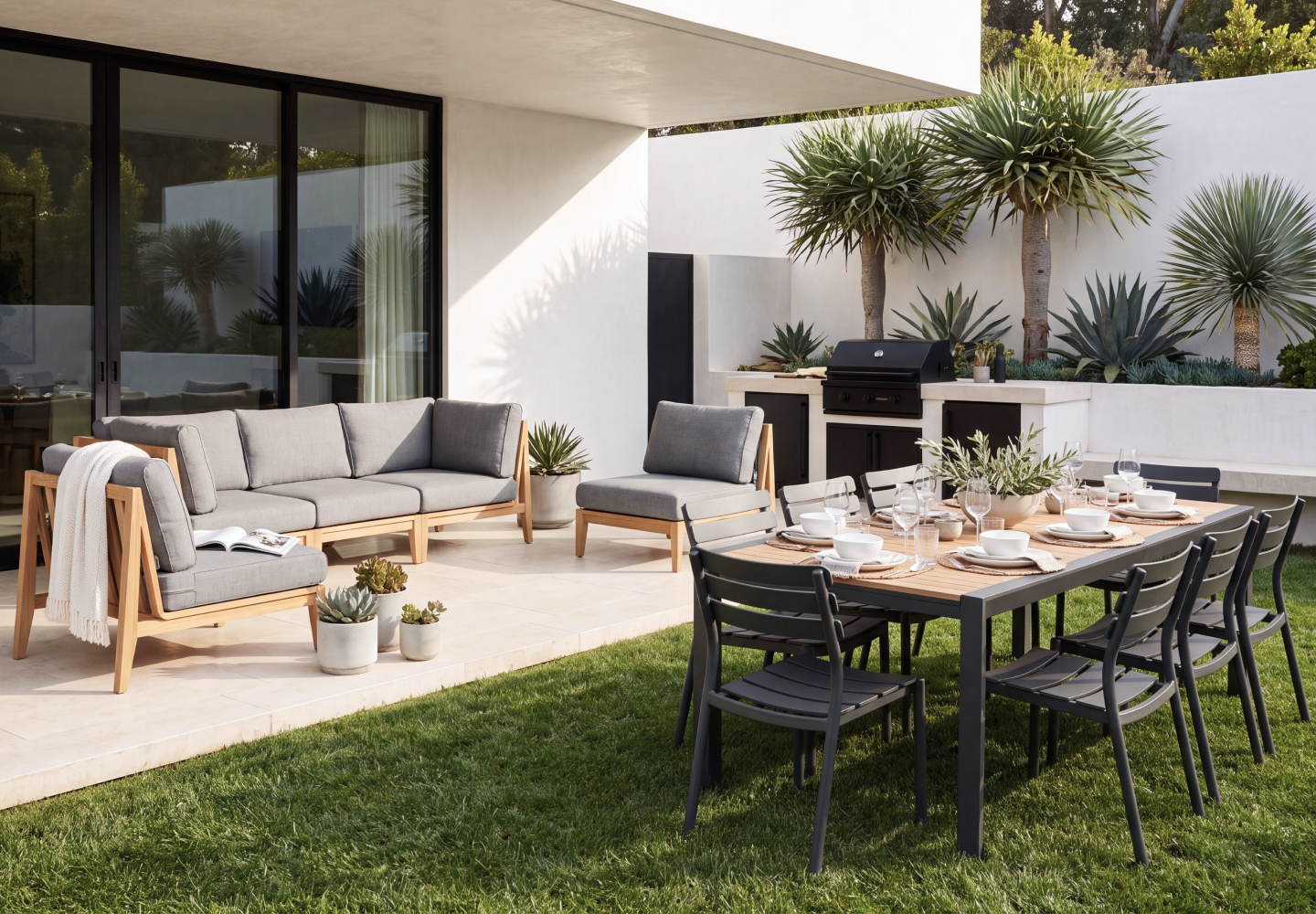
Outer teak, ready for outdoor life

Teak Outdoor Sofa – 3 Seat
FSC®-certified Grade A teak paired with washable OuterWeave® cushions and built-in OuterShell® protection.
Explore the sofa →
Teak + Aluminum Dining Table
An FSC®-certified Grade A teak top on a powder-coated aluminum frame, with a hidden extension leaf.
Explore the table →Background on teak’s native range and cultivation: Royal Botanic Gardens, Kew and UN Food and Agriculture Organization. Learn about FSC® chain of custody.