

Teak Outdoor Furniture Buying Guide: What To Know Before You Buy
Teak Buying Guide
How to Choose Teak Outdoor Furniture for Your Space
Look beyond the wood label. Compare construction, dimensions, cushions, care and delivery details to find teak furniture that fits the way you live outside.

Start here
Is Teak the Right Choice for You?
Teak is worth considering if you want natural wood character, welcome a finish that changes outdoors and are comfortable with the weight and care of wood furniture. Before buying, check how the entire piece works—not just what the frame is made from.
Choose for your everyday use.A dining area, a lounge and a patio you frequently rearrange have different requirements for comfort, clearance and movement.
Verify quality beyond the grade.Ask about the wood, joints, hardware, finish and sourcing. A grade label alone does not explain the quality of a finished piece.
Plan for cushions and changing weather.Compare cleaning instructions, protection and storage needs before choosing a seating configuration.
Start with How You Will Use the Furniture
Before comparing teak outdoor furniture, decide what the space needs to do. The right purchase for relaxed weekend reading may be different from the right purchase for outdoor meals, large gatherings or a balcony with limited storage.
| Your main use | Start by checking | Common buying mistake |
|---|---|---|
| Lounging and conversation | Seat depth, cushion feel, back support and the arrangement of chairs or sofa modules. | Choosing by appearance without checking whether the seat suits how you sit. |
| Outdoor dining | Table height, chair clearance, leg placement and space for chairs when occupied. | Measuring only the tabletop and leaving too little room to sit down or pass behind chairs. |
| Small patios and balconies | Overall dimensions, usable seating and access through doors or narrow passages. | Buying a set that fits on paper but blocks the main route through the space. |
| Frequent rearranging | Individual piece weight, lifting requirements and how modules connect. | Assuming a substantial wood frame will be easy to move alone. |
Teak is also a visual decision. Its natural grain and developing patina suit people who enjoy variation. If maintaining a more consistent finish or moving furniture frequently matters more, compare alternatives before committing. Our teak vs aluminum outdoor furniture guide explains those tradeoffs in more detail.
Understand Teak Quality Without Relying on a Label
Teak heartwood contains naturally occurring oils and is valued for outdoor use. Sellers commonly describe material using Grade A, B or C, but ask what their label means and what wood is used in the actual product. Do not treat a grade as a guaranteed number of years of service.
What to Ask About Grade-A Teak
Grade-A teak generally refers to selected heartwood with relatively consistent color and fewer visible defects. Ask whether the main structural parts use heartwood, whether the material is solid teak and how it has been dried before assembly. Those details are more useful than a broad promise that furniture will last a lifetime.
Variation in grain and tone is normal in natural wood. A photograph can help you understand the appearance, but color alone cannot prove the grade, internal quality or sourcing of the material.
How to Compare Lower-Priced Teak Furniture
A lower price can reflect material selection, smaller dimensions, simpler construction, fewer included pieces or a different service package. Ask for those differences rather than assuming price reveals the wood grade. Compare equivalent configurations, including cushions, covers and delivery.
What FSC Certification Tells You
FSC certification concerns responsible sourcing; it is not a furniture comfort rating or a lifetime guarantee. Look for a clear sourcing claim attached to the product, then assess construction and fit separately.
Explore the Outer teak outdoor furniture collection to compare available seating and tables, and check each product page for its material details.
Inspect the Construction, Not Just the Wood
A well-made outdoor piece needs connections and components suited to repeated use and changing conditions. The frame, joints, fasteners and finish all deserve attention.
Joints and Hardware
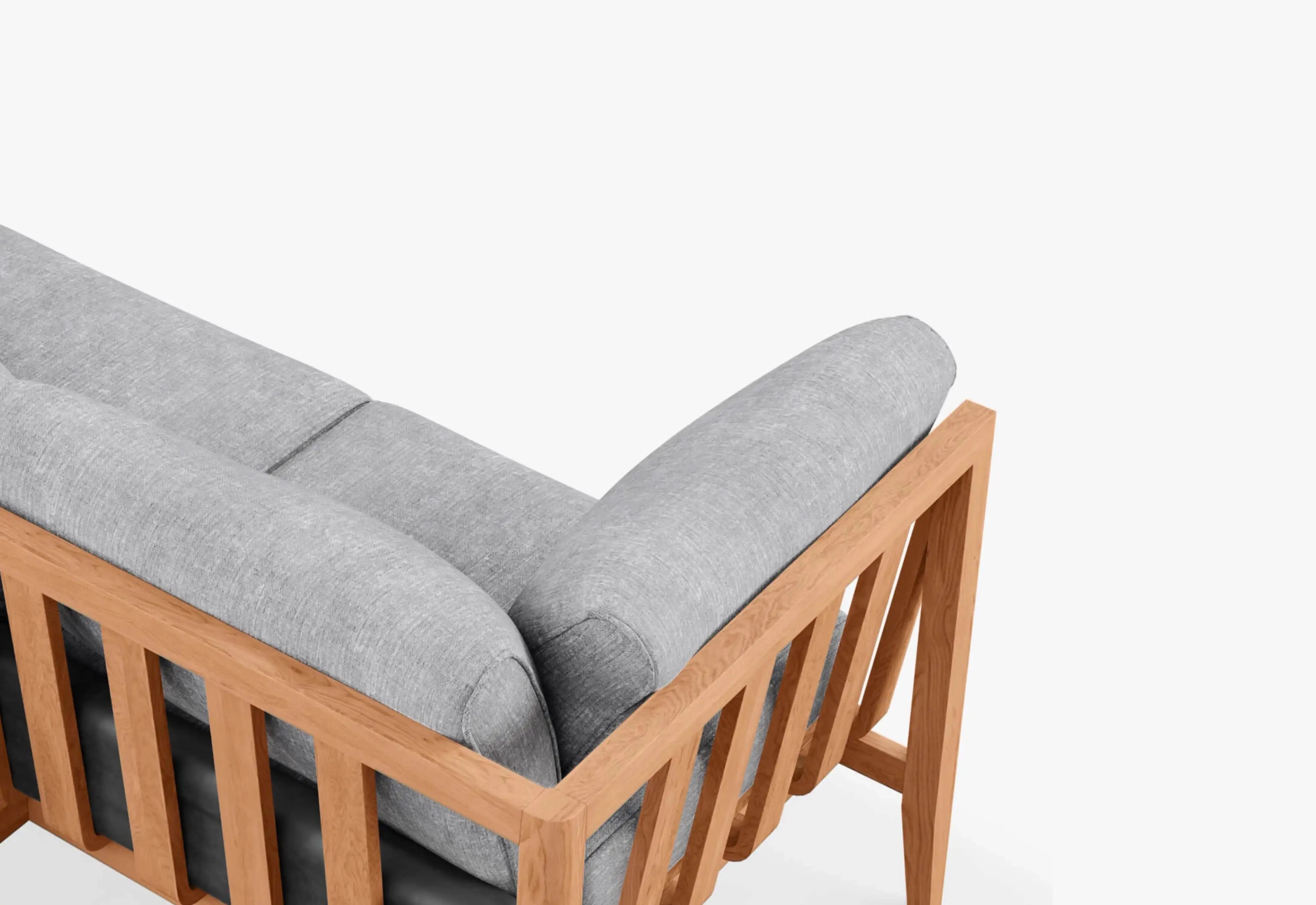
Mortise-and-tenon joinery can be a useful construction feature, but screws and metal connectors are not automatically signs of poor quality. What matters is how the joint is designed, how securely it fits and whether the hardware is appropriate for outdoor exposure.
Look for close views of corners, legs and connection points. If assembly is required, review the instructions and ask whether connectors need periodic tightening. For modular seating, check how pieces stay together and what is required to change the layout.
Solid Teak and Mixed-Material Designs
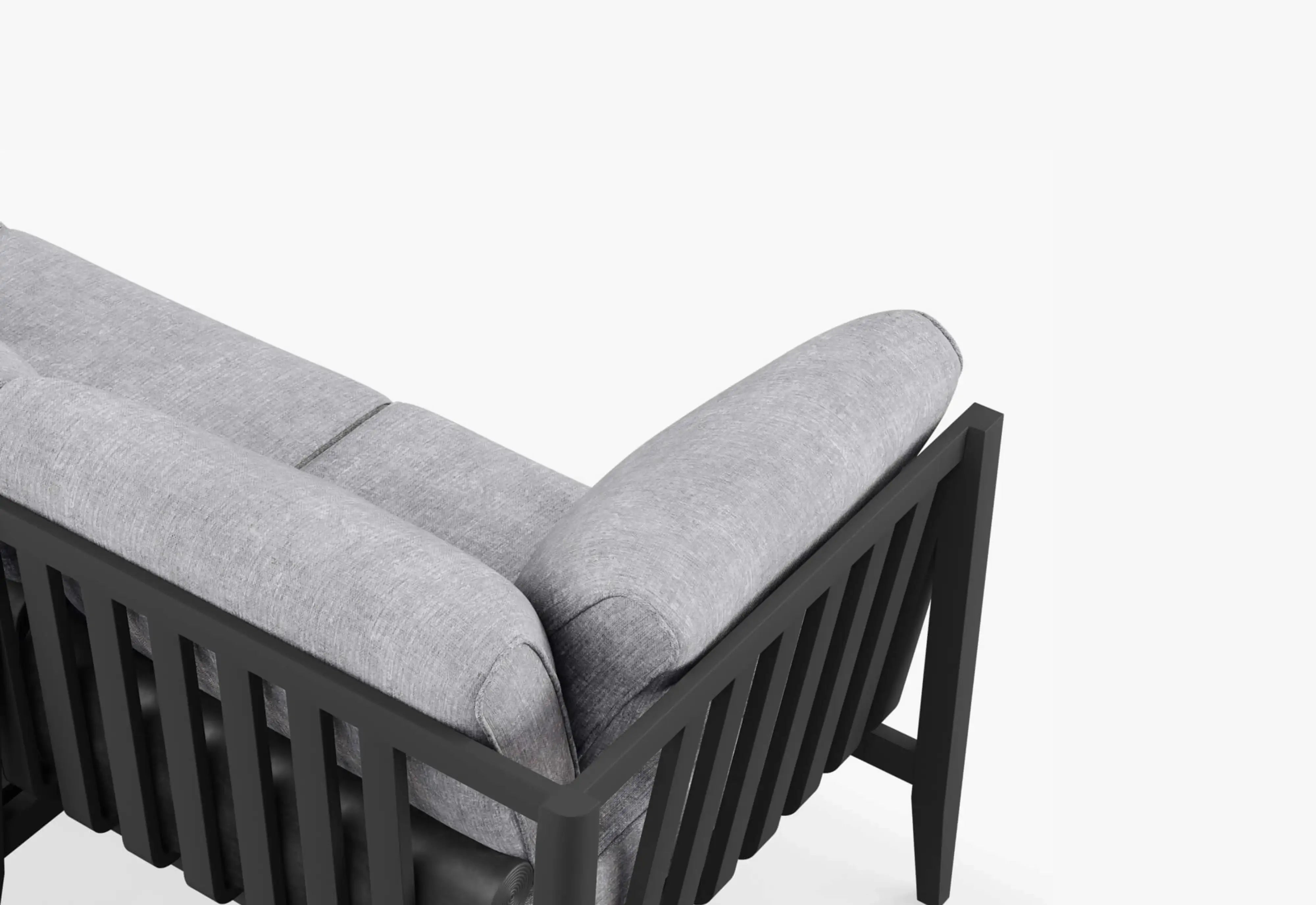
Confirm which parts are teak. A solid teak frame, a teak tabletop on an aluminum base and a decorative teak accent serve different purposes. A mixed-material design can be a deliberate choice; the important point is that the seller describes it clearly.
Do not use weight alone to judge quality. Dimensions, frame geometry and other materials also affect how heavy a piece feels.
Surface Finish and Everyday Contact
Check the surfaces you will touch: armrests, tabletop edges and seat fronts. They should feel comfortable and be free of exposed splinters or sharp hardware. Ask whether the wood is untreated, oiled or coated, since the finish affects future care.
Natural weathering is different from a loose joint, deep split or damaged component. Find out how the brand handles those issues and what the warranty actually covers.

Measure for Use, Not Just for Fit
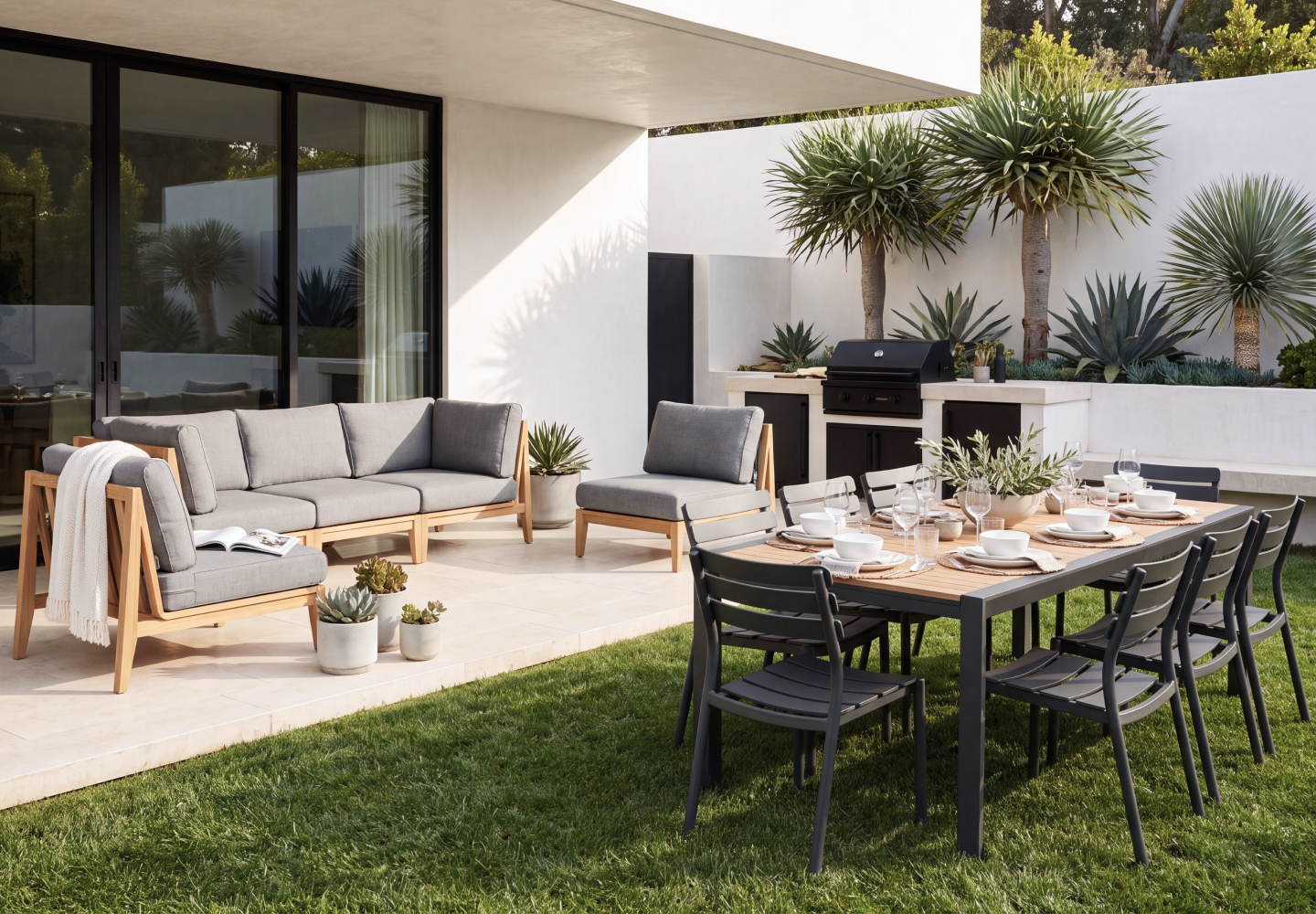
A sofa can fit within a patio's dimensions and still make the space awkward. Measure the usable area after accounting for doors, steps, planters, grills and the routes you use every day.
For Teak Sofas and Sectionals
Compare overall width and depth with seat dimensions. Overall depth tells you how much floor space the sofa uses; seat depth helps explain how it may feel. Arm width and cushion shape also affect the usable sitting area.
Mark the footprint on the ground with tape, then add the coffee table and any side chairs. Walk through the layout. Check whether you can reach a table, open nearby doors and move comfortably around the furniture.
For Dining Tables and Chairs
Measure the table with chairs pulled out, not only with chairs tucked underneath. Check the table's leg positions against your chair width and whether chair arms fit under the tabletop.
If the table extends, test the full expanded footprint. A table that accommodates extra guests also needs enough room for those guests to sit down and move around.
For Delivery and Assembly
Check gates, corridors, stairs and turns along the delivery route. Ask whether furniture arrives assembled or in separate parts, what the package dimensions are and whether the selected delivery service includes placement or assembly.
A simple layout testMark each piece at its published overall dimensions. Add the space needed for occupied chairs and your main walking route. If the arrangement feels crowded before the furniture arrives, choose a smaller configuration.
Compare Cushions and Protection Separately from the Frame
For teak outdoor seating, frame quality is only part of the experience. Compare cushion support, fabric feel, cleaning requirements and replacement options with the same attention you give the wood.
- Comfort: Check seat depth and back support. If possible, try the configuration before ordering.
- Cleaning: Read the instructions for the exact fabric and components. A removable cover does not necessarily make every cushion part machine washable.
- Replacement: Ask how to obtain replacement covers or cushions and whether they match the configuration you are buying.
- Protection: Confirm which covers are included, which are optional and what conditions they are intended for.
On compatible Outer seating, OuterShell® provides convenient light-duty protection. For prolonged rain, bring cushions into a protected location. Compare all-weather covers separately and confirm fit for your configuration.
Decide How You Want Teak to Age
Untreated teak gradually changes from golden-brown toward silver-gray outdoors. The pace varies with exposure. Consider whether you welcome that appearance or prefer to maintain a warmer tone.
If You Prefer Natural Patina
Allow the color to develop while keeping the surfaces clean. For Outer teak, use mild detergent, water and a soft-bristled brush. Natural color change is cosmetic; inspect loose joints or damage separately.
If You Prefer a Golden Tone
Follow the specific product's instructions for cleaners and finishing treatments. Outer’s care page describes teak cleaner and allows teak oil for certain teak pieces. Check those directions before treating the wood.
Plan for New Furniture and Seasonal Storage
Outer recommends an initial soapy-water wipe to reduce natural oil transfer to fabrics. Dry furniture before storage. Read the official Outer care instructions for product-specific steps.
For a separate overview of routine maintenance, see our teak furniture cleaning guide. Use the official instructions for your product when choosing a treatment.

Compare the Complete Purchase Cost
Compare equivalent pieces and configurations rather than the lowest advertised price. A frame-only offer and a complete seating set may differ substantially in what you receive.
| Cost or condition | What to confirm |
|---|---|
| Furniture configuration | Exact pieces, dimensions, cushion options and accessories included in the price. |
| Protection | Whether a fitted cover is included or purchased separately. |
| Delivery and assembly | Charges, service level, access requirements and assembly responsibility. |
| Returns | Return window, condition requirements, collection arrangements and applicable charges. |
| Warranty and support | Coverage for the frame, cushions and fabric; exclusions; and the claims process. |
| Future upkeep | Cleaning supplies, optional finish treatments and replacement cushion availability. |
A warranty is not a forecast of service life. Likewise, a quoted lifespan without stated use and care conditions is not a reliable way to calculate ownership cost. Prioritize documented construction, clear policies and a configuration that fits your needs.
Your Teak Outdoor Furniture Buying Checklist
Before placing an order, make sure you can answer these questions.
- Use: Is the furniture intended mainly for lounging, dining or a combination?
- Fit: Have you checked overall dimensions, occupied chair space and walking routes?
- Wood: Does the product describe which parts use teak and what material selection is claimed?
- Construction: Are joints, hardware, assembly and modular connections explained?
- Appearance: Are you comfortable with natural grain variation and changing color?
- Cushions: Have you checked comfort, cleaning instructions and replacement options?
- Protection: Do you know what is included and how you will handle extended wet weather?
- Delivery: Will the packages fit through the access route, and who handles assembly?
- Policies: Have you read the current delivery, return and warranty terms?
- Total: Have you compared the complete configuration rather than the starting price?
Use the Right Guide for Your Next Decision
This buying guide helps you assess a teak purchase. Continue with the resource that matches your remaining question.
- Teak vs aluminum: compare materials before deciding on a frame.
- Outer care and maintenance: check official instructions for the exact product and components.
- Teak cleaning guide: review routine cleaning considerations.
- Teak outdoor furniture: browse available pieces and compare product details.
Choose your configuration
Compare Teak Seating for Your Space
Use these configurations as a starting point. Check current dimensions, options, included pieces and availability before ordering.

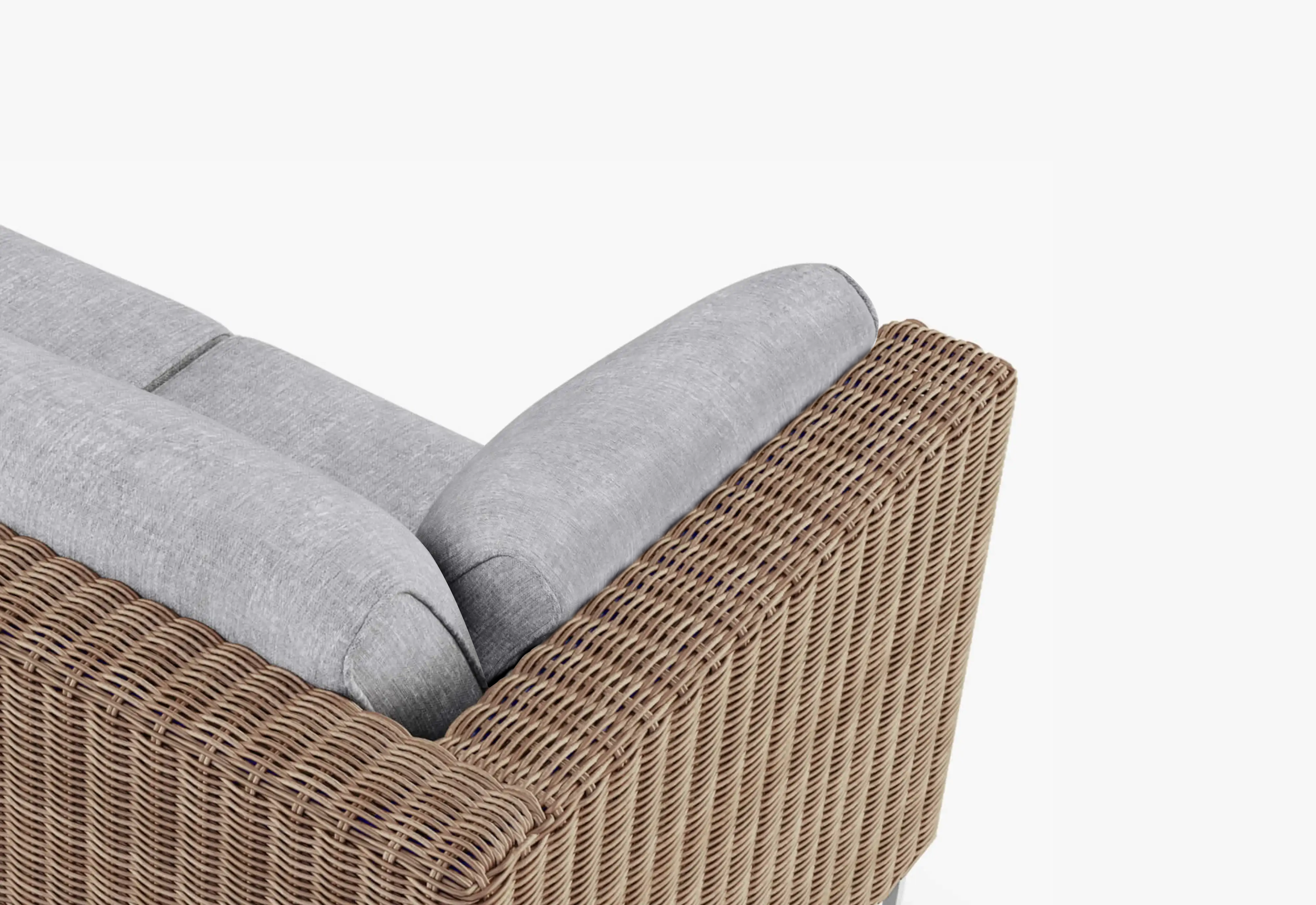
Teak Outdoor Sofa — 3 Seat
Consider a sofa when you want a shared lounge seat. Measure its footprint with your coffee table, side chairs and walking routes before choosing the configuration.
Check dimensions and options
Teak Conversation Seating
Individual chairs can help create a conversation area or complement a sofa. Compare each piece’s width, depth and placement rather than assuming separate chairs use less space.
Browse teak seating and tablesCommon questions
Teak Outdoor Furniture Buying Questions
Is teak outdoor furniture worth the price?
It can be if you value natural wood, are comfortable with its changing appearance and choose a well-made piece that fits your space. Compare construction, cushions, protection and service alongside the material. A higher price alone does not prove quality.
How can I judge teak quality when buying online?
Look for clear material descriptions, close-up construction images, dimensions, assembly instructions and product-specific care guidance. Ask the seller to clarify the grade claim and sourcing information. Photographs and color alone cannot establish wood quality.
Does teak need oil to be used outdoors?
Untreated teak can develop a natural gray patina. If you want to maintain or restore a different appearance, follow the specific product’s care instructions rather than applying a universal rule about oiling.
Does gray teak mean the furniture is damaged?
Gray color is a normal cosmetic change in weathered teak. Assess structural concerns separately: loose joints, deep splits, unstable legs or damaged hardware warrant inspection even if the surface color looks normal.
Are screws a sign of poor-quality teak furniture?
No. Outdoor furniture can use different joining methods. Evaluate the design, fit and suitability of the hardware, along with assembly and maintenance requirements. A joint name or the presence of a screw is not enough to judge the finished product.
Should I choose teak or aluminum furniture?
Choose by the tradeoffs that matter in your space: natural appearance, changing patina, weight, movement and finish care. Read the teak vs aluminum comparison for a more detailed decision framework.
What should I check before buying a teak sectional?
Check the overall layout, individual module dimensions, seat depth, connections and access route. Include tables and walking space in your measurement. Confirm which cushions and accessories are included in the selected configuration.
Find the Teak Pieces That Fit Your Life Outside
Compare seating and tables by dimensions, configuration and care needs. Start with the teak collection, or explore other materials if you are still deciding.