

Outdoor living / Seating explained
What Is a Sectional Sofa? Shapes, Pieces & Outdoor Layouts
A sectional sofa changes the shape of a conversation. Instead of one straight line of seats, it can turn a corner, frame a table, or give someone a place to stretch out.
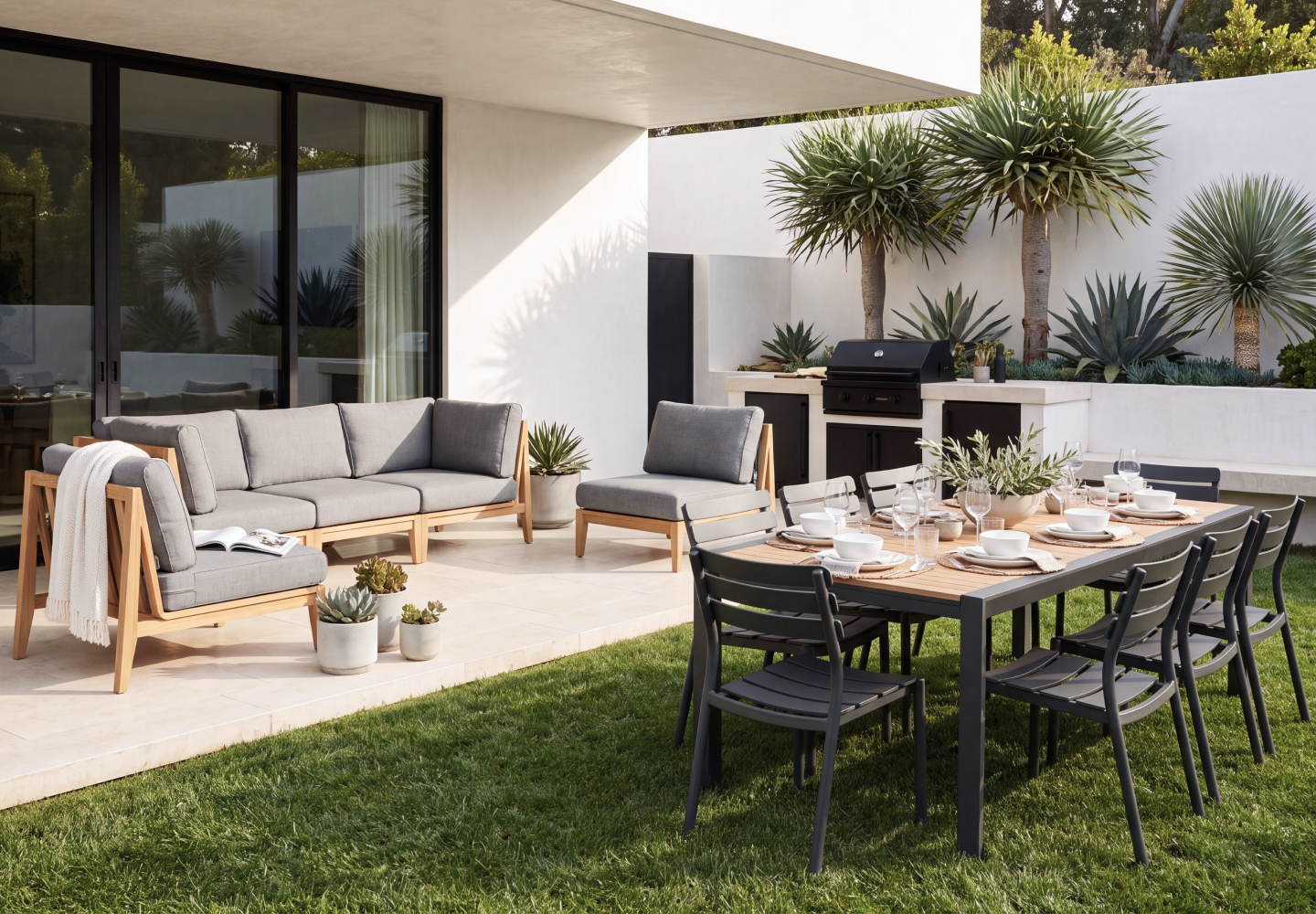
You can recognize a sectional by its connected seating sections. The pieces may form an L, a U, or a sofa with a chaise extending from one end. Some arrangements are fixed once assembled; others use modular pieces that can be rearranged. Understanding the pieces and the shape makes it easier to decide whether a sectional belongs on your patio.

A sectional sofa is a seating arrangement made from two or more connected sections. It differs from a standard sofa in its multi-section construction and the way those sections can change the footprint. “Modular” describes how freely the components can be rearranged; it does not describe a particular shape.
What makes a sofa a sectional?
A standard sofa is usually one straight seating unit. A sectional is built from sections that work together as one larger seating arrangement. Depending on the design, those components might include an armless seat, an end seat with an arm, a corner piece, a loveseat-length section, or a chaise with extra depth for reclining.
The corner is often the defining moment. It turns the seating from a row into a place where people can face one another more naturally. A chaise sectional achieves a similar change in footprint by extending one side forward, even if it does not wrap fully around a corner.
Piece count does not always equal seat count. A loveseat-length component can provide two sitting places while counting as one furniture section. Use the product’s stated seating capacity and assembled footprint when comparing models.
Sectional vs. sofa vs. modular sofa
| Term | What it describes | What to check |
|---|---|---|
| Sofa | Usually a single straight seating arrangement. | Whether a separate chair or ottoman will provide the extra seating you need. |
| Sectional | Connected sections forming a larger arrangement, often with a corner or chaise. | The overall footprint and which side the return extends toward. |
| Modular sofa | Individual components designed to work in multiple configurations. | Which pieces can actually be moved, connected, or added later. |
A sectional can be modular, but the words are not interchangeable. A fixed L-shaped sectional may have one intended setup. A modular collection can let you assemble a straight sofa today and an L-shaped sectional later, provided you have the necessary compatible pieces.
The shapes you will see most often
L-shaped sectional
Two runs of seating meet at a corner. This shape works well along two edges of a patio or as a way to define a lounge area without enclosing it completely. It is often the easiest sectional shape to place near a coffee table or fire pit.
U-shaped sectional
Three sides create a more enclosed conversation area. It can seat a larger group comfortably, but its central opening, table space, and walkways need attention. The fact that a sectional is modular does not make a U-shaped arrangement compact.
Chaise sectional
A sofa extends into a longer lounging seat on one side. It is appealing for stretching out, though that projection can interrupt a walkway on a narrow deck. Check whether the chaise is fixed, reversible, or a separate modular piece before ordering.
The best shape is the one that leaves room to move around it.
What a sectional does well—and where it can be difficult
Why people choose one
- Shared seating: It gives a group one gathering place rather than scattering chairs across the patio.
- Better use of a corner: An L can make an underused edge feel intentional.
- Room to lounge: A return or chaise offers a different way to sit, read, or stretch out.
- Flexible planning: With a truly modular system, some pieces can be regrouped as the space changes.
What to consider
- Footprint: Count the full depth of the return, not just the long side of the sofa.
- Traffic flow: Leave a clear route to doors, dining areas, and the yard.
- Orientation: “Left” and “right” labeling can vary by seller; confirm the diagram.
- Care: More cushions mean more surfaces to clean, protect, and store when needed.
What changes when the sectional lives outside?
Indoors, comfort and layout can do most of the work. Outdoors, the frame, fabric, cushions, and protection plan matter too. Consider what your space encounters: strong sun, overnight dew, rain, debris from trees, or long periods without use. A water-resistant cushion cover does not make the complete seating system waterproof.
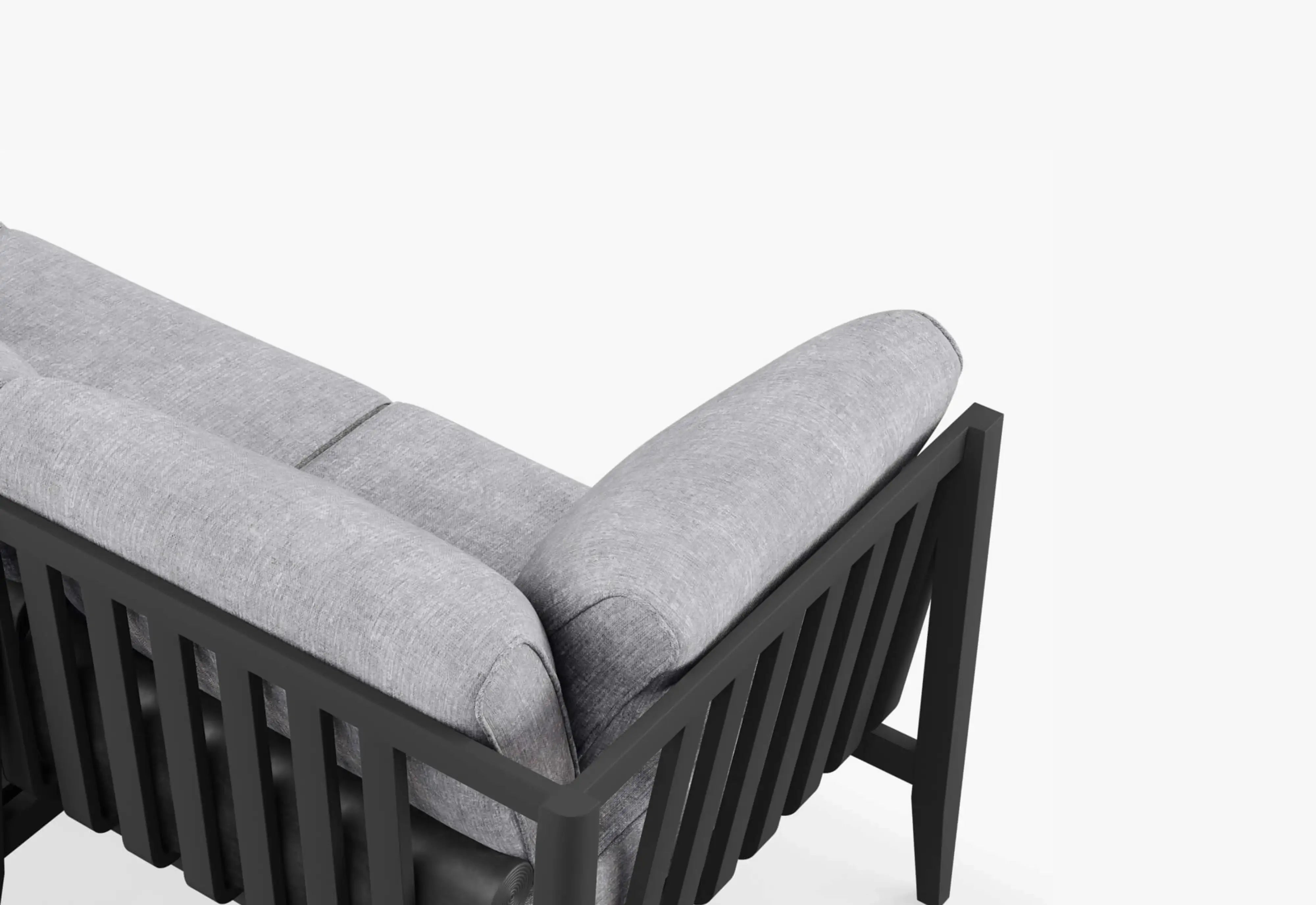
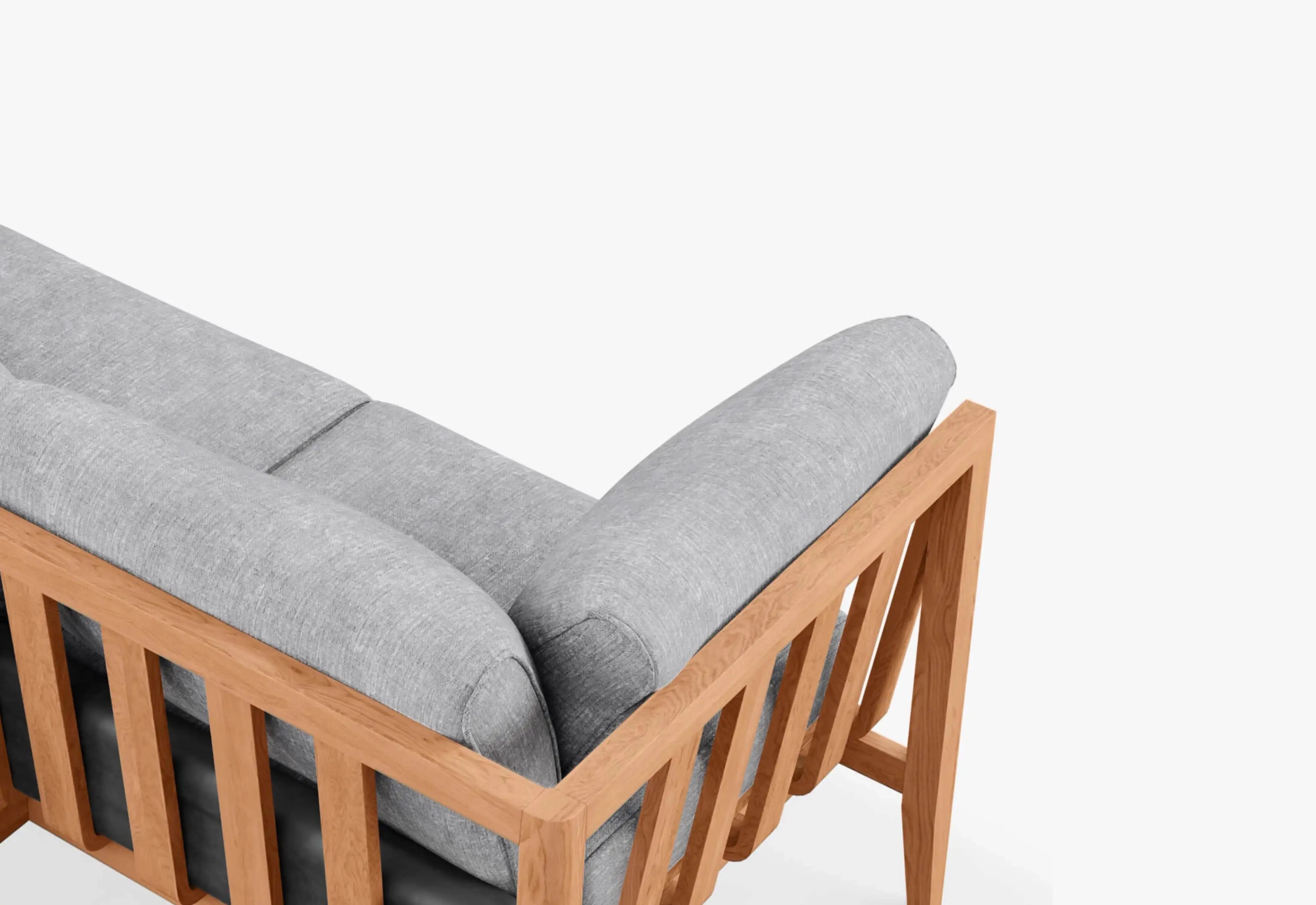
For Outer’s outdoor sectionals, the frame choice can change the look of the same basic idea: FSC®-certified teak brings natural warmth, while powder-coated aluminum creates a lighter visual profile. Both pair with supportive OuterCloud® cushions, machine-washable OuterWeave® covers, and a built-in OuterShell® that rolls over the cushions between uses. For prolonged or severe weather, follow the product’s care directions and use additional protection as appropriate.
Once you know which shape appeals to you, measure the entire arrangement and the space around it. Outer’s outdoor sectional dimensions guide covers that next step in detail.
Two ways to make the shape your own

Teak Outdoor L Sectional – 5 Seat
A warm FSC®-certified teak frame with modular sections, OuterCloud® comfort, and built-in cushion protection.
Explore the sectional →
Charcoal Aluminum U Sectional – 6 Seat
A wraparound arrangement for a larger gathering area, with washable cushion covers and integrated OuterShell® protection.
Explore the sectional →A sectional is a shape with a purpose: it brings people together in a defined seating area. Start with how you want to sit and move through the space, then choose the configuration and materials that make that everyday use feel easy.