

Best Outdoor Cushions Buying Guide: Fabrics, Fill & Weather Protection
Evaluate outdoor cushions across fabric composition, environment resilience, weather defense, fit, and long-term ownership—tailoring your selection to your local climate and outdoor lifestyle.

Good Cushions for Carefree Outdoor Living
True cushion performance relies on an engineered system: solution-dyed upholstery, resilient core architecture, reinforced seams, and integrated weather protection. Over time, fabric fading, retained moisture, or structural sag compromises the entire lounging experience.
Because demands vary dramatically from covered verandas to poolside decks and exposed rooftops, evaluate materials against your space's specific climate conditions.
Choose Outdoor Cushions for Your Climate
"Outdoor-ready" includes a range of performance standards. Base your material selection on your climate's most rigorous recurring feature—whether intense UV exposure, persistent rainfall, or coastal salt air.
UV & Fade
PrioritizeSolution-dyed performance fabric, strong UV resistance, colorfast construction, and a cover for time between uses.
Care RoutineBrush away debris, protect the cushions when practical, and follow the brand’s washing instructions to preserve the finish.
Rain & Snow
PrioritizeWater-resistant fabric, a core that manages moisture, removable covers, drainage, airflow, and added storm protection.
Care RoutineAfter heavy rain, position cushions for airflow and let them dry completely before covering, stacking, or storing.
Heat & Humidity
PrioritizeMold- and mildew-resistant materials, breathable construction, easy cleaning, and covers that can be removed when buildup appears.
Care RoutineRemove pollen, food residue, and organic debris before they become a food source for mildew.
Salt Air
PrioritizeFade-resistant fabric, reinforced seams, durable closures, easy-to-rinse surfaces, and frames and hardware suited to coastal exposure.
Care RoutineRemove salt residue with fresh water as recommended, then allow the cushions and nearby hardware to dry fully.
Seasonal Storage
PrioritizeRemovable washable covers, manageable cushion weight, convenient carrying, and a clean, dry, breathable storage plan.
Care RoutineNever seal damp cushions in plastic. Clean and dry every layer before winter or long-term storage.
7 Essentials of High-Performance Outdoor Cushions
Evaluate outdoor cushions as designed performance gear rather than simple decorative accessories:
Performance Fabric
Look for specific UV, fade, stain, water, mold, and mildew performance—not just the word “outdoor.”
Supportive Fill
Choose a core that balances comfort with shape recovery, support, and drying behavior for your exposure.
Water Management
Ask what happens after rain: how water is resisted, where moisture moves, and how the cushion dries.
Frame-Specific Fit
Correct width, depth, height, and cushion profile reduce gaps, sliding, overhang, and uneven support.
Seams & Closures
Reinforced stitching and durable zippers matter when covers are removed, washed, and exposed repeatedly.
Easy Cleaning
Removable covers and clear care instructions make spills, pets, pollen, food, and seasonal buildup easier to manage.
Replacement Availability
Replacement covers, cushion sets, fabric swatches, and a clear warranty can extend the useful life of the furniture.
Waterproof vs. Water-resistant Outdoor Cushions
While many seek "waterproof" outdoor seating, luxury upholstery is engineered for high-level water resistance. True waterproofing demands sealed seams, impermeable backings, and watertight closures—often sacrificing essential breathability and tactile softness
High-performance water-resistant cushions effortlessly shed rain, dew, and spills while maintaining air circulation for swift drying after heavy weather.
A Complete Water Barrier
True waterproof performance depends on the full construction, including the fabric, backing, seams, zippers, and openings. One waterproof layer does not automatically make the finished cushion waterproof.
Designed for Everyday Exposure
Water-resistant cushions help repel spills, dew, and light rain, but they still need airflow and drying after significant exposure. This is the more accurate expectation for most premium outdoor seating.
Best Materials for Outdoor Cushion Covers
Evaluate cushion fabrics through five key criteria: fiber composition, dyeing method (such as solution-dyeing), protective coatings, tactile comfort, and maintenance requirements. Note that performance varies widely even within identical fiber classes.
| Material | UV Resistance | Rain & Humidity | Feel | Best For |
|---|---|---|---|---|
| Solution-Dyed Acrylic | Strong water and mildew resistance when properly constructed and maintained | Generally soft and textile-like | Full sun, premium seating, coastal exposure | |
| Olefin / Polypropylene | Naturally low absorption; quality and finish still matter | Ranges from textured to soft | Rainy climates, covered patios, everyday value | |
| Performance Polyester | Depends heavily on solution dyeing, coating, backing, and construction | Often soft with many color options | Moderate exposure and spaces with added protection | |
| PVC-Coated Mesh / Vinyl | Strong water handling, but seams and heat buildup need attention | Firmer and less upholstery-like | Splash zones and selected marine-style applications | |
| Cotton or Indoor Fabric | Absorbs moisture unless heavily treated | Soft | Indoor or fully protected spaces only |
Material labels alone are not enough. Confirm the finished cushion’s UV, water, mold, cleaning, seam, and warranty specifications with the manufacturer.
Comfort, Fill & Shape Retention
Cushion comfort depends on core architecture: high-resiliency foam density, multi-layer ergonomics, edge support, and shape recovery rather than sheer height.
| Fill Type | Comfort | Shape Retention | Drying | Best Setting |
|---|---|---|---|---|
| Loose Polyester Fiber | Soft and plush | Lower under frequent seat use | Often relatively fast, depending on construction | Decorative pillows and lightly used back cushions |
| Standard Supportive Foam | Structured and balanced | Good when density and quality are appropriate | Moderate; requires protection and airflow | Covered or partly exposed everyday seating |
| Reticulated Quick-Dry Foam | More open and structured | Varies by density and use | Designed for airflow and drainage | Poolside, frequent rain, and exposed environments |
| Layered High-Resiliency Foam | Supportive with a softer top feel | Strong when the system is well engineered | Depends on barriers, covers, and total construction | Premium everyday lounge seating |
Press the center and edges of a seat cushion, then watch how it recovers. Look beyond cushion thickness: a lower-profile cushion built with high-resiliency layering yields far superior support and moisture control than a tall, low-density insert.
Outer Cushion System: Integrated Performance Architecture
Outdoor comfort works best when the fabric, support, and between-use protection are designed together.

OuterWeave®
Solution-dyed performance fabric designed to resist water, stains, fading, mold, and UV exposure while remaining soft and machine washable.
Explore OuterWeave®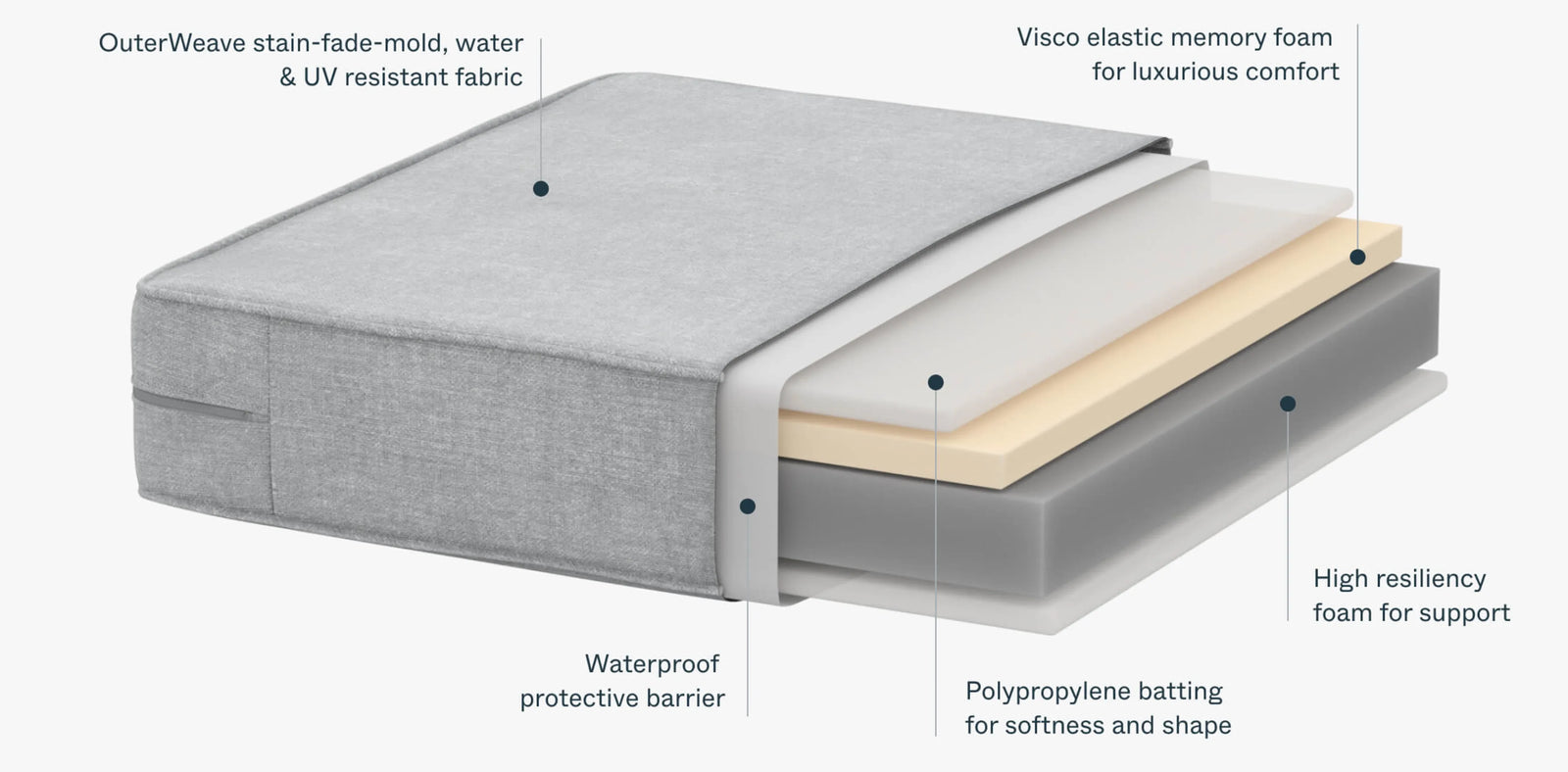
OuterCloud®
High-resiliency memory foam and a DWR protective barrier work together to deliver supportive, indoor-inspired comfort in an outdoor-ready system.
Explore OuterCloud®
OuterShell®
The integrated cover deploys in seconds to help shield cushions from dew, pollen, dust, debris, and everyday weather between uses.
Explore OuterShell®Maximizing Lifespan with Built-In and Fitted Covers
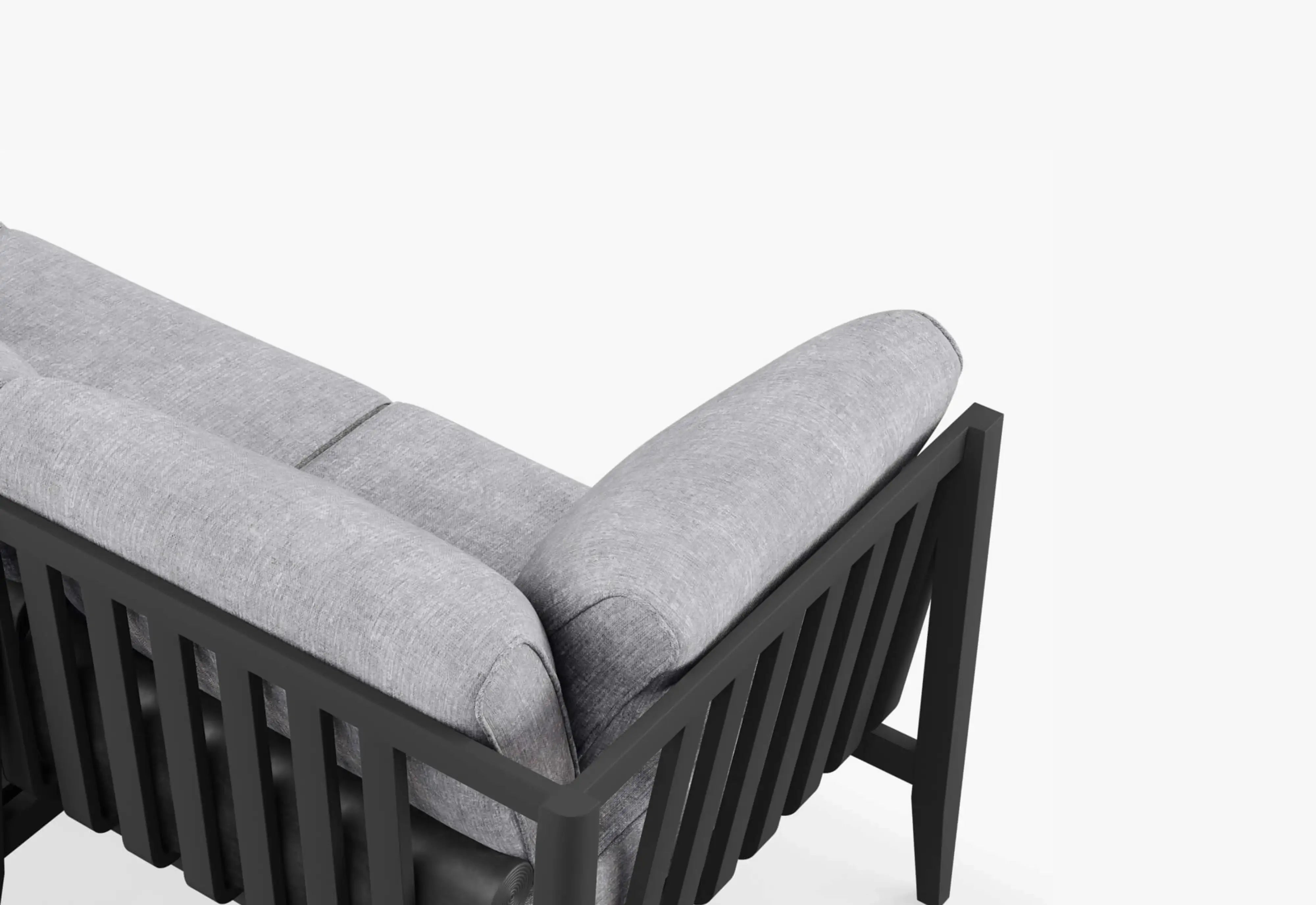
Designed for seamless daily protection, the integrated OuterShell® deploys in seconds to shield cushions from dew, pollen, dust, and light rain—rolling away neatly behind the backrest when sitting.
For prolonged storms or winter off-seasons, supplement daily protection with a heavy-duty All-Weather Cover to ensure lasting fabric integrity.
Cushion Size, Thickness & Frame Fit
A well-made cushion still performs poorly when it is the wrong size. Measure the furniture frame and account for the way the seat and back cushions meet—not only the old cushion, which may already be compressed or misshapen.
 Seat Width Seat Depth Back Height
What to Measure
- Seat WidthMeasure the available space from side to side and account for arms or corner pieces.
- Seat DepthMeasure from the front edge to the back support where the cushion will sit.
- Back HeightMeasure from the top of the seat cushion to the desired top of the back cushion.
- ThicknessCheck comfort, seat height, arm proportion, and how the cushion changes the sitting angle.
- Frame FitLook for minimal gaps, no forced squeezing, secure placement, and even support.
For Outer seating, choose frame-specific replacement cushions whenever possible so the cushion profile and OuterShell® integration match the furniture.
Replacement Cushions vs. Replacement Covers
Base your cushion update on foam performance, not just surface appearance:
- Replace Cover Only: For supportive inserts needing fresh color or renewed fabric.
- Replace Complete Cushion: For compressed cores with lost resilience, odor, or degraded edge support.
Always match replacement components to your exact furniture specifications: seat depth, backrest incline, and closure hardware differ across collections.
| What You Notice | Likely Need | Why | Next Step |
|---|---|---|---|
| Fabric is stained, faded, or ready for a new color | Replacement cover | The insert is still supportive and correctly shaped | Confirm cover compatibility and care instructions |
| Seat feels flat, uneven, or unsupportive | Full replacement cushion | The core—not only the fabric—has reached the end of its useful performance | Match the exact frame and configuration |
| Persistent odor or moisture remains inside | Inspect the full cushion | Cleaning the cover alone may not address moisture held by the insert | Follow manufacturer guidance before reuse |
Other Cushion-Specific Entrances
Looking for another format? Explore the Chaise Lounge Cushion or the Aluminum Dining Bench Cushion.
How to Clean and Maintain Outdoor Cushions
A regular maintenance routine prevents environmental buildup from becoming set-in stains:
Brush
Remove loose dirt, leaves, dust, and pollen before they settle into the fabric.
Spot Clean
Blot spills promptly and use mild soap and water when allowed by the care label.
Rinse
Remove remaining cleaner and salt residue according to the manufacturer’s instructions.
Air Dry
Dry every layer completely before covering, stacking, or placing cushions into storage.
Protect
Use between-use protection, a fitted cover, or clean seasonal storage as conditions require.
| When | What to Do | Why It Matters |
|---|---|---|
| After significant rain | Increase airflow and allow complete drying | Reduces trapped moisture before the cushion is covered again |
| During pollen season | Brush or vacuum loose buildup regularly | Keeps debris from becoming a set-in stain or mildew food source |
| After coastal exposure | Remove salt residue as recommended and dry nearby closures and hardware | Limits residue buildup on fabric, seams, zippers, and the frame |
| Before winter storage | Clean, rinse if needed, and dry completely | Prevents dirt and moisture from being sealed away for months |
The Price Tag Is Only the Beginning
Compare outdoor cushions by cost per year and usable time outside. Better washability, replaceable components, protection, and warranty support can reduce the cost and effort of ownership.
Cover Replaceability
Can worn fabric be refreshed without discarding a supportive insert?
Core Performance
Does the cushion recover its shape and continue supporting everyday use?
Cleaning Effort
Are the covers removable, washable, and supported by clear care instructions?
Weather Downtime
How much drying, carrying, or preparation is required before the seat can be used again?
Protection & Storage
Is daily protection integrated, and what additional cover or storage is needed seasonally?
Warranty & Service
Check cushion-specific coverage, exclusions, compatible replacements, and support before purchasing.
Outer cushions currently include a five-year limited warranty. Always review the current warranty terms and exclusions for the specific product before purchase. Review Outer Warranties
Selecting Your Ideal Outdoor Solution
Start with what you are actually trying to solve: a complete new seating area, a cushion replacement, or better fabric and weather protection.
Shop Outdoor Sofas
Explore modular seating designed around OuterWeave®, OuterCloud®, and built-in OuterShell® protection.
Explore Outdoor SofasRefresh Existing Seating
Choose a compatible replacement cushion when the frame is still working but the comfort or fabric needs attention.
Shop Flex CushionsCompare Before You Commit
See fabric colors in your own outdoor light, then plan between-use and seasonal protection for your climate.
Order Fabric SwatchesOutdoor Cushions FAQ
What should I look for when buying outdoor cushions?
Are outdoor cushions waterproof?
What is the best material for outdoor cushion covers?
What cushion fill is best for outdoor furniture?
How do I keep outdoor cushions from fading in full sun?
What should I choose for a humid climate?
How should I care for outdoor cushions near the coast?
Should I replace the cushion cover or the entire cushion?
How should outdoor cushions be stored for winter?
Protect Your Outdoor Comfort

Choose Comfort That Is Ready for Real Life Outside
Explore modular outdoor seating designed around supportive cushions, washable performance fabric, and easier protection between uses.