

The Material Edit / Outdoor Wood
Acacia vs. Teak Outdoor Furniture: Which Wood Is Better for Your Space?
Acacia and teak both look at home on a patio. Choosing between them takes more than comparing wood samples.
One piece may spend its life beneath a covered porch. Another may sit through direct sun, rain, and changing seasons. The better wood depends on that exposure, the finish and construction of the furniture, and how much care you want to give it.
Here is how acacia and teak compare—and where the differences matter most in everyday outdoor use.

The short answer
Acacia can be a smart choice for a sheltered patio and a lower initial budget. Teak is usually the stronger choice for a more exposed outdoor living space when natural weather resistance and the way the wood ages matter more than the starting price. Neither label, by itself, tells you how well a particular piece is made.
Acacia wood for outdoor furniture
Acacia is a group of hardwoods rather than one uniform material. Outdoor furniture sold as acacia can differ in species, grain, color, construction, and surface finish. That variety is part of its appeal, but it also makes the care instructions for the specific product especially important.
What acacia does well
Character, strength, and a more accessible starting price
Distinctive appearance. Acacia can show lively grain and a broad range of warm tones, from lighter brown to deeper reddish shades. The exact look depends on the species and finish.
Useful strength. Many acacia species are hard, strong woods. For a dining chair, table, or bench, the finished design and joinery still matter as much as a hardness figure.
Lower initial cost. Acacia furniture is often priced below comparable teak furniture, making it worth considering when you want real wood within a tighter budget.
What to plan for
The finish and exposure need attention
An acacia piece may rely on a protective finish to help it cope with outdoor moisture and sunlight. That finish can require upkeep. Follow the manufacturer's guidance for cleaning, refinishing, and storage rather than assuming every acacia product needs the same treatment.
For an uncovered patio with frequent rain or long hours of direct sun, ask how that specific piece is built and maintained before purchasing. A covered location reduces exposure, although it does not remove the need for routine care.
Teak wood for outdoor furniture
Teak is prized for its natural oils, close grain, and long history as a wood used outdoors. It is an appealing material for a patio that feels like an extension of the home: warm when new, and capable of developing a quieter silver-gray appearance with exposure.
What teak does well
Natural outdoor durability and graceful weathering
Outdoor performance. Teak's natural characteristics make it well suited to furniture that spends time outside. It does not depend on an opaque painted finish for its wood appearance.
A look that changes with time. New teak has a warm golden-brown tone. Sun and rain gradually bring out a silver-gray patina. This is an appearance change, not a reason to assume the frame has failed.
Flexible care choices. You can embrace the weathered look with routine gentle cleaning, or follow a more involved care routine to retain more of the original color.
What to plan for
A higher price and a visible change in color
Teak usually costs more upfront than acacia. Keeping the golden appearance also takes more effort than letting the wood weather naturally. Even if you welcome the patina, clean away dirt and debris and follow the furniture's care instructions.
Sourcing deserves attention as well. Ask whether the teak is traceable and responsibly sourced, then look at how the furniture is dried, joined, and finished. “Made of teak” is a starting point, not a complete quality specification.
Acacia vs. teak: the differences that matter
These six questions are more useful than choosing by wood color alone.
01 / Weather exposure
Where will it actually sit?
A roof or screened porch makes acacia easier to consider because it limits direct rain and sun. For a more open patio, teak's natural outdoor durability is a meaningful advantage. Neither wood should be left buried under wet leaves or standing in water; placement and basic care still matter.
02 / Maintenance
Would you rather maintain a finish or accept a patina?
With acacia, check whether the maker calls for periodic attention to its protective finish. With teak, regular gentle cleaning is still worthwhile, but preserving the original golden color is optional. If a silver-gray patina suits your space, you do not need to treat that color change as damage. See Outer's teak cleaning guide for a practical routine.
03 / Strength and hardness
Is harder wood automatically better outdoors?
No. The Janka scale measures resistance to denting under a particular test. Acacia includes multiple species with different hardness values, so one “acacia number” can be misleading. A high hardness score also does not tell you how well a finished chair handles repeated wetting, how its joints are made, or how much care its finish needs. Evaluate hardness alongside construction and outdoor exposure, not in place of them.
04 / Appearance
Do you prefer variation or a quieter grain?
Acacia often offers pronounced grain and varied tones, especially when stained. Teak typically begins with a warm, natural tone and can weather to gray. Neither aesthetic is universally better. Consider how the furniture will look beside your home's exterior, flooring, landscaping, and other patio materials—both when new and after outdoor use.
05 / Cost and long-term value
What are you paying for beyond the wood?
Acacia commonly wins on initial price. Teak asks for a larger upfront investment. Compare the complete furniture: material grade, joinery, hardware, cushions, protection, and the care you will realistically provide. A lower price can be the right decision for a sheltered, occasional-use space; a higher-priced teak setup can make more sense for an outdoor room you use every day.
06 / Sourcing
Can the material's origin be explained?
A fast-growing tree is not, by itself, proof of responsible sourcing; a premium species is not proof of poor sourcing. Ask for specific information about where the timber comes from and what certification, if any, applies to the finished product. Outer identifies its teak furniture as FSC-certified and explains its material selection in more detail below.
Why Outer chooses teak
The wood matters. So does what happens before it reaches your patio.
Outer uses FSC-certified Grade A teak for its natural-finish furniture. Incoming timber is evaluated for maturity, grain, color, and visible characteristics. Because the wood remains visible in the finished frame, that selection cannot be hidden beneath opaque paint.

After cutting, components are sorted for controlled kiln drying and checked for moisture before precision shaping. Joints are prepared for assembly, and the finished frames receive hand sanding and inspection. Each step contributes to the consistency, fit, and feel of the piece.


See the full process in How Outer Teak Furniture Is Made.
The outdoor living edit
If teak fits your space, consider the whole setup
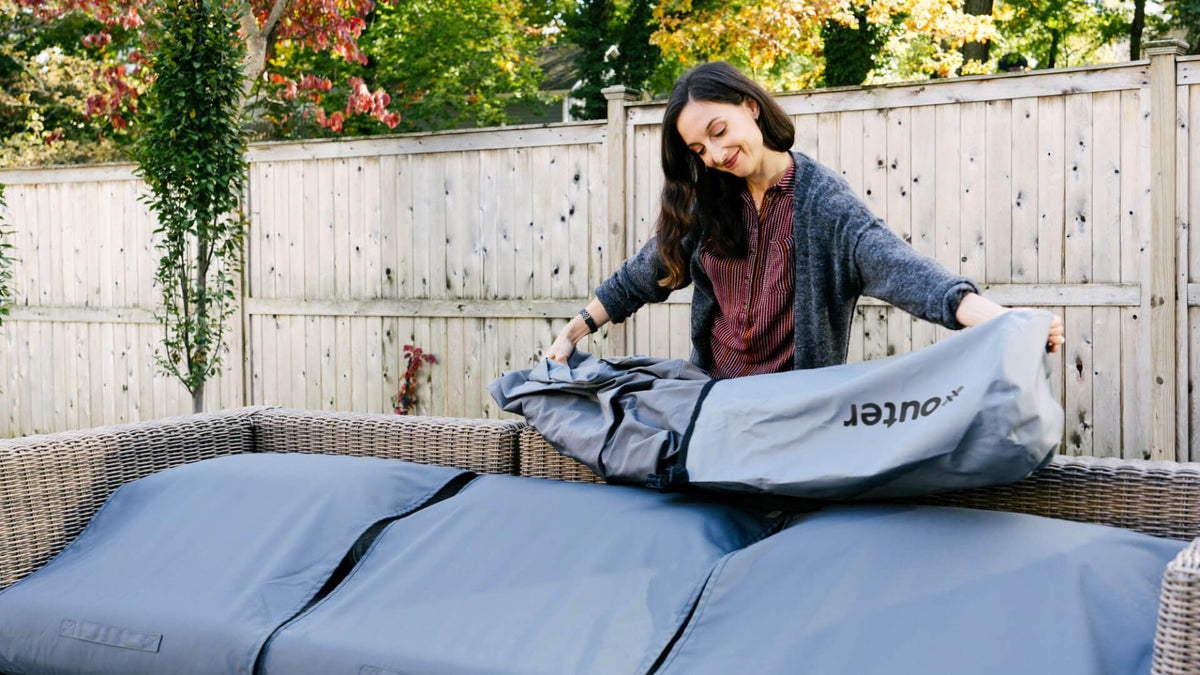
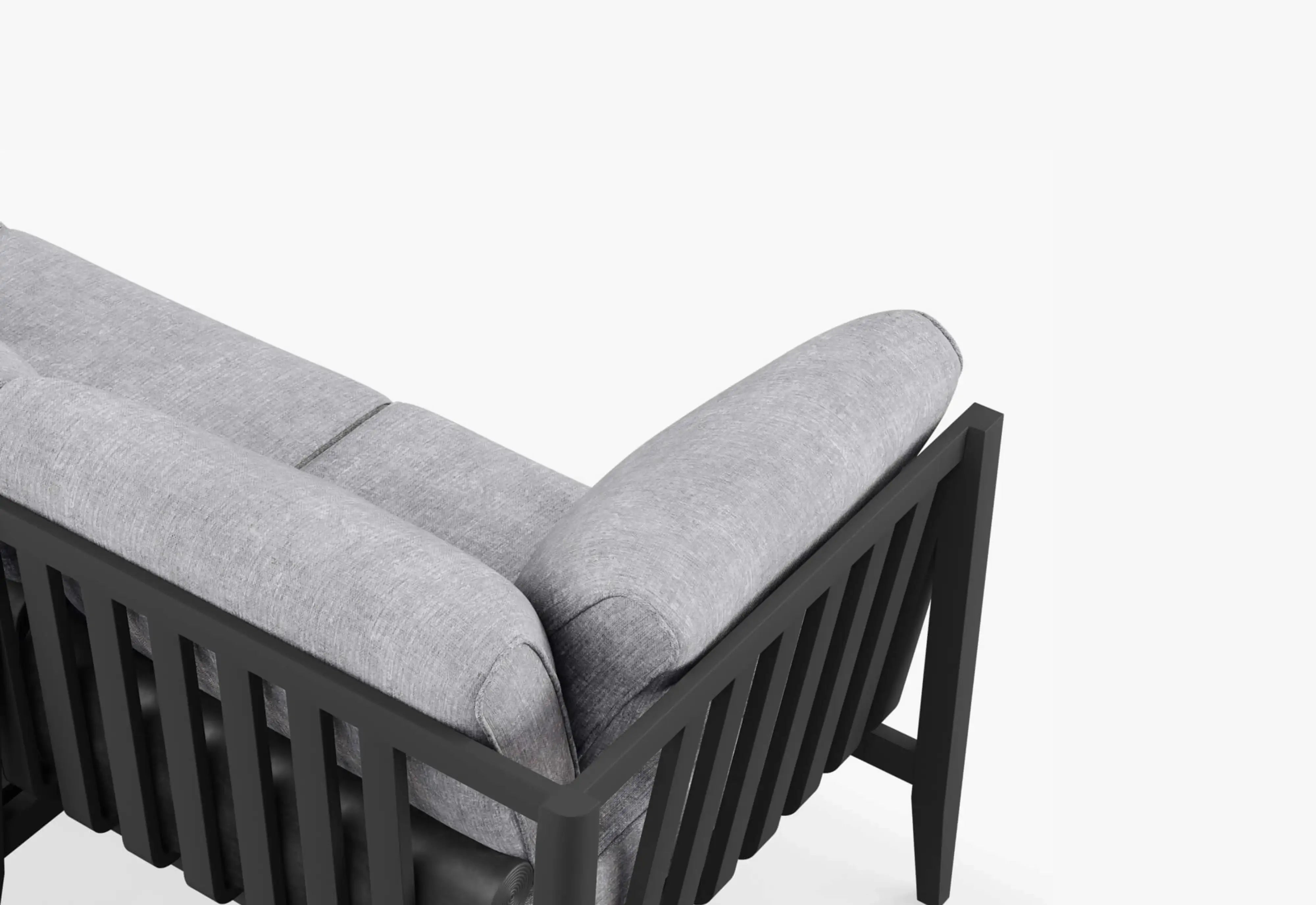
The frame is only one part of a comfortable outdoor seat. In Outer teak seating, OuterCloud® provides cushion comfort, OuterWeave® is the upholstery you use and care for, and the built-in OuterShell® helps protect the cushions between uses. Follow product care guidance and use a full furniture cover when conditions call for more protection.

Consider for / A defined lounge area
Teak Outdoor Sofa – 3 Seat
A natural teak frame and cushioned, modular seating for a patio where you want a clear place to sit and stay awhile.
Best for: A compact outdoor living arrangement.
Consider if: You want to evaluate comfort and cushion care alongside the wood frame.

Consider for / A roomier patio
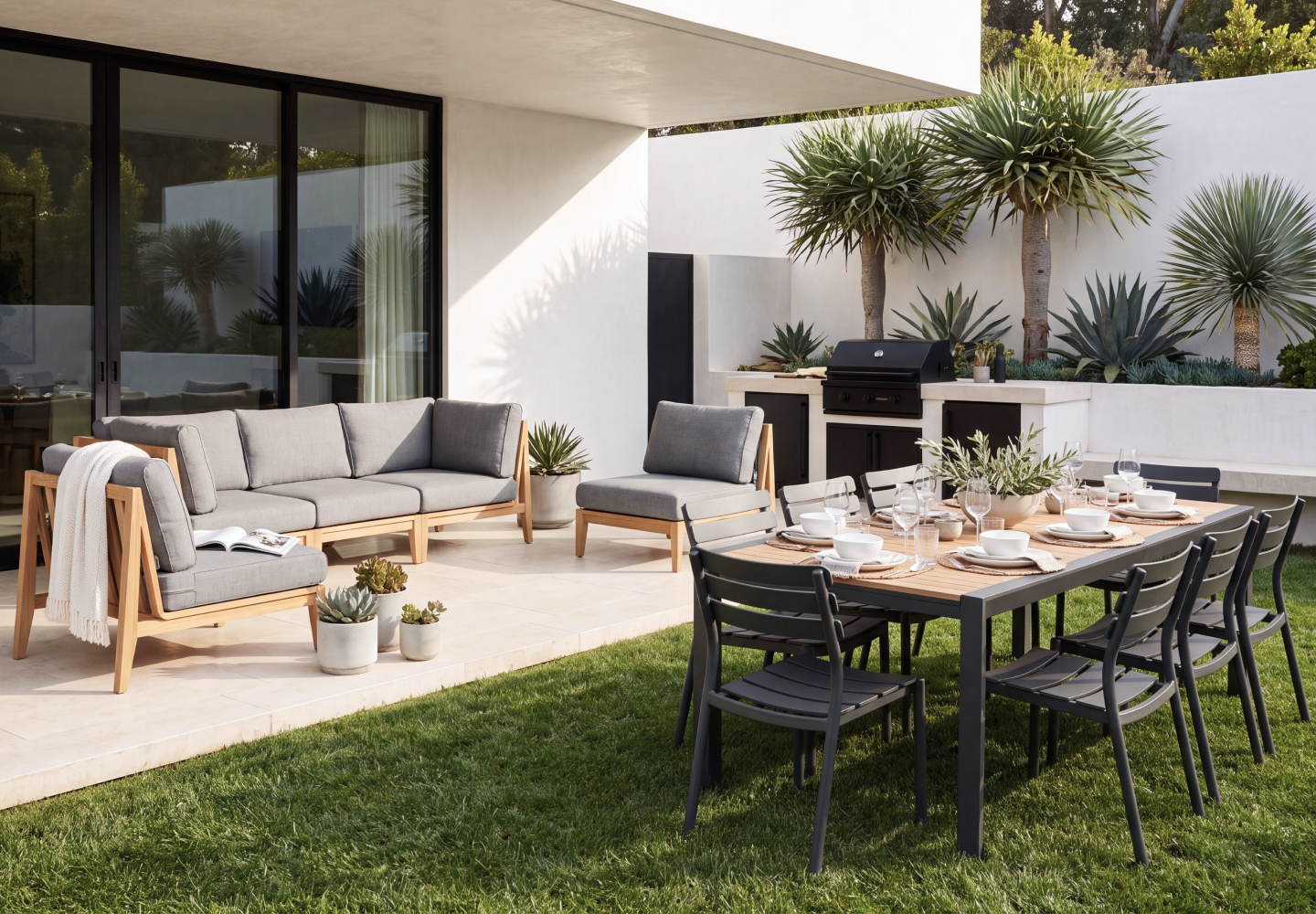
Teak Outdoor L Sectional – 5 Seat
An L-shaped arrangement for a larger seating area, with the same natural warmth of teak.
Best for: A patio organized around conversation.
Consider if: You have room for a larger footprint and want seating for more people.
The right choice comes down to where—and how—you live outside
Choose acacia when a sheltered setting, a lower initial price, and a manageable finish-care routine match your needs. Choose teak when your furniture will be a regular part of an open-air space and you value its natural outdoor performance and changing appearance.
Then look past the wood label. Ask about the frame, joinery, sourcing, cushions, and care instructions. The furniture you enjoy using—and can realistically care for—is the better investment for your space.