


Outdoor Furniture Buying Guide
Best Patio Furniture:
A Guide to Durable Outdoor Life
Choose patio furniture that fits your body, your available space and the way you spend time outside. This guide explains how to test comfort, measure a layout, compare construction and plan for the practical costs of ownership.

The Short Answer
What Is the Best Patio Furniture for Your Space?
Start with how you use the patio, then check comfort, fit, construction and care before choosing a set.
For everyday lounging: prioritize supportive cushions, a seat depth that suits your posture and enough room to move around the seating.
For meals and hosting: compare the table and chairs as a complete layout, including pulled-out chairs, serving space and the route back to the house.
For limited space: choose the fewest pieces that support your main activity. A compact sofa or two useful chairs can work better than a larger set that blocks circulation.
For long-term flexibility: confirm module connections, replacement options, cover fit and the maintenance you will actually follow.
A Practical Comparison Framework
Compare the Details That Affect Everyday Use
Attractive photos and a premium price do not explain how furniture will feel or function on your patio. Compare shortlisted products using the same questions, and record missing information before buying.
| Decision | What to compare | How to check it |
|---|---|---|
| Comfort | Usable seat depth, seat height, back support, arm placement and cushion firmness. | Sit in your usual position, change posture and stand up without relying on a product photo. |
| Space | Overall dimensions, corner orientation, table placement and movement around the furniture. | Mark the full footprint on the patio and test doors, chair movement and walking routes. |
| Construction | Frame, finish, upholstery, cushion inserts, joints and hardware. | Read component specifications and inspect hidden surfaces as well as the visible finish. |
| Flexibility | Module types, connectors, standalone use and compatibility with future additions. | Request a parts diagram and confirm which pieces can form each proposed layout. |
| Care | Cover removal, washing restrictions, drying, cleaning access and storage needs. | Read the care instructions before purchasing rather than assuming every component is washable. |
| Ownership | Delivered cost, protection, component warranties and replacement availability. | Build a complete budget and ask how a damaged cushion, connector or module would be replaced. |
Start With Use
Choose the Furniture Category Before the Finish
List the activities your patio needs to support, then identify the one you do most often. A conversation area, a dining area and a poolside lounge require different seat positions and clearances.
Separate your usual household needs from occasional hosting. Buying enough permanent seating for your largest annual gathering can leave a smaller patio crowded during everyday use.
If you need help browsing the categories, explore the Outdoor Furniture Hub. Use the checks below to evaluate the pieces you shortlist.

Comfort Starts With Seat Geometry
The most comfortable patio furniture is not necessarily the softest. A seat must support the way you sit, including reading, eating, talking and reclining.
Compare the usable sitting area with the overall product dimensions. A sofa's total depth includes its frame and back; it does not tell you how far you will sit from the front edge to the back cushion.
A Repeatable Comfort Test
Test More Than the First Sit
When possible, try the furniture in person. Use the same sequence for each option and include the people who will use it most often.
Evaluate the Cushion and the Fabric Separately
The cushion insert affects support; the upholstery affects surface feel and cleaning. Ask about both. A fabric labeled water-resistant does not establish that the entire cushion is waterproof or that its insert can be machine washed.
For Outer seating, compare the OuterCloud cushion construction with the OuterWeave upholstery information. Treat comfort, fabric performance and cleaning instructions as separate parts of the purchase decision.
Buying online? Request usable seat dimensions, compare them with a chair you already find comfortable, and review return terms before ordering. Fabric swatches can help assess texture and color, but they cannot establish seat comfort.
02 · Size and Layout
Measure the Space You Can Actually Furnish
A patio's total area is not the same as its usable furniture area. Doors, steps, posts, planters, cooking equipment and walking routes reduce the footprint available for seating.
-
Draw the fixed features first.
Record the patio's shape, door swings, sliding-door access, stairs, railings and permanent obstructions. Identify the route people use between the house, garden and other outdoor areas.
-
Mark each furniture piece at full size.
Use tape or a temporary outline for the overall sofa, chair and table dimensions. Mark a sectional's full corner footprint, including arms and backs—not just its seating surface.
-
Test the layout while the furniture is being used.
Pull dining chairs out, open doors and account for reclined lounges. Walk through with a serving tray or the items you normally carry. A gap that works beside an empty chair may not work when someone is seated.
-
Check delivery access and assembly.
Compare package dimensions with gates, hallways, stairs and tight turns. Confirm whether the furniture arrives assembled, which parts detach and where assembly can take place.
-
Plan the protection footprint.
Check whether covers fit the final configuration and where cushions or covers will be stored. Leave access to reach fasteners and remove covers without moving the entire set.
| Layout | Often useful for | Check before buying |
|---|---|---|
| Sofa with separate chairs | Conversation, flexible chair placement and patios with more than one entrance. | The chairs' full depth, the conversation area and access to each seat. |
| L-shaped sectional | Lounging and grouping seating along two sides of an outdoor area. | Corner orientation, entry points and whether the return section blocks a walking route. |
| Two armchairs with a small table | Reading, morning coffee and smaller outdoor spaces. | Usable seat width, table reach and enough room to enter and leave both chairs. |
| Dining table and chairs | Meals, serving and gatherings that need upright seating. | Chair movement, table-leg position, armrest clearance and space for people to pass. |
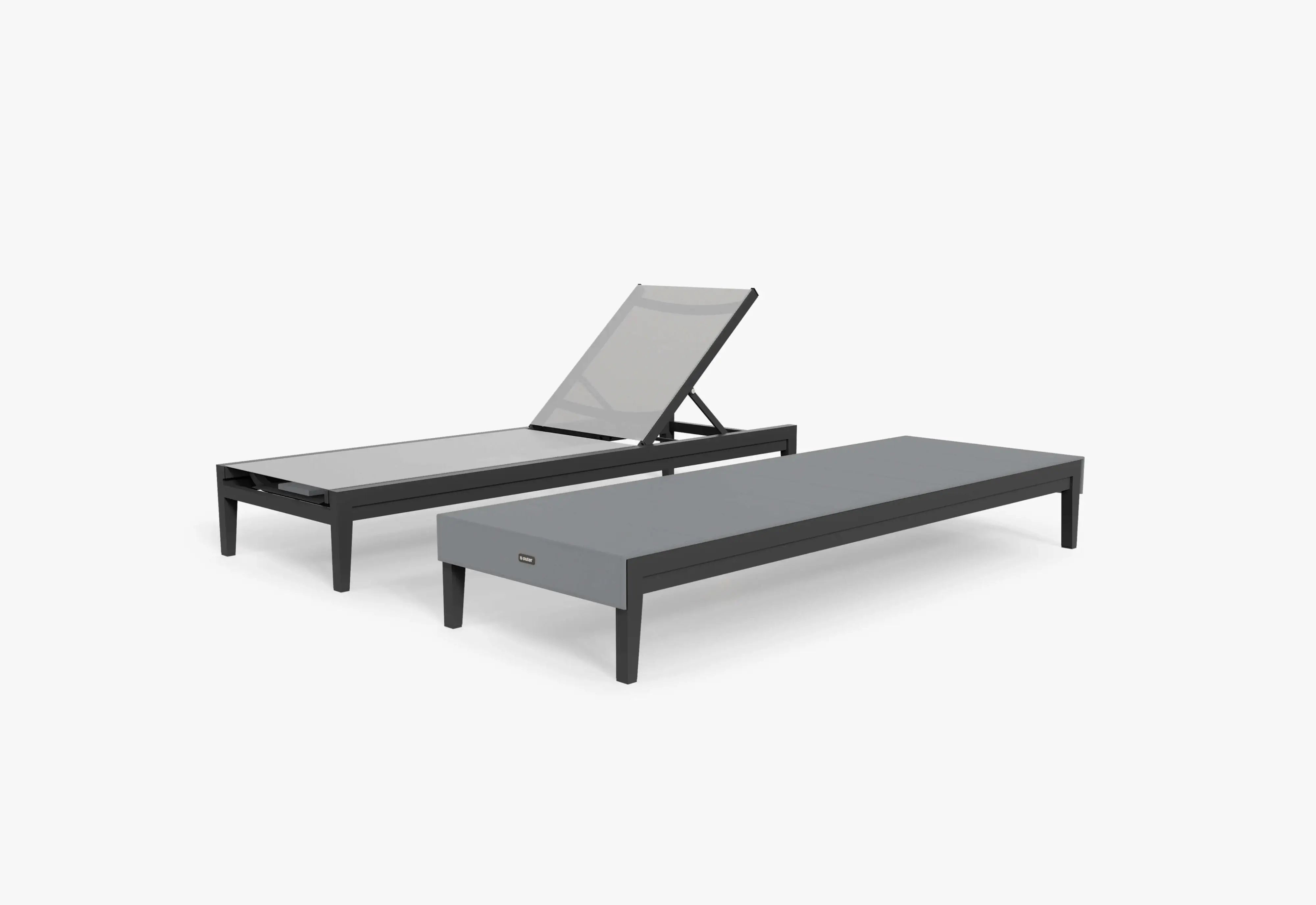
| Chaise lounges | Reclined relaxation and poolside use. | The fully reclined footprint and access to the adjustment mechanism. |
Check Dining Furniture as a Pair
A chair can fit beneath a table when empty and still be uncomfortable during a meal. Compare the cushioned seat height with the tabletop, apron and underside clearance. Check whether armrests slide under the table and whether legs or supports interfere with knees.
For an extendable table, test the room in its extended configuration. Include all the chairs you intend to use and the space needed to serve food. Extra tabletop capacity is useful only when the patio can accommodate the complete setup.
For a smaller patio: compare a compact usable layout with your larger option before ordering. Keeping an entry route open and making every seat accessible can matter more than adding one extra place to sit.
03 · Materials and Construction
Match the Material to Your Priorities
Use material choice to refine a layout that already fits. Compare appearance, movement, cleaning access and the changes you are willing to accept as the furniture ages.

Aluminum: A Practical Starting Point for Simple Care
Aluminum can suit buyers who prefer a clean visual profile and want to avoid caring for a natural wood surface. Compare the actual product weight if frequent rearrangement matters; size and construction also affect how easy a piece is to move.
Inspect coating coverage, welds, joints and feet. Ask how to address finish damage and whether cushion removal leaves the frame easy to clean.
Explore Aluminum Furniture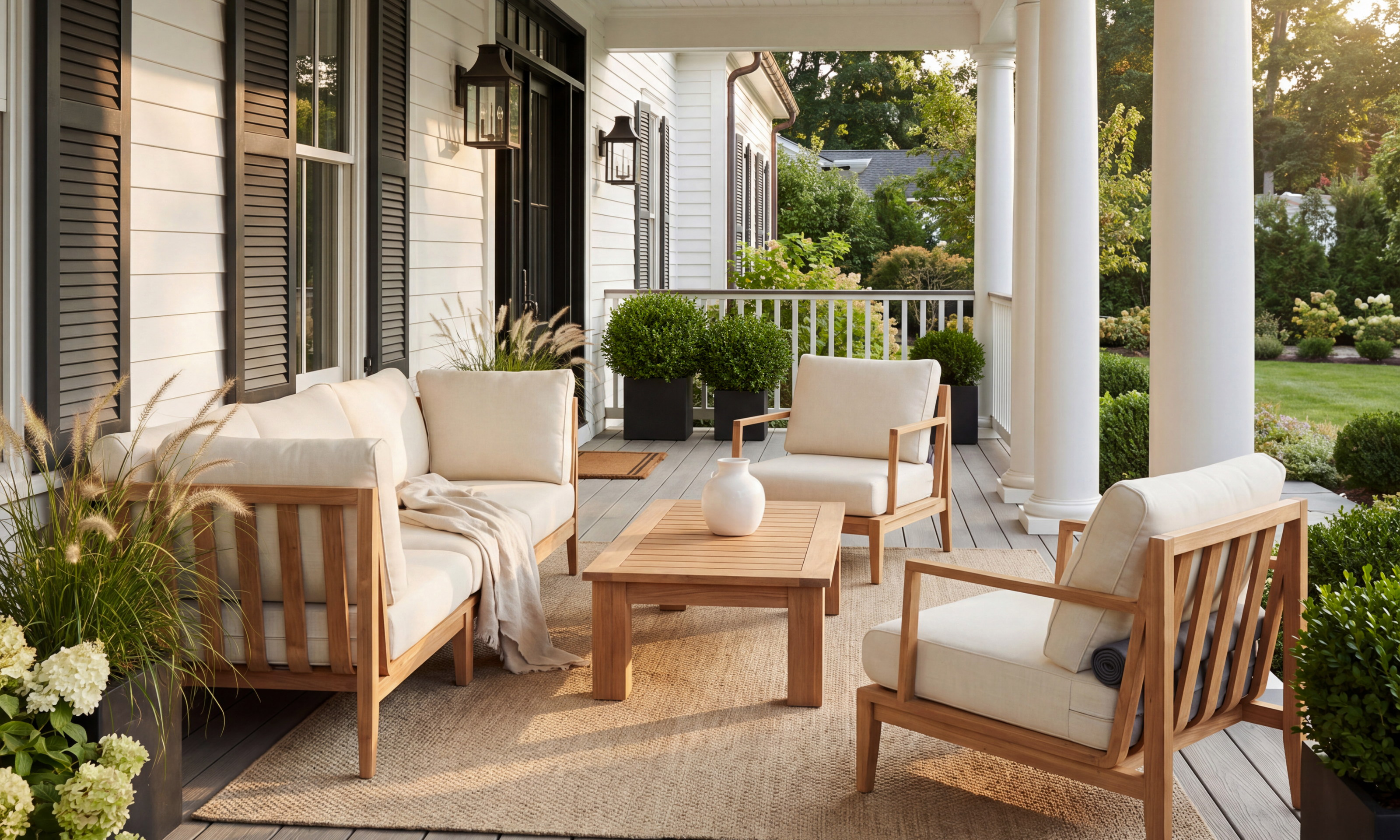
Teak: Choose It for Natural Character
Teak suits buyers who want wood grain and a warmer material presence. Decide whether you welcome a silver-gray patina: keeping an original-looking color can involve a different routine from accepting natural weathering.
Check joints, surface preparation and the manufacturer's maintenance instructions. Do not assume a treatment recommended for one teak product is appropriate for every other product.
Explore Teak Furniture
All-Weather Wicker: Texture With Construction to Check
Wicker describes a woven construction, so confirm what the strands are made from and whether they are intended for outdoor exposure. Natural indoor wicker and synthetic outdoor wicker should not be treated as interchangeable.
Examine weave consistency, edges and the structural frame underneath. Consider how easily you can remove pollen and debris from the weave, particularly near planting beds.
Explore Wicker FurnitureNeed a closer material comparison? Read Teak vs. Aluminum Outdoor Furniture. For coatings, fabric limitations and component inspection, use our weather-resistant materials and care guide.
04 · Modularity
Check What “Modular” Lets You Change
Separate pieces are not automatically interchangeable. Arms, corner units, connectors and finished side panels determine which layouts a system can form.
If you expect to expand later, ask about the exact modules required. A straight sofa may need additional corner or armless pieces to become an L-shaped sectional.
Use the Outer Sofa Configurator to explore available arrangements, then confirm dimensions and compatibility for the selected collection.
Conceptual layouts only. These diagrams do not establish that one set can form every arrangement without additional components.
Questions to Ask Before Planning an Expansion
- Module availability: Can you purchase the required armchair, corner or armless piece individually?
- Connection method: How are modules secured, and can the connectors be accessed after installation?
- Standalone use: Will a separated piece have the arms, feet and finished surfaces it needs?
- Compatibility: Are connections and dimensions consistent across the specific collection and version?
- Replacement fit: Can cushion covers and inserts be ordered for the exact module?
- Future appearance: Could a new fabric or frame finish look different beside pieces that have already aged?
Future availability should be confirmed rather than assumed. A modular system offers useful flexibility, but it does not guarantee that every color or component will remain available indefinitely.

Choose Protection You Can Use Consistently
Protection is part of the purchase, not an accessory to think about after the first storm. Check how the furniture will be covered, uncovered and dried between uses.
Separate Daily Cushion Protection From Full Furniture Coverage
OuterShell is an integrated cushion cover intended for everyday protection from debris, dew and light-to-moderate rain. It does not cover the entire frame or replace a plan for prolonged rain and severe weather.
Browse Outdoor Furniture Covers for the selected configuration. For climate-specific choices and seasonal planning, see Best Weatherproof Outdoor Furniture for Every U.S. Climate and Season.
06 · Maintenance
Read the Care Instructions Before You Buy
Low-maintenance patio furniture still needs cleaning and inspection. Compare the complete routine, including upholstery, cushion inserts, covers and the areas beneath the seating.
Check Whether Cleaning Is Practical in Your Home
- Cover removal: Are zippers and attachments accessible, and can the covers be removed without damaging them?
- Washing method: Is machine washing permitted for the specific cover, or is hand cleaning required?
- Drying space: Do you have room to air-dry removable covers and wet cushions?
- Frame access: Can you reach joints, feet and the underside without a difficult full disassembly?
- Debris exposure: Will nearby trees, planting beds or frequent outdoor meals increase cleaning needs?
- Replacement: Can a badly stained cover or damaged insert be replaced separately?
For Outer cushion covers: detach the entire OuterShell from the cushion fabric before machine washing eligible removable covers. OuterShell itself must not be machine washed. Use the specified cold, gentle wash routine and hang dry; cover instructions do not authorize machine washing the cushion insert.
Blot promptly and use the approved cleaning method before a stain becomes harder to remove.
Remove debris and check high-use surfaces, loose connections and areas that remain damp.
Clean as needed, inspect covers and seams, and adjust the protection plan for the coming conditions.
Clean and dry the furniture and cushions before covering or moving them into storage.
Aluminum
- Routine
- Use the approved mild-soap cleaning method and inspect the finish.
- Check
- Chips, scratches, joints, feet and areas that collect residue.
- Avoid
- Abrasive tools and cleaning methods that damage the coating.
Teak
- Routine
- Clean gently and follow the care guidance for the selected product.
- Check
- Surface dirt, joints and whether appearance changes are normal weathering or need attention.
- Avoid
- Aggressive pressure washing or applying treatments without checking suitability.
Outdoor Wicker
- Routine
- Remove debris from the weave and clean with the approved gentle method.
- Check
- Loose or damaged strands, exposed edges and the supporting frame.
- Avoid
- Harsh brushing, abrasive cleaners and pulling on damaged strands.
Use the current Outer Care and Maintenance Instructions for product-specific requirements. For a detailed washing workflow, read How to Clean Outdoor Cushions.
07 · Budget and Long-Term Value
Compare the Complete Cost of a Usable Setup
Start with everything needed to use and protect the furniture. A low advertised price may exclude a table, covers, delivery or other components included in a different offer.
| Budget item | What to confirm |
|---|---|
| Furniture | Exact modules, cushions, chairs and tables included in the selected configuration. |
| Delivery and setup | Shipping, taxes, assembly requirements and any access-related service charges. |
| Protection | Daily protection, full furniture covers and storage needs for the actual arrangement. |
| Care | Approved cleaning supplies and any product-specific maintenance you intend to perform. |
| Replacement planning | Current availability and pricing for cushion covers, inserts, connectors and other serviceable parts. |
Use the Same Planning Period for Each Option
Annual ownership cost can help organize a budget, but it is an estimate rather than a lifespan prediction. Choose the same planning period for both options and include replacement purchases if you expect one option to require them within that period.
Illustrative calculation: a setup costing $3,000 delivered, plus $600 for protection and care and $800 in planned replacements, totals $4,400. Over an eight-year budgeting period, that equals $550 per year.
This is a calculation example, not an Outer price quote or a claim that the furniture will last eight years. Change the inputs to match actual quotes and your own assumptions.
Keep maintenance time separate unless you deliberately assign it a dollar value. Frequency of use also matters: a comfortable setup used several times a week may deliver more practical value to your household than a cheaper set you avoid using.
Read the Warranty by Component
A headline warranty period may not apply equally to frames, fabric, foam, finishes and accessories. Check what is covered, what counts as normal wear, which care requirements apply and what information is needed for a claim.
Review the current Outer Warranty before buying. Warranty length should not be treated as a guaranteed product lifespan or a promise that every component will be replaced.
Where to Allocate a Limited Budget
Prioritize the seating you will use most, an appropriate outdoor construction and a workable protection plan. Add decorative pieces after comfort and circulation are resolved. If you plan to buy in stages, confirm expansion compatibility before relying on future additions.
Before You Order
A Final Patio Furniture Buying Checklist
Use: Does the setup support your main outdoor activity and usual household size?
Comfort: Have you checked usable seat dimensions, back support and ease of standing?
Footprint: Have you marked the full furniture dimensions, including arms and corner sections?
Movement: Can people use doors, pull out chairs and pass the seating while it is occupied?
Delivery: Can the packages or assembled pieces reach the patio through the available access route?
Construction: Do you know the materials used for the frame, finish, cushions, upholstery and connections?
Modularity: Are the required layouts supported by the exact modules and connectors you are purchasing?
Protection: Do covers fit the final arrangement, and is there a plan for prolonged rain?
Care: Have you checked washing restrictions, drying space and cleaning access?
Budget and support: Have you compared delivered cost, warranty terms, return conditions and replacement options?
Common Questions
Patio Furniture Buying FAQ
What is the best patio furniture to buy?
What makes outdoor furniture comfortable?
How do I know whether patio furniture will fit?
Is a sectional or a sofa with chairs better?
What should I choose for a small patio?
Is aluminum or teak better for patio furniture?
What should I check before buying modular patio furniture?
Can all outdoor cushion covers be machine washed?
Is expensive patio furniture worth it?
Does a long warranty mean patio furniture will last that long?
Apply the Buying Framework
Outer Seating Options for Different Priorities
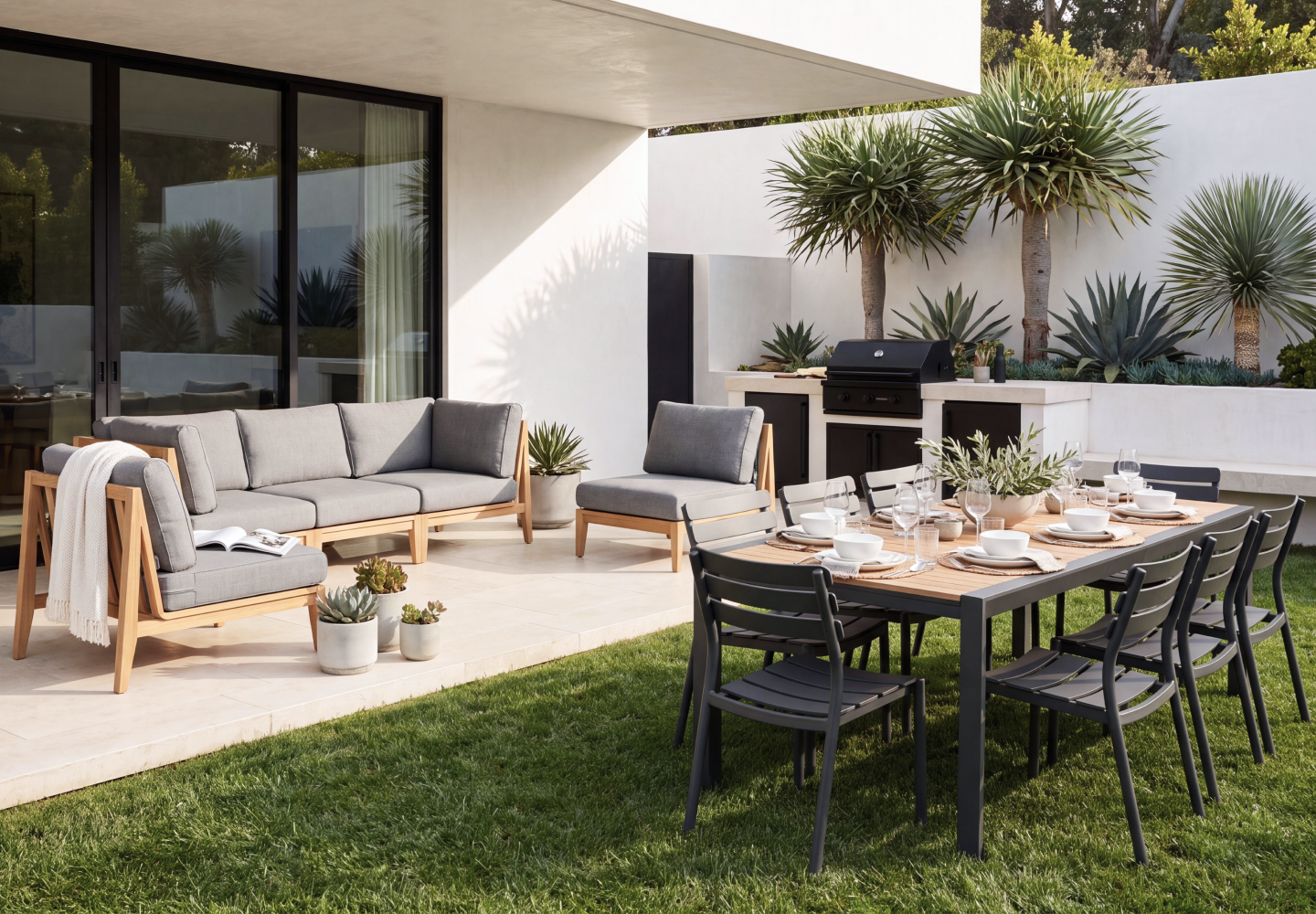
These Outer configurations illustrate different material and layout choices. They are not an independent ranking of every patio furniture brand. Compare the current specifications with your comfort, dimensions and care requirements.

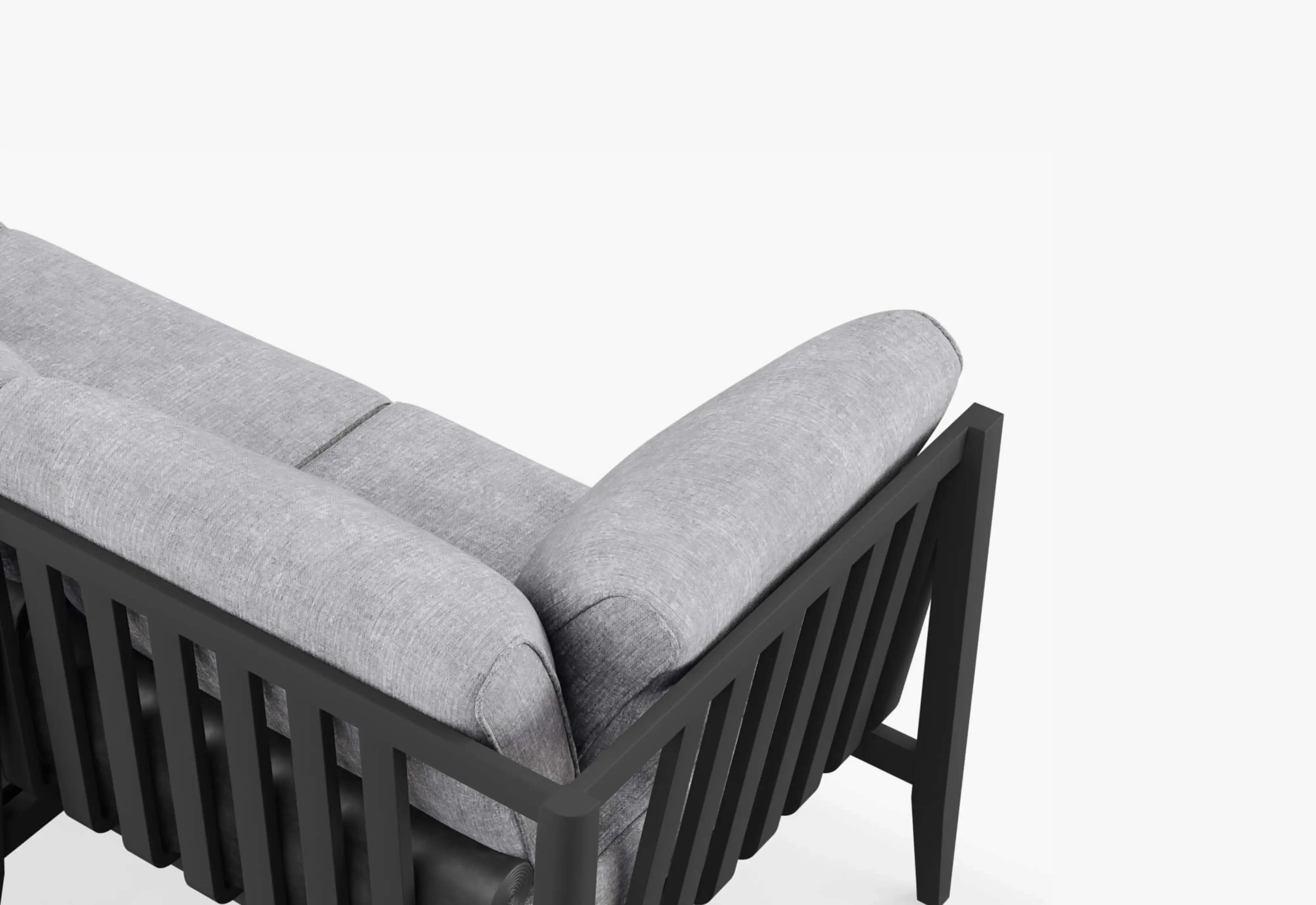
Charcoal Aluminum Outdoor Sofa with Armchairs — 5 Seat
A sofa-and-armchair arrangement offers separate places to sit and flexibility in how the conversation area is organized. The aluminum profile suits an outdoor room with a clean, contemporary appearance.
Check before choosing: the combined footprint, usable seat depth, chair access and the cover requirements for your final arrangement. Compare product weight if you expect to move the pieces regularly.

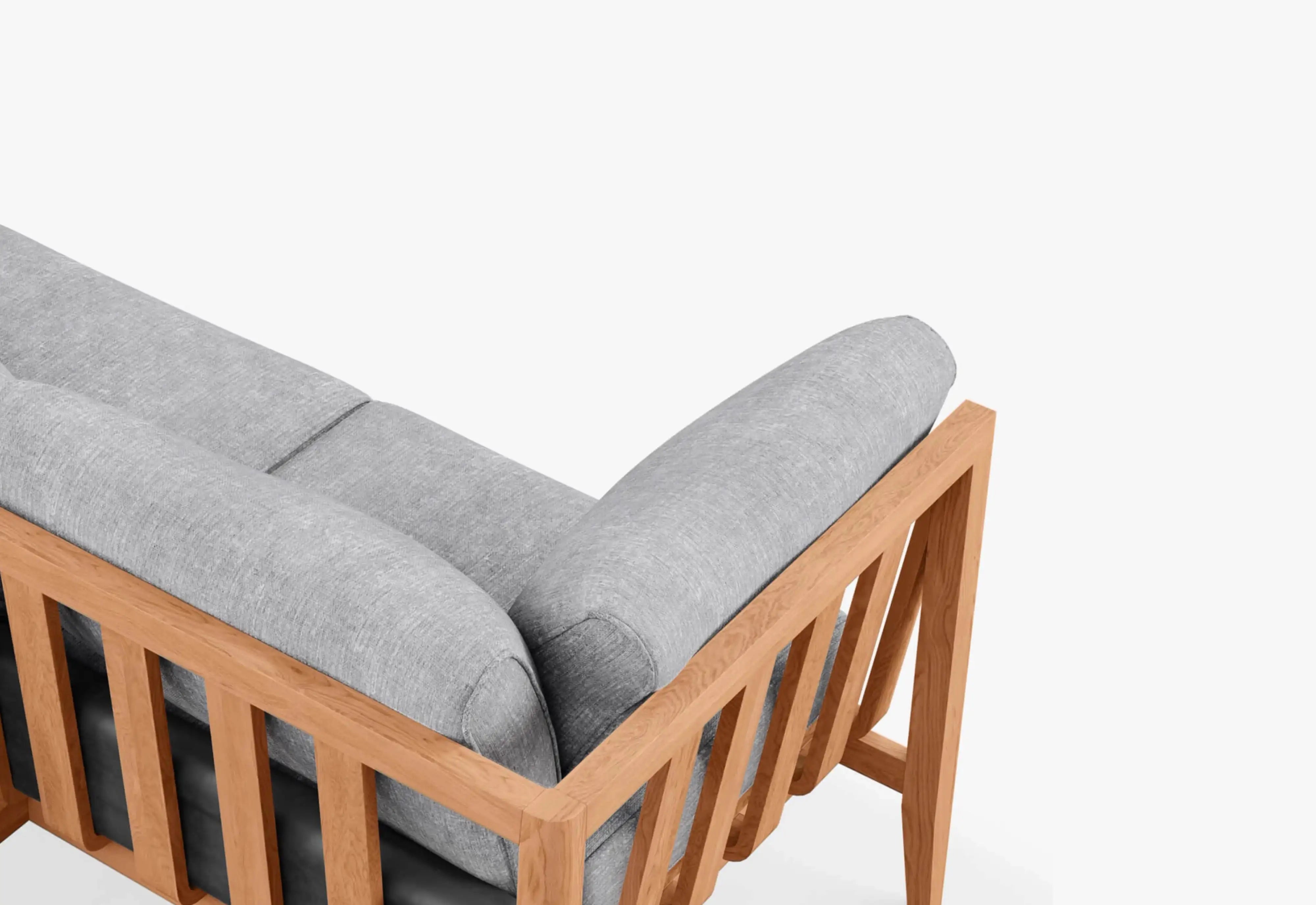
Teak Outdoor Sofa with Armchairs — 5 Seat
Consider this arrangement when visible wood grain and a warmer material palette are central to the patio. Separate armchairs allow you to adjust the seating relationship to the sofa.
Check before choosing: the layout dimensions, cushion fit and current teak care instructions. Decide whether you welcome natural patina before selecting a maintenance routine.

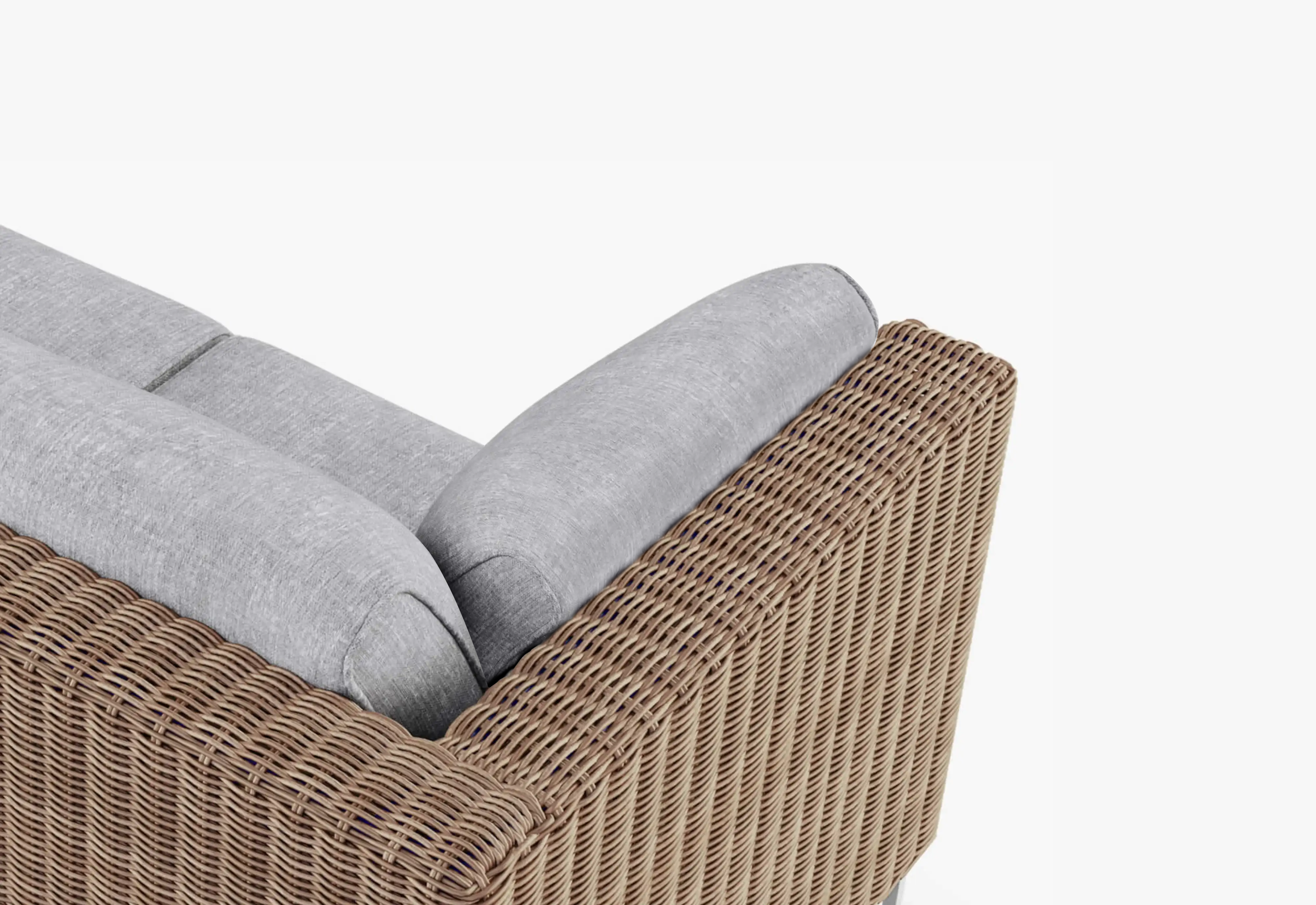
Handwoven Brown Wicker Outdoor Sofa with Armchairs — 5 Seat
Woven texture can complement a relaxed outdoor room with planting, natural colors and softer visual lines. Evaluate the seat fit and frame construction as carefully as the visible weave.
Check before choosing: the full chair dimensions, cleaning access around the weave, replacement cushion options and protection for the proposed setup.

Charcoal Aluminum Outdoor Armchair
Compare as standalone seating or as an addition to a compatible layout. Check usable seat dimensions and module compatibility.
View Armchair
Teak + Aluminum Extendable Dining Table
Compare both table lengths with your patio. Include compatible chairs, chair movement and serving access in the extended layout.
View Dining Table
Ascent Adirondack Chair
Compare its sitting position with your preference for upright or reclined relaxation. Test seat height and ease of standing.
View Chair
All-Weather Furniture Covers
Choose covers for the exact pieces and arrangement you own. Check dimensions, fastening and access before adding them.
Explore CoversContinue Your Comparison
Browse by the Decision You Are Ready to Make
Bring your measured layout and buying checklist to the collection pages. Compare the current dimensions and specifications rather than relying on lifestyle images alone.


